
The Textile Files with Faig Ahmed
Fiber art finally steps into the spotlight. Once situated in a liminal zone between domestic craft and institutional prestige, textile-based practices are finally receiving the serious recognition they deserve. In the article, we spotlight some of the most compelling and influential voices in contemporary textile art, including Faig Ahmed, Julia Gutman, April Bey, and Bridget Stehli.
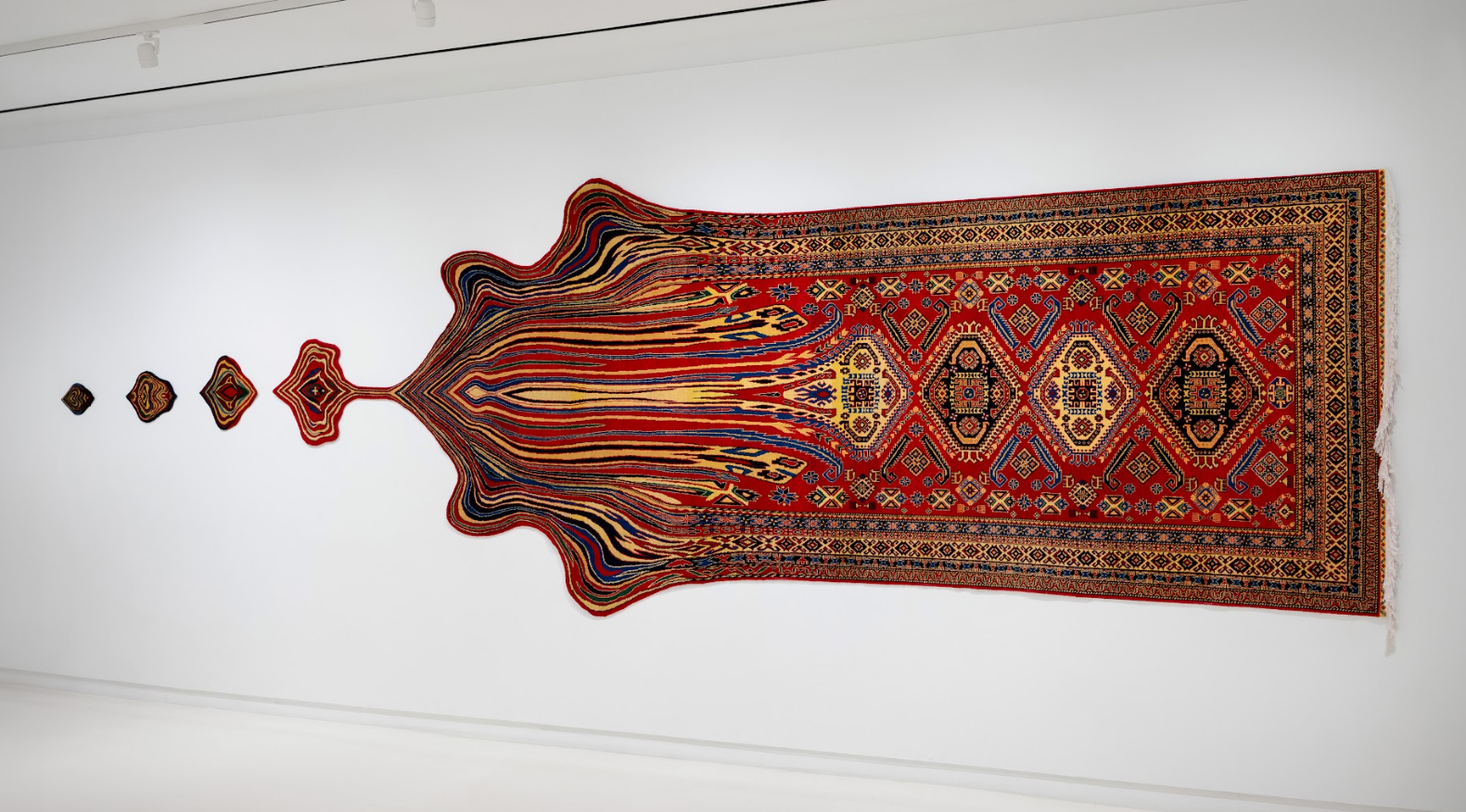
The Thread of Tradition and Culture with Faig Ahmed
Interview by Michelle Grey | Introduction by Lameah Nayeem
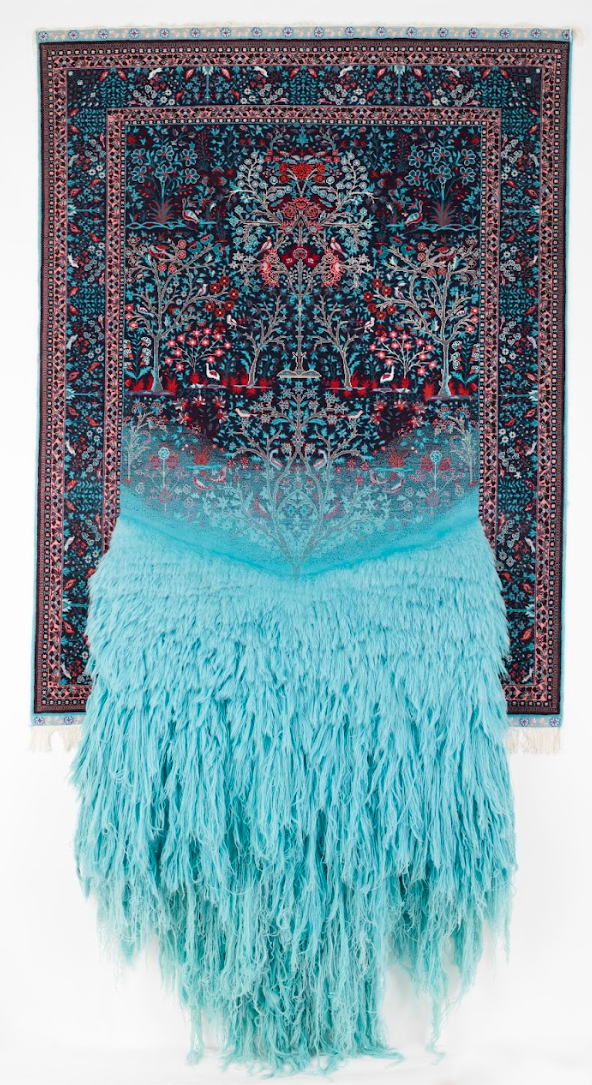
Artworks that contemplate spirituality often reinforce a kinetic relationship between us and the divine: we crane our necks upwards to marvel at the Sistine Chapel, and we turn our heads to follow the gaze of Michelangelo's David. Faig Ahmed, however, encourages us to look at what lies beneath our feet. Drawing on Azerbaijan’s ancient weaving traditions of the South Caucasus, Ahmed utilises traditional rugs as vessels for the volatility of identity and tradition, as the archaic becomes increasingly rarefied in our information-driven age. Interested in world religions and ancient scriptures, the words of mystic poets and calligraphy, Ahmed transforms inherited forms of Azerbaijani rugs through technical virtuosity and conceptual intervention. His rugs, decorated with geometric motifs and medallions resembling the traditional ‘kilimgulu’, are woven with complex interlacing techniques.
Here, Ahmed introduces another variable into his visual arithmetic. Prisms morph into pixels and defined borders glitch and mutate through three-dimensional warping, bleeding out into the surface of the gallery. The digitalised rupture of sacred craft reflects a paradigmatic shift, Ahmed observes: the dictums of desert prophets have given way to the sovereign rule of technology, and the new often arrives at the cost of the old.
Michelle Grey: What initially inspired you to merge traditional Azerbaijani rug-making with contemporary art?
Faig Ahmed: It’s a natural continuation of human culture when tradition transforms into contemporary life, especially in our time, when local elements of tradition become part of the fabric of global culture.
MG: Your work often challenges perception. What do you hope viewers feel or question when they see your distorted rug works?
FA: I don’t hope – I know exactly what the viewer feels, because I feel the same. That’s the role of the artist. The artist is the first viewer of their own work. My pieces are not answers, but questions – about the boundaries of identity and how stable they really are.
MG: Can you walk us through your typical creative process – from idea to finished work?
FA: It’s a complex process that can’t be described in just a few sentences. But briefly, there are three stages: before creating something, you first need to see it from the artist’s perspective. Then you have to live through that experience. But that doesn’t mean that every experience will result in art. If the idea is conceived, then the art-making process can begin. Everything else is just boring technical details.
MG: Your rugs often look digitally manipulated but are handwoven. How do you balance the digital and analogue in your work?
FA: I learn this from the world itself – we’re living in a time when the digital realm is growing into an entire universe. Our task as humanity is to feed this growing digital organism with information. My works are a documentation of this transition.
MG: How does your Azerbaijani heritage shape your artistic philosophy?
FA: There is so much in Azerbaijan’s rich heritage to draw inspiration – its history, music, architecture, poetry, cuisine and more. However, what inspires me most is the philosophy of the Azerbaijani poet [Imadaddin] Nasimi, who viewed the world through the lens of mystical symbols. Understanding those symbols can reveal the code of their inner universe to a person.
AM: Has your work ever sparked controversy or strong reactions in more traditional communities?
FA: I’ve received mixed reactions from traditionalists in different parts of the world. But I believe that’s the very effect contemporary art should have. A person rooted in tradition is stable and tends to fear change. That’s why my approach to art can scare and confuse some people.
MG: Are there any materials, mediums or concepts you’re eager to explore next?
FA: One of my main ongoing projects is researching art itself through a scientific method. This includes using medical and other biometric devices to study how art affects viewers. We’re collecting data from hundreds of people, which will be analysed by specially trained AI capable of revealing connections that traditional art studies can’t detect. Some in the art world are afraid of this approach – they think it could destroy the magic of art. But I believe it will unlock a vast, hidden potential within artistic practice. The project will also result in artworks based on the research, making it both a scientific and artistic endeavour.
MG: What legacy do you hope to leave through your art?
FA: I haven’t thought about that. My work is directed at living people, not those who have yet to be born. Future generations will perceive all of us as part of their past experience, and as we know, all experiences are valuable.
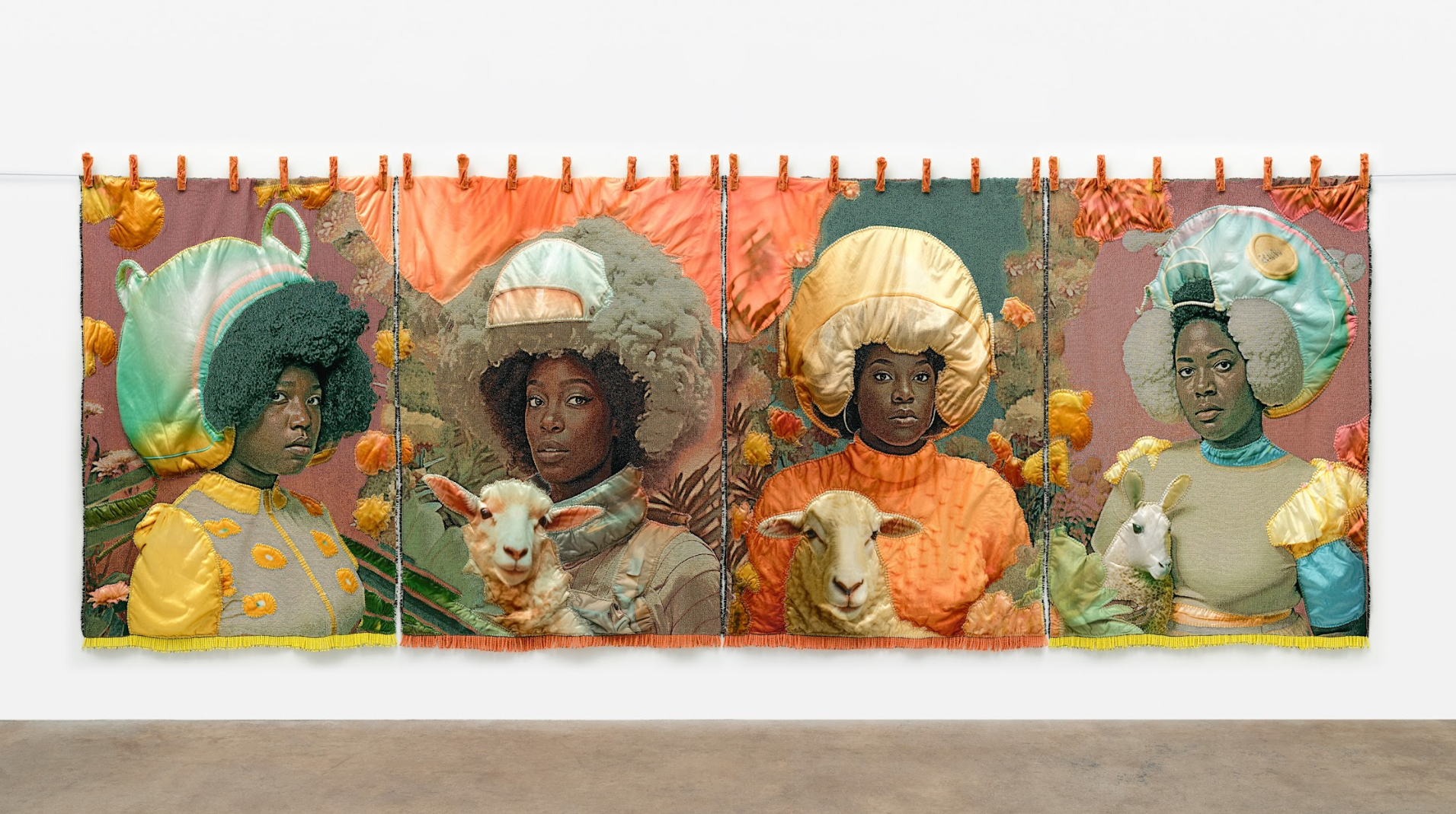
April Bey, We Will Not Apologise for Being the Universe; Our Own Constellation. Don’t You Know Light Lives in Dark Places Too?, 2025, jacquard woven textiles, sherpa blanket, giant clothespins, beads, 84" x 240" [HxW]. Courtesy of the artist and Vielmetter Los Angeles. Photo credit: Brica Wilcox.
Name: April Bey
Date of Birth: January 1987
Hometown: Nassau, The Bahamas
Hobbies & Interests: Star Trek, live music, reading and collecting books, foodie
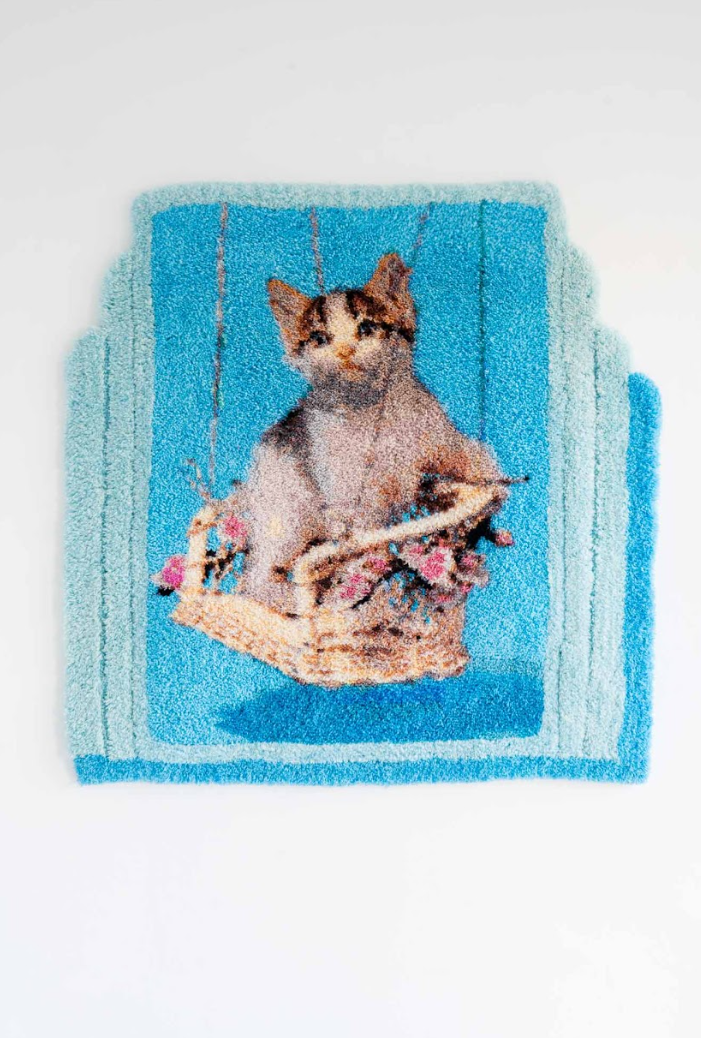
Bridget Stehli, Kitten (blue), 2024, oil on panel, wood, satin, polyester fibre filling, lace, 24cm x 27cm. Courtesy of the artist.
Name: Bridget Stehli
Date of Birth: 23 February 1986
Hometown: Sydney
Hobbies & Interests: Reading and collecting books, finding other people’s thrown out junk, bushwalking
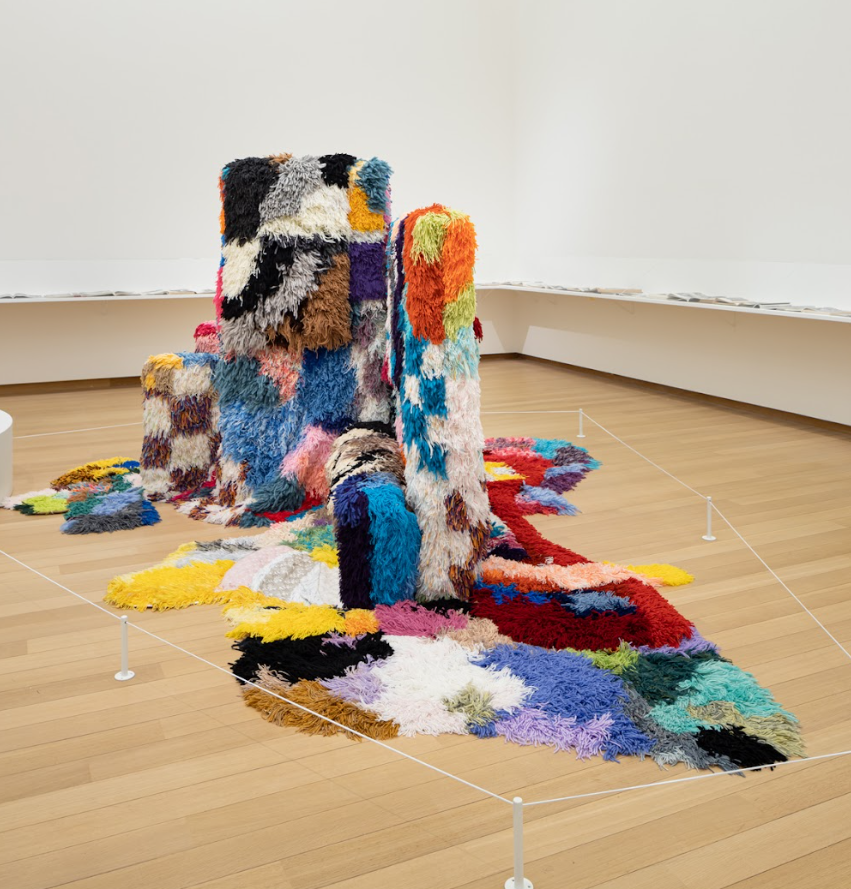
Sarah Zapata, To teach or to assume authority, 2018, natural and synthetic fiber, handwoven cloth, dimensions variable. Courtesy of the artist and Stedelijk Museum Amsterdam.
Name: Sarah Zapata
Date of Birth: 30 December 1988
Hometown: Texas
Hobbies & Interests: R&B/Soul/New Jack Swing, sewing, sitcoms
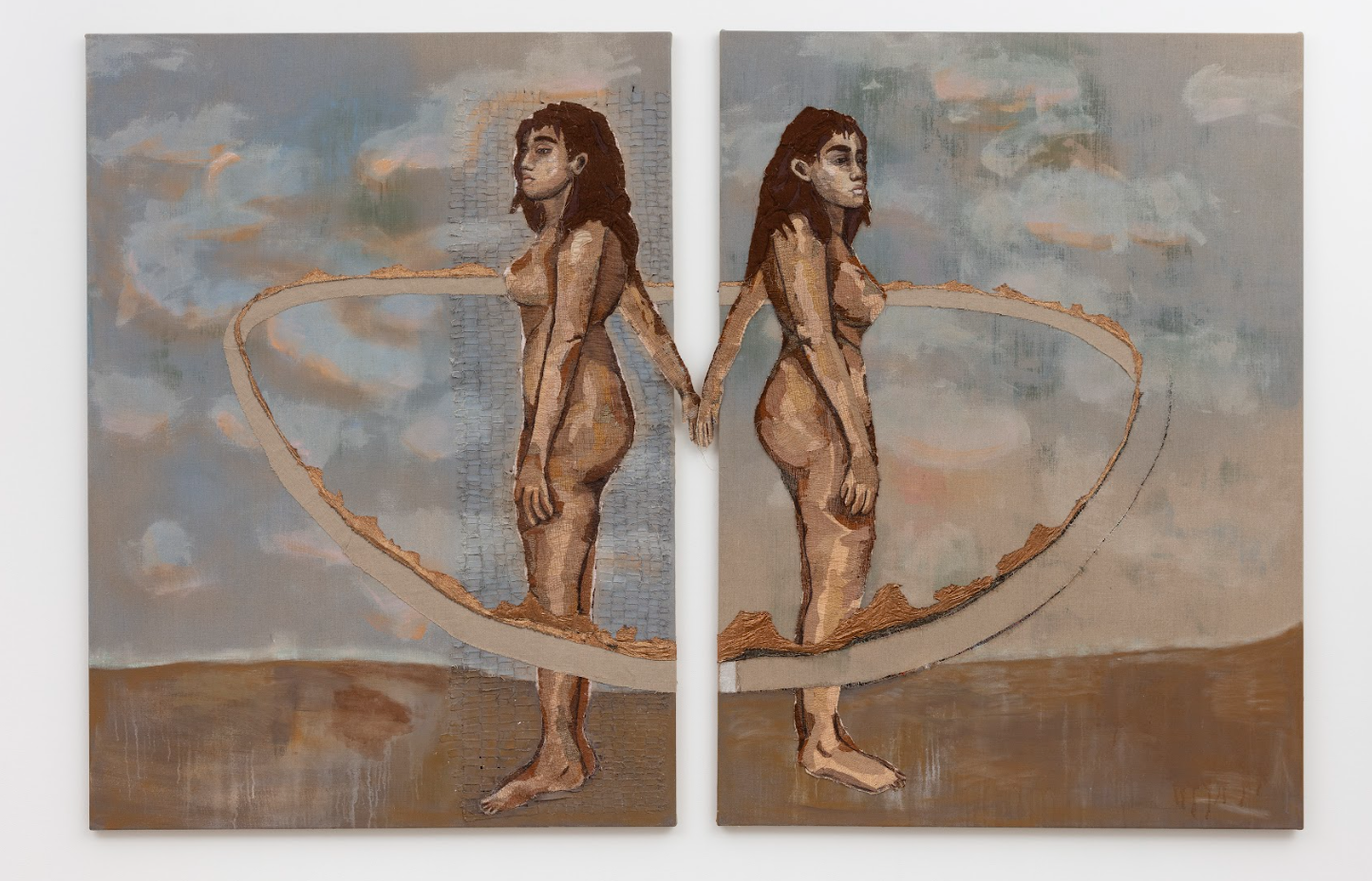
Julia Gutman, I'll be your mirror (for Azazel), 2025, found textiles, embroidery and acrylic paint on linen, 230 x 350 cm. Photography by Simon Hewson. Image courtesy of the artist and Sullivan+Strumpf.
Name: Julia Gutman
Date of Birth: 13 July 1993
Hometown: Sydney
Hobbies & Interests: I spend a lot of time in the studio! But when I’m not there, I’m usually cooking dinner for more people than can comfortably fit in my apartment. I like to fill my fridge with fresh veggies and esoteric sauces — improvise wildly, and eat until we all have to lie down.