
Interview by Lila Daly l Photography by Manolo Campion
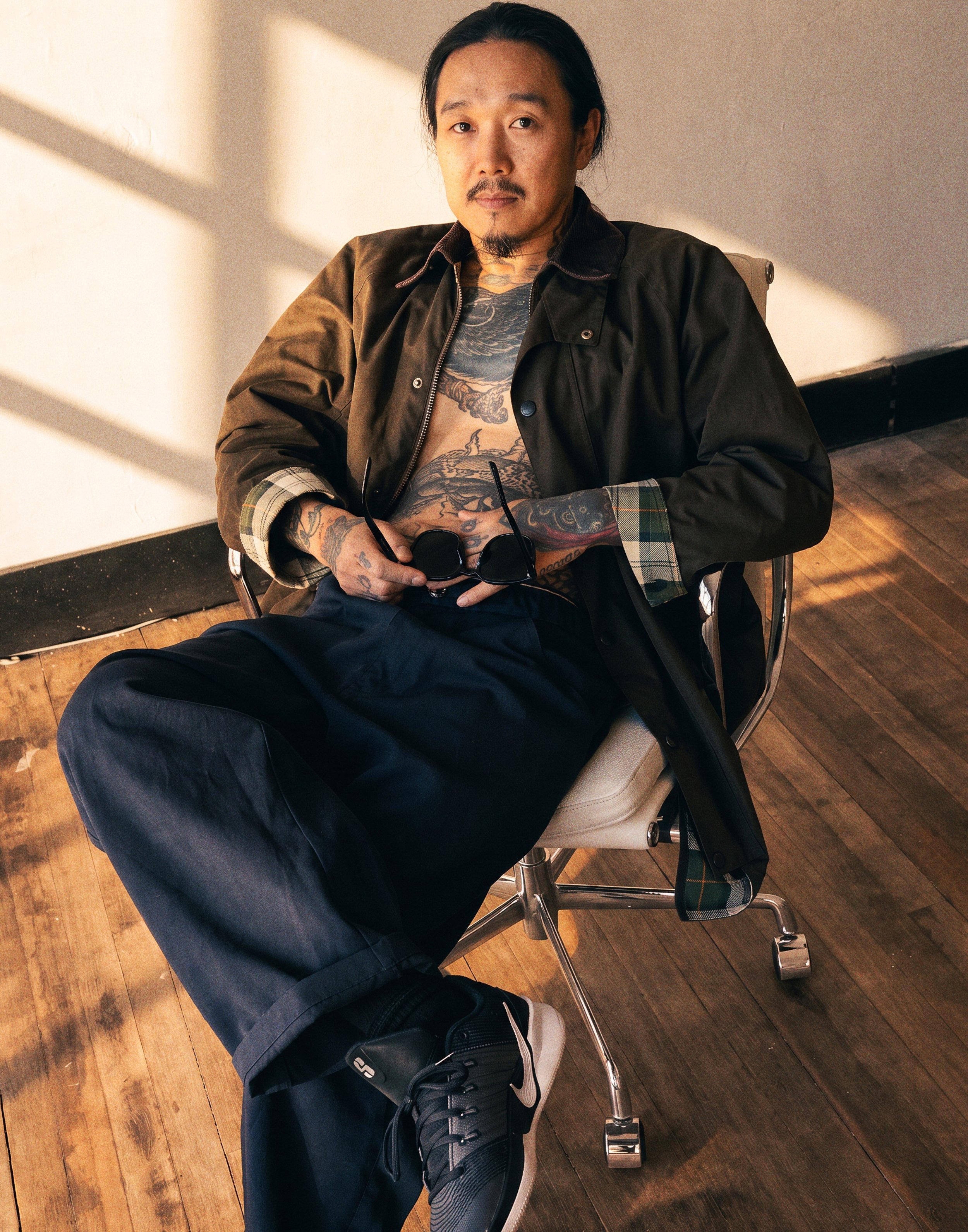
If there’s ever a symbol of a warm welcome, it’s the maneki-neko, or waving cat, beckoning from a shop window or bidding you farewell from a loved one’s hallway. In artist Yoshio Honjo’s latest exhibition, Maneki-Neko, exhibiting at Nanda\Hobbs from 15–31 October, it’s the cat that welcomes the viewer into a visual world bridging Japanese folkloric tradition and contemporary storytelling.
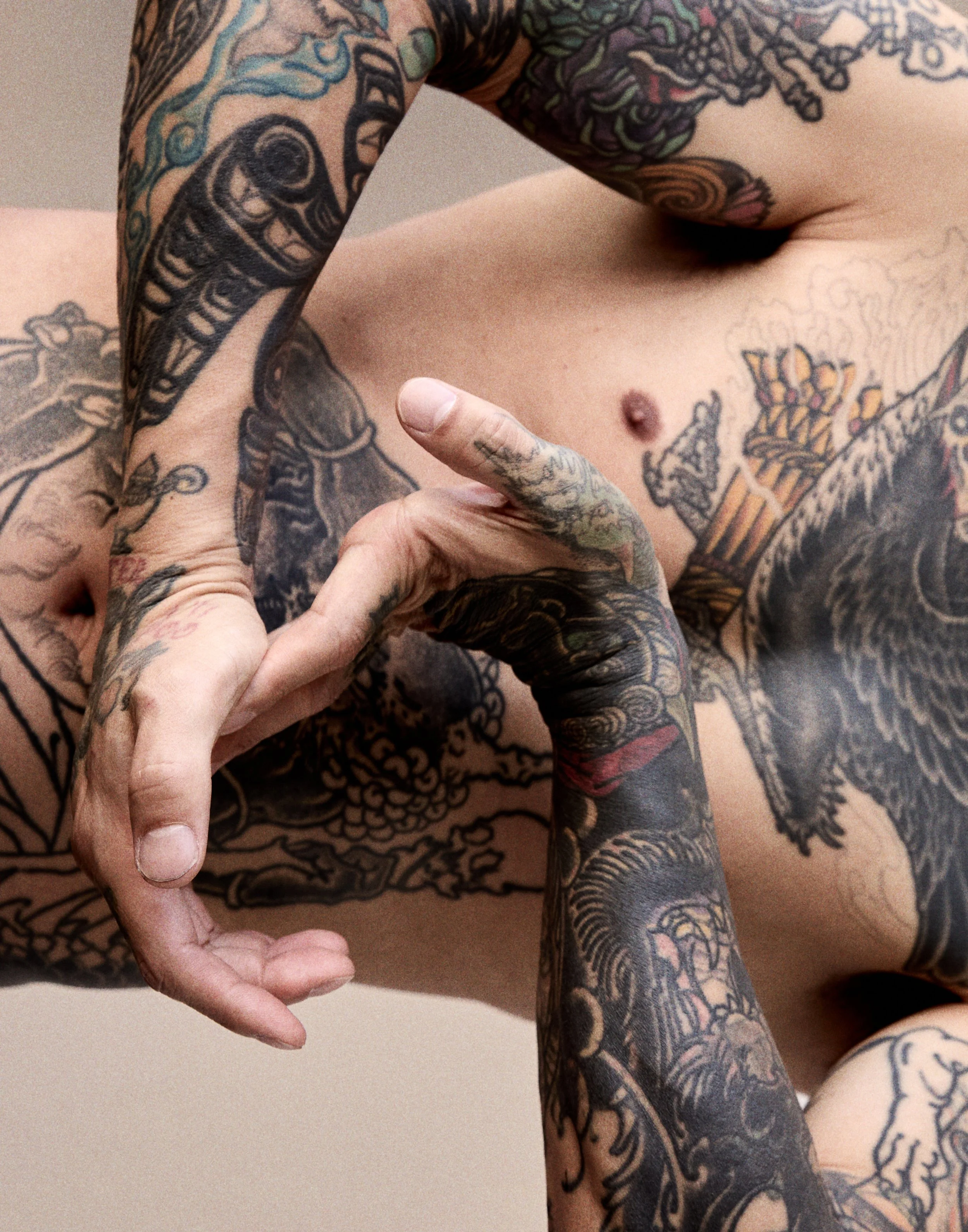
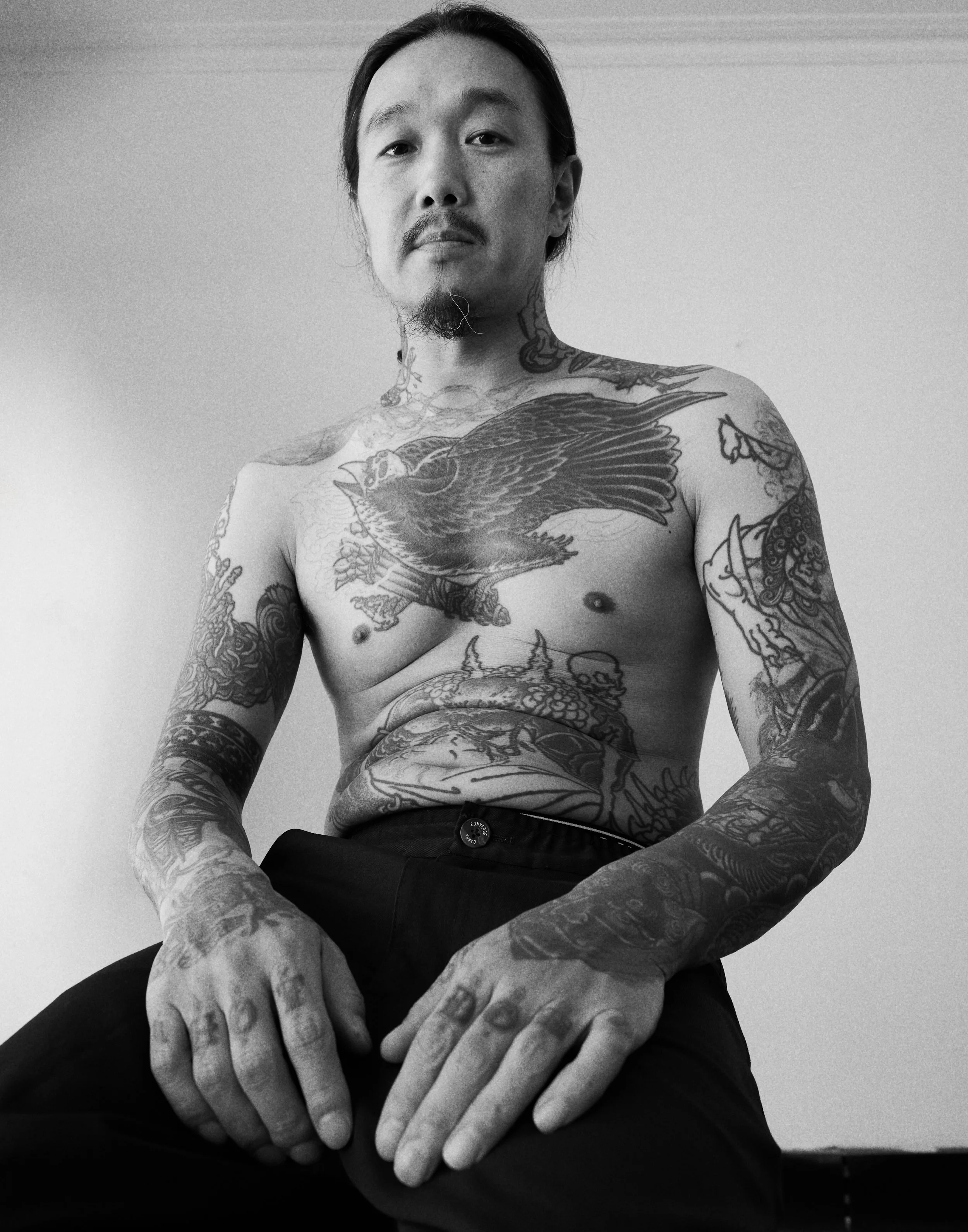
A three-time finalist in the Archibald Prize, Honjo is known for his playful reimaginings of Japanese artistic tradition and mythology, inspired by the woodblock prints of the Edo period. Honjo’s works are created with mud pigment on kōzo washi, a paper made from the paper mulberry tree; a material so delicate that it’s unforgiving of mistakes. Yet, with a celebrated career as a tattoo artist, Honjo’s steady hand and practiced understanding of permanence make this delicacy appear uncomplicated, shaped by the principles of care and patience honed through this most intimate of art forms. Known for full-body tattoos that take years and sustained relationships with individuals to complete, as well as his contemporisation of Japanese folklore and mythic imagery, Honjo’s practice reflects ongoing conversations between past and present, the folkloric and the everyday, artist and canvas, image and body.
With his exhibition officially opening today at Nanda\Hobbs, Yoshio Honjo speaks to Lila Daly about the multiple meanings of the cat and the body as a canvas.
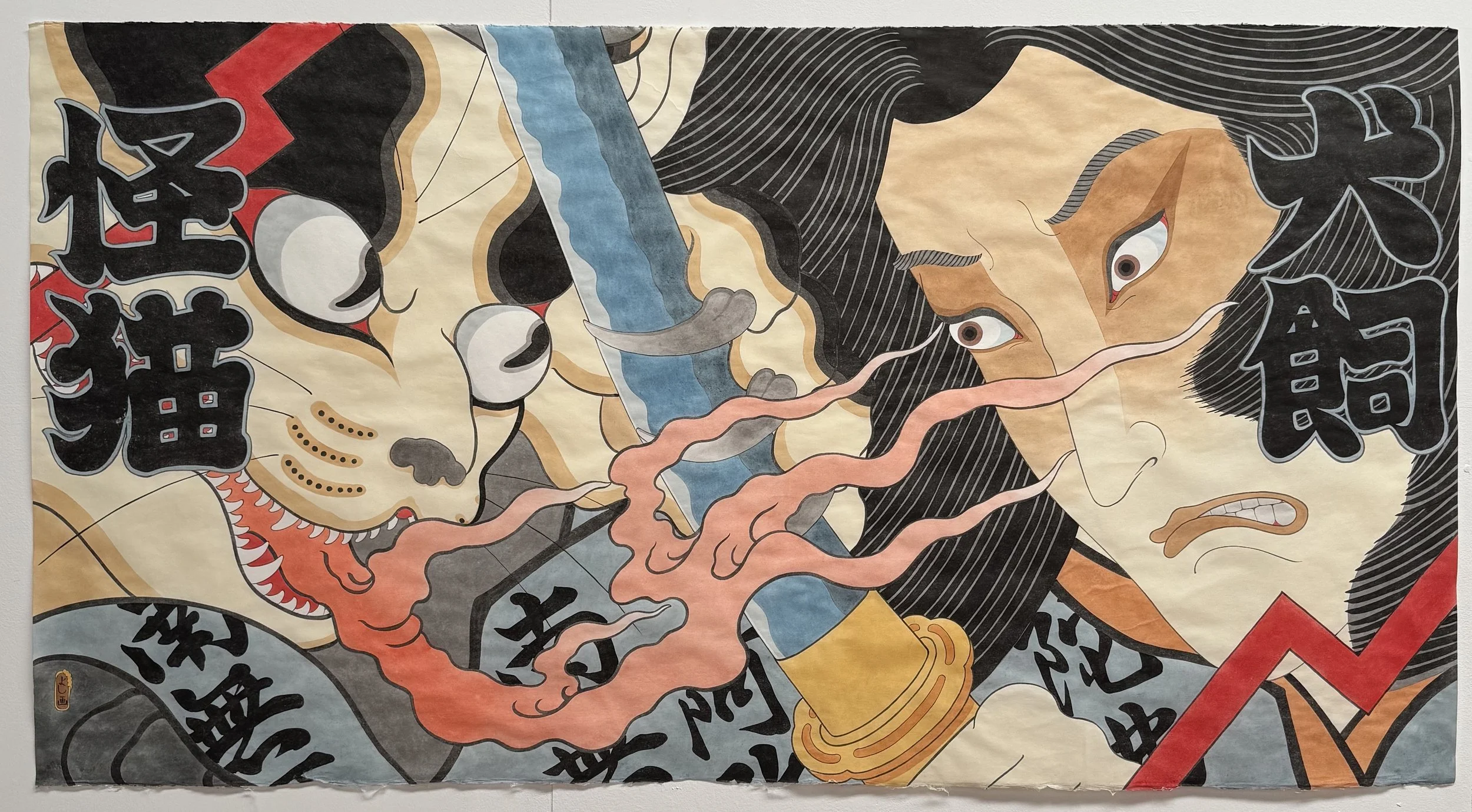
Yoshio Honjo, ‘Inukai genpachi to kaibyo, 2026. Image courtesy Nanda\Hobbs.
LILA DALY: Your exhibition at Nanda\Hobbs draws on the cat’s many lives in the Japanese cultural imagination, from folklore and mythology to Hello Kitty and the waving maneki-neko in the shop window. What led you to the cat as the focus of your latest body of work?
YOSHIO HONJO: I think there is much more to cats than just cute characters. There are many interesting stories about cats in Japanese mythology and folklore, and I have always liked cats myself. The old master Utagawa Kuniyoshi was also famous for his love of cats. I became interested in bringing these things together and exploring the different ways cats appear in Japanese culture. So I thought, why not make a whole series of cat paintings for my exhibition?
LD: The mythic and folkloric presence of cats can also be seen across cultures, histories and artistic traditions. What do you think it is about this creature that continues to interest artists? Have these stories captured you since you were young?
YH: Actually, when I was younger I was not so interested in ukiyo-e or traditional Japanese stories. My interest developed later, when I started doing more Japanese-style tattoos. Through this work, I began to look more closely at Japanese history, folklore and traditional imagery. I became fascinated by the stories behind the images, and how much meaning they can have. Cats are especially interesting because they can be cute and familiar, but they can also be mysterious or even frightening. There are so many different ways to interpret them.
LD: On tradition, you paint with suihi enogu (mud pigments) on traditional kōzo washi paper. What do you like about working with these materials?
YH: I like to keep traditional methods where possible, and I prefer to use handmade paper. My paintings are based on Japanese stories and culture, so it feels right to use materials that also have a connection to that tradition. I have a lot of respect for the people who continue to make these materials by hand. It is important to me to support their work and keep these traditions alive. I also like that traditional materials have their own character, and that the way they behave becomes part of the painting.
LD: You’re also a tattoo artist, a practice that requires specific forms of care, a close connection with the body, and also a sense of permanence. How do you think about permanence in your practice?
YH: When I design a tattoo, I always try to think about what will look best on the person, not just now but in the long term. A tattoo stays with someone for life, so I think carefully about the design, the placement and how it works with their body. I want to make something that they will still feel good about many years later. I think about my paintings differently in some ways, but I also want them to have a lasting quality, rather than just being something that looks good for a short time.
LD: Do you see your tattooing and painting practices as distinct from one another, or is that a distinction you feel that others place on your work?
YH: For me, they are basically the same thing, just with a different canvas. I use many of the same ideas and approaches in both practices, and I enjoy working with Japanese imagery in both ways. Of course, tattooing has to work with the person's body, while a painting has its own space and possibilities. I understand that people see them as different things, but in my mind, they are closely connected.
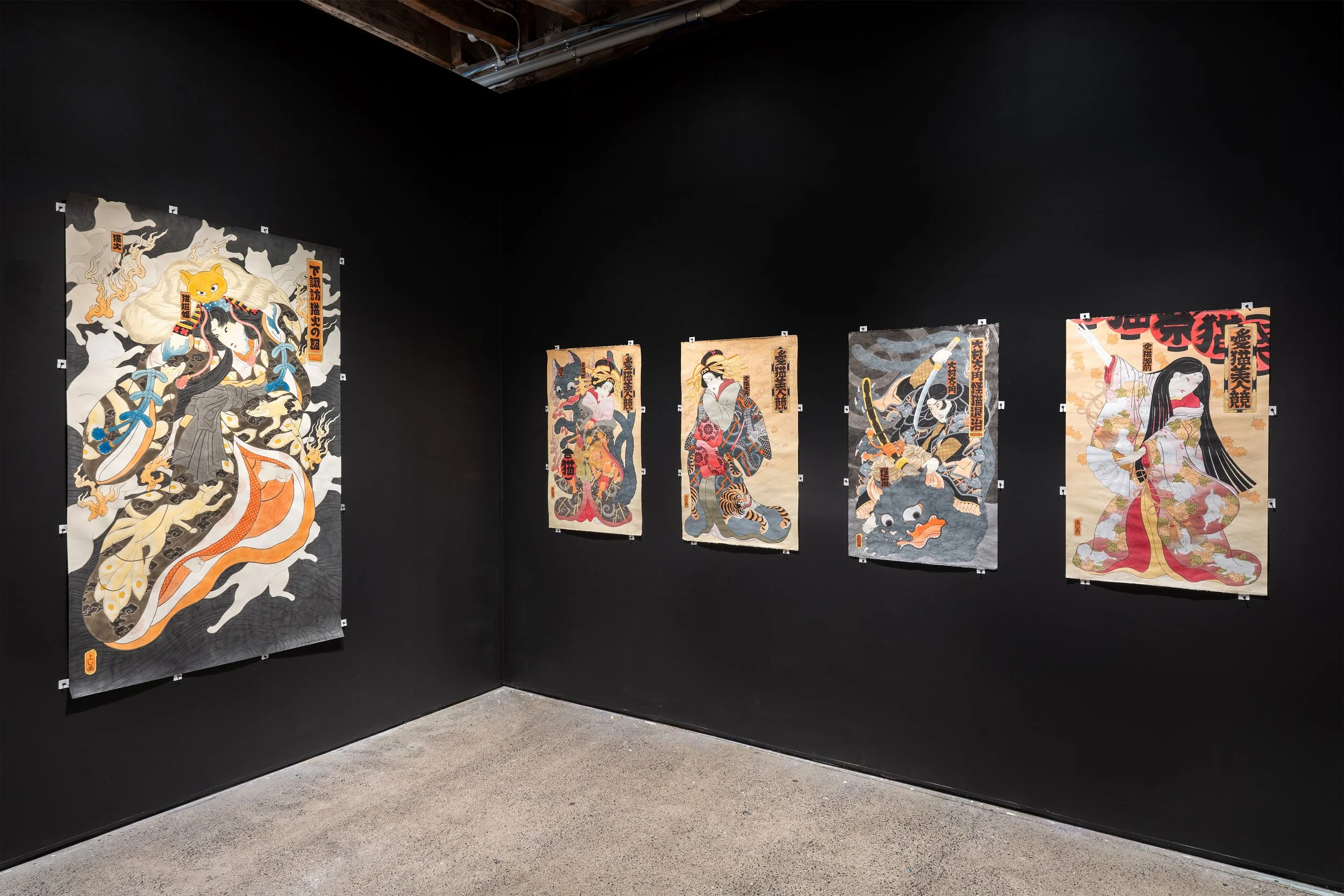
Maneki-Neko, installation view, 2026. Image courtesy Nanda\Hobbs.
LD: Tattooing is also a collaborative process, shaped by the person you’re working with, their body, and their own histories, while your paintings enter into a rich dialogue with history, folklore, and the artistic tradition of Edo woodblock printing. How do you think about different forms of collaboration across your practice?
YH: In the past, I usually worked more closely with what my customers wanted, and then added my own ideas to the design. These days, many customers come to me because they already know my style and trust my work. They might give me a subject or an idea, and then allow me more freedom to develop the design. I really enjoy this way of working because it gives me the chance to bring my own ideas into the project. I feel very lucky to have customers who trust me in this way. With my paintings, I have more freedom from the beginning, but I still think about how people will connect with the work and what they might see in it.
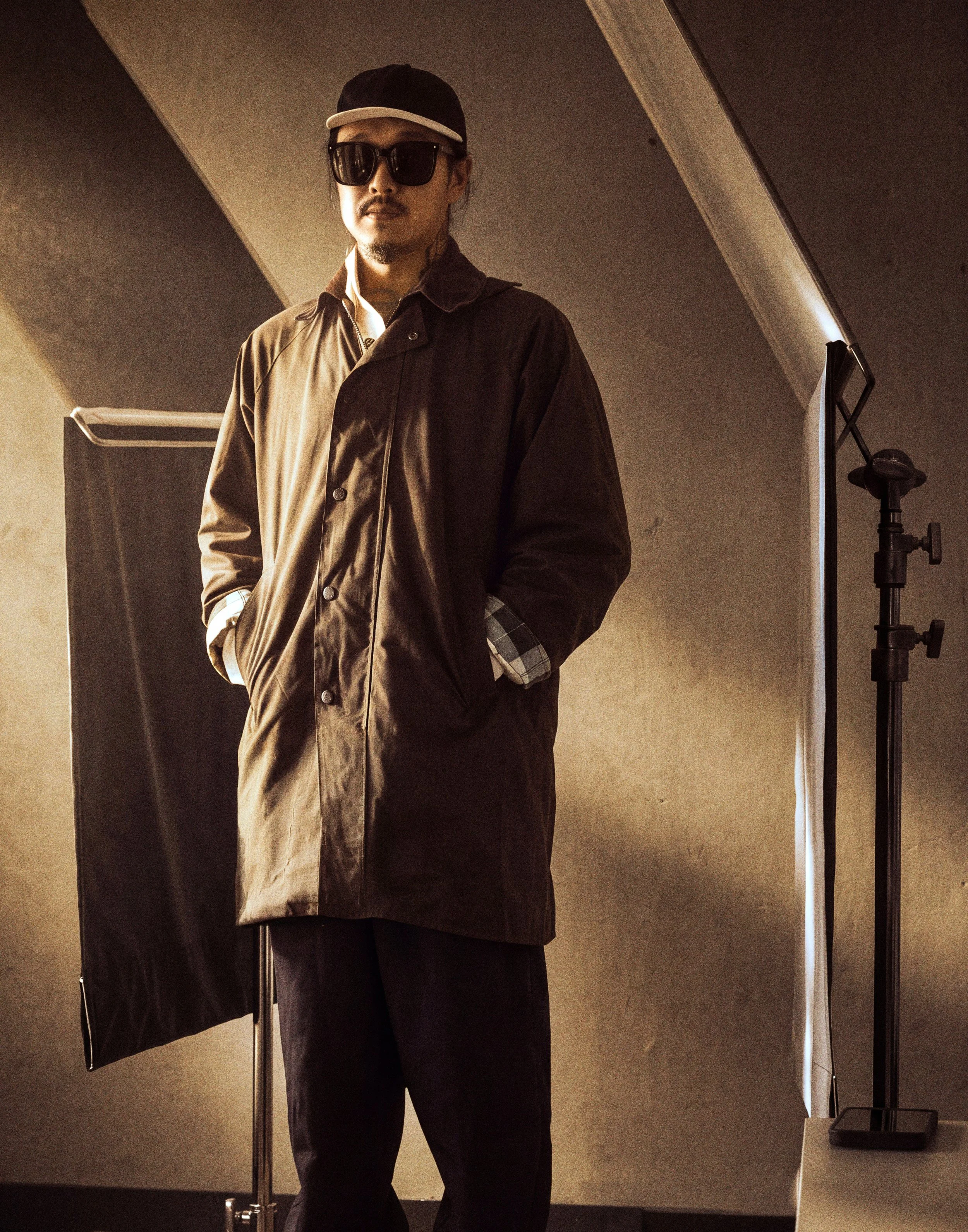
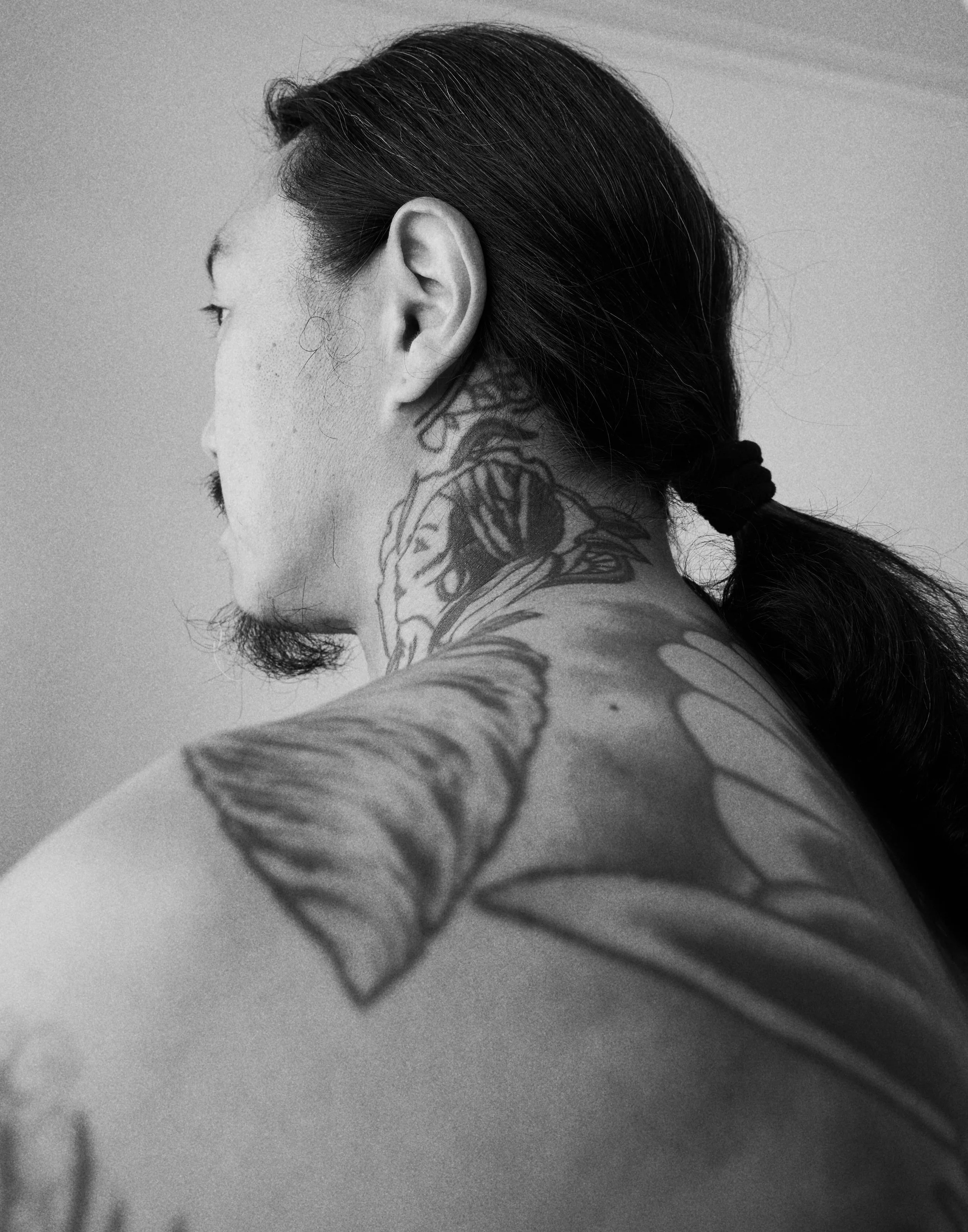
LD: Your work also often brings historical and folkloric imagery into dialogue with the contemporary and everyday — and traditional and mass culture — from these mythic cats to geisha rocking Louis Vuitton and eating pepperoni pizza. What do you like about making connections between these worlds?
YH: Sometimes I like to imagine what people from the past would be doing if they were living today. What would a geisha do today? Maybe she would use an iPhone, listen to music with headphones, carry a designer bag or collect toys. I enjoy imagining these situations because they bring history into our modern lives in a funny and unexpected way. I also like the contrast between traditional Japanese imagery and modern popular culture. It gives me a chance to play with the image and make people look at it differently. For me, it is interesting to imagine how these characters might live today, while keeping something of their original identity.
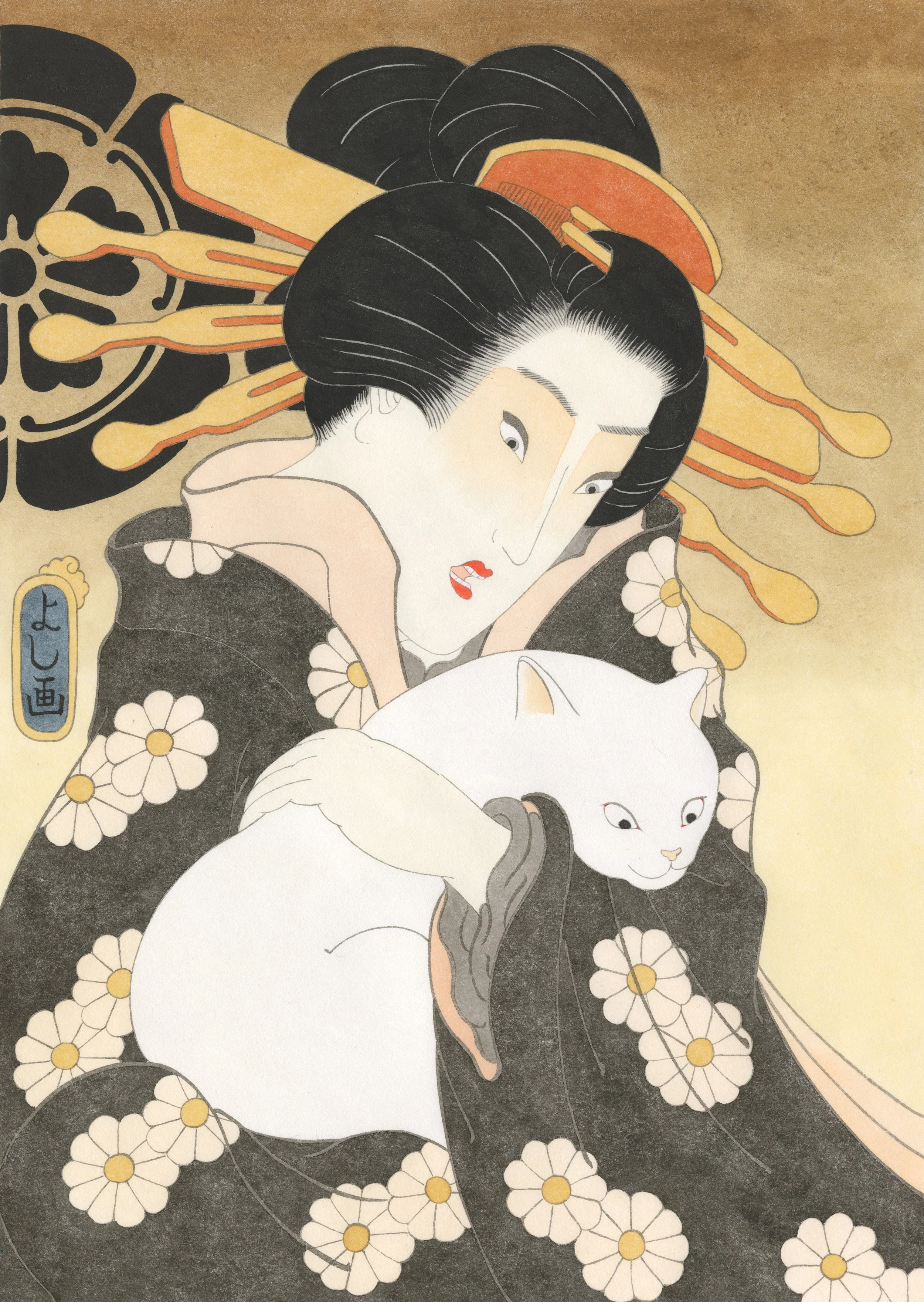
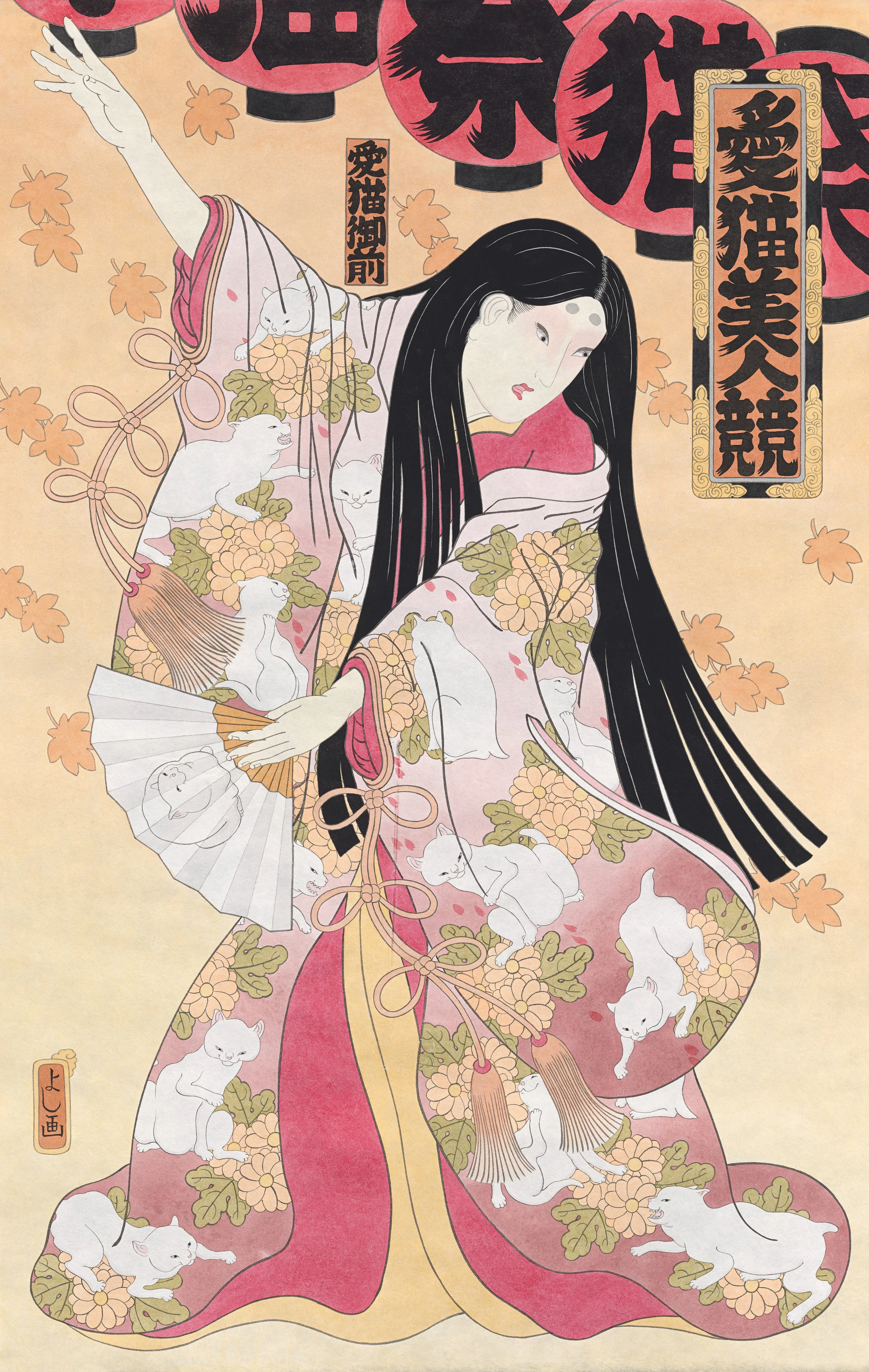
Yoshio Honjo’s Maneki-Neko is exhibiting at Nanda\Hobbs until 31st October.