
A Room of Our Own: Australian Fashion Rooms in Paris
Words by Emmanuel Hakizimana
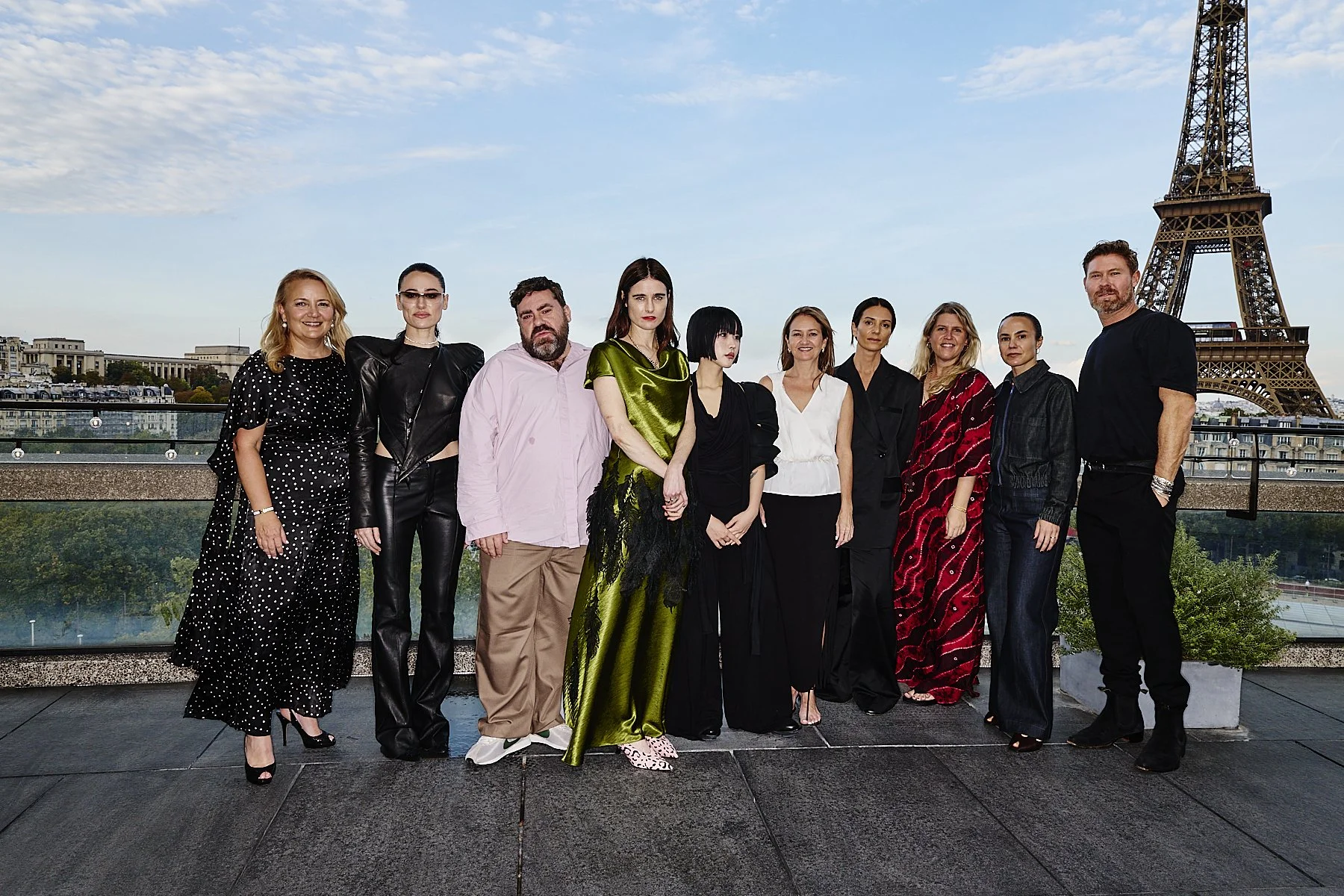
Photograph by Sonny Vandelvelde.
The global stage gets a glimpse of the diverse design languages, practices, and undeniable individualism within the identities of designers shaping the Australian fashion landscape. Twelve Australian designers took on Paris Fashion Week Spring/Summer 2027, facilitated by the Australian Fashion Council’s Fashion Rooms and Gateways program, to quote AFC Executive Chair Marianne Perkovic; “… turn[ing] [Australian] talent into commercial opportunities”.
Designers participated in over 200 appointments with pristine retailers such as Harrods and Galeries Lafayette at the debut Australian Fashion Rooms showroom at Galerie Jérôme Poggi.
In conversation with four of the twelve Australian designers — HALUMINOUS, ILIO NEMA, Romance Was Born and Caroline Reznik — Emmanuel Hakizimana explores their experiences of bringing Australian fashion to the global stage in Paris.
HALUMINOUS
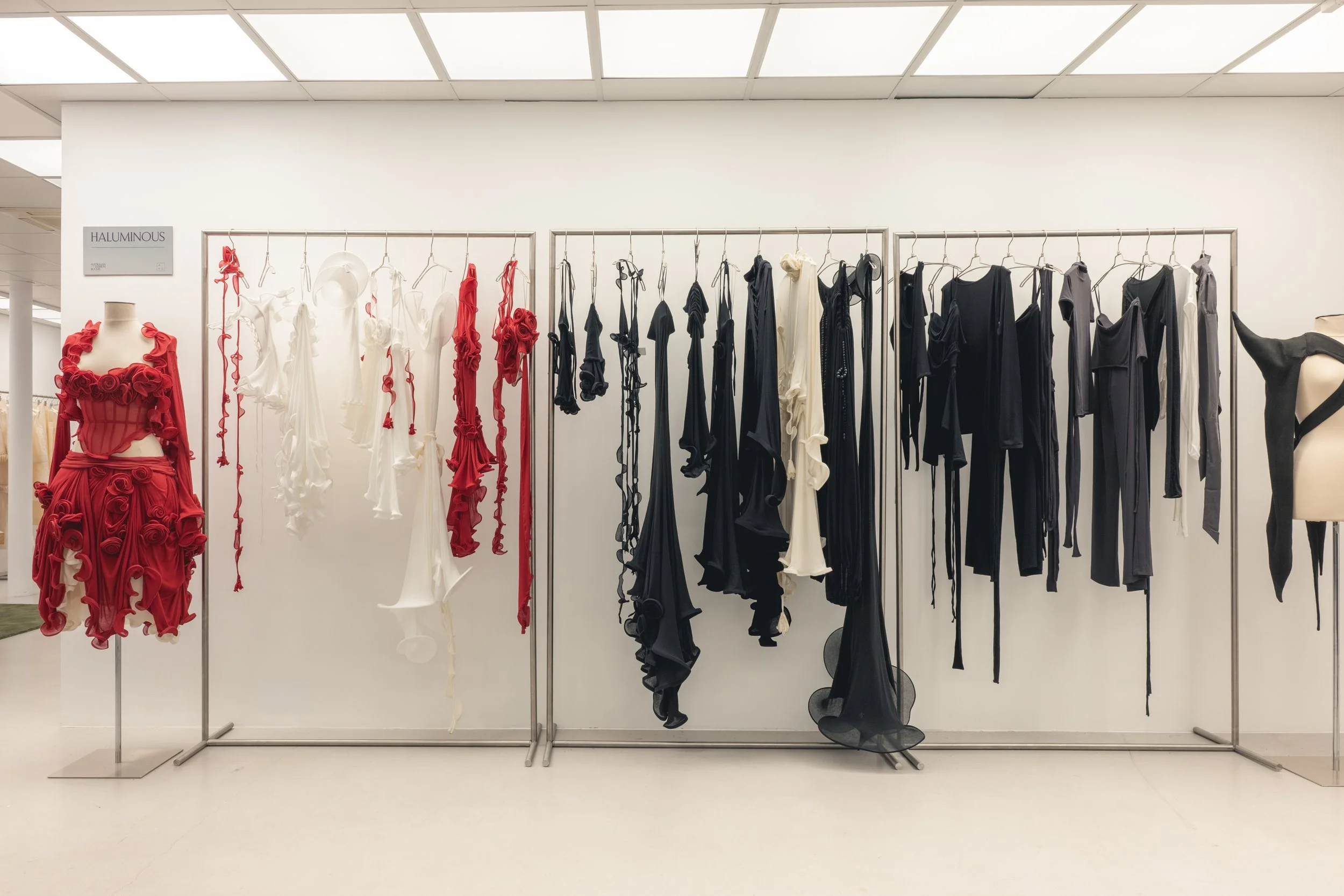
Photograph by Mia Rankin.
HALUMINOUS was founded by Hannah Teresa Kim, a Korean-Australian designer challenging and reframing what is understood as resortwear. Influenced by her formative years, Haluminous presents ideals of dark romance, ease, fantasy and sensuality.
EMMANUEL HAKIZIMANA: What ideas and perspectives do you think Australian designers bring forth to the global stage?
HANNAH TERESA KIM: I think Australian designers bring a sense of ease, especially within resortwear. We’re really lucky with the lifestyle we have and how close we are to nature. That influences how we dress, but also how we want clothes to feel. For me, even when a piece looks dramatic or fantastical, I still want it to feel soft and easy to wear. That’s something I want to bring to the global stage through HALUMINOUS.
EH: And are there any stereotypes around Australian fashion and design, particularly within the perimeters of resortwear, that you find restrictive?
HTK: I don’t necessarily find them restrictive, but I think people often associate Australian resortwear with prints, florals and relaxed dressing. With HALUMINOUS, I’m interested in bringing something more provocative, edgy and romantic to that space. I love the ease of resortwear, but I also want that feeling of fantasy, expressed through shape and the way the fabric moves on the body.
EH: How has your experience as an Asian-Australian designer within the Australian cultural and the social landscape influenced your design language?
HTK: As a Korean-Australian, K-pop was definitely an influence growing up, but books were a big part of it too. When I first came to Australia at 10, I practically lived in the Korean language section of my local library. I read almost everything they had in Korean, from fiction set in Egypt to Japanese fiction and children’s fantasy picture books.
I think I internalised a lot of those stories. The slower pace of life in Australia gave me time to read and imagine, and living close to nature was a big part of that too. Together, those experiences shaped quite a romantic, fantastical way of seeing things.
That comes through in HALUMINOUS in the shapes and the feeling I want the clothes to have. There’s an element of escape, but also that softness and ease that feels connected to my life in Australia.
EH: How do you think that the introduction to global markets can contribute to the design ethos of HALUMINOUS?
HTK: Travelling, meeting buyers in showrooms and even in bars, and visiting shops around the world has helped me see HALUMINOUS in a broader context. I’m not sure it has changed the way I design yet, but it has made me believe more strongly in the fantastical resortwear we’re creating.
Seeing what’s out there made me feel that we have something different to offer, particularly in what we’re doing with jersey. It has also made me think about how to introduce the clothes to people discovering us for the first time, so they can understand the ease of wearing them as well as the more dramatic shapes.
It might take time for people to discover the brand and connect with it, but I came away with more belief in the design language of HALUMINOUS and a desire to keep developing it.
ILIO NEMA
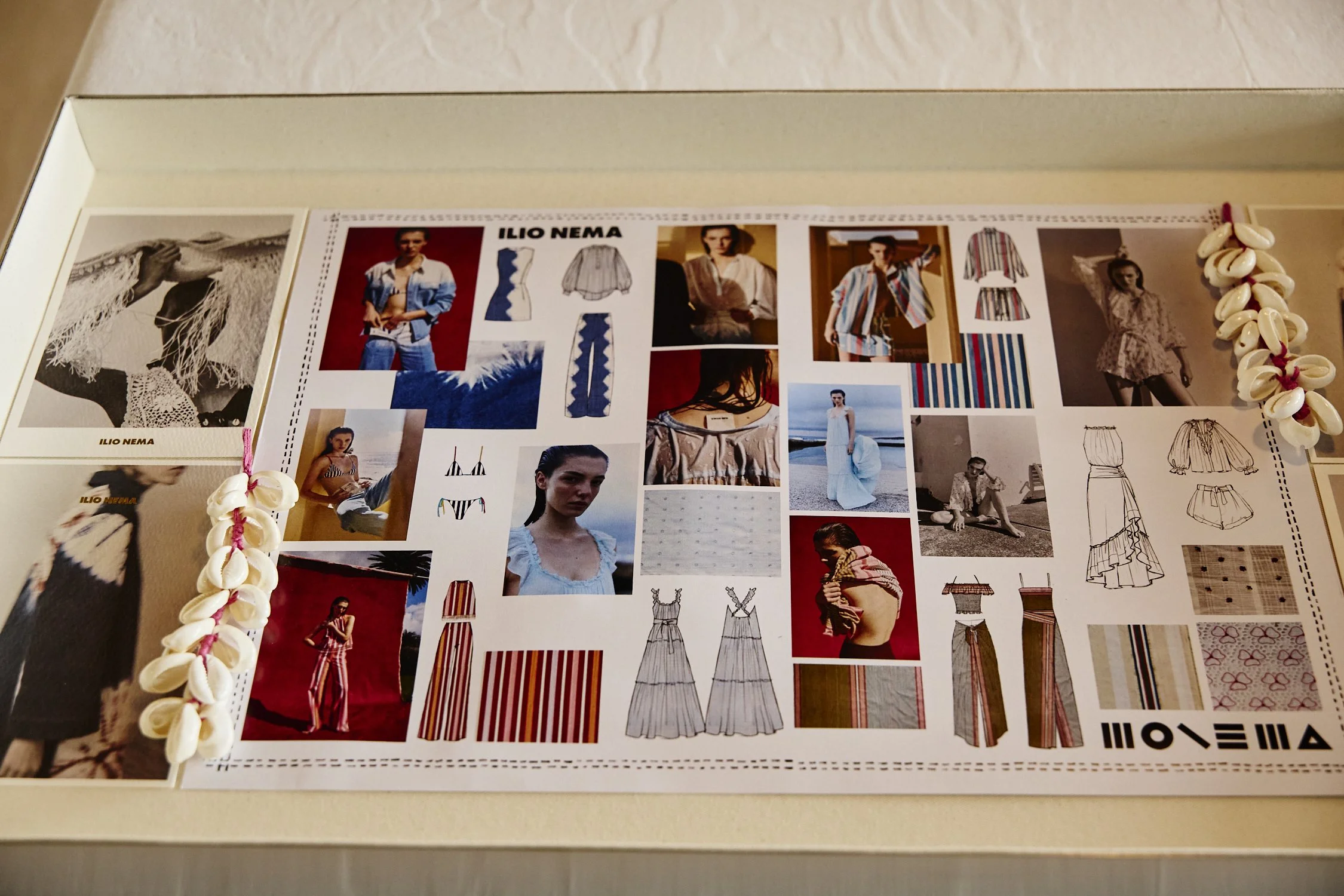
Photograph by Sonny Vandelvelde.
ILIO NEMA, founded by Ariane Leondaridis and Katia Kelso, builds a world where contemporary womenswear orbits a fundamental consideration for responsible fabric sourcing and sustainable practices, enriching the symbiotic relationships within their artisanal communities.
EMMANUEL HAKIZIMANA: There’s a very clear ethical, environmental and responsible consideration for sustainability with your brand. How do you feel the support from programs such as the AFC Rooms can provide a positive chain reaction for the global fashion industry?
ARIANE LEONDARIDIS & KATIA KELSO: [We are] a contemporary womenswear label built around an intuitive relationship between textile, maker and design. We bring a modern point of view to generations of textile knowledge, working closely with specialist artisans across handweaving, crochet, dyeing, embroidery and other traditional techniques. We focus heavily on artisanal crafts at ILIO NEMA because we are passionate about textiles.
Everything begins with the textile. We work predominantly with natural fibres including cotton, linen, wool and silk, alongside responsibly sourced FSC-certified viscose where appropriate, and avoid toxic dyes. Its weight, texture, colour and method of making establish the starting point for each collection. Ideas, paintings and drawings are exchanged with our weavers, dyers and embroiderers, then interpreted through their particular skills. Handwoven stripes, crochet, tie-dye and shibori, embroidered cotton voile and experimental denim recur as part of the ILIO NEMA vocabulary, evolving from season to season. The material doesn’t simply execute the design. It helps determine it.
From there, silhouette and attitude emerge through contrast: modern against heritage, feminine against masculine, soft against strong. Romantic pieces are given structure; bolder ideas are softened through colour, transparency and handwork. It is an intuitive process that allows the character of the handmade to remain visible while placing it firmly within a contemporary wardrobe. Craft without nostalgia. Clothes designed beyond the season.
EH: Why is the preservation of unique craftmanship, hand-craft practices and traditional techniques such handlooms, shibori techniques, block printing, beading and basket weaving so integral to ILIO NEMA’s DNA?
AL & KK: Handcraft is fundamental to ILIO NEMA. We work with artisan communities whose knowledge of weaving, dyeing, embroidery, beading, block printing and basketry has been refined and passed down through generations. These techniques are not simply decorative details, but an integral part of how our collections take shape. By working directly with specialist makers, we seek to celebrate this knowledge in a contemporary context while supporting the communities that continue to practise and evolve it.
These relationships extend beyond the finished garment. Working with artisan communities supports skilled employment and rural economies, helping knowledge remain within families and communities where it can continue to be passed from one generation to the next.
We work within the natural limits of the craft and the people making it, rather than asking them to accelerate their processes to meet the demands of a fashion calendar. The maker and the method are part of the design.
ROMANCE WAS BORN
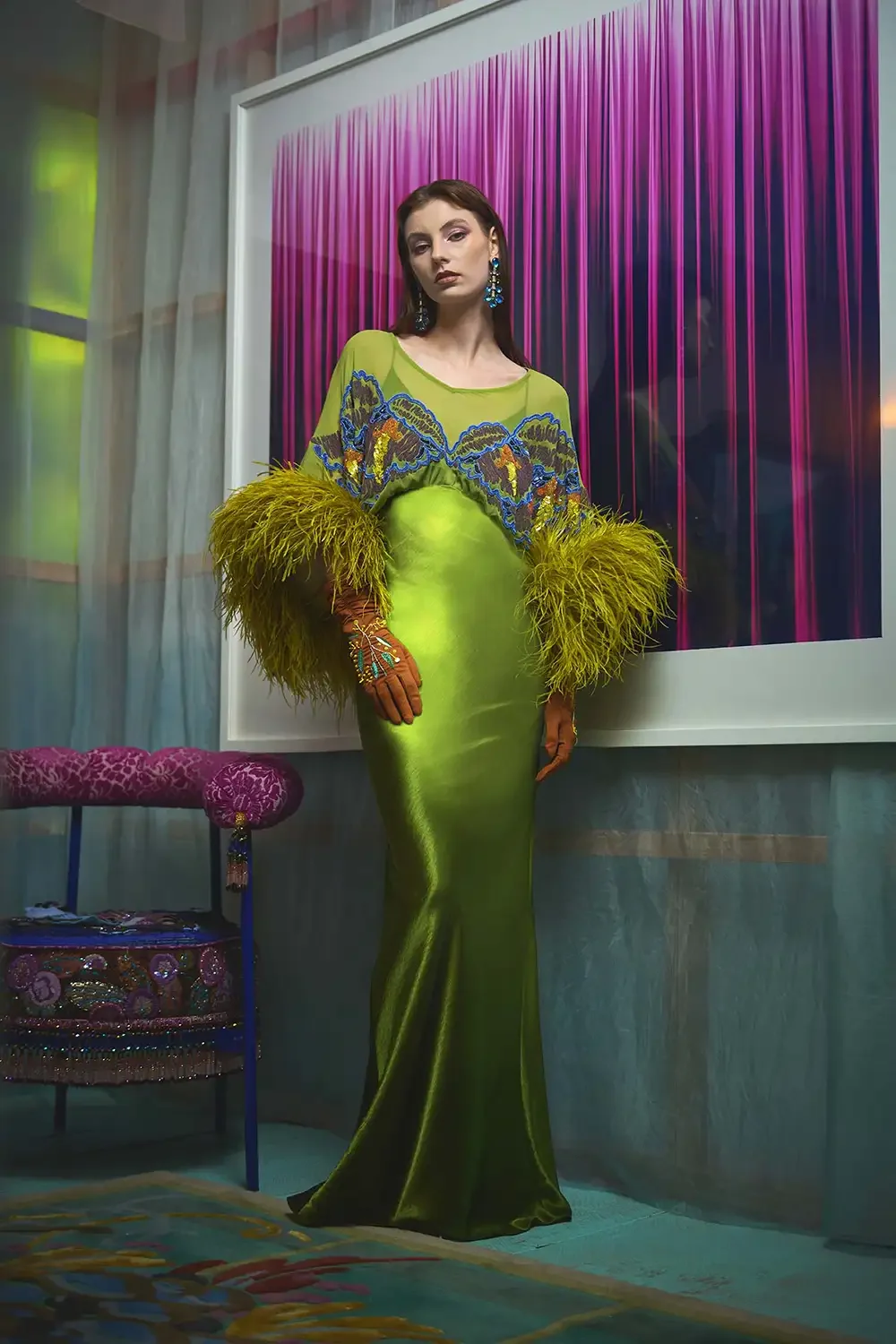
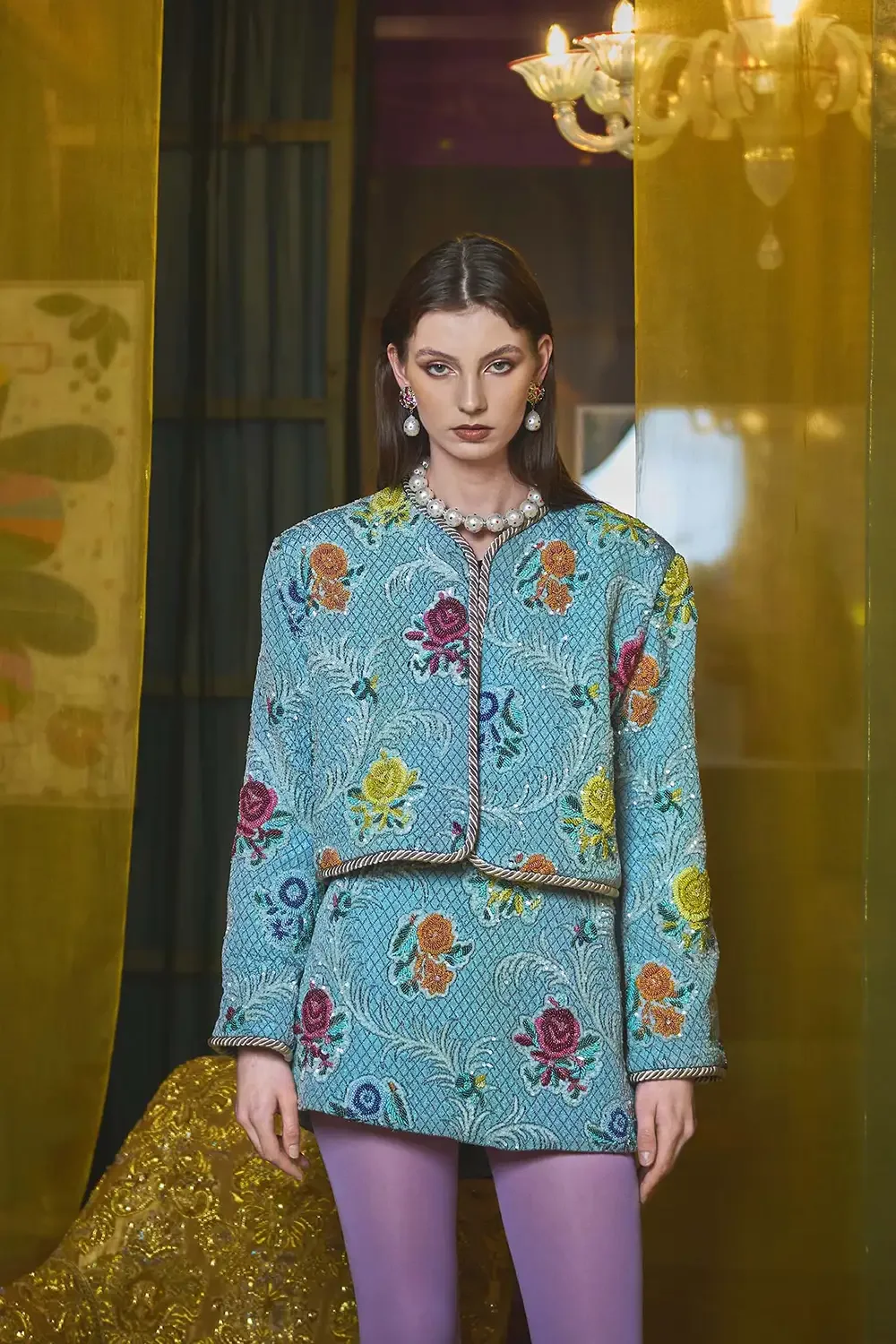
Design duo Anna Plunkett and Luke Sales of Romance Was Born bring the intersection of fashion and art to the forefront. In addition to their statement pieces, maximal designs and drive to create an immersive experience for their audience, Romance Was Born showcases the relationship which Australian designers have with art, artists, and their possibilities for belonging in artistic institutions.
EMMANUEL HAKIZIMANA: Romance Was Born has been trailblazing for over 20 years as one of Australia’s more established houses. Firstly, what new perspectives, consultations and opportunities are you most looking forward towards or have been received through the AFC’s global Gateways program?
ANNA PLUNKETT & LUKE SALES: It was an amazing opportunity to be a part of the AFC's global Gateways program because it allowed us to reconnect with the industry internationally and help us identify our position in the market. We haven't shown our collection globally since our presentation in Paris in collaboration with Jenny Kee in 2018. It's been fulfilling to show our new work this season and see how our collections have grown, developed and in a sense matured with us. We feel like we have a stronger brand DNA now than ever.
EH: Secondly, Is there anything you have learnt along the way that you would like to share with the other designers presenting as part of AFC’s Fashion rooms?
AP & LS: We feel like it's really important for designers to understand their brand DNA and where they see themselves in five years. Having the confidence to understand your positioning is really beneficial to the success of any business.
CAROLINE REZNIK
Photograph by Mia Rankin.
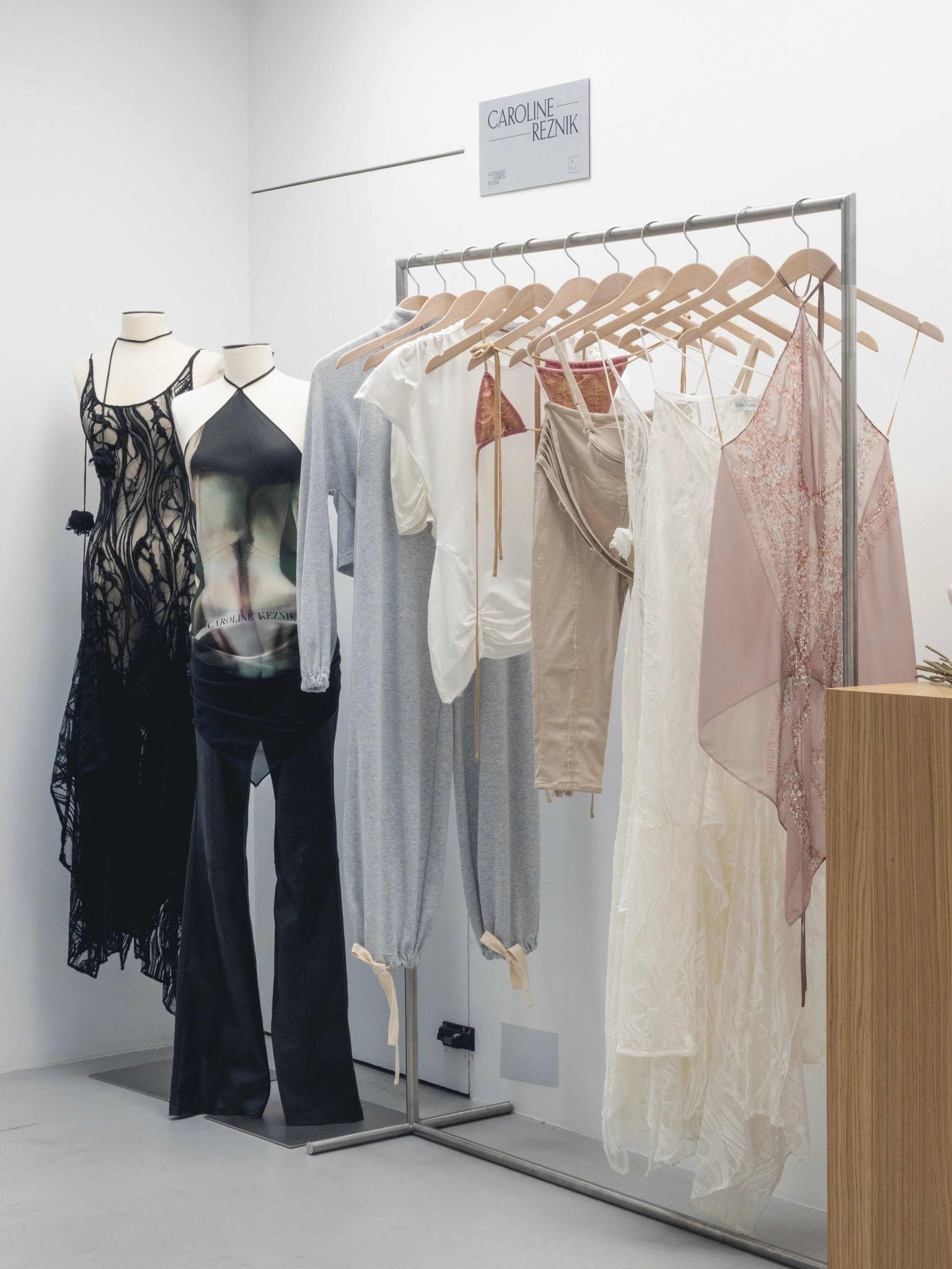
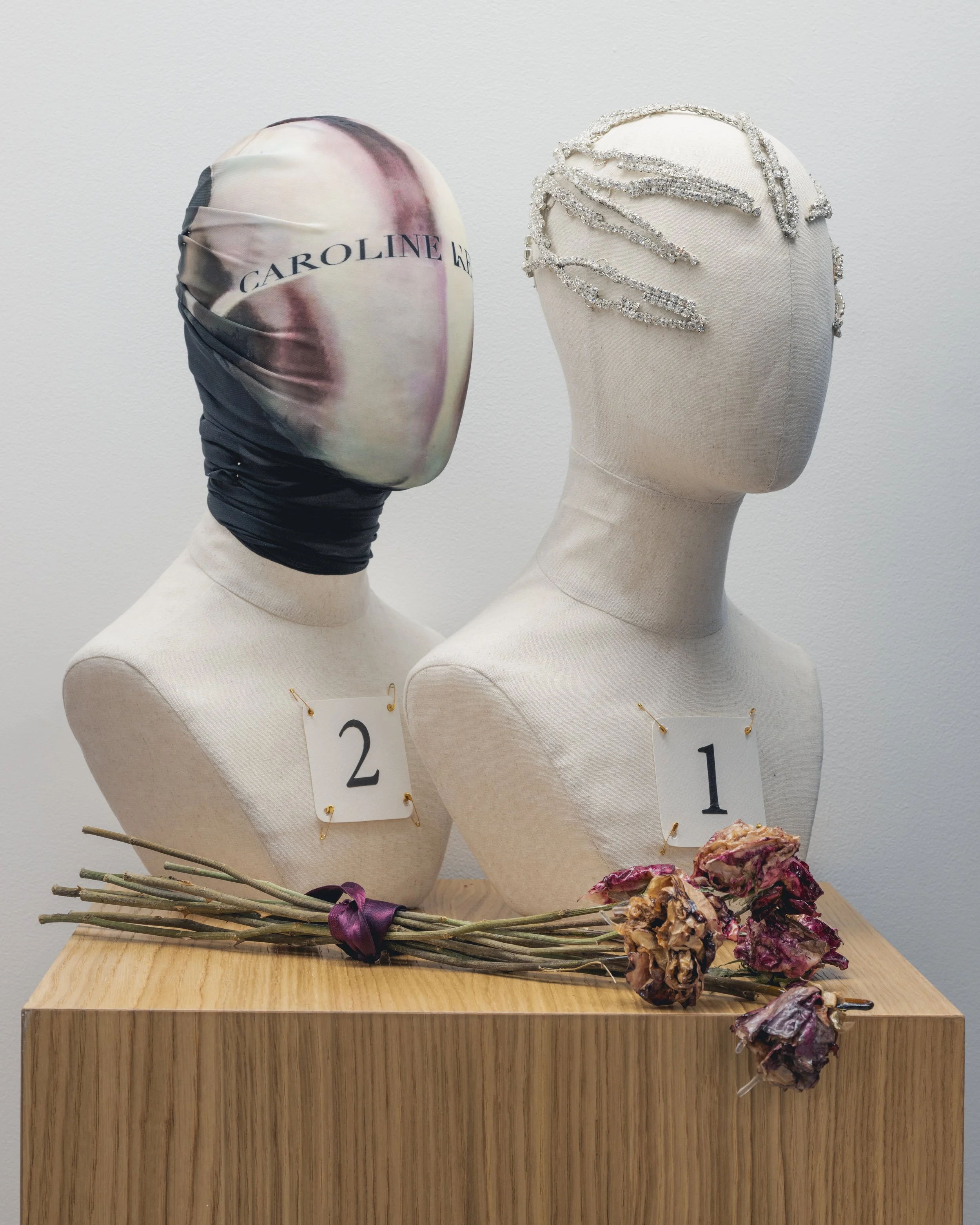
The eponymous Caroline Reznik pushes forward a refined avant-garde edge and movability, interwoven with her background in classical ballet, while maintaining a young and sensuous taste.
EMMANUEL HAKIZIMANA: As one of the youngest designers to participate in the Australian Fashion Room’s Global Initiative, What excites you the most about being involved in this cultural and commercial movement?
CAROLINE REZNIK: What excites me most is the opportunity to bring my work into a new environment, connect with people who may not have encountered my brand before, and build relationships that can shape its future. As an independent Australian designer, being able to do that in Paris, alongside designers I admire, is incredibly valuable.
EH: How have you been able to protect and retain autonomy over your brand's identity when communicating with global audiences?
CR: I think it comes back to having a clear sense of what I want the brand to be and staying true to that as it grows. My background in ballet continues to influence the way I approach design, particularly the relationship between the body, movement and the ritual of getting dressed. While the audience and context may change, I want the work to remain authentic to my perspective, rather than adapting the brand to fit expectations of a particular market.