
Out of tricks: ‘Kaput’ with Jelena Telecki
Interview by Lila Daly
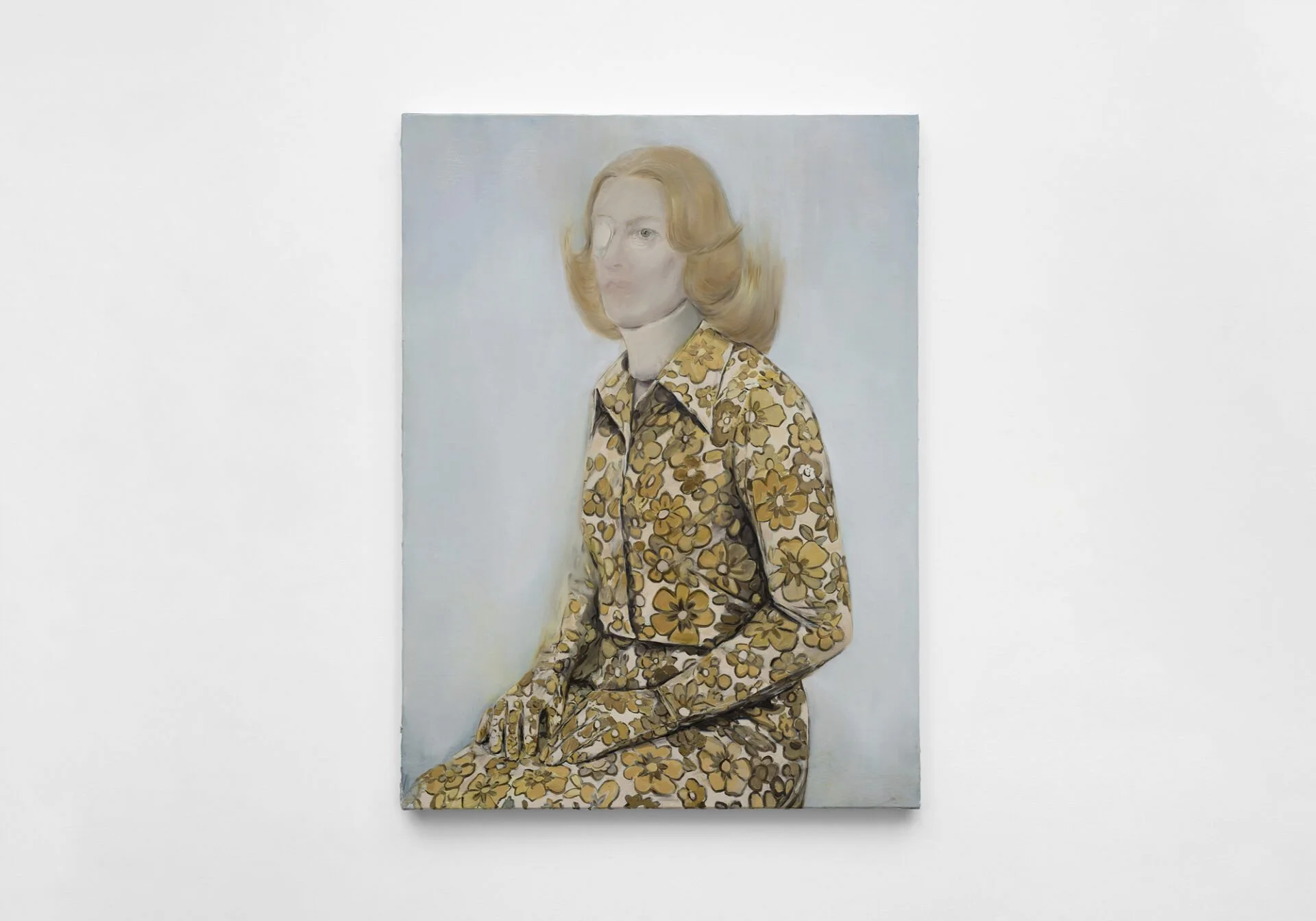
‘Brace’, 2026. Oil on canvas. Image courtesy 1301SW.
Are we at the end of painting? The end of art? For Sydney-based painter Jelena Telecki, the feeling of finality and the articulation of where things “end” can also be a site of unfolding. Telecki’s second solo show at 1301SW, Kaput, takes the end as its point of conception.
Rather than a dead end or a brick wall, Telecki’s most recent body of work emancipates the “end” from a sense of linear time and monumental narratives of progress — the end becomes embodied, experiential, where finality isn’t a stage that is reached but a state which is experienced. To be past the point of recovery, “kaput”, is itself an articulation that what we might think of as the end point can always be surpassed.
Taking its title from a common phrase from ex-Yugoslavia — where Telecki was born, having moved to Australia during the Yugoslav Wars — Kaput interrogates the experience of finality, extending her ongoing interest in representation and the intermingling of power, intimacy, violence and the absurd, framed through a rigorous research practice and in dialogue with literature and social theory.
With her masterful layering of oil paint, Telecki’s works raise the possibility that being “out of tricks” might lead to something more honest. Perhaps, like artist Dimitrije Bašičević Mangelos — one of Telecki’s influences — declared in his contrapuntal manifesto: “this is not a path, this is a dead end. No madam, on the contrary, a dead end is a path.”
Ahead of her solo exhibition at 1301SW opening on 10 October, Jelena Telecki speaks with Lila Daly about dark humour, the dyad, and the “end” of art.
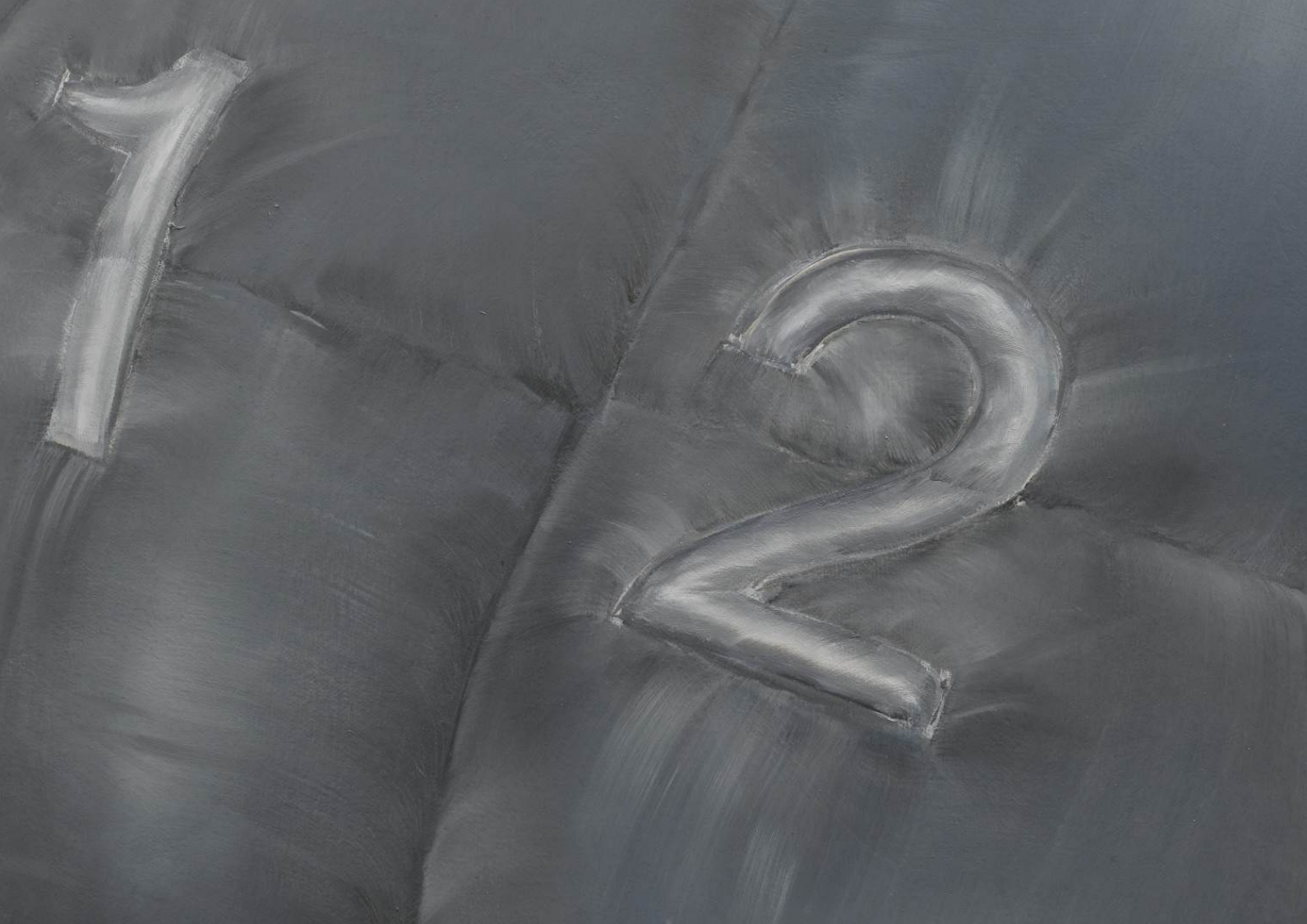
Detail: ‘0, 1, 2, 3, 4, 5 (after Mangelos)’, 2026. Oil on canvas. Image courtesy 1301SW.
LILA DALY: The title of your upcoming exhibition at 1301SW is Kaput, evoking something broken, defeated, finished or destroyed. Your works often explore ideas of failure and giving up. Why this title, and how do you think about finality in your practice?
JELENA TELECKI: Kaput is a series of work tracing the experience of being done-for: finished. So yes, it is a return to my ongoing interest in representations of failure. I have always been interested in how failure and the experience of being defeated bring forward a sense of freedom, and with it, a willingness to find new ways of articulating narratives that aren't comfortable.
The title Kaput felt most fitting as it is used frequently in my country of origin (ex-Yugoslavia), and in other European countries, when expressing a state of finality. In terms of the painting process, the etymology of kaput felt particularly relevant because it stands for “being out of tricks” — originating from piquet, a French card game where being out of tricks or done-for is called être capot. From there, the word was integrated into German (kaputt) and English (kaput).
The finality this word implies became a space for investigating why this state is experienced, what it offers, and how I can communicate it in the work. Rather than resisting it, or even worse — becoming sentimental, I embraced it for its potential to reveal how finality unfolds in my work and research. This led me to learn more about artists like Dimitrije Bašičević Mangelos, who spent most of his life making work about “the end” of art.
LD: Can you tell us a bit about your process, and how a new painting comes to be?
JT: The process starts with observing and recognising something external that bears relevance to the internal (and vice versa). Once I identify what I need to understand (or come closer to), I start drafting “scenarios” that might capture what I wish to communicate.
Many changes occur once I start painting; I like to keep the process open and allow the initial idea to shift if the painting leads me in a different direction. Research is an important part of this process as well. In this series, for instance, my interest in what felt like an endpoint led me to artists proclaimed to be at the end of painting and art.
LD: Your work engages with both personal and collective histories, including your own relationship to former Yugoslavia. At the same time, you’ve been open about resisting readings of your work that position it within a lens of intergenerational trauma or a broader Balkan diasporic experience. Why is this?
To frame the work — and how I communicate it verbally — solely through that specific part of my life has always felt too reductive, both in terms of how I develop my visual language and how the work can be read. It has always been far more interesting to me to make work that allows for multiple readings and entry points for how it can be understood and related to.
While my life and identity were unquestionably informed by the trauma many of us in former Yugoslavia experienced, my life and experiences here in Australia are equally important. Resisting an overfocus on capturing culturally specific themes in my work has created space for narratives that are more universal.
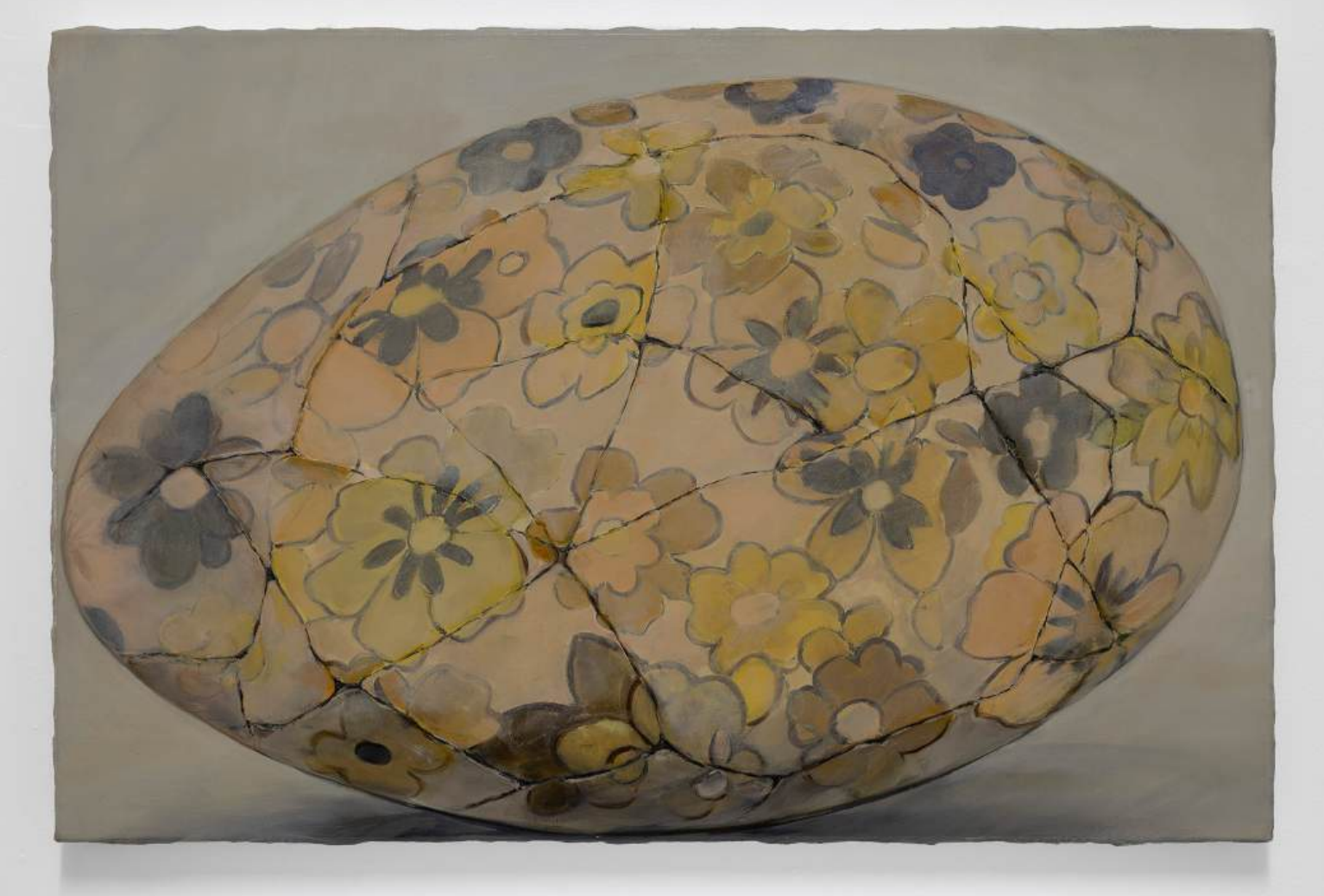
‘Crack’, 2026. Oil on canvas. Image courtesy 1301SW.
LD: What are some of your influences or inspirations outside of the art world?
JT: My family and friends, films, books, social sciences, and psychology. I am very fortunate to have grown up in a family that is wickedly funny, with a deep appreciation for the absurd. Dark humour was central to surviving misfortune — this is something I share with many people from the region, and which is captured in our cinema and literature (Yugoslav Black Wave films come to mind, as well as books by authors like Srđan Valjarević, Kristian Novak, and Damir Karakaš).
Having studied social sciences and psychology, being able to take a wider view of how we exist as individuals and as a society continues to fascinate me.
LD: Have you always been interested in these different kinds of relations, these power dynamics and their representation?
JT: While representations of power make up a large part of my work, there are other themes and narratives I have been drawn to for a long time: the absurd being perhaps the earliest interest I was keen to explore in my practice.
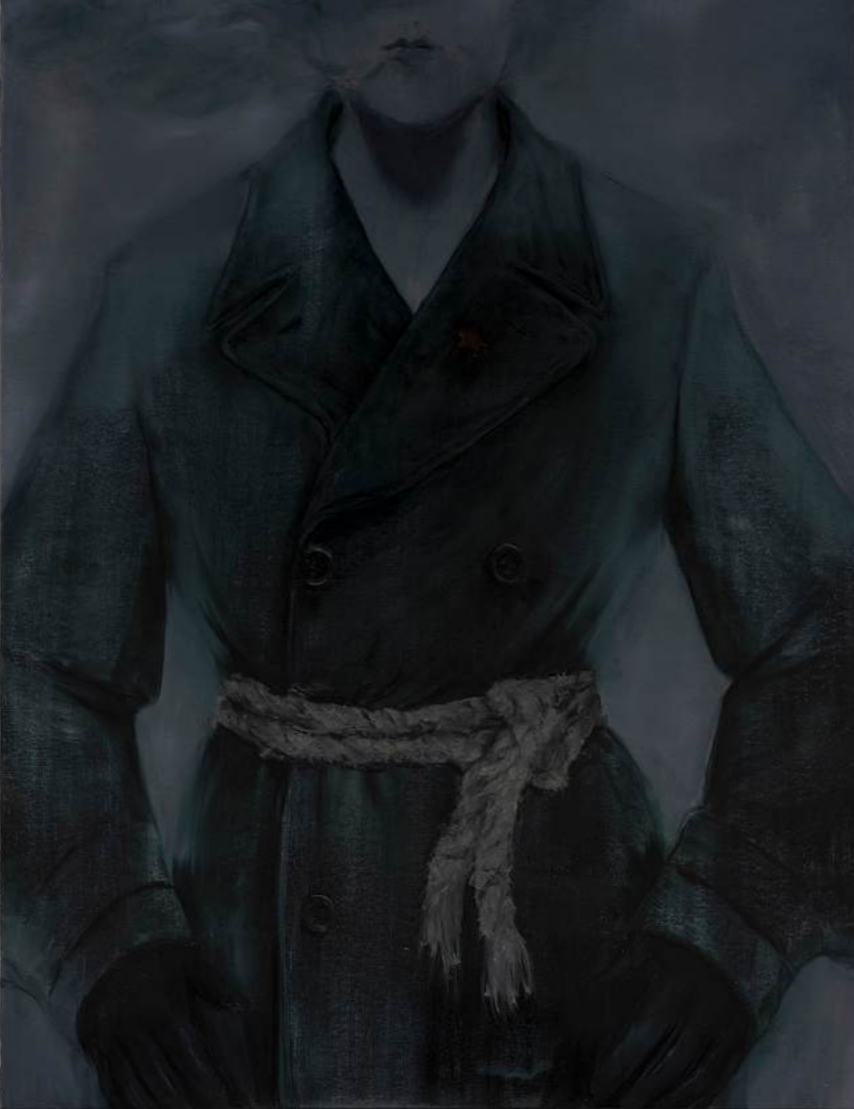
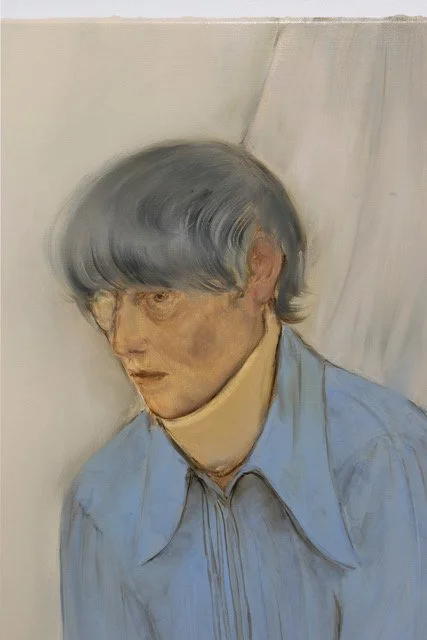
LD: Alongside the absurd, forms of doubling and dyadic relationships are significant themes in your practice — from the interplay of two bodies, serial depiction and the spectral, to the inversion of power relations, the personal and the collective, and the artist versus their artist persona. Why are you drawn to the motif of the double?
JT: In 2020, I became interested in Georg Simmel’s understanding of the dyad as the smallest, most fragile social group, one that is inherently vulnerable to exclusion by the loss of a single member. From there, I continued to explore how painting can articulate the nuances synonymous with the avoidance or fear of that exclusion.
Representations of dyads capture the perhaps depressing assertion that our mutual dependency leaves us no choice but to engage in communication and exchange. While some of these interactions can be unpleasant, they are also deeply revealing of hidden social dynamics that I find captivating when articulated visually.
LD: Your paintings also seem to capture moments where one thing can become another — utopia becomes dystopia, desire becomes humiliation, failure becomes possibility. In some works, the viewer can’t tell if the disembodied feet are in a moment of tripping or dancing, or in Leak, stepping in versus out of the mud. What interests you about representing these kinds of moments?
JT: I am interested in ambiguity and multiple readings within a work. I dislike literal or overly descriptive representation; anything that is too clear in what it communicates loses my interest. After all, almost everything can be unpacked from different standpoints. That openness is precisely what gives a painting the potential to be both formally and conceptually engaging.
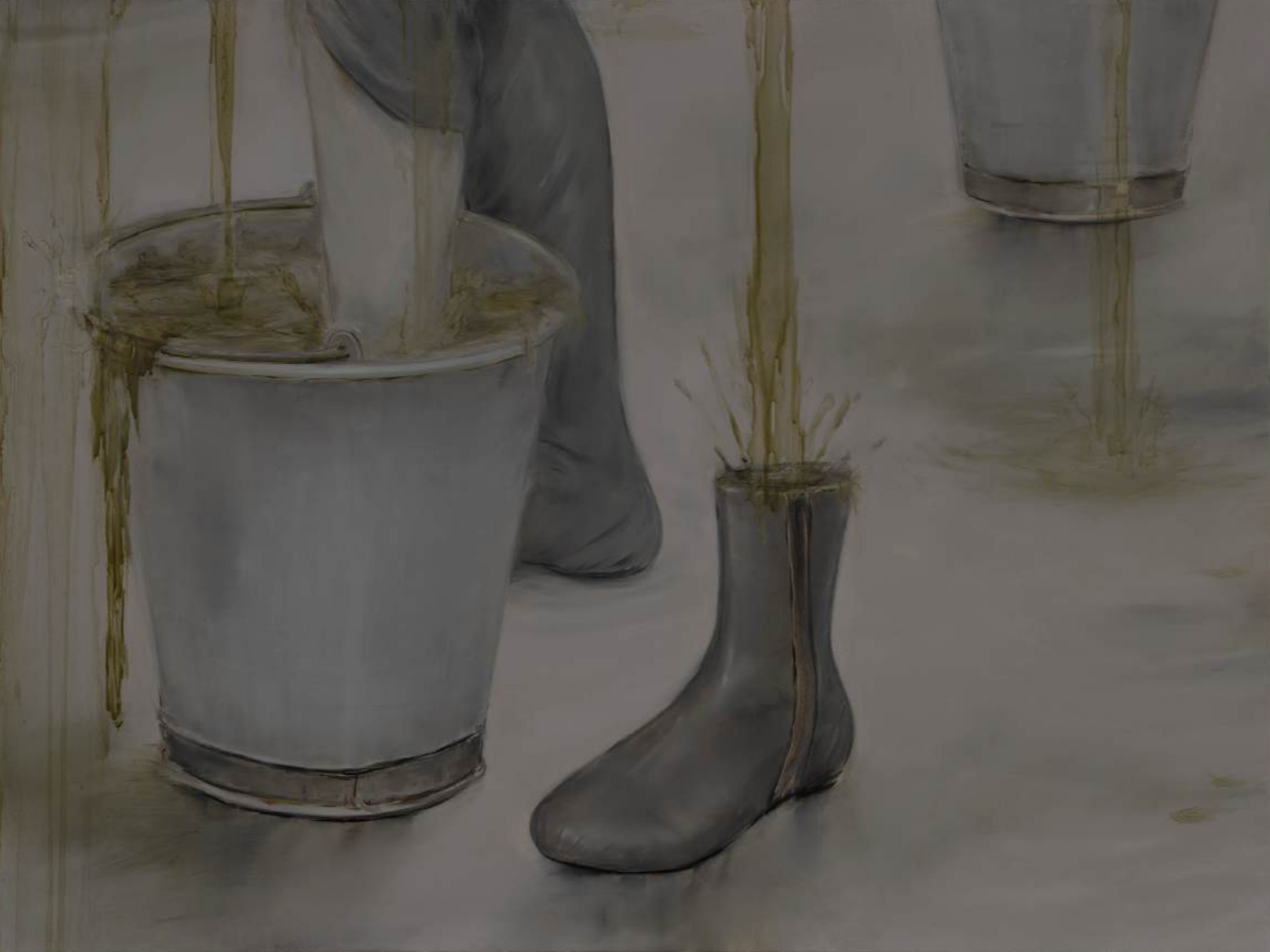
Leak, 2026. Oil on canvas. Image courtesy 1301SW.
LD: I’m particularly drawn to your stockinged legs and pointy shoes. Thinking about your interest in the social sciences, Jacques Derrida discussed how a painting of a shoe invites you to consider who the shoe is detached from, and to imagine the person who wears it. In this way, it makes you forget that you’re looking at a painting, rather than a shoe that belongs to someone. Why the shoe, in your view?
JT: For me, depicting only a shoe removes the specificity of the person wearing it and points to something more interesting than imagining a “missing” person: a situation, what is being performed, or what we project with what we wear (intentionally or unintentionally). It can also simply be that I am drawn to the beauty of a shoe as an object.
Initially, when I started cropping bodies and faces out of my work, I wanted to capture how we see things as young children: adults were only visible up to their waists, so our understanding of who they were, and, more importantly, what their role was — was partly informed by the shoes they wore.
LD: I’m also told that your studio is very small. Does the size of your studio affect the way you work, or your relationship to your paintings once they’re finished?
JT: Yes, it is rather small. I like working in a small space because it demands a complete focus on that single work on the wall. This creates a sense of urgency and intensity that I don't think I would have in a larger studio. That said, I think all works "feel" different once they leave the studio environment, regardless of their size.
Jelena Telecki, Kaput, is exhibiting at 1301SW Sydney from 10 Oct – 14 Nov 2026.