
A body of memory: Fraser Morrison Returns to ‘Cruise’
Interview by Jorgia Burke l Photography by Seung Rok Baek

Following its sold out Australian premiere, Fraser Morrison is stepping back into a world he knows all too well — the world of Cruise — a 100-minute tender ode to queer joy and survival, that pays homage to a generation lost to the AIDs crisis. Next week, Morrison returns to the stage to tackle the body of work once again as Cruise returns to the Seymour Centre 9th – 31st October, before heading to Melbourne’s Theatre Works 11th – 21st November. Following the reception of the premiere, Morrison received the Sydney Theatre Award for Best Performance in a Leading Role in an Independent Production.
Set against the hedonistic backdrop of London’s Soho, Jack Holden’s Cruise traverses the temporal divide between generations of queer men. Through the medium of storytelling, Sean Landis’direction creates a dialogue between those who lived through the AIDs crisis and those who inherited its histories. The production oscillates between fear and optimism, thematically grounding itself in the realities of suffering, yet prioritising an air of irrepressible joy. The play utilises music, memory and movement to create a rich sense of world-building across four generations.
Operating as a tribute and a tool, Cruise champions storytelling as an act of preservation. Morrison emanates theatrical dexterity to the nth degree, shuffling between 29 characters with fluidity, each rendered in their own emotional texture. Cruise functions simultaneously as a theatrical vessel and also as a vital commentary on the multifaceted textures of queer life — manifested in cathartic spaces where memory, music and movement coincide.
Ahead of Cruise’s opening at the Seymour Centre, Jorgia Burke speaks with Fraser Morrison about returning to the stage, the enduring power of storytelling, and the responsibility of carrying collective narratives forward through performance.

JORGIA BURKE: With Cruise back for round two, how does it feel returning to the production? Do the pressures and expectations feel different this time around because of the hype created from last year?
FRASER MORRISON: It’s a bit mental to be honest, because it’s so rare for a show to have a return season, especially an indie production. So I didn’t know what to expect. I am definitely surprised, and very grateful, that everyone involved has come back with a real desire to make the show better and come at it harder. There’s a world in which we could have shown up on day one and said, “let’s just do the same thing”, you know, an if-it’s-not-broke kind of mentality.
But when you take time away from a play, I think something happens subconsciously where your relationship to it deepens. After two years, your initial ideas and thoughts settle, and you might find there’s a new way you want to tackle the text. I mean, I went back recently and watched an archival recording of my performance in the first season and thought “that’s shit, that’s shit, that’s shit” [laughs], so I definitely walked in with a to-do list for myself. But then actually doing that work has been much harder than I thought. Some stuff is pretty deeply ingrained in me, and trying to edit it is like trying to undo a really tight shoelace. It’s awesome, the challenge of it all. I’m having a blast.
JB: For readers who didn’t get to experience Cruise last year, could you briefly touch on the themes and context the play is grounded in?
FM: Cruise follows a phone call between Michael, a man in his fifties who lived through the AIDS epidemic in Soho, London, and Jack, a young gay man who’s newly volunteered for a queer helpline. Through that conversation, we get taken back to the eighties and thrown into the nightlife and club scene of the time as Michael recounts the people he met and loved and lost.
It’s really a show about the sharing of history, and how integral that is for any community to thrive. There’s something really brilliant in its structure as a one-man show because by the end, all those characters mentioned now exist in the single body of Jack, or I guess me, Fraser. I think it’s such a beautiful distillation of what it is to pass stories down between generations.

JB: As a creative, you are constantly raising the bar for yourself and internalising new standards. How do you navigate this pressure? And do you think this becomes an ongoing tension for actors once their craft becomes more visible to a wider audience?
FM: I mean, I don’t know about other actors, but at least for me, on other projects, the greatest expectations of my work have always been my own. But I think I’ve gotten good at managing that and turning it into discipline and rigour. Whereas now, you’re right, after the industry and audience reception of our first season, that expectation is coming from the outside in. And I didn’t have that last time. I mean, it’s a beautiful thing, having people respond to your work that way.
I’m so grateful, and it’s just hard for me to not internalise that as pressure, or a bar that I have to meet. It’s like the image in my head is everyone sitting in the theatre with their arms crossed, smoking a cigarette and saying “go on then…” Maybe that says more about me as an audience member. [Laughs] not great. But, yeah, it’s about trying to put that to the side and just focus on the work. Or letting the standards be my own, rather than anyone else's.
JB: Playing 29 characters seems like a near impossible feat on paper due to the strain this puts you under – both physically and mentally. Could you provide some insight into how you successfully retain and distinguish the amount of dialogue, movement, and characterisation while navigating such a demanding sense of world-building on stage?
FM: It’s a lot of looking crazy in public. I’ll talk to myself in the gym, or on the bus, going over my lines. I’ll also write it down from memory as much as possible — I have notebooks in every bag I own just for that. But really it’s repetition. Like for the dialects, it’s listening to voice memos of sessions with the vocal coach Linda [Nicholls-Gidley], and then hammering it in; getting my mouth used to the placement changes between characters, getting it wrong, starting again.
Same with the physicality and movement. You essentially set up the rules of the world and characters and get it into your body as best you can so it becomes second nature. And then when that’s done, you kind of have to throw it away and trust it’s there. Start playing within those rules, breaking them, finding new moments. It’s hard to do when you’re by yourself, and there’s no one else to bounce off. You really have to become self generative, which I think ultimately is a matter of presence. But that’s when it starts to feel properly alive. Put it this way, if the audience is thinking “oh wow look at how he moved his shoulder there as that character, very nice”, I’ve failed. It’s about trying to get it to a place where they don’t see the work; they just see Soho and these characters moving through it.
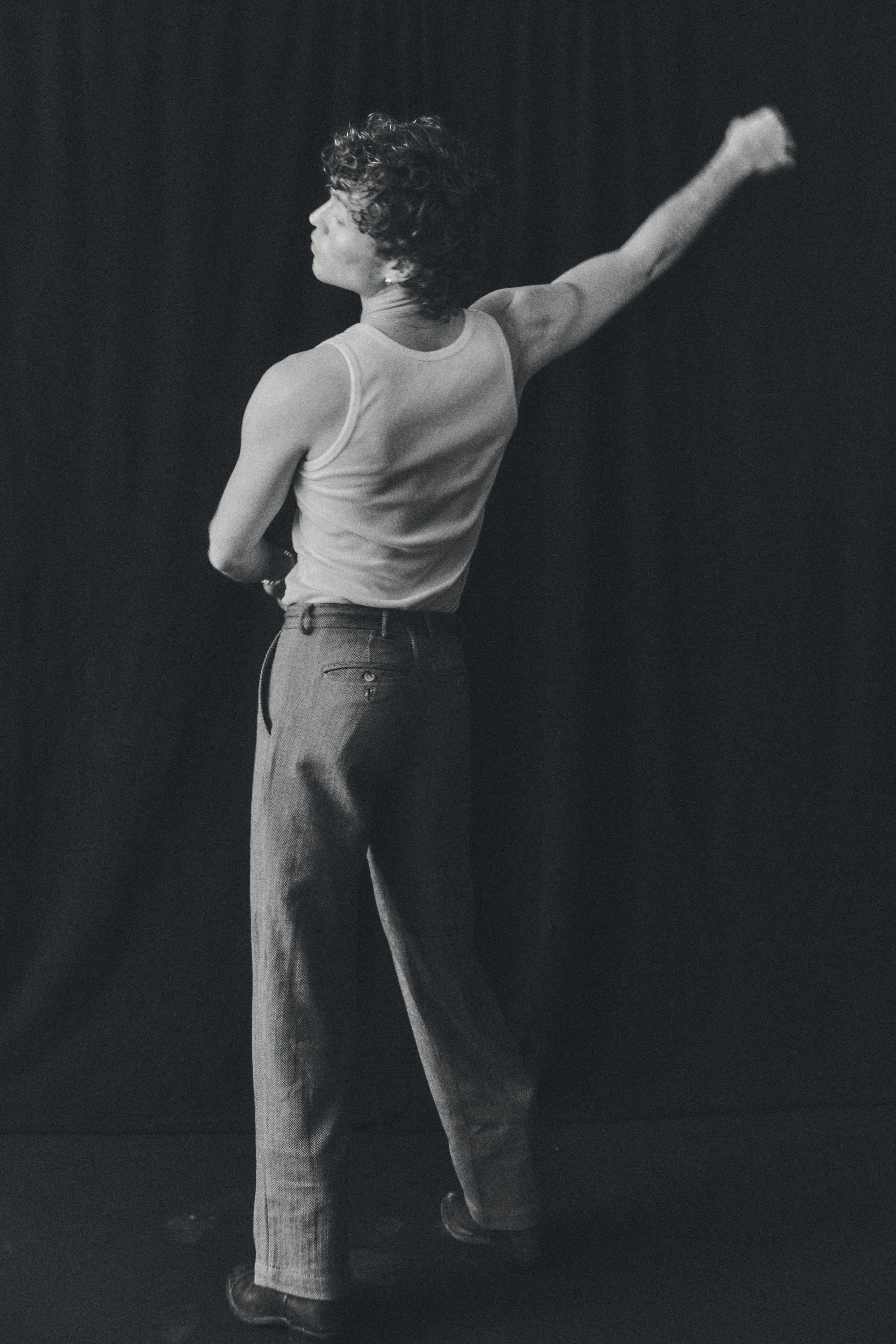

JB: One aspect of Cruise that really resonated with me was the emphasis on forefronting joy, while still honouring the atrocities being experienced on both an individual and community level. The layers of emotional complexity are so apparent in the play. How did the team establish this balance with such precision and accuracy?
FM: Yeah, it’s really the thesis of Cruise I think; joy in the face of tragedy being a means of queer survival. Which can be slightly jarring for audiences who have come to expect a certain amount of trauma when watching stories set during the AIDS crisis. And when it came to us bringing that to life, so much of it is in the writing already. Jack Holden did an immense amount of research when creating this show, and it’s so apparent in the text. All the history of Soho, the bars, the DJs. It’s so rich. But I also feel Sean [Landis], our director, really believes in that mission statement on queer joy, and has gone the extra mile to honour it.
The community consultants we had come in and talk to us about that period of time- that was all Sean’s doing. He made sure that any time we reached for laughter and euphoria in the show, it was backed by experience and community knowledge. The same goes for the tears. That high wire act is only pulled off because of Sean’s deep love for our community’s strength and his humility to outsource to people who know more and have lived more.
JB: How vital was it to have engagement with community consultants throughout the development process? What has been the domino effect of Cruise in terms of your own community connections?
It was paramount. These people sat down and were gracious enough to tell me their stories, and all of a sudden it was a mirror of the play. They became my Michael, and I was their Jack. Before that, I never had the chance to discuss these things with anyone who had lived through it firsthand. My understanding of that time was fairly general and intangible.
After chatting to them, though, my performance became so coloured with their first hand knowledge and experience. Because I now had a reference point for what it felt like to dance in the club as your friends were dying, to sit in a doctor's room as a diagnosis is given, to rebuild a life that you thought was irreparable. But mainly, it gave me three specific people to honour every night. I just have a massive amount of love for them, and I hope they feel that by the end of the show.
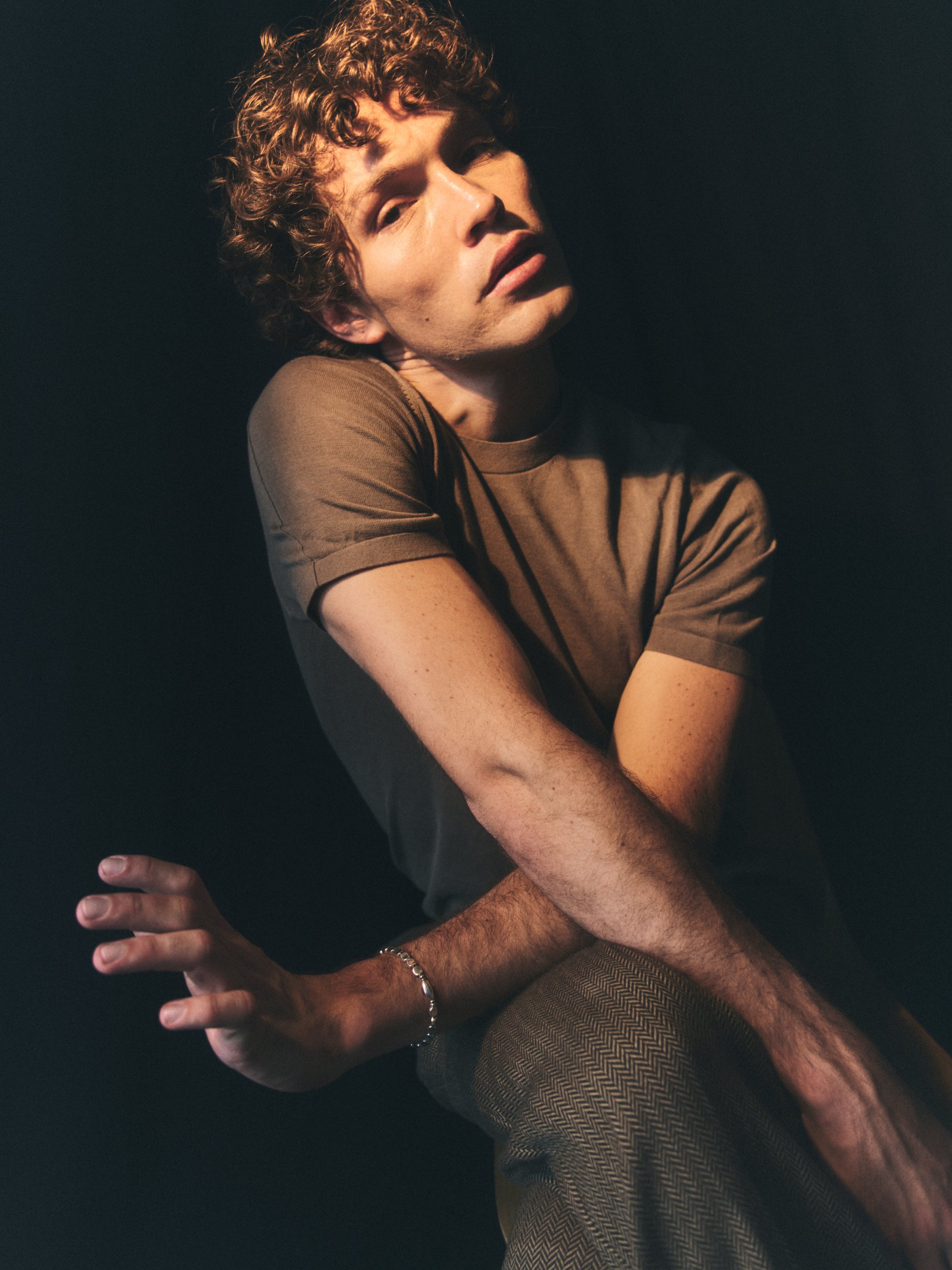
JB: Did the reception you received from the first season of Cruise change your perception of yourself as a performer? Or did it ultimately ground you further in what you felt was possible within your own craft?
FM: I don’t know about confirming what was possible, but I did definitely learn a lot about my own ambition as a performer. I remember after one performance a friend of mine asked, “How did you read that script and think, ‘yeah, I can do that’?” which I thought was funny, but I didn’t have the answer for her. Because when I signed on, I didn’t know if I could do it, but I wanted to find out. There was something in the trying, the attempt, that I think I was more interested in. It made me realise that I’m perhaps more ambitious with my craft than I originally thought, or less afraid of failing than I was when I started.
JB: I’m intrigued to know how you emotionally prepare for this gargantuan task day in and day out. What routines or practices do you have in place before stepping out on stage for such a taxing performance?
FM: I think I’m pretty good at leaving the feeling state of this one on the stage actually. Without spoiling anything, it has a handing over of the story from Jack to the audience, continuing that line from Michael, built into its ending, which means I can release it all by the curtain call. My day is more spent physically and mentally preparing for the show, if anything. I do lots of saunas and cold plunges. I try not to talk too much; my friends know I will disappear a bit until closing night. The 7:30 pm showtime also shuffles my eating schedule around and means my body is waiting to spike its energy and adrenaline at night.
I mean, it’s all very boring, but last season I ended up losing around seven kilos over two weeks because the show is so physically taxing, and I’m nothing but ribs and dick; I don’t have seven kilos to lose! So that’s definitely the focus this time round – staying strong. Nothing can really fix nerves, though. Every night in the wings I consider bailing, because I know once I say that first line, it’s like the train leaves the station and I’m running in front of it for an hour and a half. It’s terrifying. I love it.
Cruise returns to Sydney at the Seymour Centre from 9 - 31 October.