
“Innovation in Silver”: Paula Gerbase on ‘Weft’ for Georg Jensen
Interview by A-M Journal
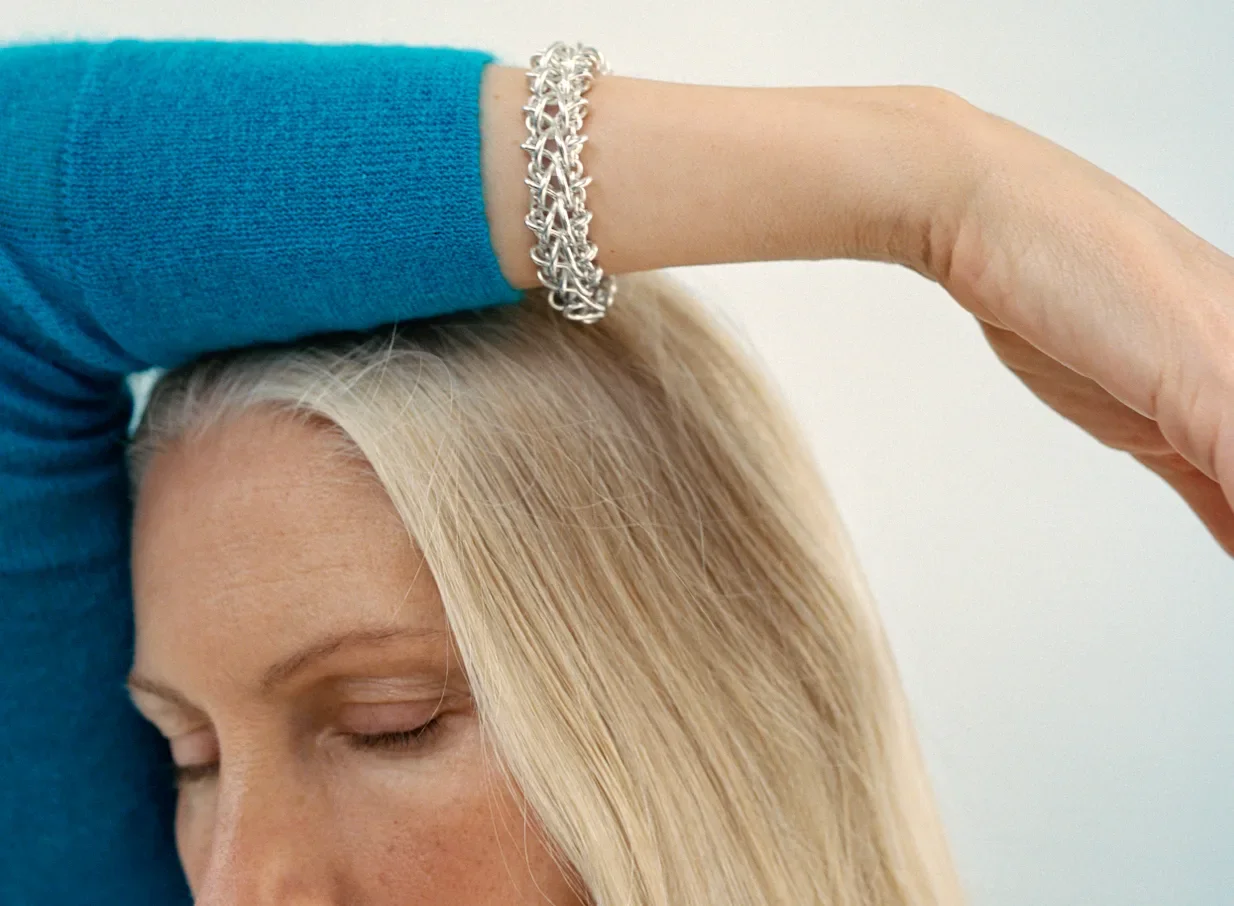
With a background in tailoring on London’s Savile Row, Brazilian-born designer Paula Gerbase, Creative Director of Danish luxury jewellery house Georg Jensen, is someone who can be trusted to carry forward more than 120 years of craft and creative expression.
Appointed Georg Jensen’s Creative Director in 2024, Gerbase’s directorship explores an “innovation in silver”, expanding the possibilities of silver as an art form while ensuring the jewellery house remains both timeless and current. For Gerbase, jewellery is deeply personal: in its closeness to the body, the way it holds the body’s heat and extends its movements and rhythms, and in the histories of collection, acquisition and inheritance which these objects carry.
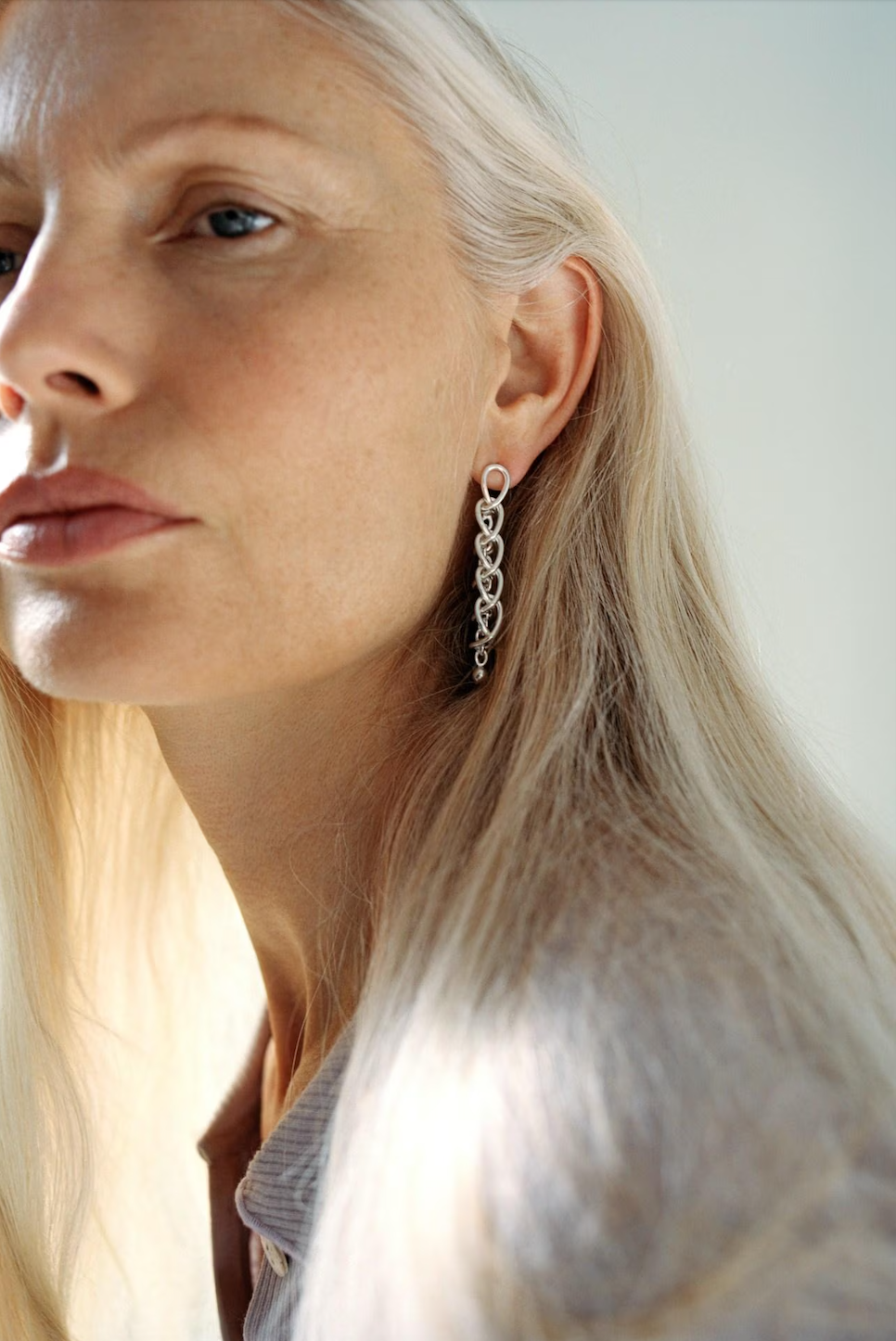
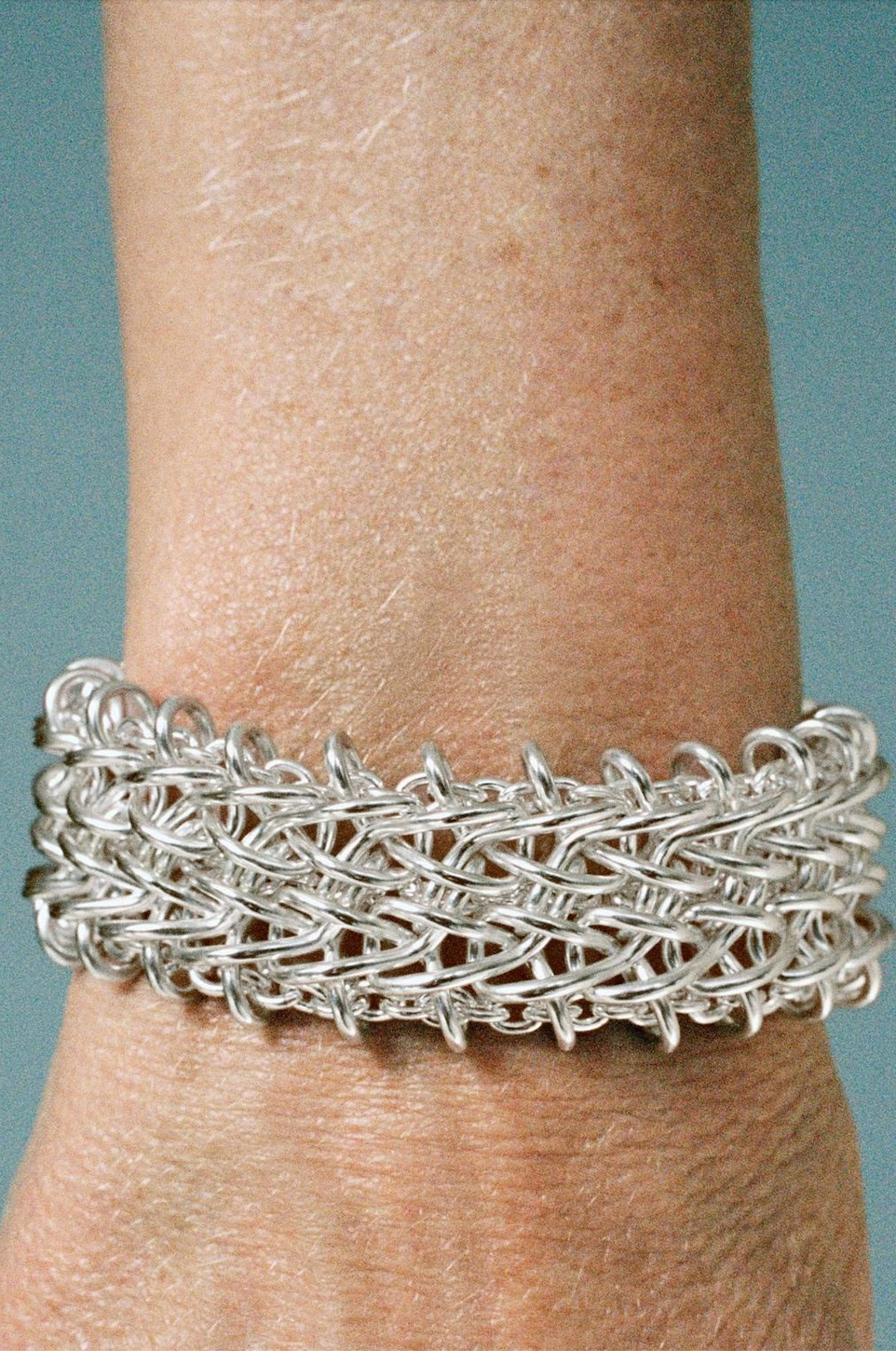
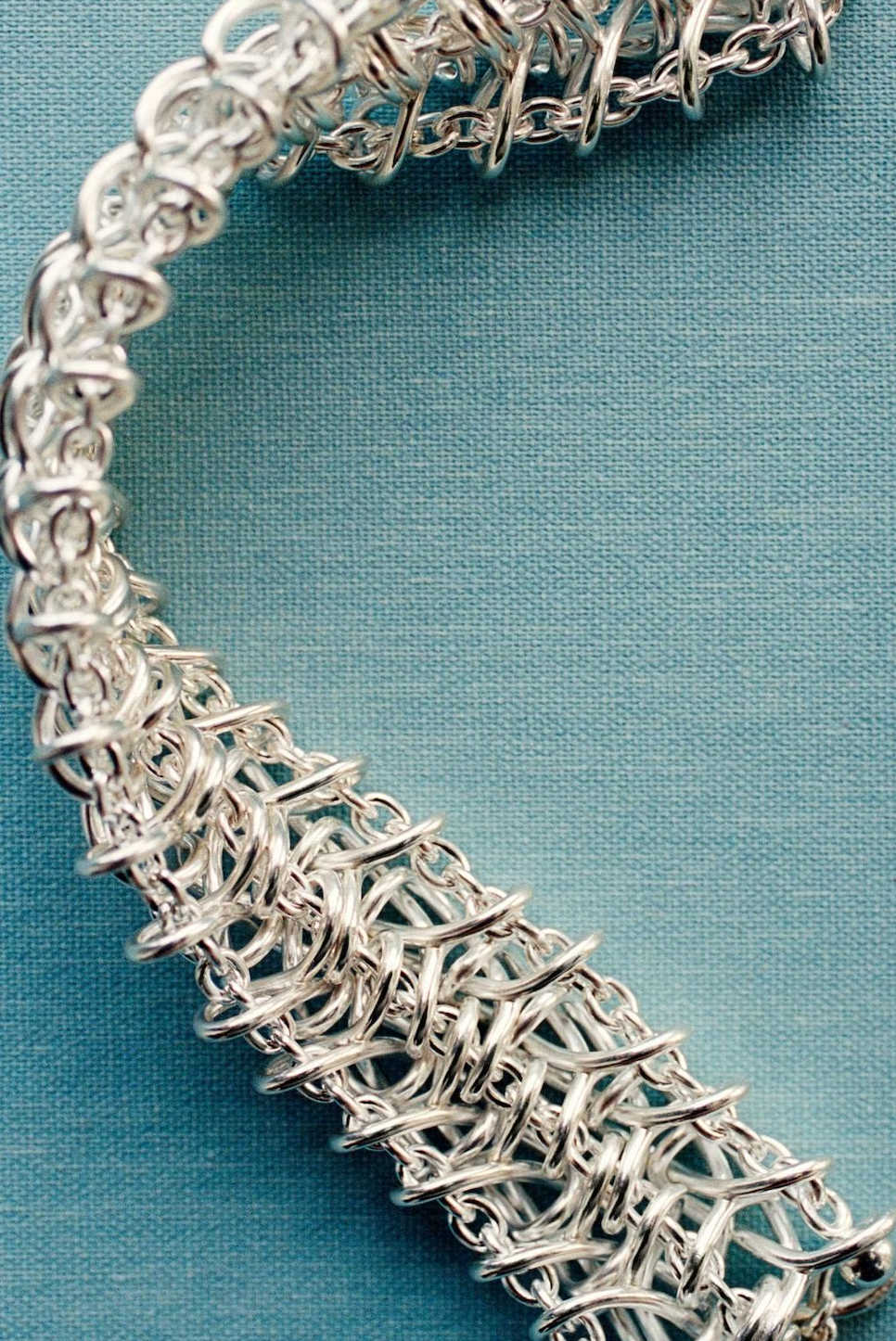
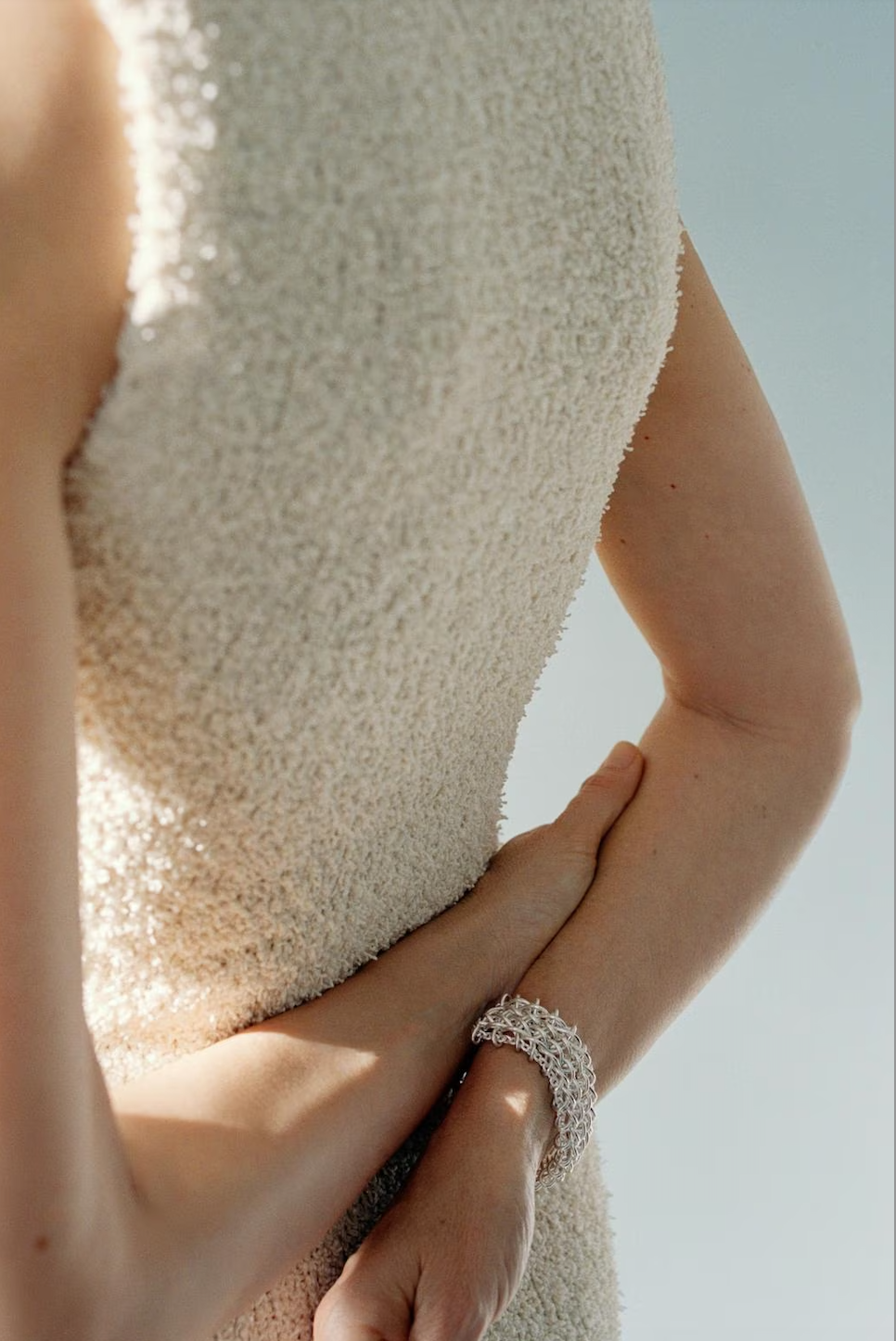
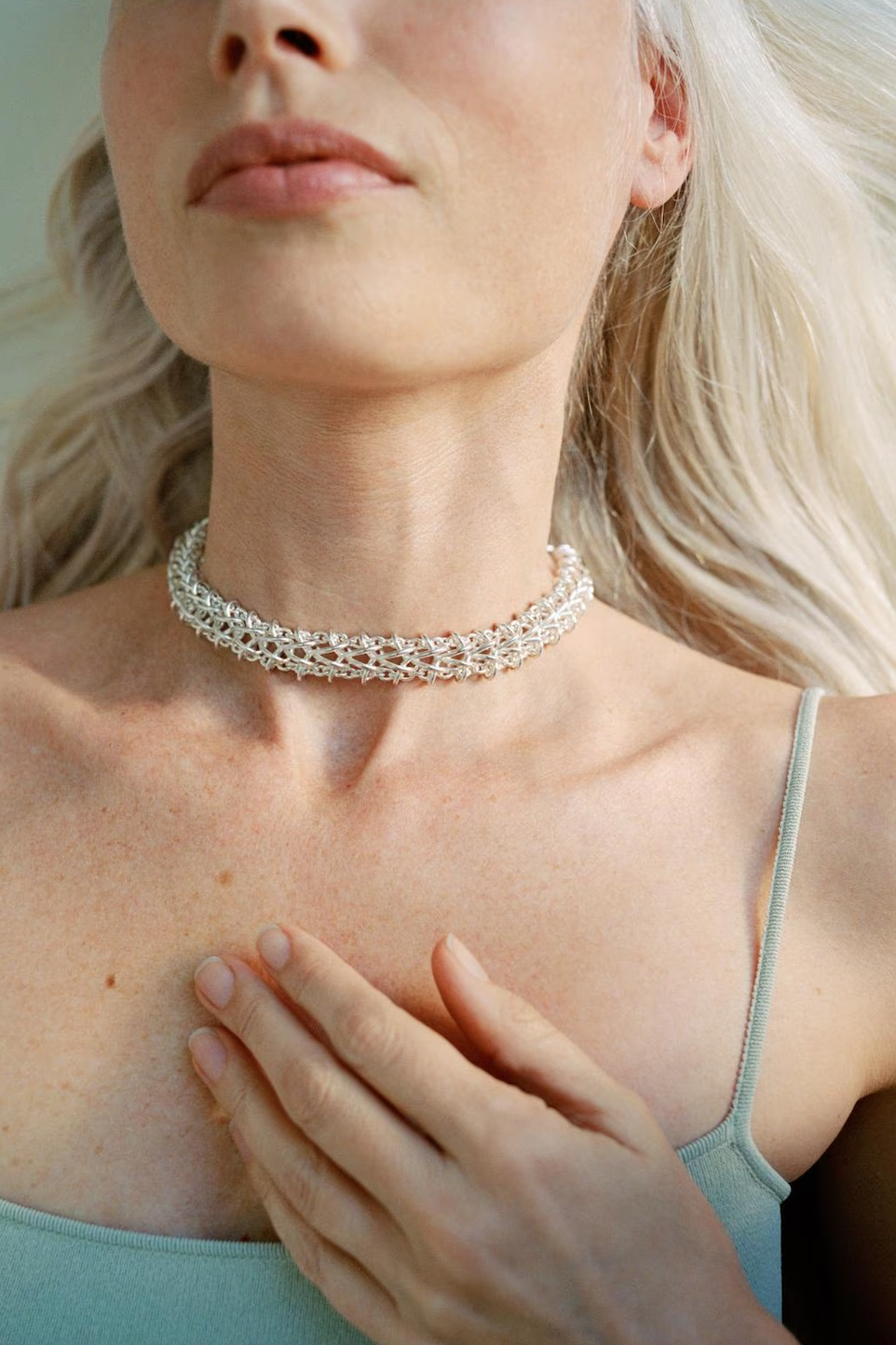
Her first collection as Creative Director, ‘Weft’, is all about balance — bridging lightness with strength, and emphasising the delicacy and durability of silver chains through intricate hand-woven designs. Taking inspiration from the archives, particularly Georg Jensen’s work during the Art Nouveau period, Gerbase brings an appreciation of craft, tradition and artistic movements to her forward-thinking creative direction.
Reflecting on the launch of ‘Weft’, A-M Journal speaks with Paula Gerbase about the intimacy of jewellery and the playfulness of silver.
ARTS-MATTER: Weft translates textile weaving into sterling silver—what drew you to weaving as a conceptual and structural starting point for your first collection as Creative Director of Georg Jensen?
PG: The starting point for ‘Weft’ was not originally weaving, but rather the collection stems from a playful exploration of movement, lightness, volume, materiality. Looking at the history of Georg Jensen’s innovation in silver, and the many artists that came through its doors and pushed the material into new realms. In particular, I was drawn to silver wire, and its use over the last 121 years.
Starting with Georg Jensen himself artfully curling delicate wire to frame brooches and pendants, and then Henning Koppel’s masterful sculptural silver pitchers and carafes which used silver wiring on necks and handles, bringing a textural element to compositions. Stumbling on the silver wire as material for exploitation then meant we started to play and assemble it in different forms, finally happening on this idea of individual links gingerly hooked on to each other and held together and interwoven by an internal chain.
A-M: Your practice moves fluidly between design, craft, and concept. How do you personally define the role of jewellery today — not as an object of adornment alone, but as something that sits between body, architecture, and language?
PG: Jewellery has a distinctive place in design where it can straddle both decorative intent but also a certain abstract expression where pieces become almost objects in themselves even when not worn. There is, however, an intimacy in jewellery which not many objects hold — being part of an individual’s very personal collection of objects — whether inherited, acquired, collected with time and purpose, which can read like a timeline of a life well lived.
For me personally, quality jewellery is more than adornment, but rather pieces that have absorbed the places, the people, the events that they have been a part of, and their evolution be it in patina, small scratches or perhaps just a new way of assembling contrasting pieces together which speak of a highly individual collection representative of a personal sense of how we see the world.
“There is, however, an intimacy in jewellery which not many objects hold — being part of an individual’s very personal collection of objects — whether inherited, acquired, collected with time and purpose, which can read like a timeline of a life well lived. “
A-M: You describe Georg Jensen’s archival work as a point of departure rather than a source of replication. How did your engagement with the Copenhagen archives specifically inform the balance between fragility and strength in ‘Weft’?
PG: The archives are very much part of or process and certainly integral to any aspect of the brand be it in product, visual language, interiors or tone of voice. More than objects, the archive provides a blueprint for a set of values which are distinctive to Georg Jensen and which we aim to honour in everything that we do — quality, a sense of playfulness, a daring spirit, community and our foundations in the arts.
When it comes to Weft, there was a real focus on movement, fragility and strength, aiming to allow the material, in this case silver wire, to take up space without ever feeling heavy. This idea came from Georg Jensen’s early work in the Art Nouveau period in pendants and belt buckles. His use of negative space and the idea that a piece should look just as beautiful from the front and from the back also inspired the Weft development.
“Looking backwards to move forward has definitely been my approach.”
A-M: Movement appears to be central to the collection’s identity. In what ways did you design for rhythm, weightlessness, and interaction with the body, and how does that differ from more sculptural traditions in jewellery?
PG: Movement was integral to the development of the collection — looking to develop pieces which would move in unison with the body rather than objects which stood their ground. I am interested in how jewellery punctuates and enhances the very personal movement of each individual, and how the pieces will move differently, almost like punctuation, dancing languidly or staccato-like depending on the wearer. There is something beautiful about jewellery which is distinctive but also the aims to frame the individual rather than stand on its own.
A-M: How are you approaching the evolution of Georg Jensen under your creative direction, and what values or ideas are guiding the house’s next chapter?
PG: Looking backwards to move forward has definitely been my approach. We have such a rich house, with over 120 years of craft and expressions which span all of the major artistic movements in that century. I am looking in particular at the foundations of the house, founded by a sculptor and with artistic intent at its core, along with a respect for the artisan, a long history of innovation in silver and a playfulness which we will continue to explore for this next chapter.