
‘Are you lonely tonight? I’m so lonesome I could cry’ with Sophie Prince and Callum McGrath
Interview by Lila Daly-Hyatt
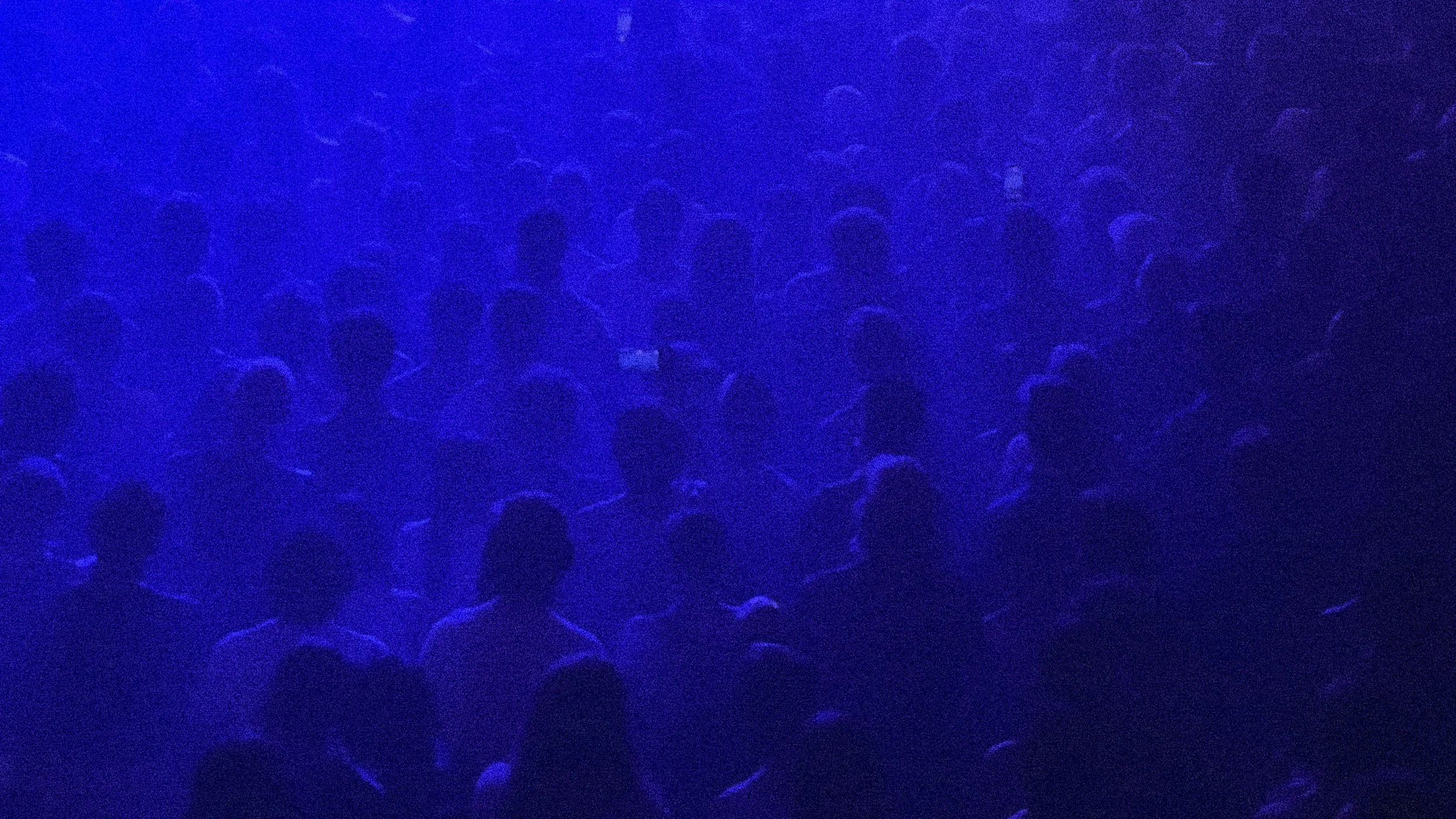
What’s after this? 2026, (still) two channel video. 24:00 mins. Sound: Jac Meddings AKA House Mum. Courtesy of the artist. Commissioned by Australian Centre for Contemporary Art, Melbourne, 2026.
Loneliness, like many things, is better when shared. The Australian Centre for Contemporary Art (ACCA)’s first exhibition in its Art and Emotion series, Are you lonely tonight? I’m so lonely I could cry, embraces this dissonance to create an atmosphere of connection. By assembling international artists, varied artistic practices and layered personal narratives, the exhibition explores what happens when an experience defined by solitude is encountered collectively.
Curated by Myles Russell-Cook and Sophie Prince, the exhibition invites artists and audiences to sit with the discomfort of loneliness together. For Prince, the very process of curating the exhibition was an act of reframing and alleviating moments of loneliness through making the experience public.
Meanwhile, for exhibiting artist Callum McGrath, nightlife venues and cultures become compelling subjects of loneliness in their liminality. Attuned to the historical significance of the dance floor and radical possibilities of club countercultures, McGrath’s two-channel video work What’s after this?, commissioned for the exhibition, reconceptualises togetherness and solitude as closer than one might think — sometimes, as close as two bodies on the dance floor.
Ahead of the exhibition’s opening, Lila Daly-Hyatt jumps on a call with curator Sophie Prince and exhibiting artist Callum McGrath to talk about the gallery as a site of connection, encountering yourself within the archives, and being alone together.
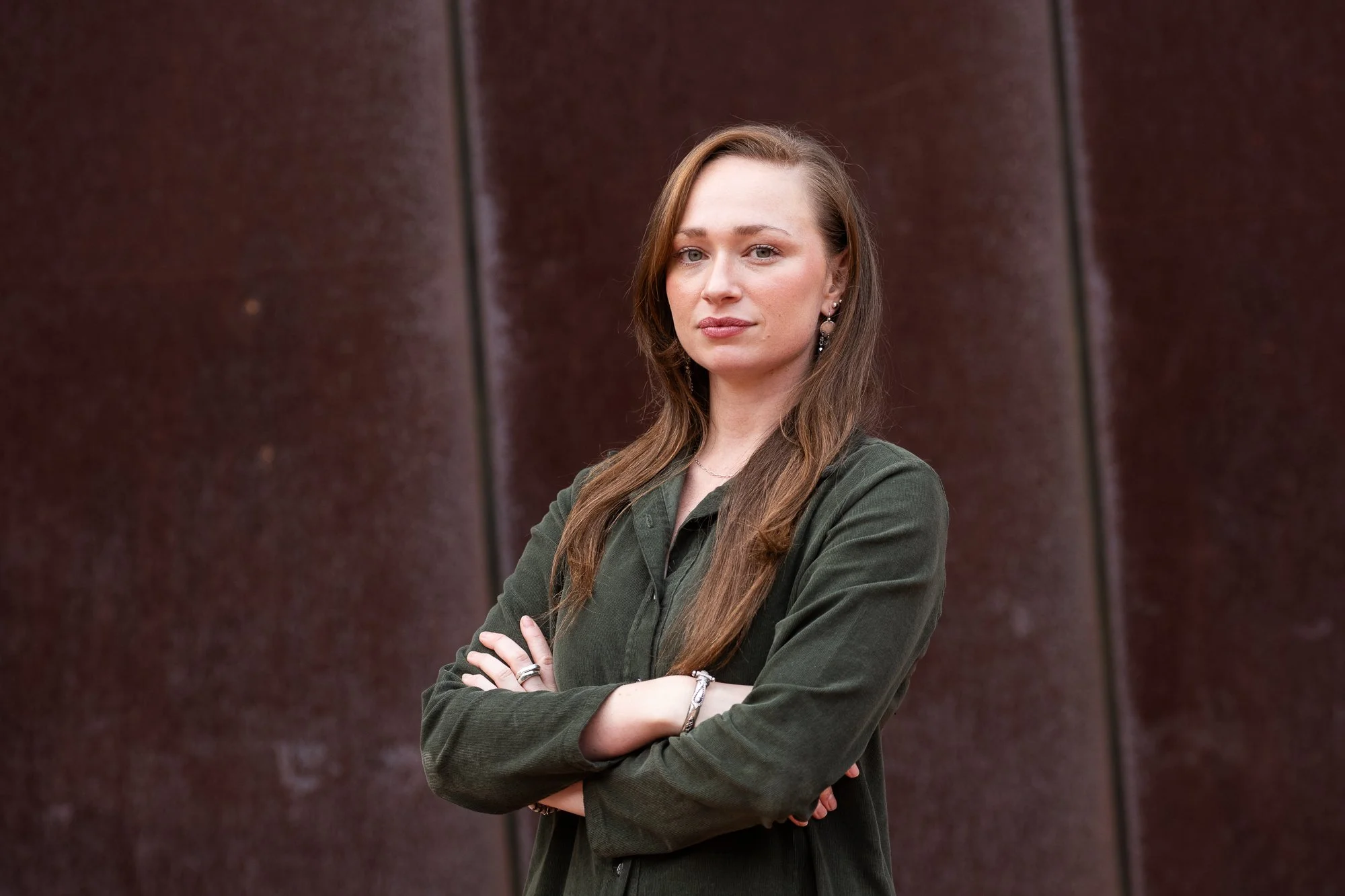
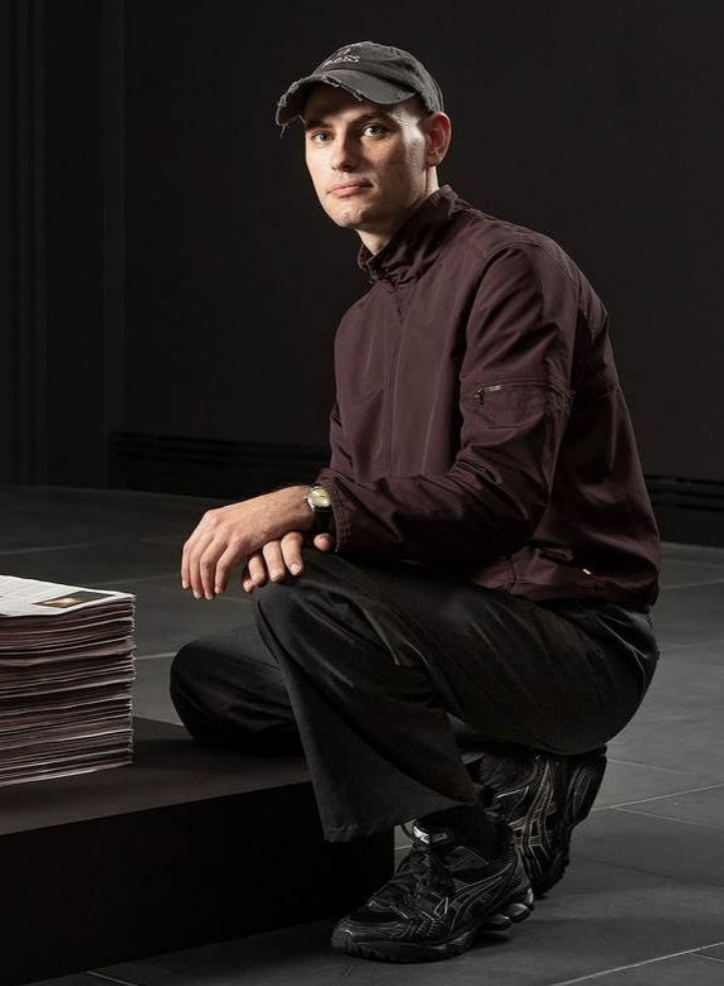
LILA DALY-HYATT: As the first exhibition in ACCA's new Art and Emotion series, why was loneliness the emotion or experience you wanted to begin with?
SOPHIE PRINCE: Myles Russell-Cook, Artistic Director and CEO of ACCA, launched the series early on in starting at ACCA as a major artistic program announcement. Loneliness, we were discussing, felt like a great entry point for the series because there is this earnestness as well as inclusivity that this particular emotion hits upon. There's this sense of leading and taking a risk with the team and the artists who are going to be part of this exhibition, who are putting themselves out there and allowing visitors to then feel more confident and more welcome to embrace its complexity. As we’ve been thinking to the next iterations as well and working through loneliness, it's been very clear that one emotion isn't a silo.
Within loneliness there's rage, within loneliness there's also joy, and I think the exhibition, and the choice to have different themes for each iteration of one emotion, isn't trying to be exhaustive and speak only to one emotion. It's kind of revelling in the complexity, which is why it's important to have it as a group exhibition — to have commissions that speak to this moment, and to have past works that also reflect the enduring elements of this emotion. Some of the artists have a collecting and archival practice. I think that loneliness definitely has a sensitivity to it that we're excited to share.
LDH: Loneliness is such a personal but also a collective experience, which is one reason I find the exhibition so interesting, especially as a group show. Callum, what resonated with you about this theme, and could you tell us a bit about your work, What's after this?
CALLUM MCGRATH: Yeah, of course. Back in 2022-2023 I was commissioned to make this work called Together, Alone for UNSW Galleries, and in that work I was asked to respond to the history of Sydney nightlife related to gay and queer culture in the 70s, 80s and 90s. It ended up being a work that kind of explored this growing sense of individualism and had a bit more of a somber tone to it. Sophie saw that last year when it was on display, and that started a conversation around that project, and I started thinking about wanting a kind of final iteration of the series, so for this work it's much more grounded in a Melbourne/Naarm context here.
There are two video channels in this new installation – one of them is taken entirely from my own catalogue of footage over the past three years. I think there's a lot of layers to this work, but the one that responds to this exhibition, I think, is a kind of exploring the dance floor as this subject of the work, and the tension that exists on a dance floor based party culture, where there are moments of intense collectivity and togetherness but also a feeling of isolation, of quietness, moments when you're just being alone on the dance floor with your thoughts or whatever, and that as an aspect of loneliness to think about.
SP: It looks so good, it's going to be amazing. I'm going to hang out in there on my lunch breaks.
LDH: Sophie, what stood out to you about Callum's work or practice when curating this exhibition?
SP: I've always followed working contemporary artists who explore music and counterculture scenes, that's one of my personal interests, so when I saw Cal's work I was like, “oh, this is someone continuing that legacy really well”, and it made me excited to develop a relationship, and see if there was something in Cal's mind to continue that train of thought, and luckily there was. I think as a curator, you're kind of picking up on subliminal messages that you don't even really realise, and then just by taking that initiative to reach out, the work reveals itself.
I'm not out here trying to get people to fit into a box of a theme — Myles and I both really wanted the theme to be a revelation through the process of working meaningfully with artists and seeing what their experience and what their interests were, and that has brought a lot of nuance to the exhibition. There are things that Myles and I hadn't even thought of, or didn't know how to articulate ourselves, and now we're like, “oh, that's what that feeling was”, or, you know, I’d thought about that, but I hadn't known how to speak about it, or didn't realise it was a shared feeling.
So, there's definitely a sense of earnestness and intuition curatorially in this exhibition, which I think is shied away from, and has kind of been out of fashion in the art world for a little while. You know, being really rigorous and artist-led and well-researched is really important, but letting your own experience as a curator and as a human have some air time, especially in working on this exhibition, has been a strength in pulling this show together. It’s allowed for there to be an atmosphere, an authentic human atmosphere, throughout the exhibition.
Callum’s got a whole space in the exhibition — it's an environment, and that was an important part of this show, having a few distinctive atmospheres so the visitor can feel like they're subjective and using their senses, and so that there can be this kind of liminal moment where knowing isn't just about reading a label, it's about feeling the work. Callum’s commission has really evolved to be one of the key moments where it's about being and feeling through the senses, not just reading the label.
CM: I was going to say, one of the most exciting things about the invitation for this exhibition, and I guess the theme of emotion more broadly, is that I feel like no one in the show's work is defined by that theme per se – it's more these threads that are drawn out of their specific practice and idea, and I think that's a really exciting moment. And again, I think the iterations of these works that I've made reflect this subculture, these kinds of party subcultures, and what comes out of that are all big responses to themes in a bigger show.
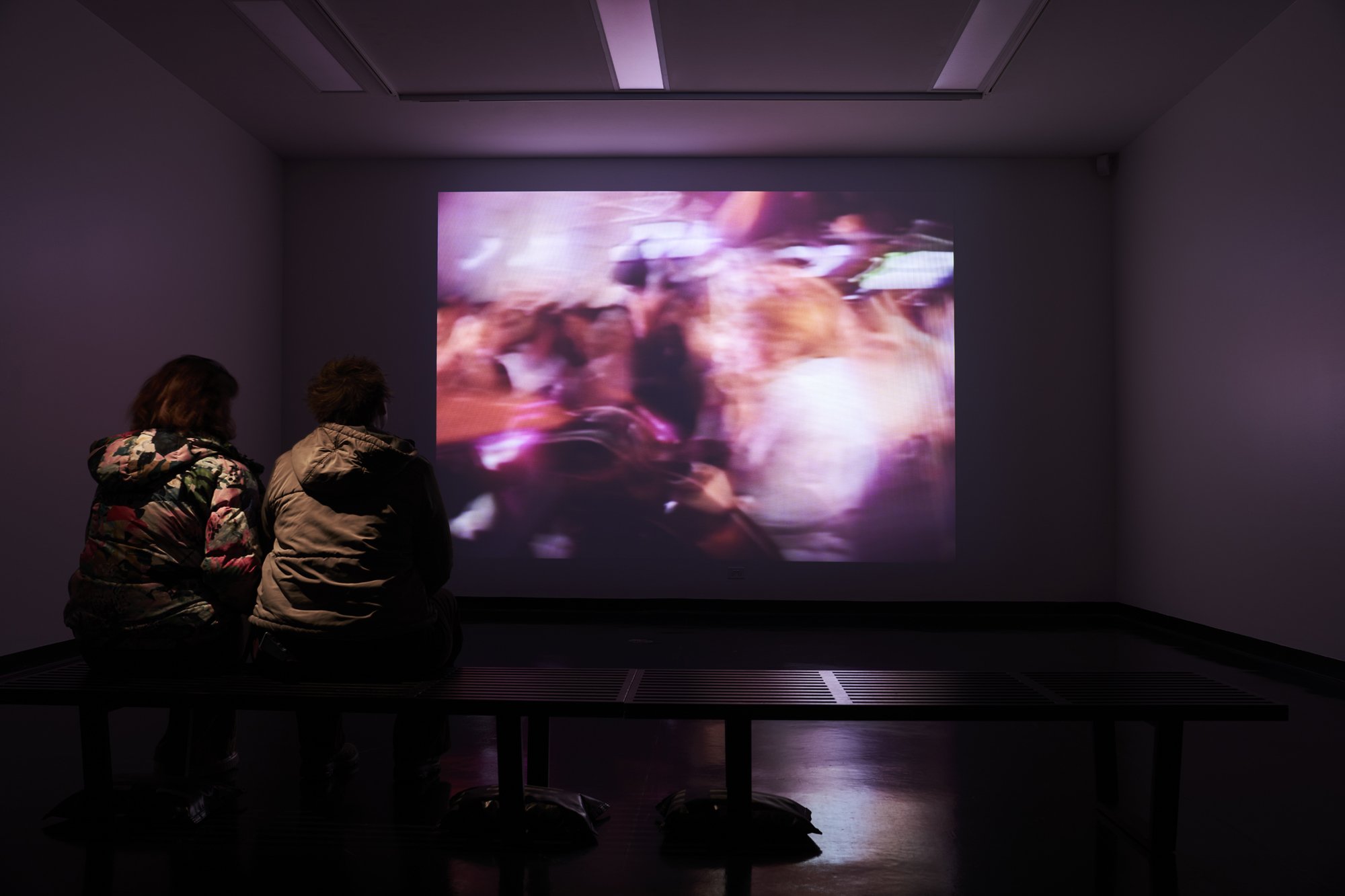
Callum McGrath, Together, Alone, 2023, 20:42min, Sound: Nina Buchanan, Commissioned by UNSW Galleries. Courtesy of the Artist.
LDH: So, you’ve been thinking about all of these different threads of loneliness. Have you also been considering the social and political dimensions of isolation and alienation as something that can be imposed?
SP: Totally. I would say the themes for each iteration of art and emotion are offering a lens through which to see work that can be looked at through a few different perspectives, but the offer of lensing through emotion is an invitation for people to come together and deny this legacy of shame and privacy. It's important to have specific moments for different ideas even if they do all bleed together and can intersect in a lot of ways, because I think loneliness in particular has been quite taboo.
It has real world implications for mental health, dementia, issues around youth, suicide, for the elderly, for the way in which civic environments are even built, and so a physical brick-and-mortar space where people can meet in loneliness and move beyond it, or feel okay about it, is really important right now when things are so divided. The pandemic really was an important moment in bringing the issue to the mainstream conversation, these real lived issues of loneliness — and they haven't gone away, even if the statistics have fluctuated since then, since everyone's come out of literal isolation.
LDH: I guess in your Melbourne context, with the pandemic, it was especially intense, so it makes sense that you’ve been thinking through all of these aspects. I like what you said earlier about knowing through emotion, because I feel like loneliness is really hard to articulate.
SP: Yeah, definitely. It's so hard to articulate, which perpetuates the experience. It's like a catch-22 — you know, there's so many threads that map onto other emotions as well. Myles and I have been talking about it as a kaleidoscope of emotion, and the lens of loneliness is just one way in which to see all of these fragments of colours, of sadness, of joy, of rage as well.
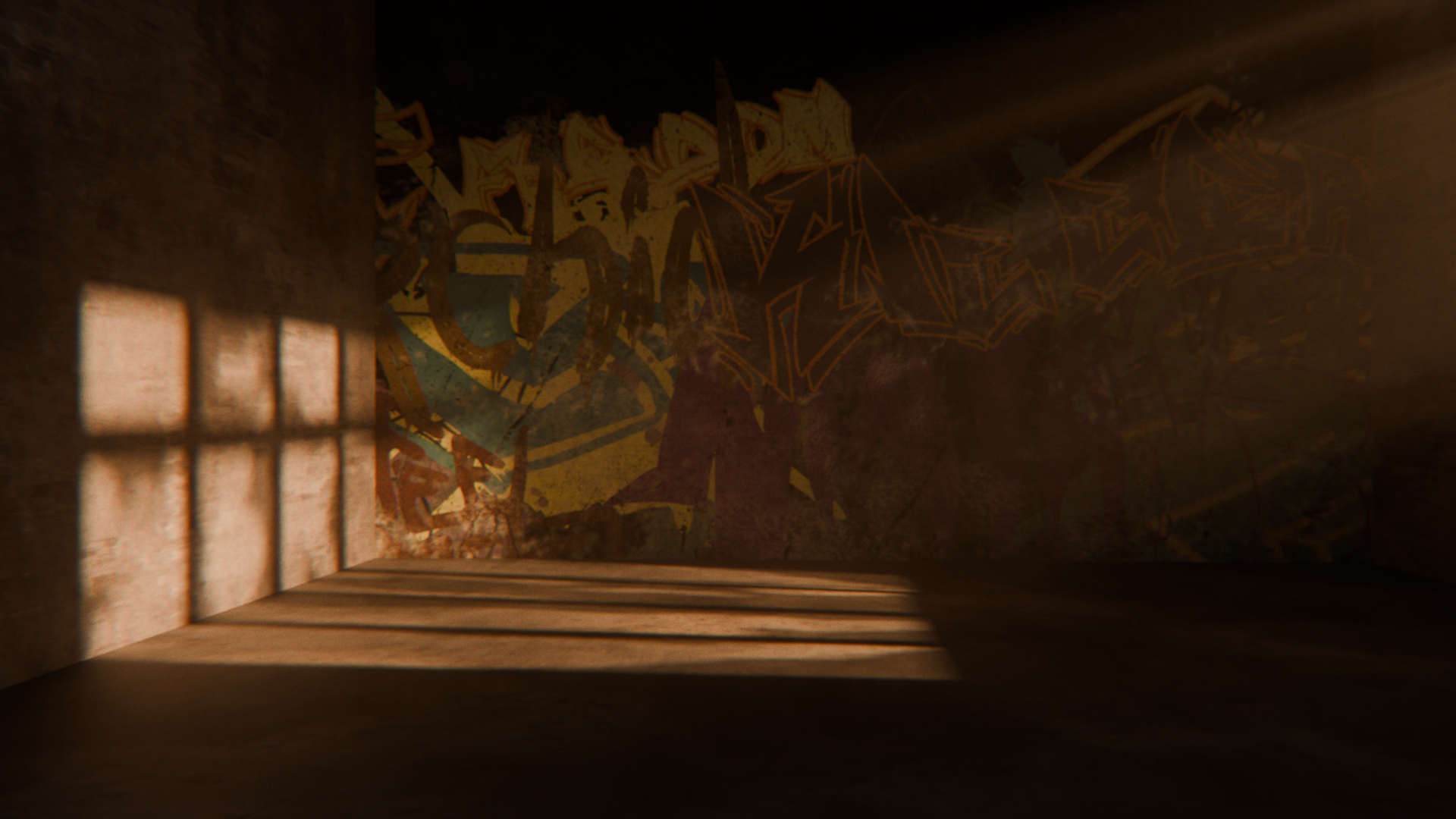
What’s after this? 2026, (still) two channel video. 24:00 mins. Sound: Jac Meddings AKA House Mum. Courtesy of the artist. Commissioned by Australian Centre for Contemporary Art, Melbourne, 2026.
LDH: Callum, you were collecting footage and filming in different nightlife venues over three years for this particular work?
CM: Yeah. That wasn't something that was necessarily intentional, this work hasn't been years in the planning per se, but after Together, Alone, I knew that the next one I wanted to do would be my own footage, so I have been just kind of like collecting, and having that in my mind. I’m filming in a very specific way — when you see the footage of the video, you'll see that it doesn't look like someone's Instagram iPhone footage; it's a very specific lens that I've taken it through.
The footage also isn't really chronological. About a year and a half ago I collaborated with Jac [Meddings], who did the sound — they are a DJ — and I think there's a very specific perspective change that happens from that which I couldn’t do myself. You know, there are these kind of shots in the crowd where you’re very much swallowed by the environment, but then after that point it moves to a vantage point behind, looking out into the crowd, and reflects kind of a flip in that footage, in a sense, which I think is interesting. I really wanted it not to be chronological because it would be boring for it to just be like, “hmmm, here I'm in the crowd and then now I'm behind”. So bringing in all of these other elements was interesting.
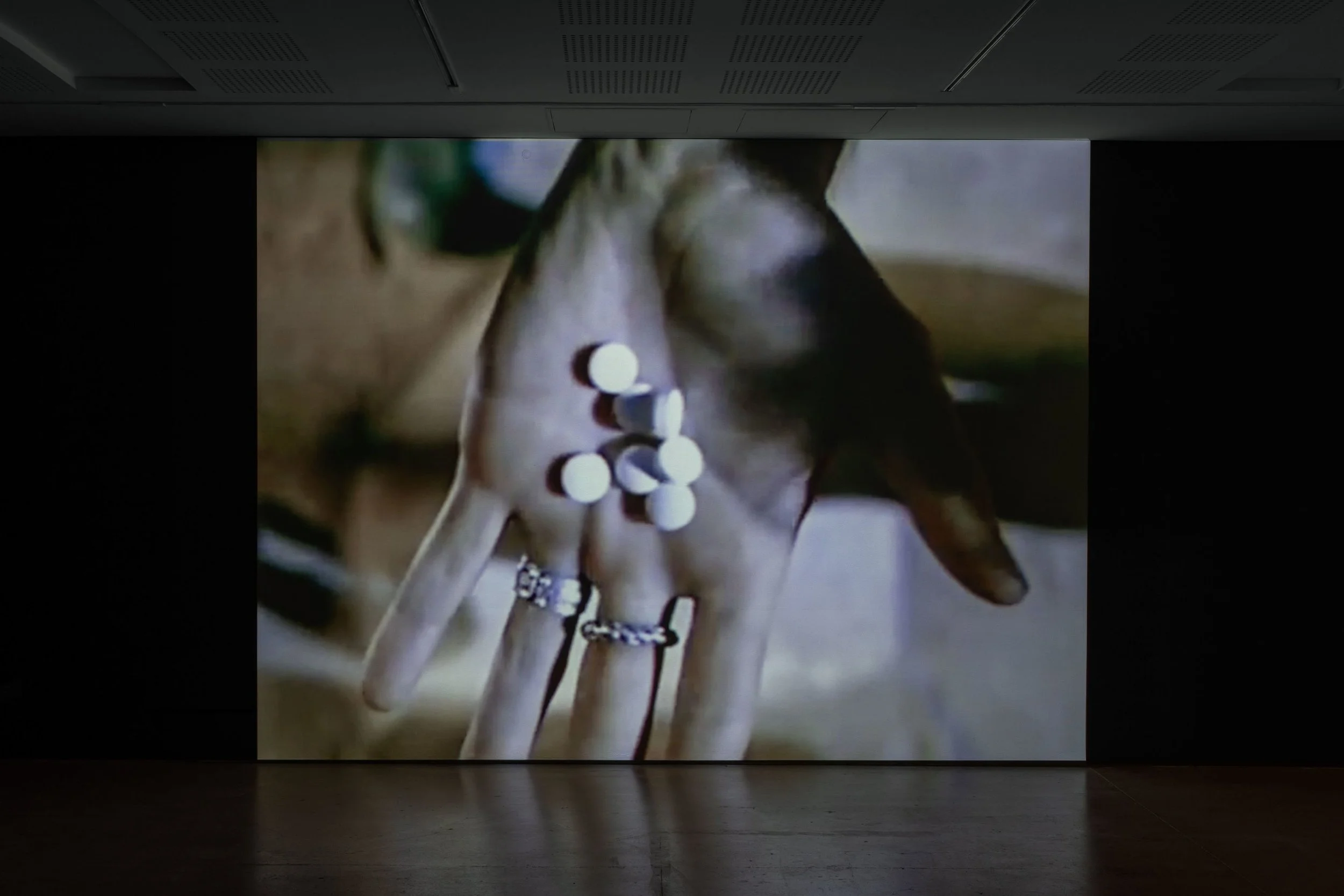
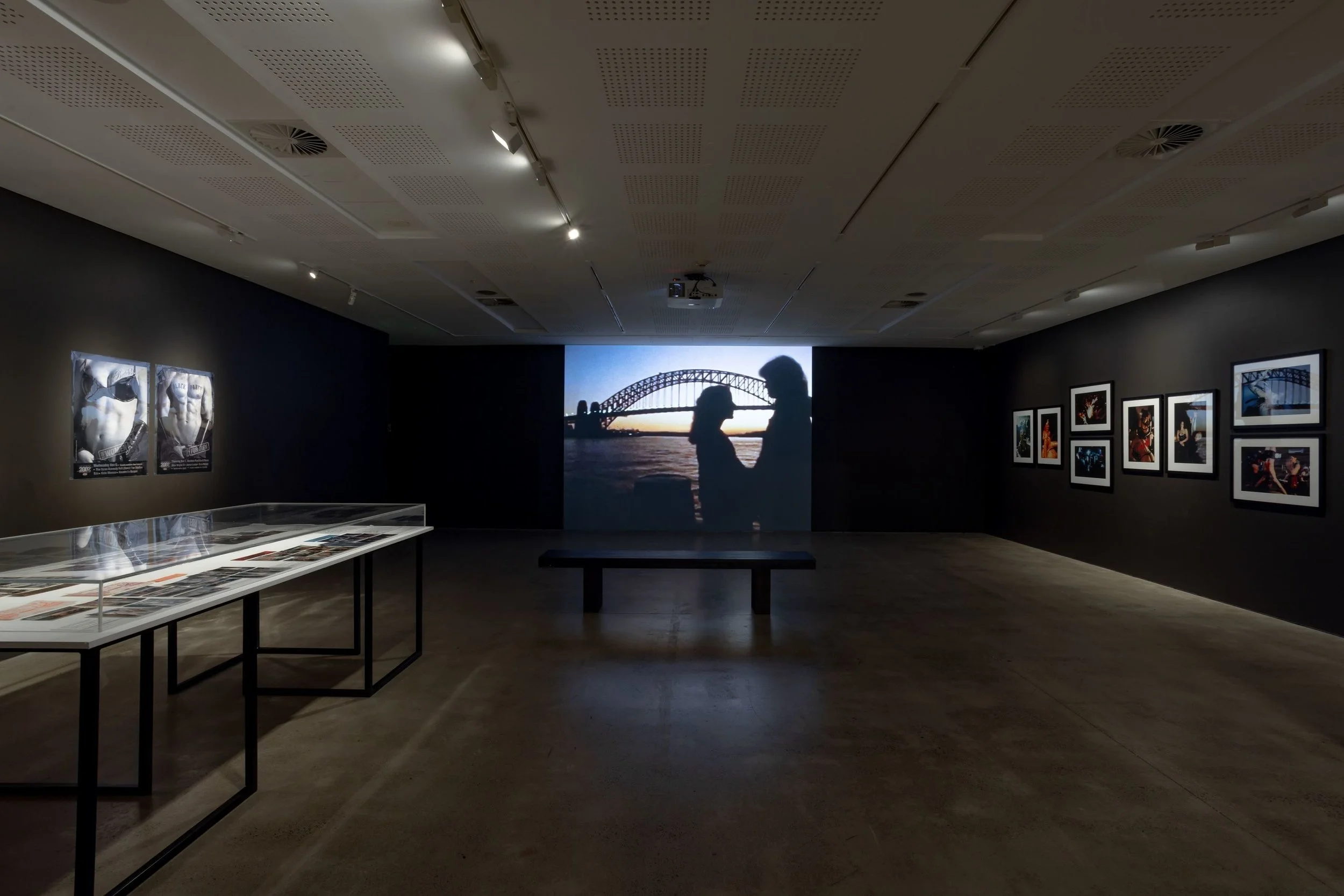
Callum McGrath, Together, Alone, 2023, 20:42min, Sound: Nina Buchanan, Commissioned by UNSW Galleries. Courtesy of the Artist.
LDH: Nightclubs have a really important history as spaces for marginalised peoples and communities to come together in response to social isolation and exclusion, which we’ve been talking about, and to challenge these attempts to destroy community. Is this something you were thinking about in this work?
CM: Yeah. A lot of my work in the past is very research based – a lot of text, documentary kind of vibes, and I think the big reason this work disavows a lot of that, and is much more a sampling of things, is because it is so hard to identify this feeling – it's more compelling to kind of visualise it and make a feeling or affect. Together, Alone, the work before this, was very much relating to this idea of party culture in the end of the 20th century, for queer people, as this space of intense liberation, where communities and responses to AIDS and HIV really came out of these spaces. I think in the times we live in now, that is not as clear as a space, but they are intensely political spaces still. And, you know, queer and brown bodies are still politicised in this way — we know that.
I think there's this interesting thing that happened in this world; there's not a clear cut delineation between a queer space and a straight space — that becomes more fluid, you know, like, we've infiltrated straight spaces — there's this interesting balance of how those two things come together. Thinking about groups like Chuleo Club, for example, which are these kinds of collectives that run parties specifically for marginalised and non-mainstream groups; they might throw one thing which is a smaller event and that is really for that community, but then you’ll see a festival or have stage takeover, and it's a completely different audience and kind of doing a different thing. So [in this work] you'll see footage and video from all those various places, and I think they're doing different things that are all political in their own way.
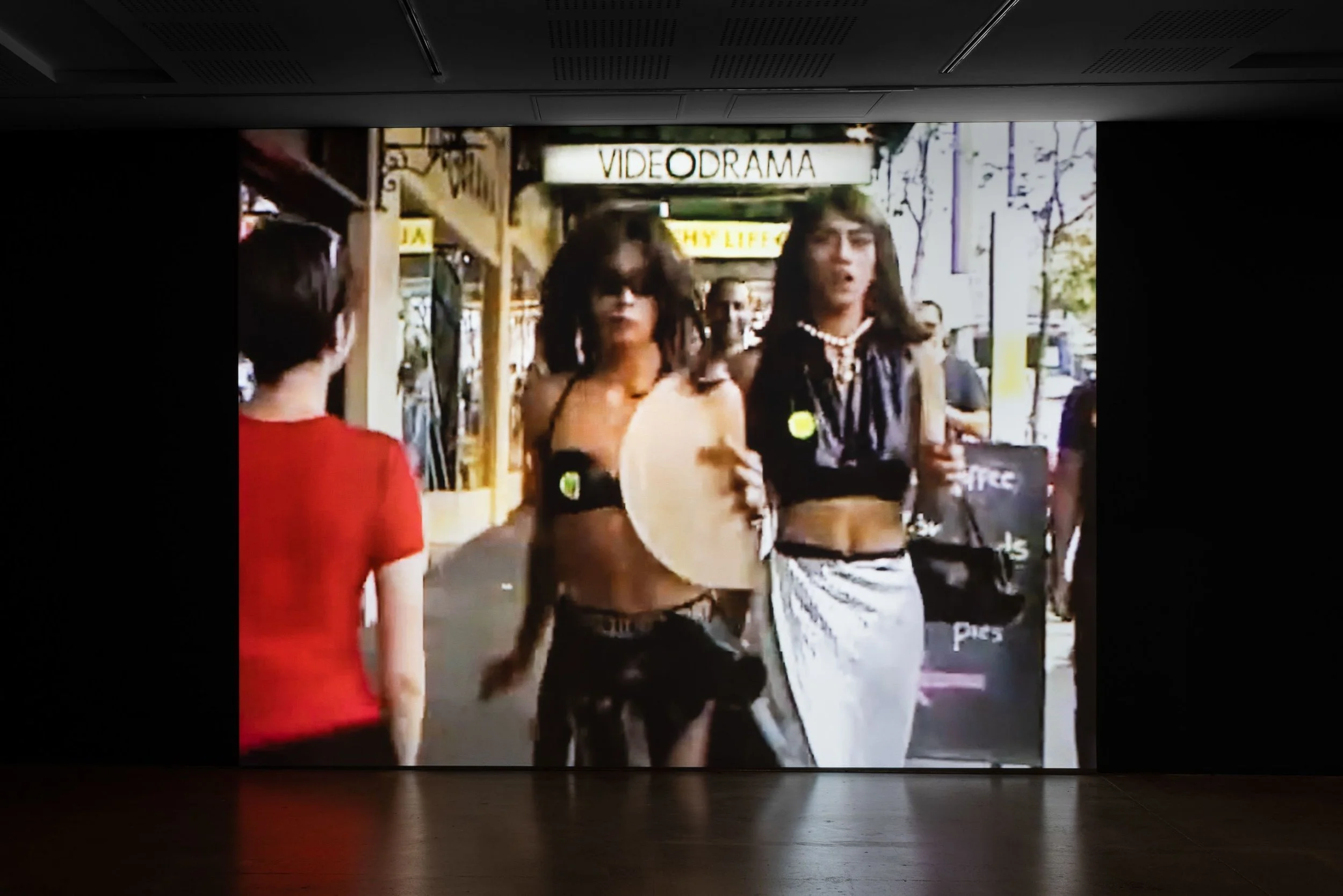
Callum McGrath, Together, Alone, 2023, 20:42min, Sound: Nina Buchanan, Commissioned by UNSW Galleries. Courtesy of the Artist.
LDH: Sophie, you touched on these archival threads earlier in our discussion, and Callum, you often use archival research and found footage in your practice. Were you thinking about the archive as a way of creating connections across time, almost through encountering things that are familiar but also quite radically different?
SP: Definitely, in the show this kind of concept, what you've hit on, is very much layered into Cal’s work and new commission, and then it's also present in Kayla Mattes' woven work Lonely Planet, which was made from 2025 to this year. It's over 7 metres of hand woven tapestry and she's collecting memes and near or lost connections, or unresponded texts, or GIFs, or time stamps from the internet, and weaving them together as a kind of tablet, as hieroglyphs of our contemporary time, kind of wrangling the borderlessness of the internet, which as a gesture implies how much content there is by creating just one segment of that ever-unfolding history.
And then Patrick Pound as well, he's renowned for his collecting practice and he has been commissioned to do The museum of loneliness (2026), which is going to be site responsive; objects from his ever-growing collection that he always works with, with all of the objects almost literally capturing loneliness, whether there's text in an image, or it's an object that's connected to someone who's explicitly known to be lonely, or even if it's something more intuitive where he's considered the object itself to be lonely — it's definitely an atmosphere.
It posits this idea that you're touching on here that links back to Callum’s work, which is how we care for objects and how those emblems of materiality reconcile our inner experience and brings it outward, and I think what Cal's work does, is it sits within a legacy of artists who've kind of canonised themselves without it being about ego — it's more about, who else is going to do this work for us and document scenes where if you're not part of them, you might not even know they exist.
It's a legacy of, you know, Jeremy Shaw and Mark Leckey, for example, or Wolfgang Tillmans, and these musicians, these DJs, these producers that Callum has documented and then brought together as an atmospheric moment and experience — this is reifying, legitimising and sharing this with people who may or may not know these scenes, and asserting this in a way that's true to what these parties do without taking it too seriously. Like, this is a valid expression of culture which is an act of resistance in a world that's trying to oppress expressions of creativity, divide us, and deny space for diverse bodies.
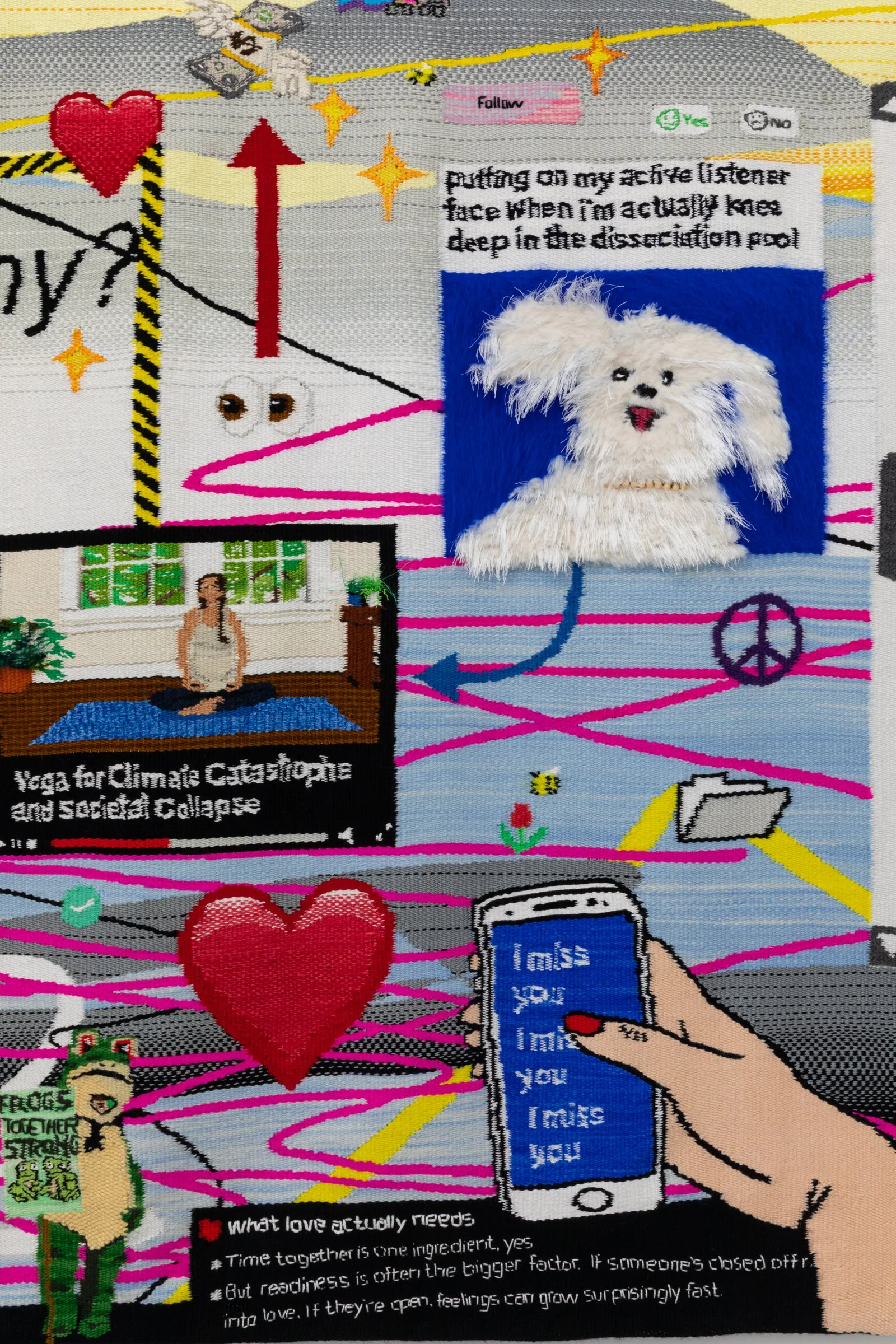
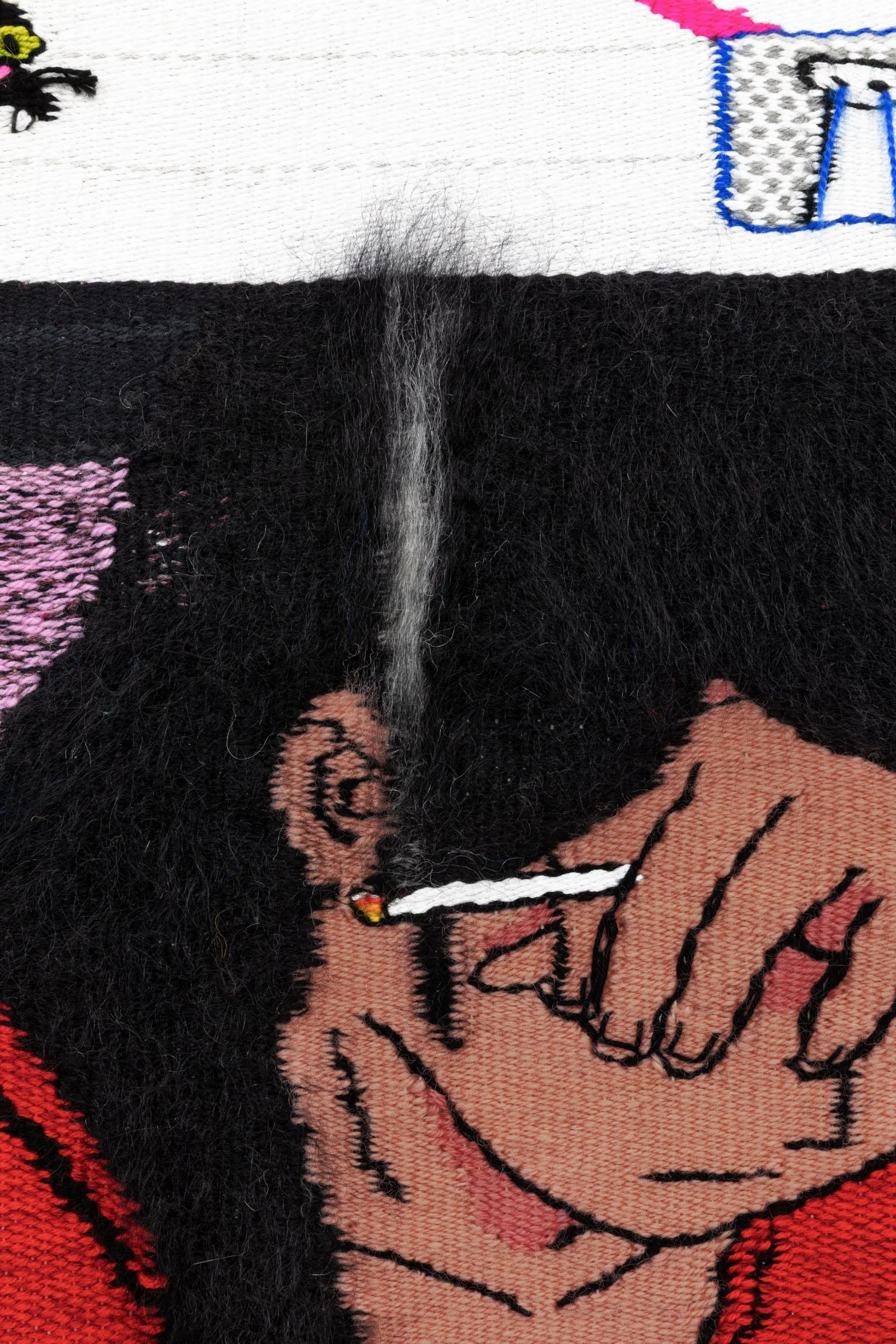
Kayla Mattes, Lonely Planet, 2025–2026 (detail). Handwoven cotton, wool (hand-dyed), mohair, faux fur, silk, acrylic, polyester, beads. Courtesy of the artist. Commissioned by Australian Centre for Contemporary Art, Melbourne, 2026. Photograph: Moe Waka.
LDH: It’s also interesting, because some people talk about the archive as quite a lonely or silent place.
CM: I think it's interesting because this is probably my first work where rather than using an archive, I don't want to say I'm creating my own, but there's an act of processing and recording. Yeah, like it's not documentary, but it's really intentional — the places aren't named in the video, but I think that speaks to the ephemeral nature of them, and I think some people will see stuff they recognise, but for the people who won't, I hope that this sense or feeling is something they pick up on. It’s always important to think about these archives as these kind of living and breathing things that shape the future and shape the present.
One of my favourite documentaries from 2021 is Adam Curtis’ Can’t Get You Out of My Head — it's this kind of emotional retelling of the 20th century, and that is such an interesting idea for me. He uses archival footage, and at the base of it is this idea that we can tell history through emotions and feelings and senses of things, rather than really dry kind of straightforward narrative.
LDH: It seems like within this exhibition, it’s been important to create an atmosphere and a kind of sensorial experience, rather than it just being “how do these things fit within a theme”. And in terms of that atmosphere, it's also about creating opportunities for connection. I’m wondering, with shifts from cultures of community to our current moment marked by increasing individualism, what kind of role do you think galleries and contemporary art can play in creating these spaces of connection?
SP: I think it's about literal space to be, and to let you arrive at the space and be welcomed into the space where you're at in that moment — you know, embracing alternative ways of navigating the world that are more embodied and subjective, and I guess coming to know yourself better through the work of others, because there's an amazing generosity from these artists who have worked through the ambiguity to be articulate for us.
You don't have to identify with every layer, or see yourself in every layer, but the offer of seeing glimmers or seeing outside of yourself is what I think galleries can do. I think that this show is making that part of the premise, I guess, as a kind of self-conscious thing.
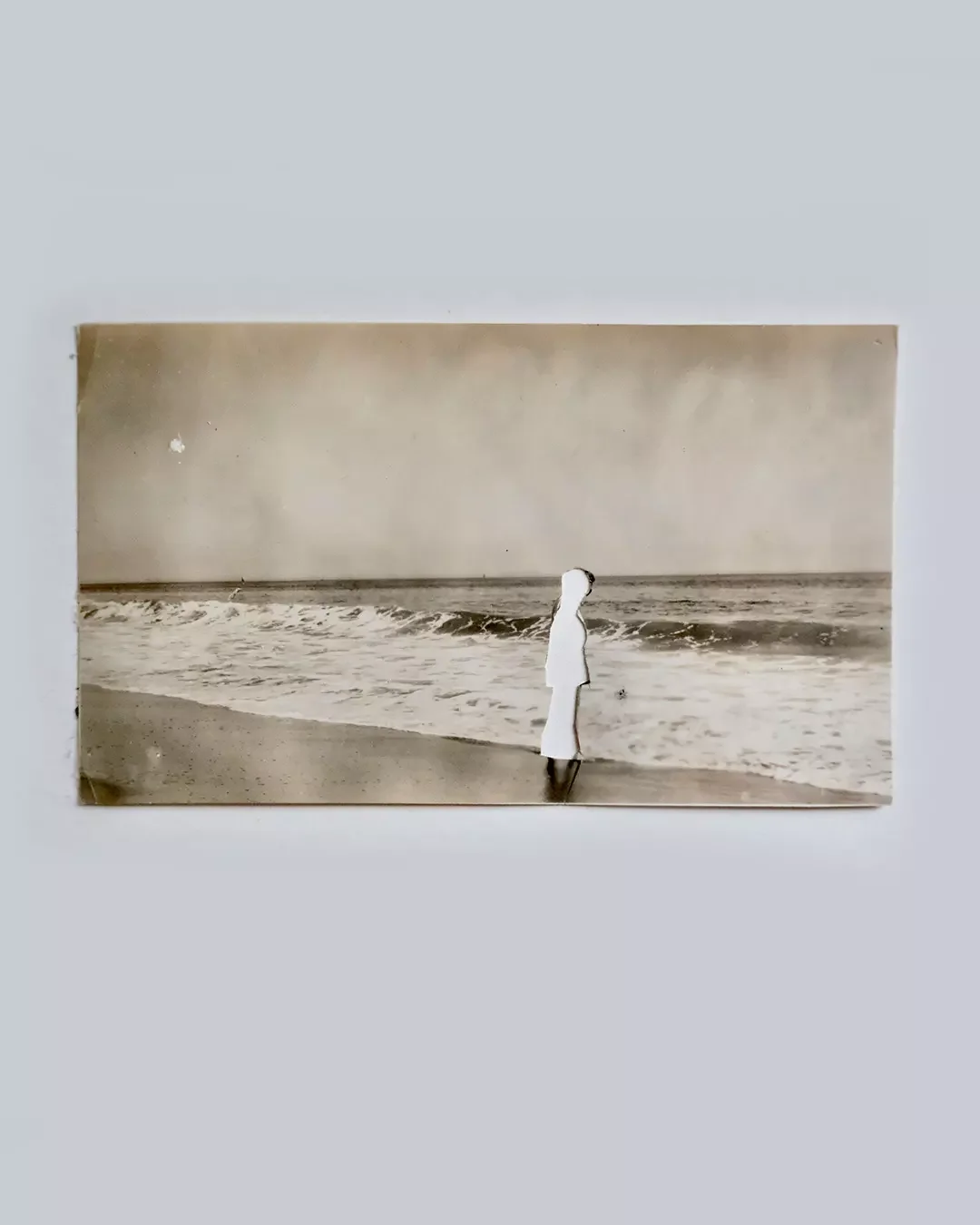
Patrick Pound, The museum of loneliness (detail), 2026. Photo: Courtesy of the artist and STATION, Melbourne.
LDH: It's really vulnerable, but there's something so special about encountering yourself through the experiences of others.
CM: I'm personally a bit terrified about the vulnerability of it all. I've never made a work where it's all my footage before – it's such a personal lens. And I don't know if it necessarily reads that way, as super personal, but for me it is. My partner’s made the sound for the work, and you know, it’s this layering of that, and then in relation to this theme of loneliness, it’s such an interesting tension.
I feel like it’s about the spaces we can build to insulate ourselves as well. Maybe when the show opens and I see everyone else's work — you might have a read on this as well, Sophie — but understanding the tone of my work, I don't think it's a particularly harrowing video. I think there’s kind of a sense of optimism and togetherness in the work, so I'm really curious to see how it’s then read in a bigger dialogue of an exhibition and how the tone of the work shifts — does it become more harrowing and sad, or is everyone coming together in this exhibition to make these works about loneliness, and will there maybe be this kind of feeling of solidarity?
SP: That's an interesting point. I don't think I've spoken about it yet, but as I've thought about it, it's generally not a harrowing tone [in this exhibition]. It reminds me of the last show I curated at ACCA which was Tourmaline Transcendent, and that show was really rooted in Tourmaline's research and legacy work on the life and legacy of Marsha P. Johnson, a trans black woman who was preeminent in the 80s to 90s in New York, and did amazing activism around gay rights, trans rights, women's rights and then HIV activism as well. And at the end of the day, these works in the show now, and then Tourmaline's works, were talking about really intense issues of our times that we've inherited from history as well, but have presented them through a lens of reclamation and defiance, and through mediums and atmospheres that actually uplift people.
So instead of, I guess, using the masters tools of being weakened, or sad, or isolating oneself — which is a part of making the work as well — there's definitely an atmosphere of choosing beauty, I guess to keep going on.
LDH: Yeah, that's wonderful. I guess it's about sitting together in loneliness, which is also there in your works, Callum — that feeling when you’re on the dance floor, and you're surrounded by so many people, but you can just be solitary as well.
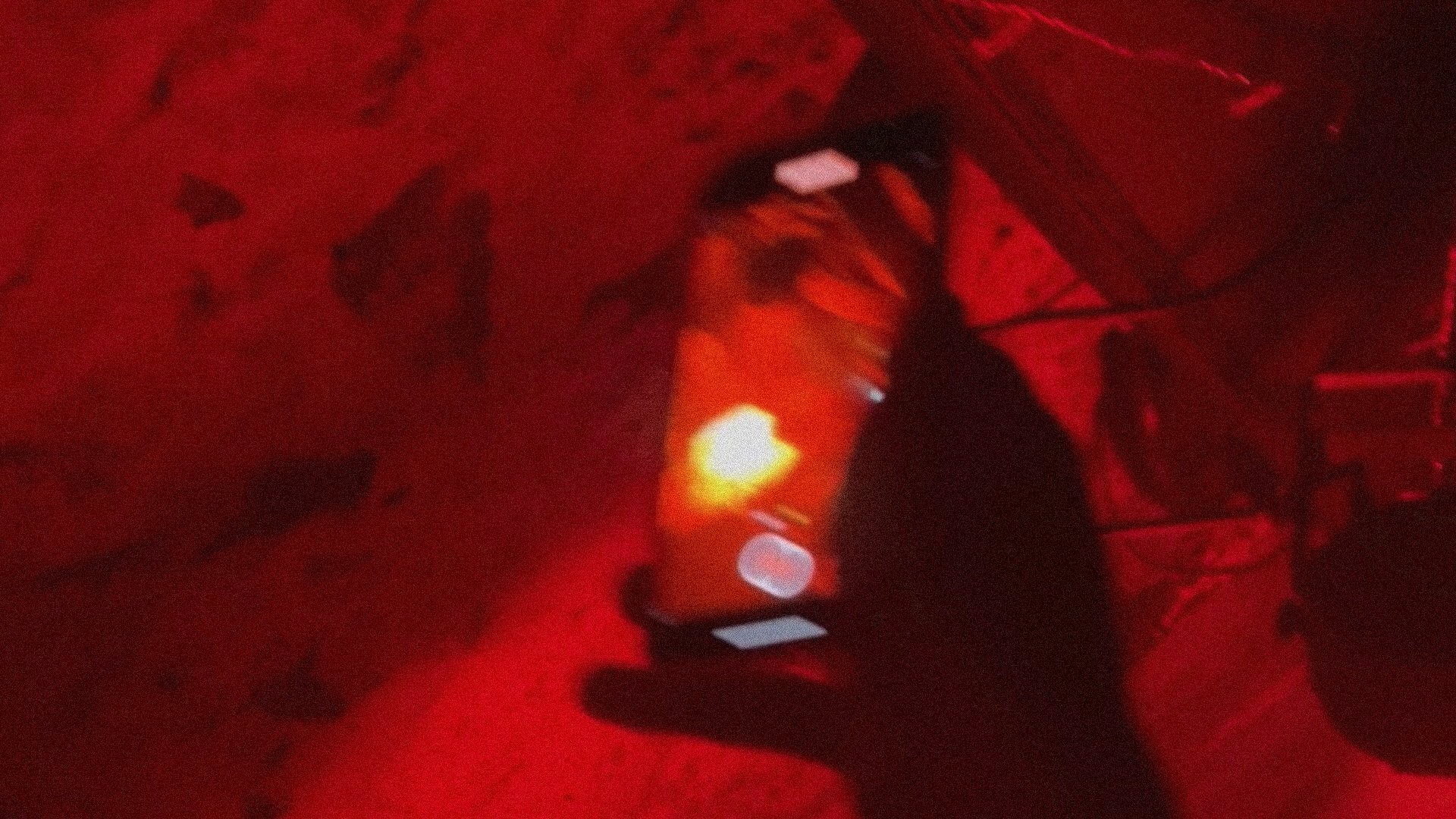
CM: Yeah, fully. You can be in the smokers’, chatting, having so much fun, but the dance floor is in many ways a retreat from that — you know, it's literally impossible to communicate with people because the music’s too loud, and you can just move and be by yourself. I think to me, that’s a really nice view on this idea of what it means to be lonely, and in some aspects, striving for a bit of loneliness for yourself. We're so connected and, again, the phone is this kind of reoccurring motif in the work, in how we mediate the world and are mediated by others. It’s intense.
We're all connected more than we've ever been before, so there is something to be said for switching off; and that doesn't have to happen in a bedroom when you’re alone, but can happen on a dance floor while you're surrounded by people.
Are you lonely tonight? I’m so lonesome I could cry is exhibiting at the Australian Centre for Contemporary Art (ACCA), Melbourne, from Friday 3 Jul 2026 – Sunday 30 Aug 2026.