
Becoming a ‘Future Relic’ with Daniel Arsham
Words by Lila Daly-Hyatt
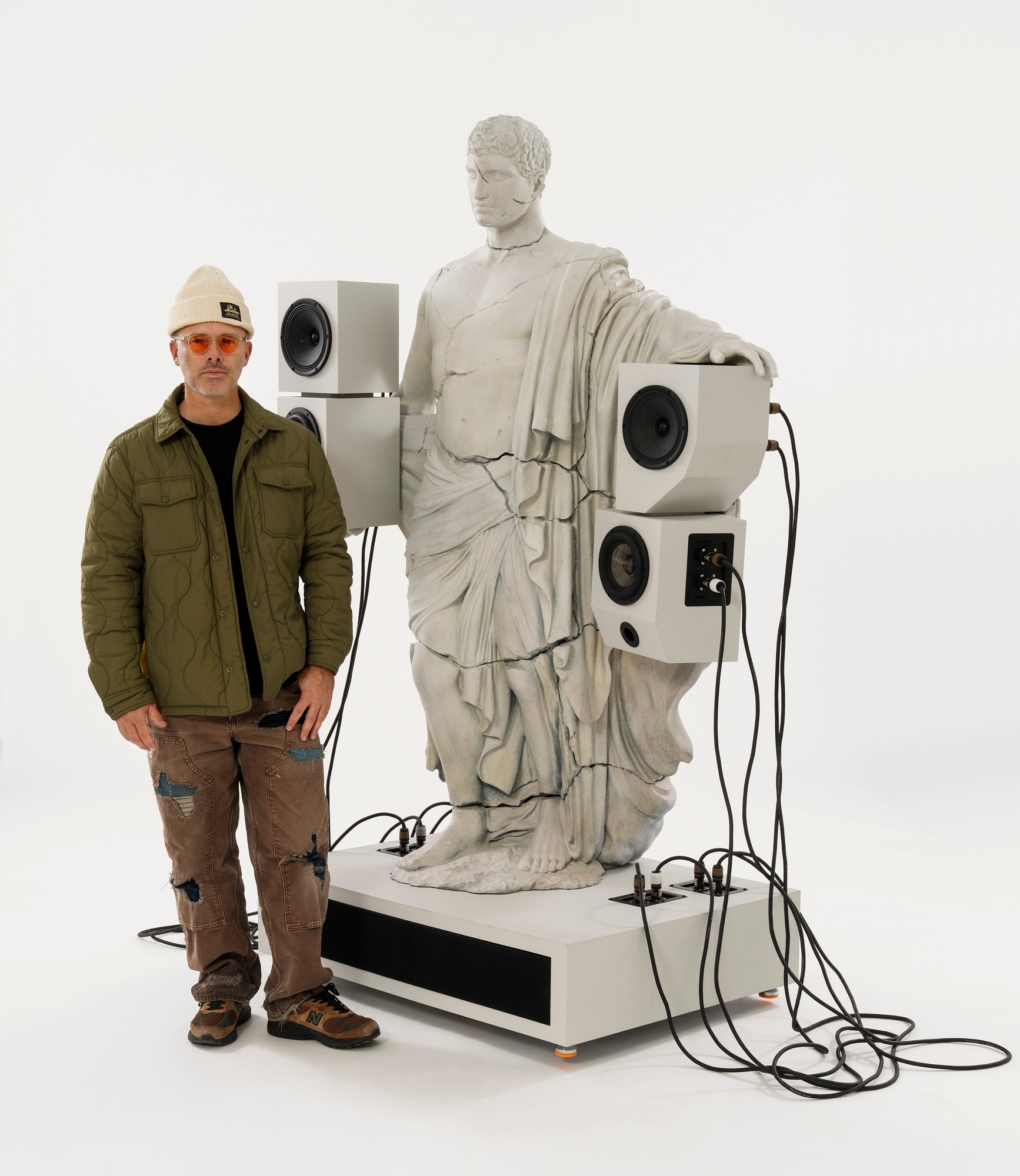
Photograph by Guillaume Ziccarelli. Courtesy of the artist and Perrotin.
What differentiates an everyday object from a relic? Often, it’s nothing more than time. Through his distinctive visual language of erosion and decay, New York based multi-disciplinary artist Daniel Arsham explores how modern objects become future relics. In his latest project, Arsham turns his eye for “fictional archaeology” to the structures of the art world, excavating what it takes to become a capital ‘A’ Artist. Eroding the myths surrounding artistic success, Arsham’s newest book, Future Relic, is the guide that he wishes he had as a struggling young artist.
Without claiming to provide a step-by-step manual — as Arsham recognises, there is no linear trajectory — Future Relic circles the practical realities of building a career as an artist. The book provides a candid autobiography of failure, risk, possibility, and the importance of mentorship in accessing an artistic world that can feel scarily opaque. From the story of starting his own gallery in a rented Miami house at just 21 years old to the clever persistence that secured his first opportunity to meet Emmanuel Perrotin, Future Relic brings a sense of pragmatism to a sphere often defined by elusive notions of success and recognition by an art world elite.
Following the release of Future Relic, Daniel Arsham caught up with A-M Journal to discuss finding meaning in rejection, how objects hold memory, and what art school doesn’t teach you.
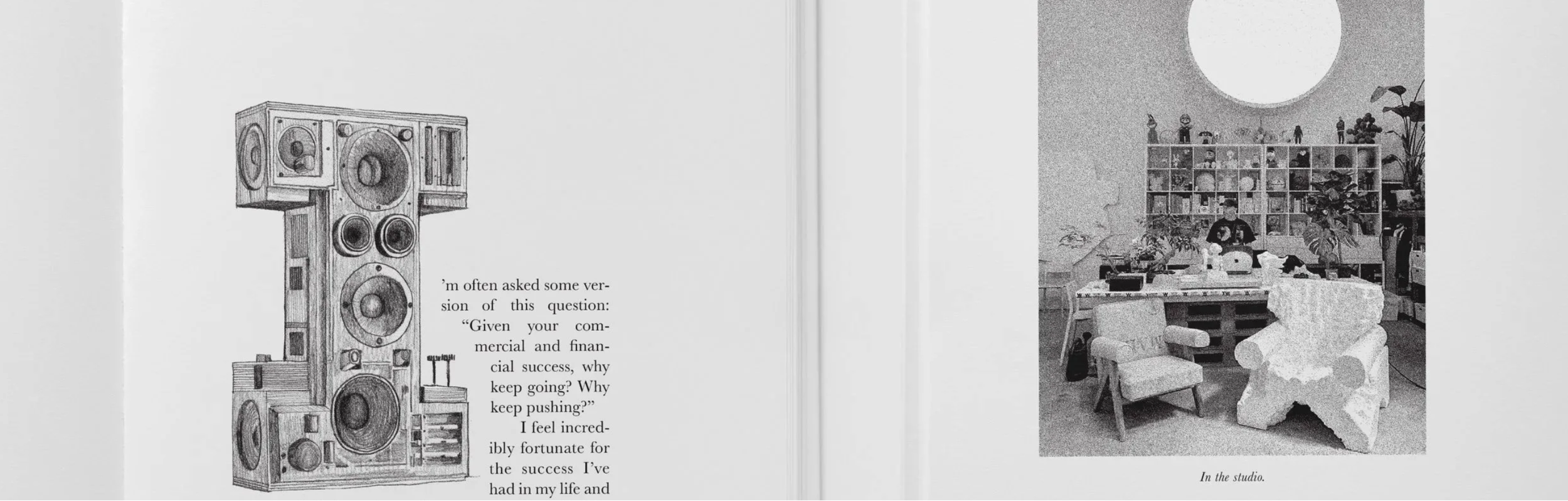
ARTS-MATTER: Drawing on your book’s title, can you unpack what you mean by a “future relic”? How does this concept impact your creative practice and modes of recording?
DANIEL ARSHAM: To me, a future relic is an object that feels displaced in time. It’s something familiar from our contemporary world, but presented as if it has been discovered hundreds or thousands of years in the future. I’ve always been interested in the way objects carry memory and meaning, and how culture gets compressed into physical things. When archaeologists uncover fragments from ancient civilisations, we build narratives around them. I like the idea that somebody in the distant future could do the same with our era through objects we completely take for granted today.
That way of thinking impacts everything I make. Even the act of recording work, photographing it, archiving it, or putting it into a book becomes part of this larger fictional timeline. I’m not just documenting objects, I’m building evidence of a world that doesn’t quite exist yet.
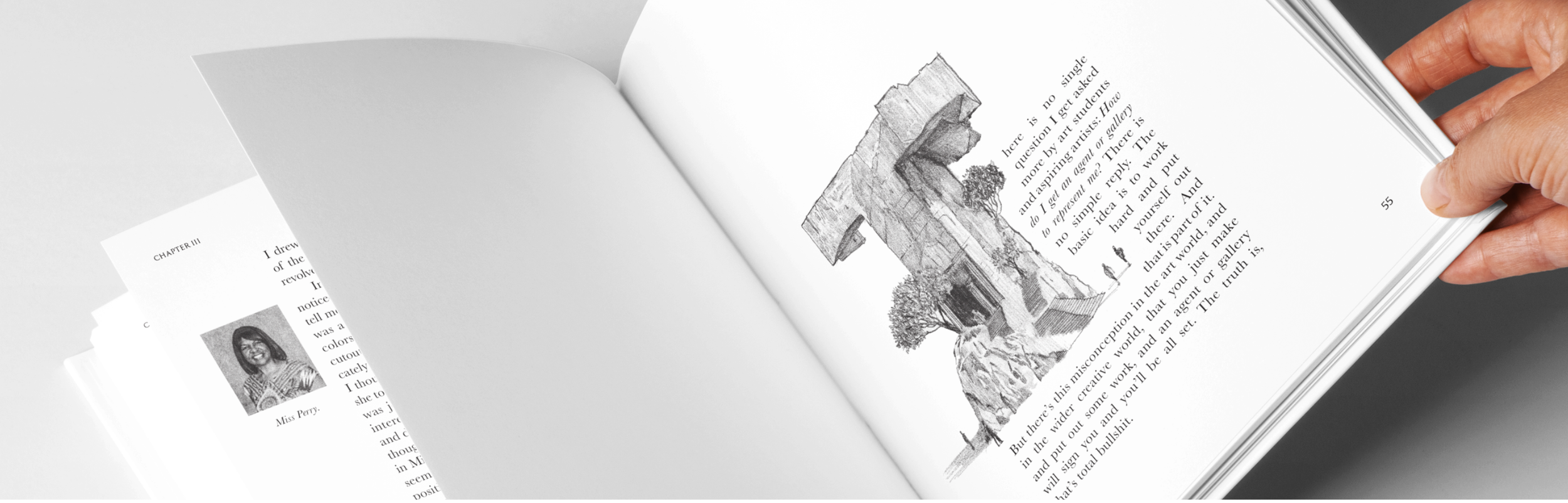
A-M: The book really speaks to the importance of mentorship. Did you see writing this book as a broader act of mentorship on your part?
DA: Definitely. I didn’t grow up with access to the art world, and when I was younger there were so many parts of building a creative life that just felt completely opaque to me. Art school teaches you how to make things, but it doesn’t really teach you how to survive as an artist, how to navigate relationships, failure, finances, rejection, or even how to sustain momentum over decades.
A lot of this book comes from wanting to share the things I wish somebody had told me earlier. Not as a formula, because everybody’s path is different, but as an honest account of what it actually takes. I think mentorship is really just shortening the distance between somebody’s ambition and their understanding of what’s possible.
A-M: Failure, and the ability to persist through it, is another important consideration in Future Relic. Do you have a self care ritual or trusty method for pulling yourself back together after a failure or rejection?
DA: Honestly, I don’t romanticise failure, it still feels terrible every time. But I’ve learned that almost every meaningful thing in my life came on the other side of rejection or periods where nothing seemed to be working. I think persistence is probably more important than talent in most creative fields.
For me, the best way through it is movement and routine. I go back to the studio. I work. I play golf. I exercise. I try not to sit inside the emotion for too long. Making things has always been the way I process my life. The worst thing you can do after rejection is stop moving forward.
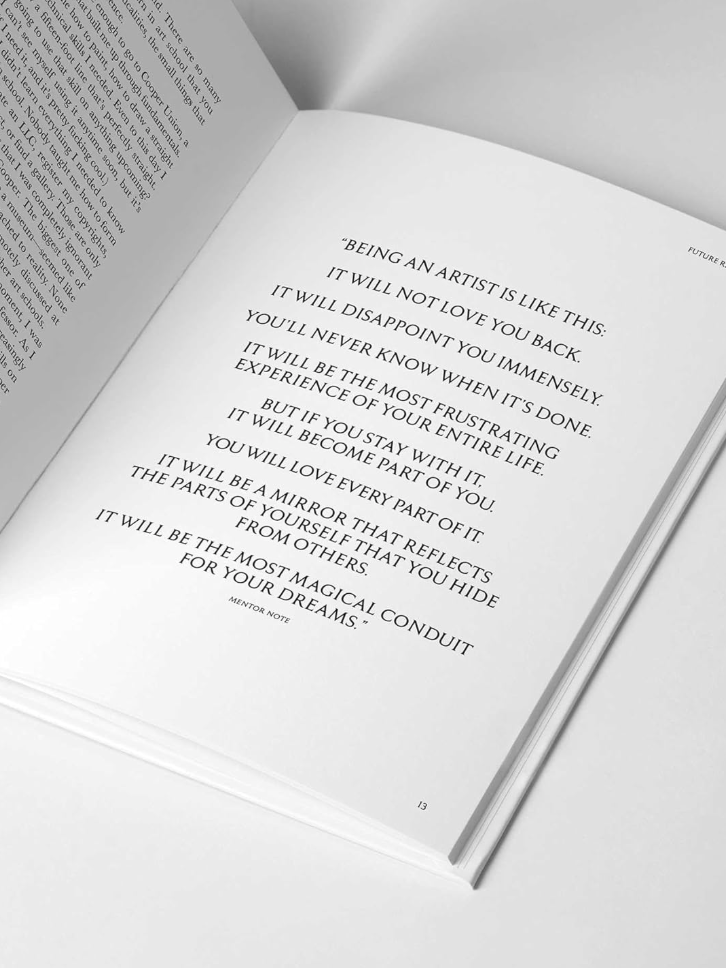
A-M: You’ve spoken about artistic practice as a kind of “mirror that reflects the parts of yourself that you hide from others.” In Future Relic, you draw on personal experiences that you haven’t shared before. Was the vulnerability of sharing these experiences in writing different from the other works you create?
DA: Yeah, completely different. Sculpture can be incredibly personal, but it’s also abstracted through material and form. You can hide inside the work a little bit. Writing is much more direct. There’s nowhere to hide when you’re telling stories from your own life in a literal way.
At the same time, I realised that the moments I connected with most in other people’s stories were usually the imperfect ones. The failures, insecurity, uncertainty, obsession. So I felt like if I was going to write this book honestly, I had to include some of those experiences. Otherwise it just becomes mythology, and I wasn’t interested in making mythology about myself.
A-M: You also describe your practice as a way of “making things that you wish existed in the world.” Is there an everyday object or technology that you wish existed?
I’m fascinated by objects that can quietly integrate into daily life while still carrying emotional or poetic weight. I think a lot about technology becoming invisible instead of louder and more distracting. I’d love to see objects that age beautifully instead of becoming obsolete, things that accumulate memory the way a leather chair or an old building does.
Honestly, I think part of my practice comes from frustration with how disposable most contemporary objects feel. A lot of the things I make are attempts to create permanence in a culture that’s increasingly temporary.