
Digital Languages, Material Lives with Petra Cortright
Interview by Lila Daly-Hyatt l Photography by Olivia Repaci
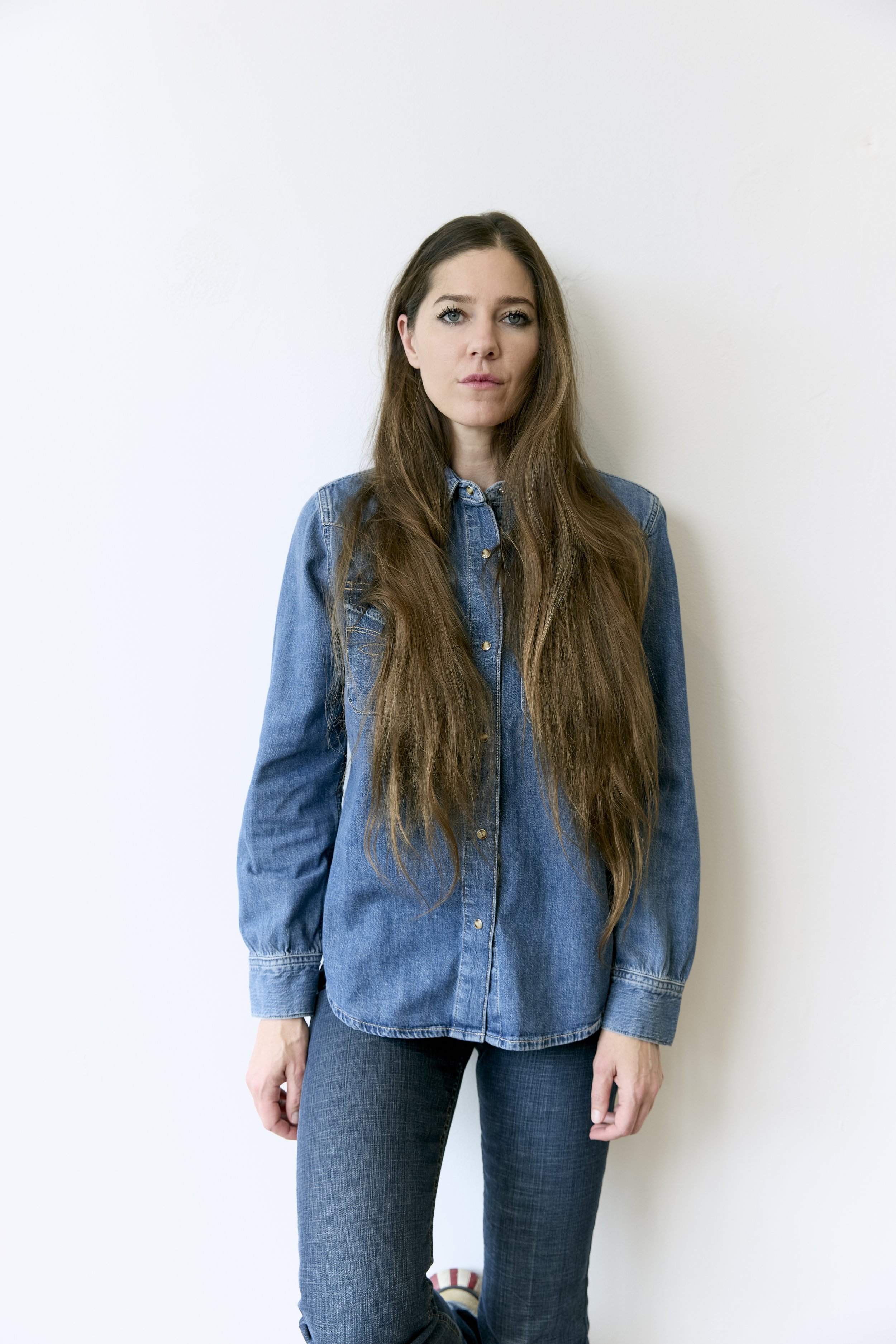
Not many painters can say that they have every brushstroke they have ever made — but artist Petra Cortright can.
A leading figure in digital painting and the “Post-Internet Art” movement, Los Angeles-based artist Petra Cortright brings her distinctive painting approach to Sydney for the first time with her solo exhibition shot silk wave star weep crush jet win, showing at 1301SW until the 22nd of August.
Rising to prominence through self-portrait webcam videos posted to YouTube, Cortright is known for her detailed digital paintings, created in Photoshop using painting software, image manipulation, and brushstrokes made on her Wacom tablet. Working with layered digital files which can evolve endlessly, Cortright’s works are responsive and atmospheric, often attuned to the geography of a particular place. With a subtle nautical theme, her first exhibition in Sydney responds to the shared coastal landscapes of Australia and Southern California.
Posessing an acute instinct for world-building, Cortright’s works become their own environments — layered, rich, and full of movement, they dispel the crispness and sleekness often associated with digital art. The seemingly endless capacity of the digital file, with its countless layers and continual revisions, creates paintings that function as both landscapes and portals: windows that simultaneously look outwards and inwards, revealing traces of their virtuality through a repetition of symbols and brushstrokes while expressing an organic sense of rhythm and spontaneity.
Reflecting on the opening of her exhibition at 1301SW, Lila Daly-Hyatt speaks with Petra Cortright about challenging visual monocultures, the misconceptions surrounding digital art, and how to create from a place of abundance rather than scarcity.
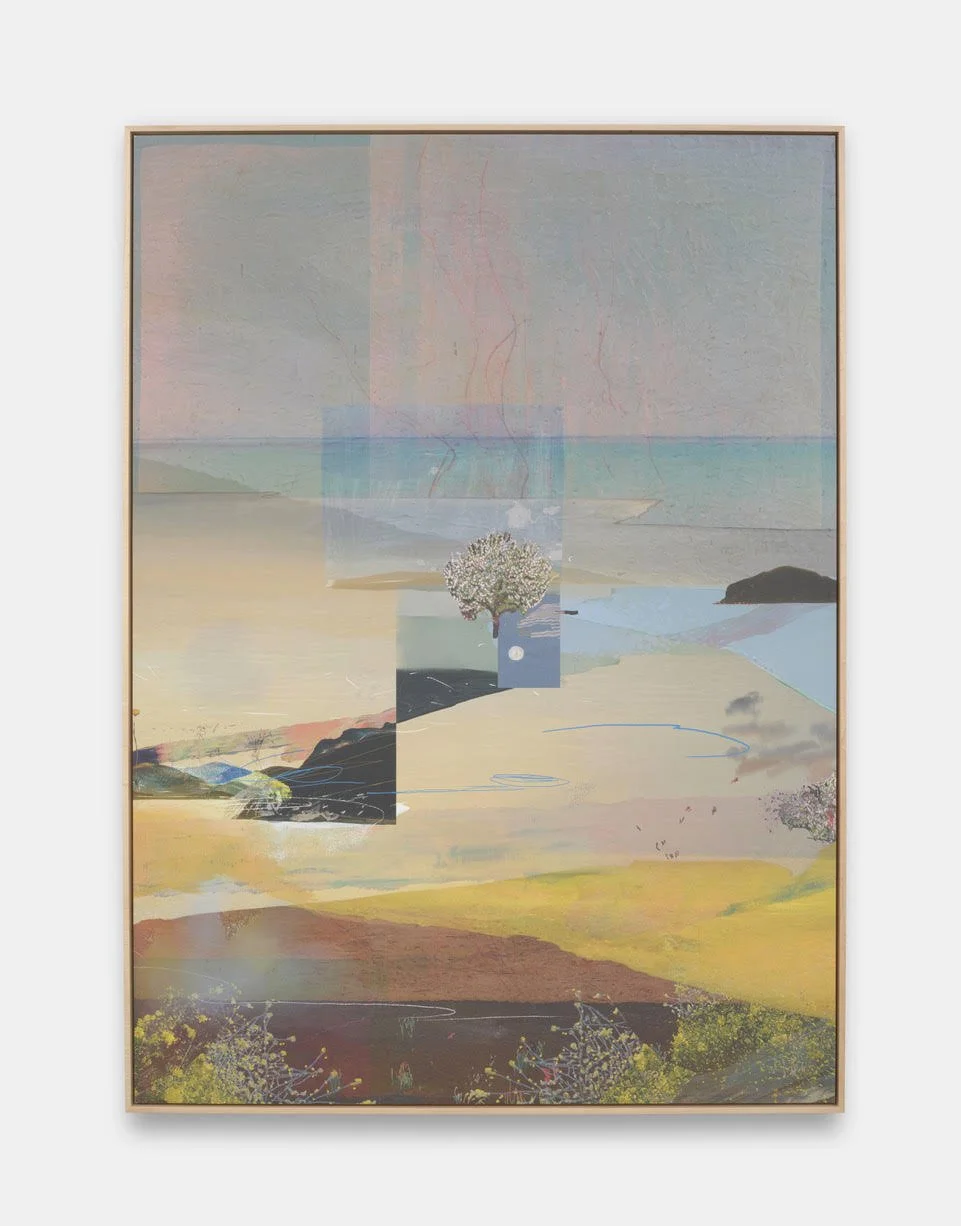
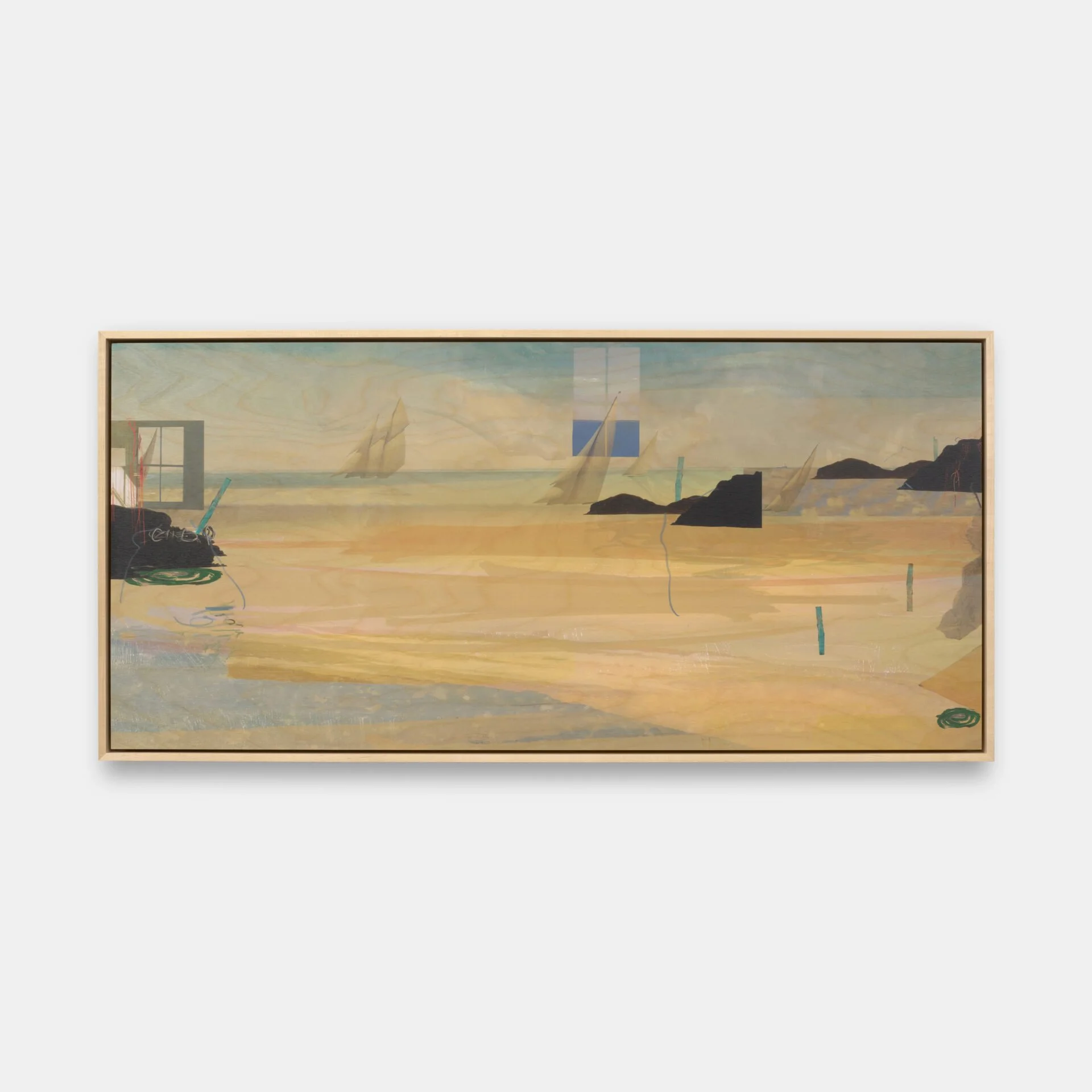
Petra Cortright, “Atlantic_atm_155mbit” bandwidth_benchmark throughput.csv, 2026.
Digital painting on canvas. Photograph courtesy of 1301SW.
LILA DALY-HYATT: Could you tell us a bit about your practice, and your upcoming exhibition at 1301SW?
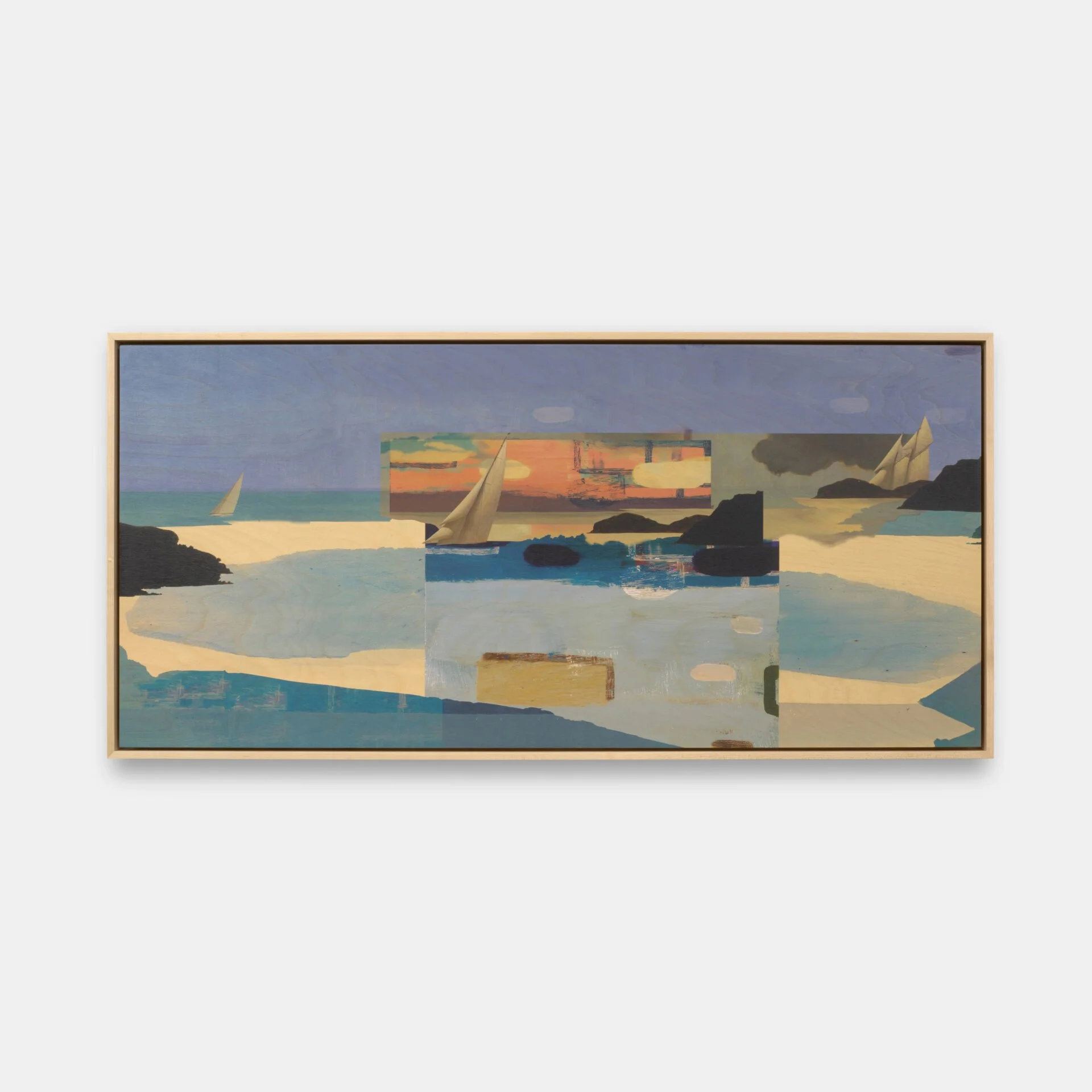
PETRA CORTRIGHT: I’m an artist from Southern California, I’m a painter and I make videos. I have worked digitally for my entire career. This exhibition brings together a new body of physical landscape paintings on wood, canvas and aluminium, alongside a new video work. The exhibition has a loose nautical theme, shaped as much by atmosphere as by subject. The paintings are informed by the Pacific, but they are not tied to a specific location. Instead, they consider the visual and psychological space shared across oceanic landscapes. For this show, I developed a colour palette with Sydney and Australia in mind.
Rather than illustrating the landscape directly, the work responds to the qualities of light, water, and coastal experience that connect Southern California and Australia. The paintings and video move between observation and invention, using colour, rhythm, and surface to suggest a landscape that feels both familiar and imagined.
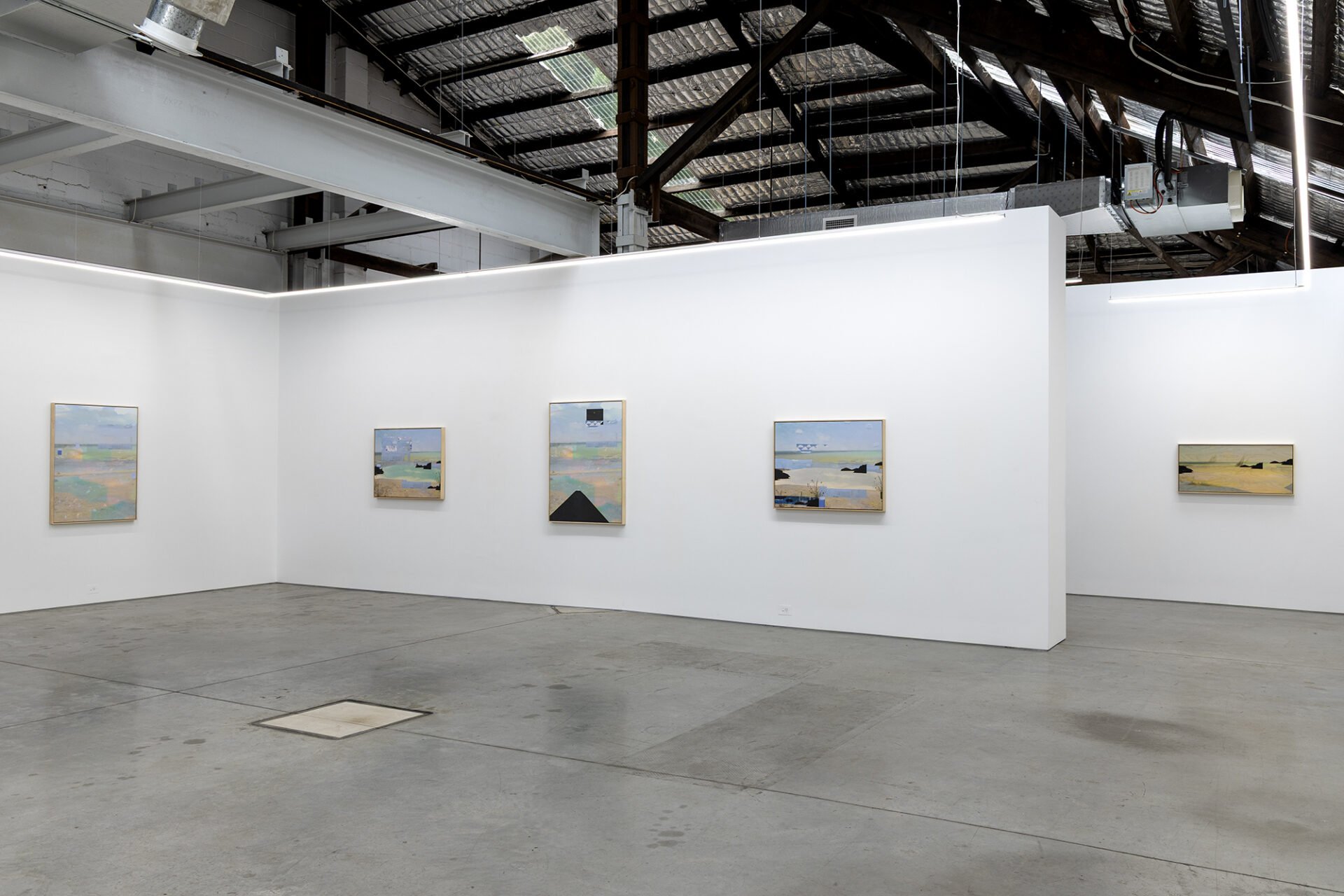
Petra Cortright, shot silk wave star weep crush jet win, 2026 (installation view). Photograph courtesy of 1301SW.
LDH: What’s the most common misconception about your practice as a digital artist? Are there things you find yourself explaining over and over again?
PC: I've worked digitally for my entire career, and I'm proud of that. Digital space is expansive, almost limitless, and I think that quality can make people uneasy. There's a common assumption that if a work begins as a digital file, its physical form must be infinitely reproducible: that making a physically printed painting is as simple as pressing a button. In reality, the opposite is true. The digital file is where I experiment. It can evolve endlessly. But the physical work is the result of years of research into materials, colour, scale, and process.
It's surprisingly easy for a digitally produced image to become lifeless. The difference between a dead print and a beautiful object lies in important technical decisions and executions, all of which matter. The paintings are produced on commercial printers that occupy entire rooms, working alongside a master printer. Every stage, from colour management to substrates to finishing, is carefully considered. They are expensive and time-consuming to produce because the goal is never simply to reproduce an image.
The goal is to make an object with presence: something singular, beautiful, and worth encountering in person. I love the freedom of making digital images. They can proliferate endlessly, and that's part of their vitality. But that freedom doesn't diminish the value of physical work. If anything, it makes the moment a work becomes an object even more meaningful. It's the culmination of countless decisions that transform an image into something materially specific and irreducible.
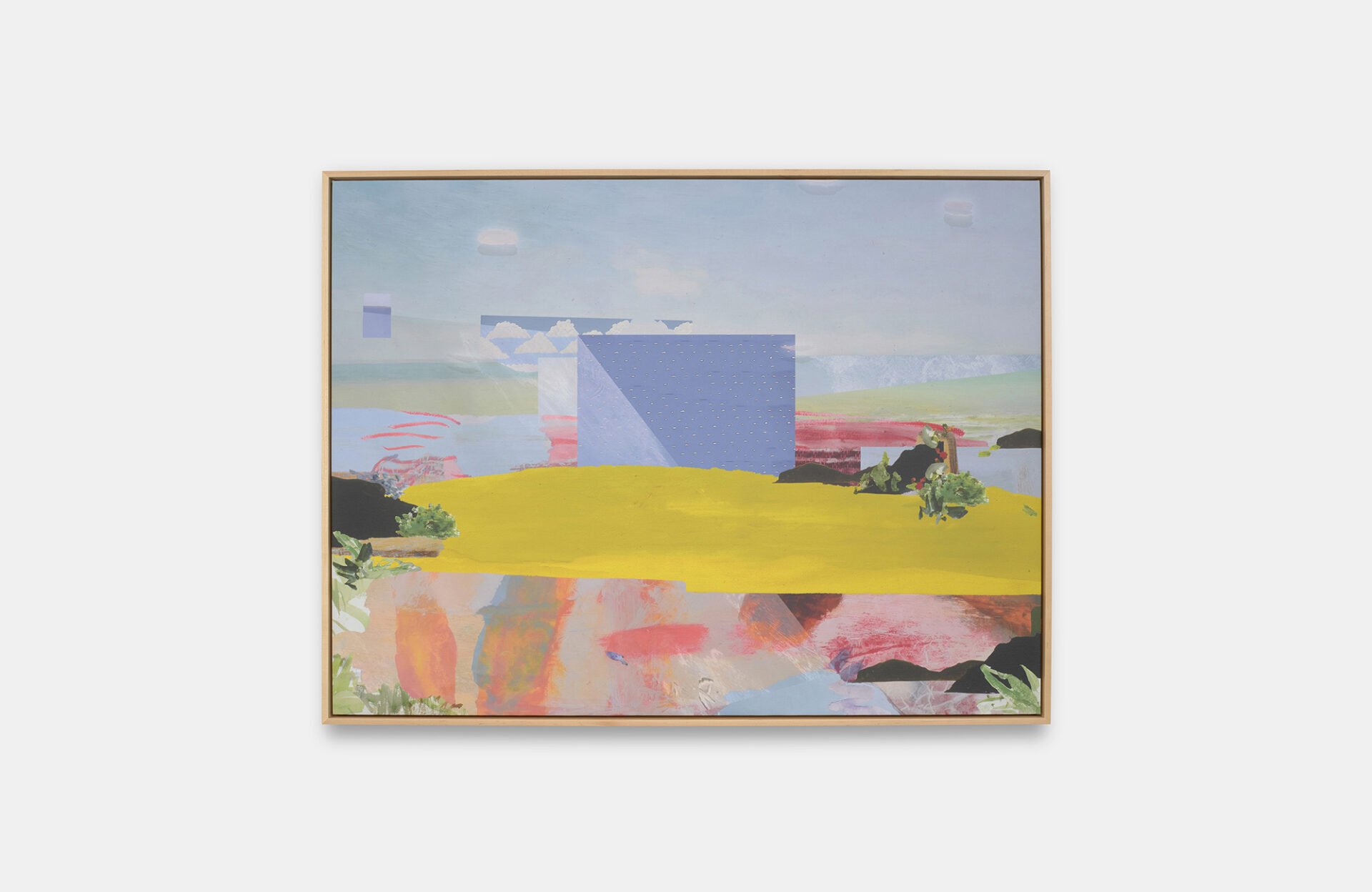
Petra Cortright, "Harper_weekly_1872" elephant_republicans engraving_set.ai, 2026.
Digital painting on canvas. Photograph courtesy of 1301SW.
LDH: Your work exists across so many different contexts, on YouTube, on screens, as digital files, as NFTs, and as large-scale artworks in galleries, like those in your exhibition at 1301SW. How do you think about the viewer in relation to your work?
PC: I don't spend much time thinking about the viewer. That's not meant as a provocation; it's simply true. My attention is on the work itself and where it exists in the world. I'm interested in whether a painting feels right for a particular place, not conceptually, but geographically.
I think about colour more than anything else. Painters are always thinking about colour because colour is inseparable from light, and light is different everywhere. The same blue, the same grey, the same green can feel entirely different depending on where you are. A place has its own atmosphere, and that atmosphere determines what a colour can do.
LDH: Thinking about atmosphere, what does materiality add to your work? Does something change for you when a work moves from the screen into a physical space?
PC: What interests me is the moment that digital image becomes a physical object. I don't think of that as reproduction. I think of it as translation. The substrate determines so much of the work's character. Canvas, wood, and aluminium each receive ink differently. They absorb light differently. They have different temperatures, different surfaces, different physical presences.
The same image changes completely depending on the material it inhabits. For this exhibition, the works exist across three substrates: canvas, wood, and aluminium alongside the single video. Together they describe different ways that a digital painting can occupy physical space. I'm interested in how the same digital language can take on different material lives.
LDH: You started out experimenting with early webcam videos and continue to embrace low quality imagery in your work. We now have such sophisticated yet widely accessible image-making tools, but there’s a continued, and even renewed, fascination with webcams, early digital cameras and low-res aesthetics. What do you think these kinds of images and lo-fi technologies make possible that more advanced tools don’t?
We're living through a moment of visual monoculture. The same phones produce the same images, framed in the same aspect ratios, circulating through the same platforms. Our cameras have become remarkably sophisticated, but they've also become remarkably standardised. The world is increasingly seen through a single visual language. Image-making is much wider than that. I'm interested in the differences between images, the qualities that emerge from particular cameras, lenses, resolutions, printing processes, and materials.
People often describe older or lower-resolution images as nostalgic, and perhaps they are. But what interests me isn't nostalgia so much as difference. A low-resolution image, an unusual lens, a particular printing process, or an unexpected substrate all produce distinct ways of seeing.
LDH: The internet is like a borderless archive of images. Where do you find yourself looking for images online, and what do you enjoy most about the process of collection?
PC: Images call to me. Sometimes I'm in the mood to hunt for them, but more and more they find me. I don't really distinguish between collecting and making images.
Being an artist is about paying attention. An image might come from something I've photographed, something I've seen online, a memory, a film still, a fragment of a map, or a detail that catches my eye for reasons I can't immediately explain. They accumulate over time until certain relationships begin to emerge.
LDH: Is there anything particular that’s inspiring you at the moment?
PC: I visited the Avatar: Forms of Vishnu exhibition at the Art Gallery of New South Wales, and I haven't stopped thinking about it. The watercolours in particular, their colour, their precision, the density of detail have stayed with me.
LDH: You've previously spoken about how you could easily make hundreds of paintings a day, producing far more work than you’re ever able to exhibit or sell through the traditional art world. Contemporary art often relies on ideas of scarcity and exclusivity, which NFTs do, as well. How does your practice, with its scalability and editability, sit in relation to those ideas?
PC: There are ideas about art that I don't find useful anymore. Some of them belong to an earlier moment: the belief that value depends on scarcity, that audiences should be exclusive, or that opportunities are finite. I don't recognise my own experience in those ideas.
My practice has always been built through openness. I've had the privilege of working with many different people, in different places, for different audiences. None of those experiences has diminished the others. If anything, each one has made the work stronger. I don't believe generosity weakens art. I don't think sharing images, exhibiting in different contexts, or reaching different communities makes the work less meaningful. Quite the opposite. Images have always traveled. They accumulate histories as they move through the world. Digital technology has made that movement more visible, not less valuable. It has expanded the ways an artist can work, collaborate, and connect.
“The challenge isn't to manufacture scarcity where none exists. It's to make objects, experiences, and relationships that have real presence.”
There is enough to go around. I've found that to be true throughout my career. I work from a place of abundance rather than scarcity (fear).”
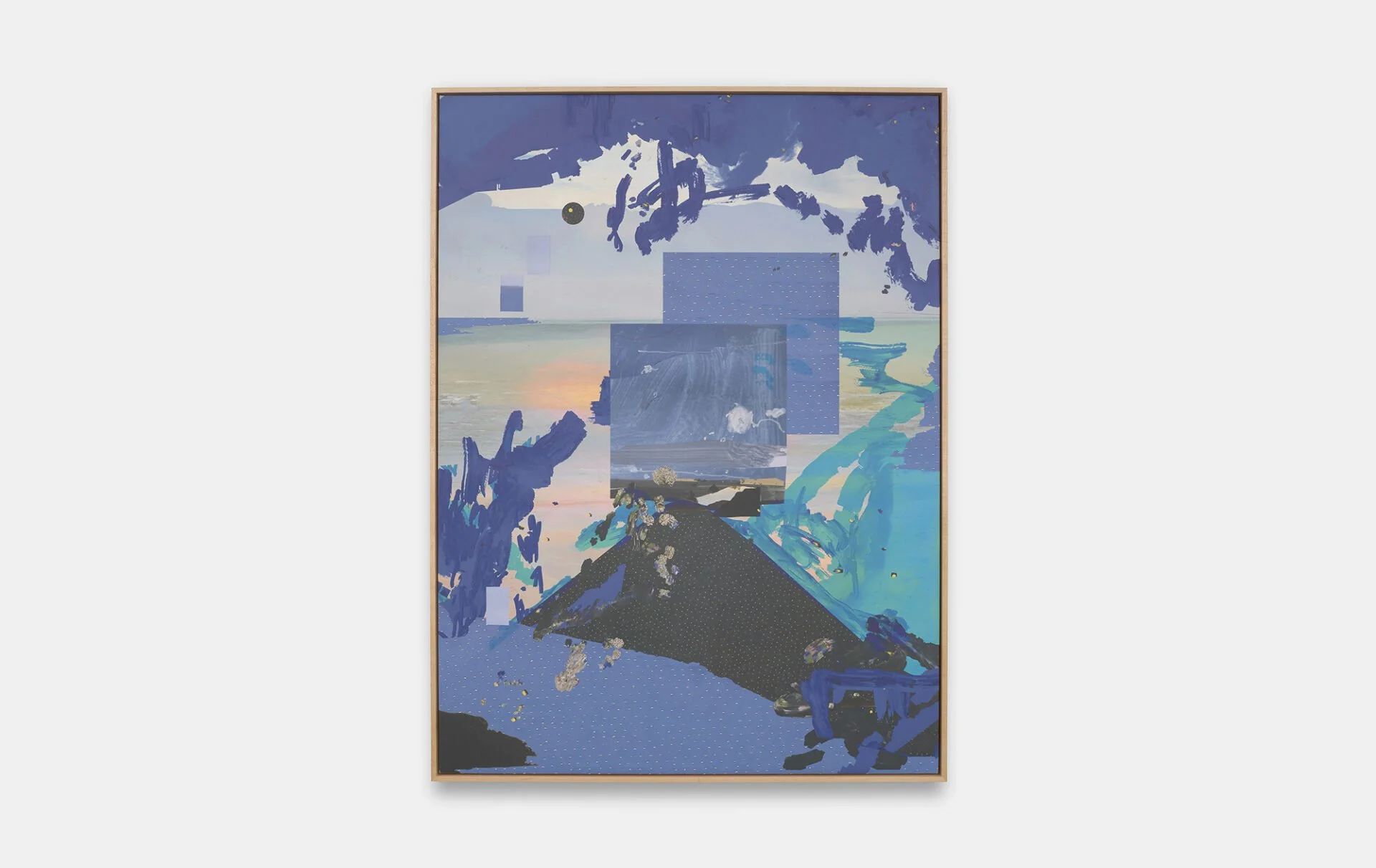
Petra Cortright, “Ohio_36th” eld_artillery roster_update.dat, 2026.
Digital painting on canvas. Photograph courtesy of 1301SW.
LDH: Despite working digitally and being positioned as a leading figure in the “Post-Internet Art” movement, your subject matter is quite traditional – as you’ve previously said, your work centres landscapes, still-lifes and portraits. What interests you about working within these traditional genres?
PC: The subjects I return to are old because they have never stopped being relevant. Artists have always thought about landscape, water, mountains, weather, light, and the horizon. So has everyone else. These aren't historical subjects; they're permanent ones.
I'm interested in the emotional weight of a landscape, how the ocean can make you feel, how mountains alter your sense of scale, how colour and light shape memory. Those experiences don't become obsolete. I don't expect them to. I think I'll spend the rest of my life trying to understand them.
“For me, making work is a way of reaching toward beauty. That's not a retreat from the world. Beauty can be a serious pursuit. It asks for sustained attention, patience, and care. It asks you to keep looking.”
I don't feel any obligation to make work about whatever happens to be dominating the conversation at a given moment. Other artists do that brilliantly. My own practice moves at a different pace. I'm interested in things that remain true regardless of the year they're made. Perhaps that's why I keep returning to landscape. It isn't a backdrop; it's a way of thinking. The ocean, the sky, the changing light, these are subjects that continue to exceed us. They offer endless variation, and they never stop asking to be seen again.
Petra Cortright, shot silk wave star weep crush jet win, is exhibiting at 1301SW Sydney until Saturday 22 August.