
To shake the soul: ‘Devotion’ with Sly Morikawa
Words by Lila Daly-Hyatt
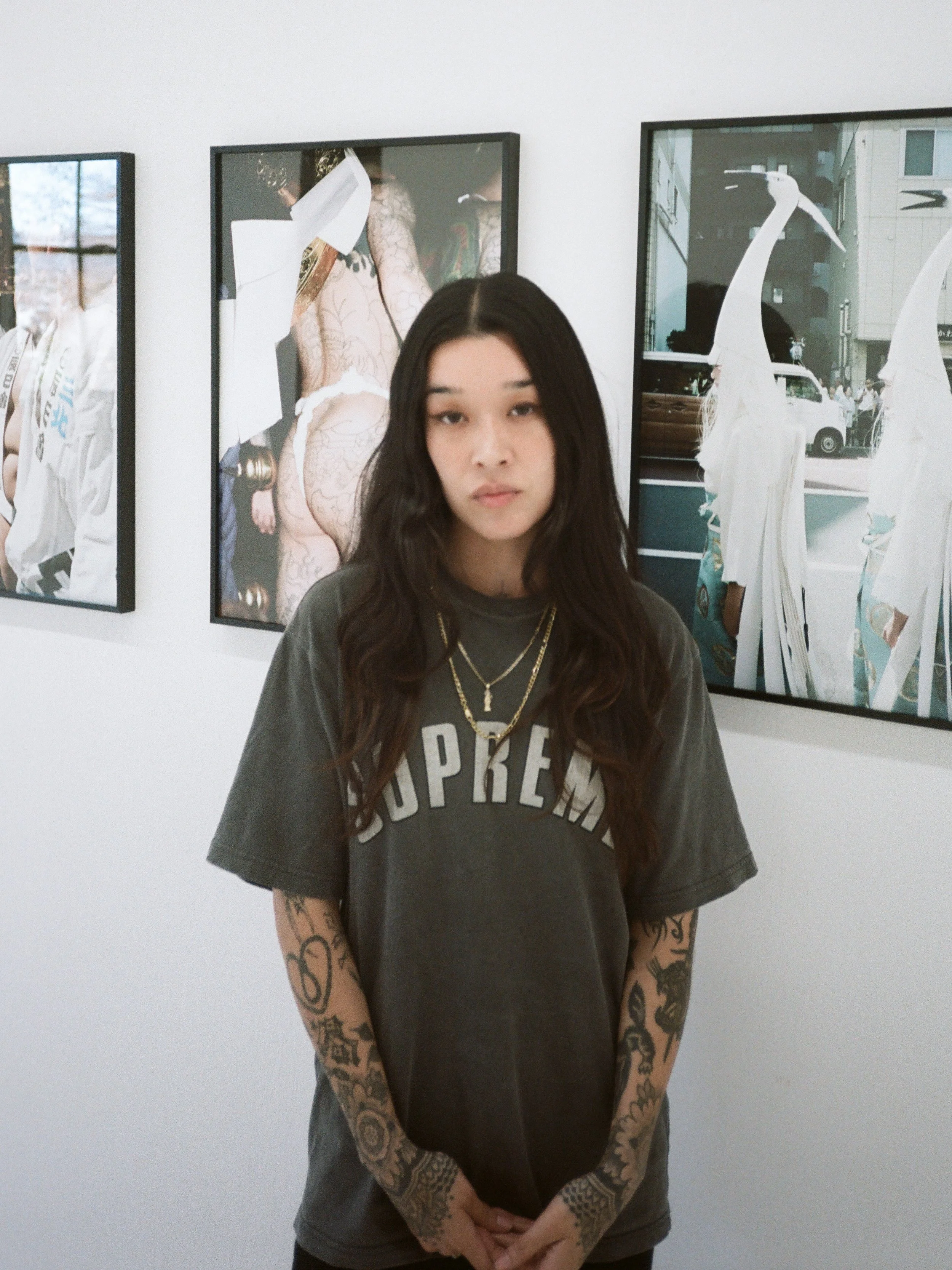
Sly Morikawa. Photograph by Chris Loutfy.
We all build our own archives. A scrap of paper goes in a box under your bed. A coaster from the bar makes its way onto your fridge. A friend sells you a film camera and you start to take pictures. That’s how Sly Morikawa became a photographer.
A Sydney-based Japanese-Australian photographer, Morikawa’s solo exhibition and latest photo series, Devotion, opens at China Heights gallery on Friday 14 August. ‘Devotion’ might recall a sense of duty, an imperative of representation. A dedication to tradition, an immersion in cultural practice. For Morikawa, ‘devotion’ is a commitment to memory: an overwhelming desire to record, to document. Growing up immersed in her mother’s photos and family archives, Morikawa is attuned to the intersections of history, memory and cultural tradition. “I’ve always been fascinated by the history of my family archives”, says Morikawa. “I’m deeply interested in Japanese tradition and cultural practices because of my heritage.”
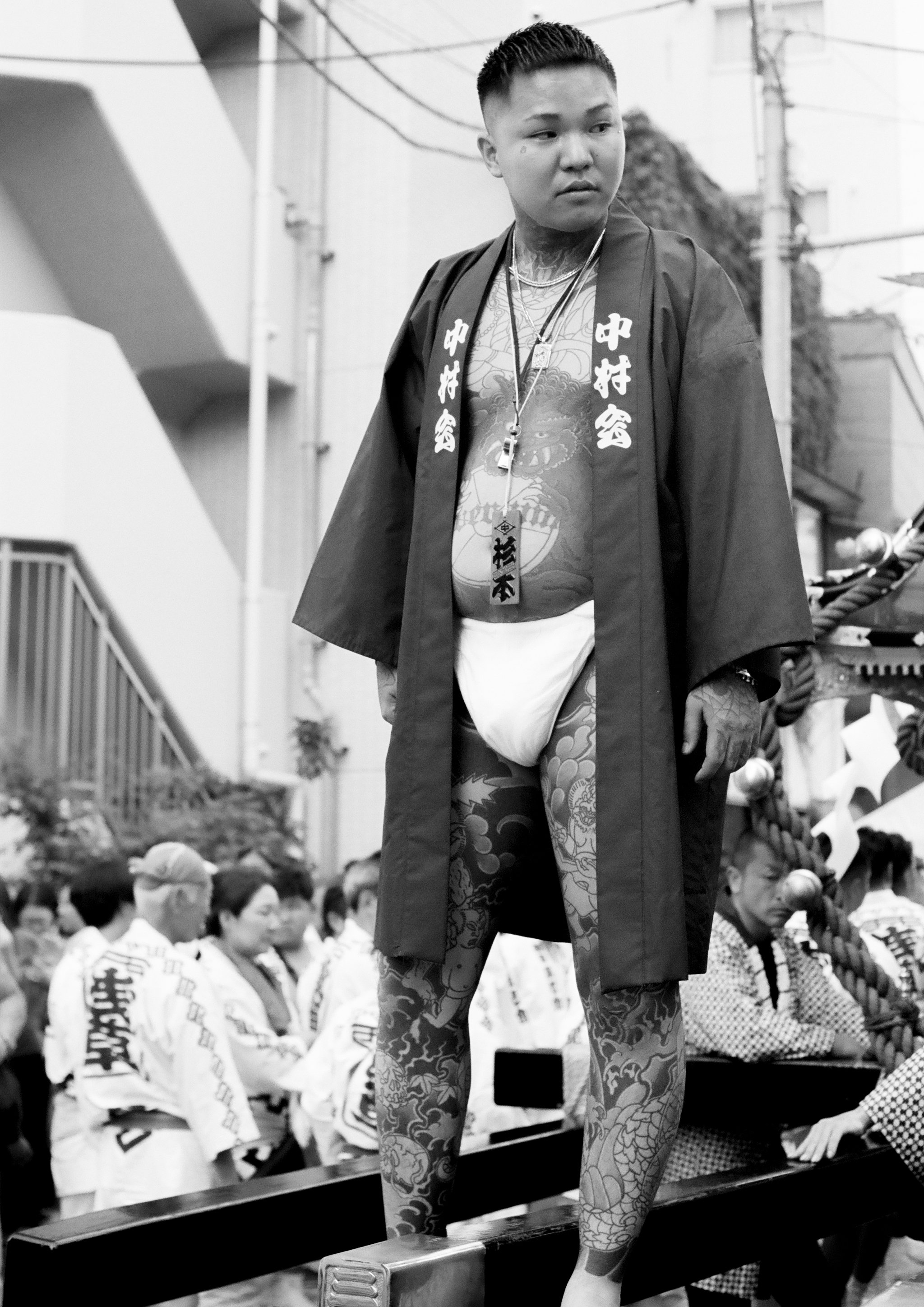
Her latest series intimately captures the energy of the Sanja Matsuri, one of Tokyo’s largest and wildest Shinto street festivals, and, as Morikawa explains, “one of the only times one would get to see the yakuza boldly displaying their irezumi, tattoos, in public.” Her exhibition extends the body of work which began with her debut photobook of the same name, published in 2024 with Friend Editions. “I already had thoughts of returning to Sanja Matsuri at some point to continue documenting it”, says Morikawa, “but when the initial photobook sold out as quickly as it did, it felt like further motivation to expand the project.” Where Devotion’s debut focused on the yakuza families involved in the festival, its new iteration at China Heights broadens this lens, capturing the energy and atmosphere of the festival itself.
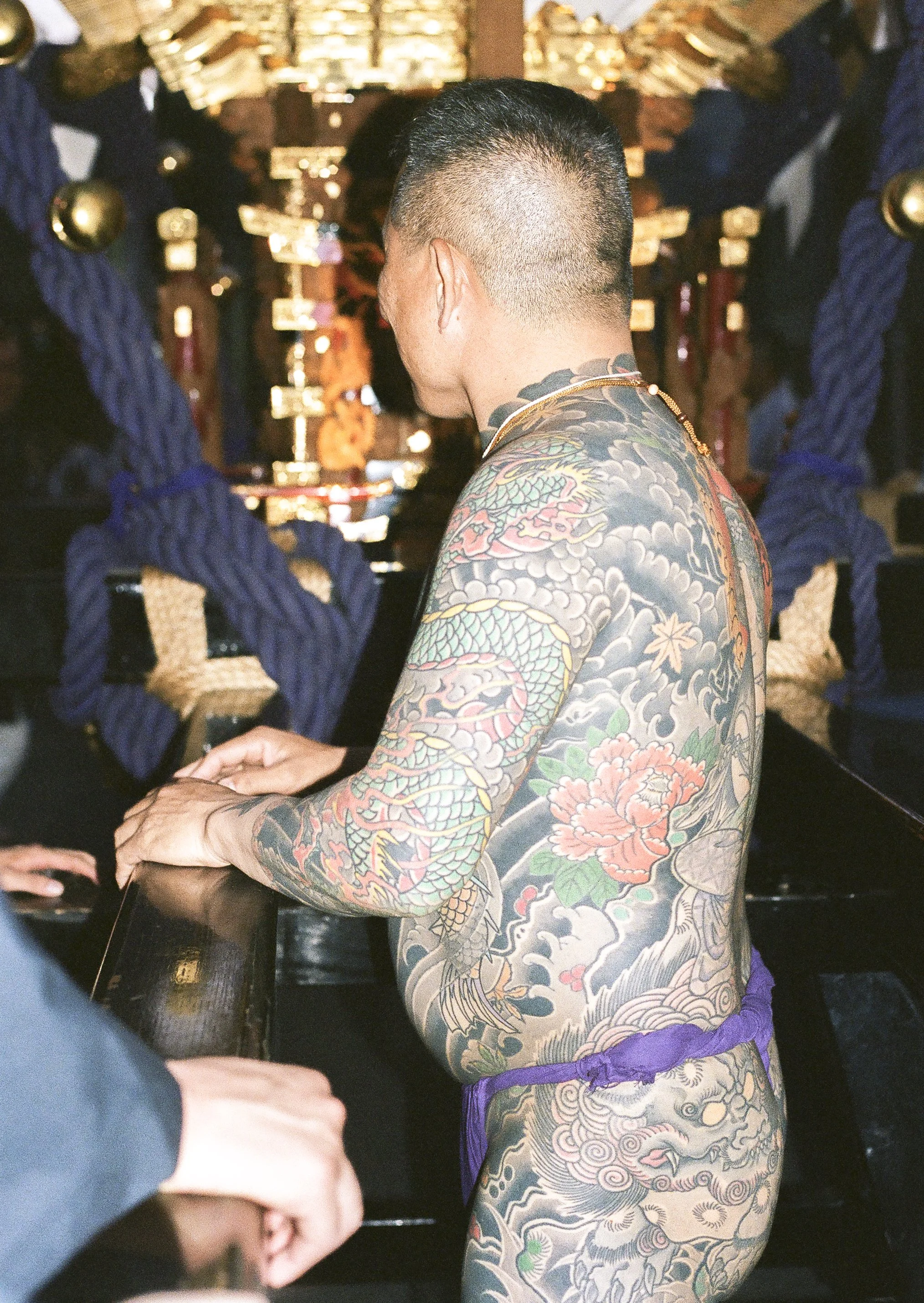
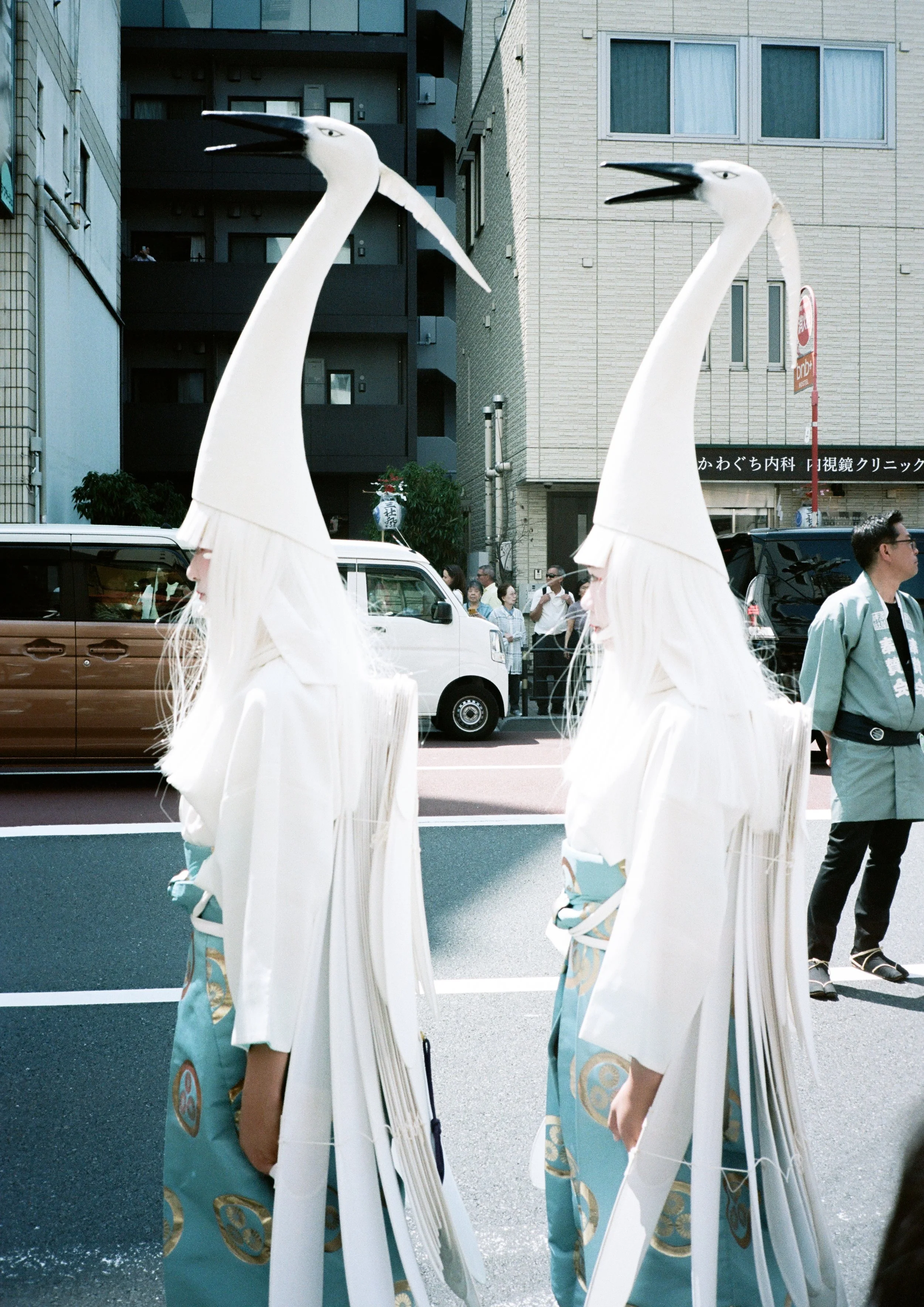
With the sound of chanting and chatter punctuated by the sharp rap of taiko drums and flutes, bare-backed yakuza with their irezumi, flaunted openly when usually censored in public spaces, street drinking and raucousness sanctioned for three days only, the Sanja Matsuri is both an exception and a rule. Social norms relax, those on the fringes come to the fore, and community is cultivated through shared tradition. Here, Morikawa’s photographs, and the subjects and setting they capture, are characterised by balance — between revelry and restraint, darkness and light, novelty and tradition, insider and outsider.
To occupy the place in-between is to trouble ideas of what is “normal” – whether deliberately or not. “While the notion of suspending stigma is naturally a part of my work, it’s not something that I think about intentionally”, says Morikawa. “My approach to photography is uncomplicated. I just do what I want to do, I only seek out what resonates with me, and I think my lens is shaped by my interests and life experience.” For Morikawa, lived experience becomes the starting point. “I have an understanding of life outside the norm because I never sought to live life “normally””, explains Morikawa. “I see people for who they are and not what society places value on, and I want to document that.”
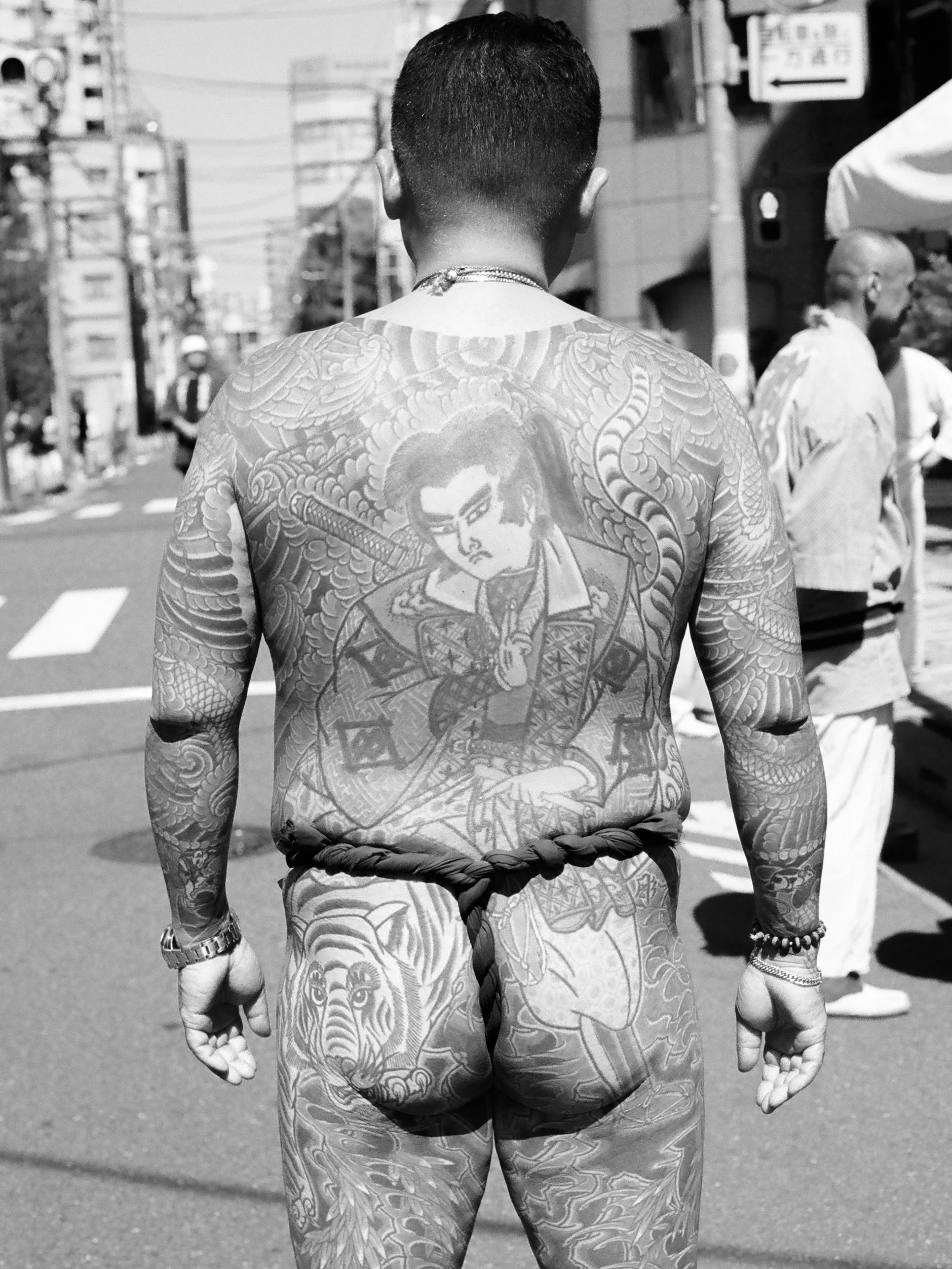
I ask Morikawa whether she sees herself as a participant or an observer, and bring up a quote from Nan Goldin — a parallel perhaps predictable for many photographers, but Morikawa doesn’t seem to mind, citing Goldin as a photographic influence. “I do not take the pictures I have in my head; I experience things, and they become pictures”, said Goldin. Morikawa agrees. “You experience life as it happens, and you document that.”
Straddling this line between participant and observer can be rewarding. “Despite this being my second time at Sanja Matsuri – I was there in 2024, and now 2026 – despite my heritage, and despite being welcomed back by familiar faces to come celebrate with them again, I’m still an outsider”, she says. “But being an outsider also means being an observer. It allows me to catch those fleeting moments that might otherwise pass unnoticed.” This suspension of expectation reflects her commitment to the subcultural communities she documents. Being an outsider creates room for surprise – distance gives you space to notice. “Instead of trying to insert myself into the centre of the experience”, Morikawa says of the Sanja Matsuri and the practice of candid, documentary-style photography, “I could let the photographs emerge from what I witnessed rather than what I expected to find."
For Morikawa, even in a crowd of thousands at one of Tokyo's biggest and busiest festivals, a dialogue between photographer and subject remains central: “I don’t love the idea of catching people off guard – the subject and I are both very much present in the moment”, she clarifies. “That shared understanding is important to me. Even when the subject’s doing their thing, it’s not about catching them off guard, and more about capturing the reality of that moment, the way I saw it.”
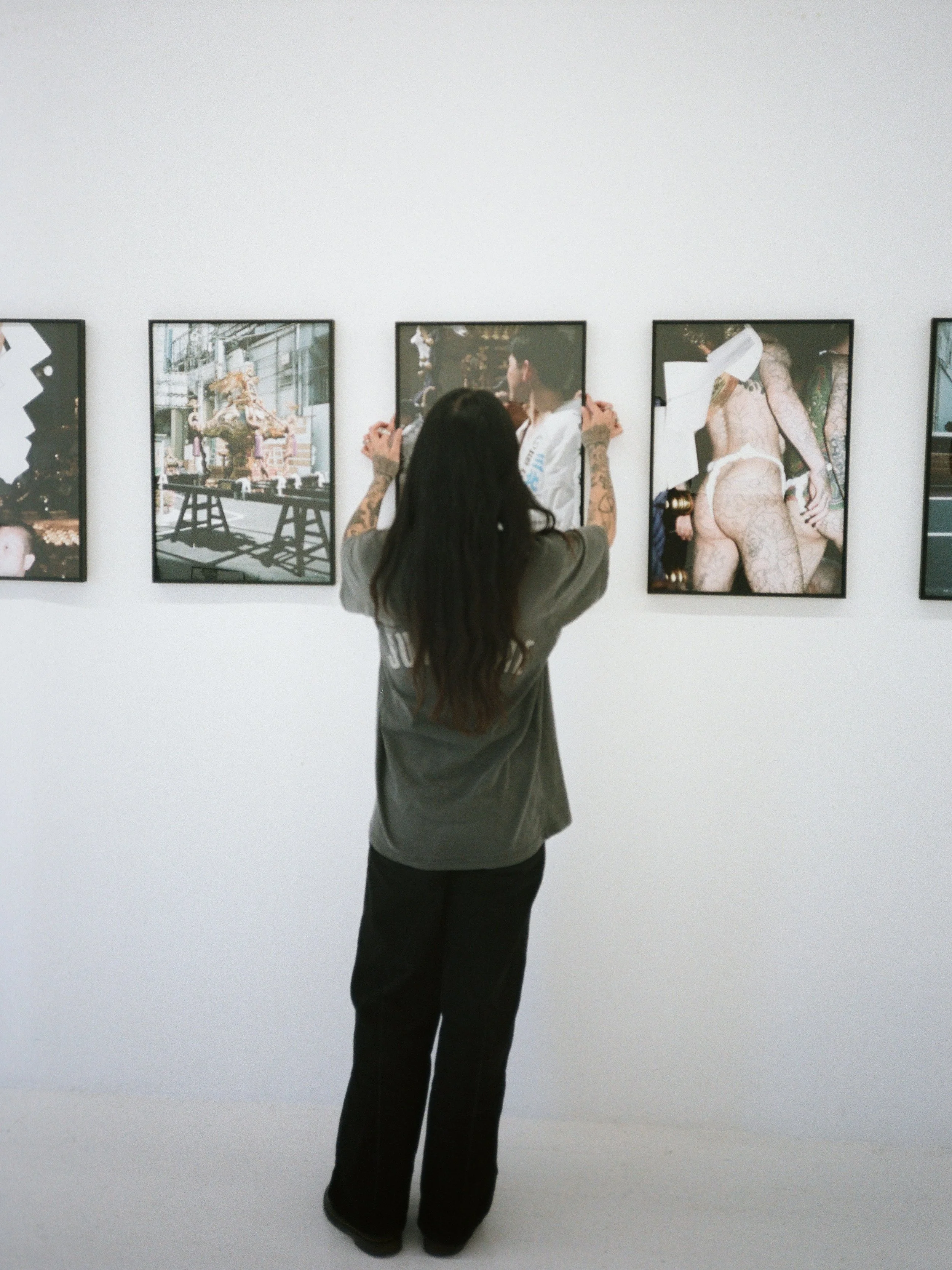
Installation of Devotion at China Heights. Photograph by Chris Loutfy.
No matter what medium she’s shooting for — Morikawa began her practice creating zines and photobooks — she always captures images for herself first. “Even when there’s a gallery show or book being discussed, I’m still shooting for myself first and foremost. Most of what I shoot just ends up in my own personal archives”, she says. “It’s about being present in the moment, listening to my intuition above all else — something about that specific time and place compelled me to want to capture it and preserve it in time. It’s mostly about my own documentation, my own processing of the world.”
Influenced by the sequential logic of the book and her own practice of compilation, the photographs in Devotion are intimately connected. “I like to think about photographs in relation to one another rather than isolated images — zines and photobooks are a natural extension of that”, she explains. “I’m interested in how meaning shifts when photographs are sequenced together.” In the gallery space at China Heights, sequence and scale create a specific environment. The Daigyoretsu, grand procession, marches around the walls of the gallery, capturing the rhythm and atmosphere of the festival itself. Looking around, the mikoshi, portable shrines, glint in the light, as the laughing katsugite, shrine-bearers, barely seem to struggle under the weight as they shake the soul of the spirits inside.
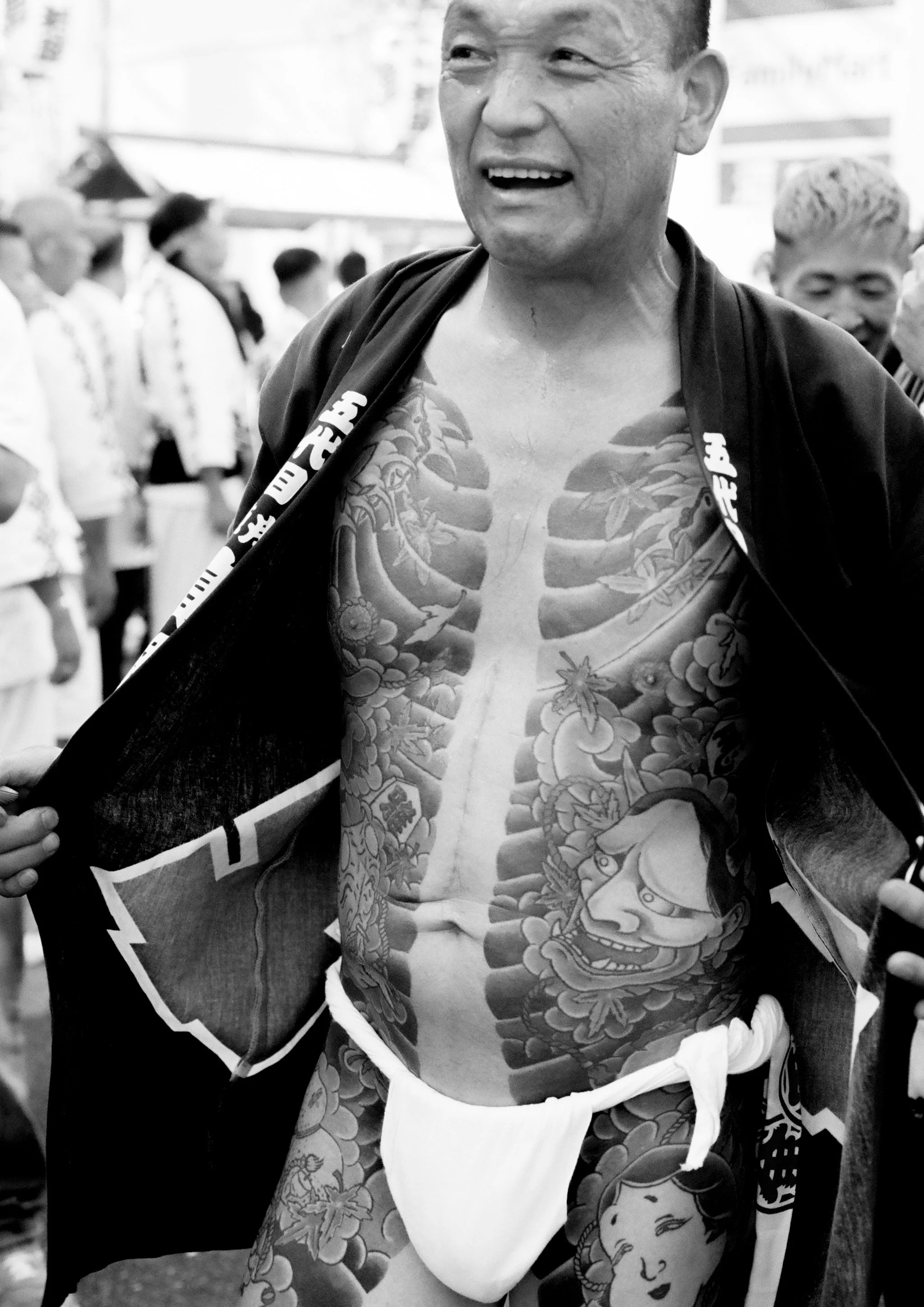

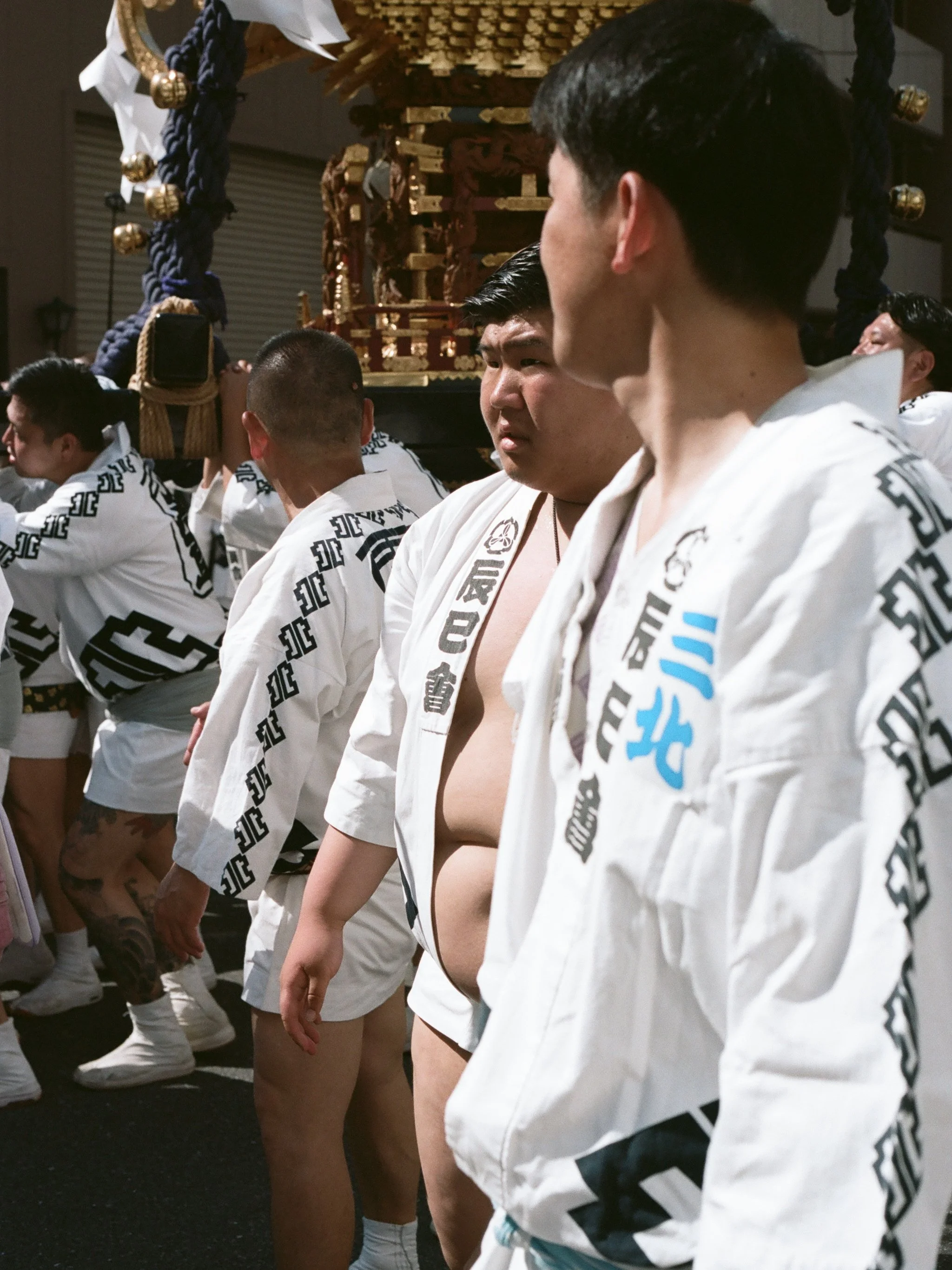
Despite her appreciation for the gallery setting, Morikawa reveals a soft spot for the viewing experience encouraged by the physicality and tactility of the photobook, recalling the marks of a hand in its construction, and the exchange of energy that comes with the flick of a page. “I love the intimacy of books as objects, how they become a physical archive of time, place and perspective”, she says. “A book slows the viewer down, you move through it at a particular pace, you find your own connections.” For Morikawa, the photobook reflects both a personal preference and an act, or an ethics, of witnessing. “That experience is how I like to encounter other photographers’ works, and how I want my own to be encountered”, she says. “In some ways, the process of making and moving on from a book or a zine feels the same as moving through chapters in my life, it’s an integral part of my practice.”
Her desire to connect through images extends beyond the photobook and the exhibition setting. As someone with an archival impulse — to document, collect and share — Instagram offers something to Morikawa as a photographer, despite the pressures of the algorithm. “I don’t mind it, despite its reputation”, she explains. “I’ve always seen it as a means of expression and connection — it’s allowed me to connect with and show at galleries, publish and sell books, and be part of communities.” Morikawa brings a sense of optimism and a belief in autonomy to the avalanche of the algorithm. “I see a lot of good stuff on there even when I’m wasting my own time — nature, art, film, documentary, history, culture, subculture. You can make your algorithm work for you.”
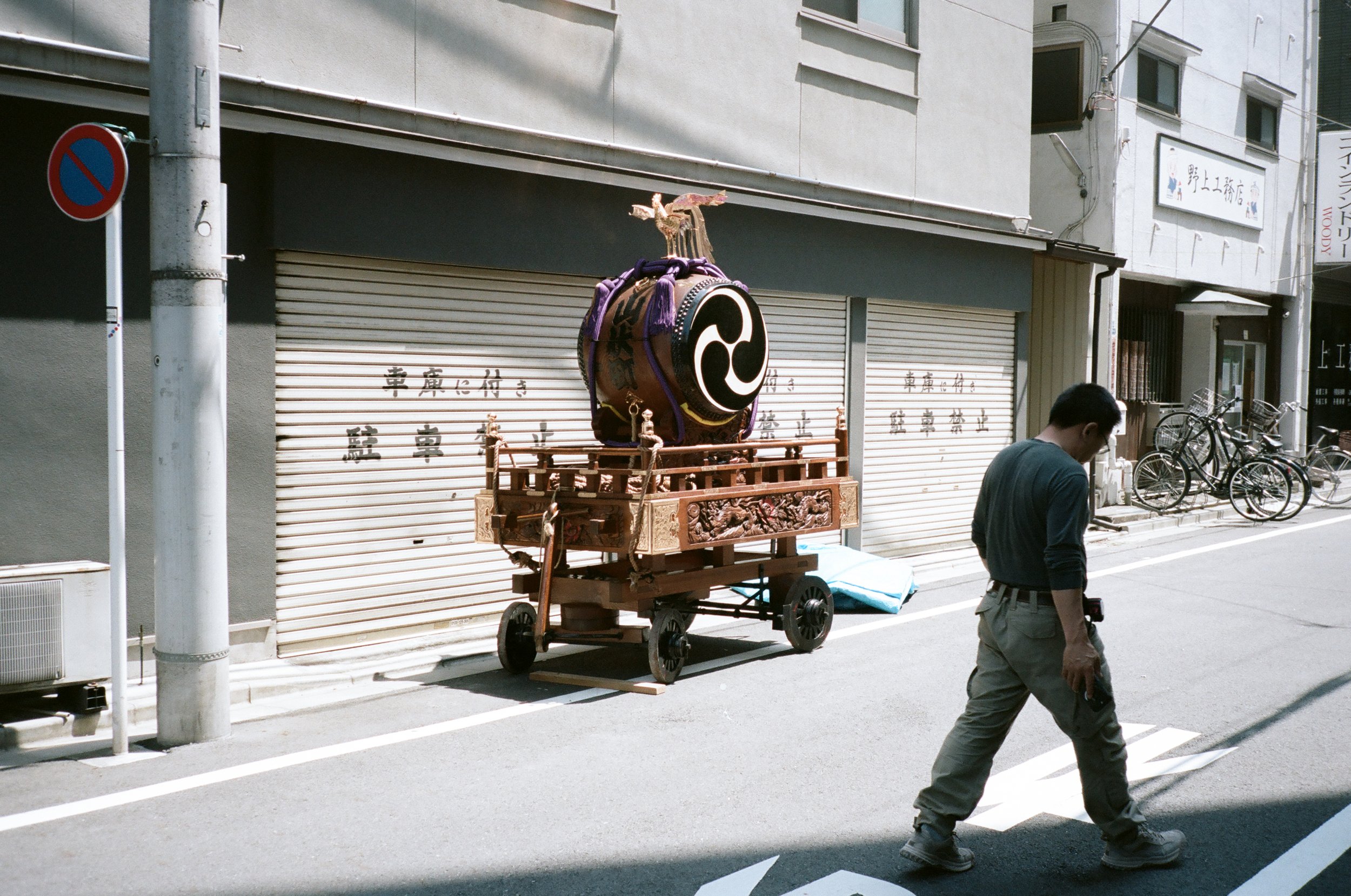
Sly Morikawa, 'Shinto 2', 2026.
Looking back on time “wasted”, there’s something to be said about the impulse to collect. As a self-described “painfully sentimental person”, Morikawa’s practice centres on collection and preservation — of moments, people, tradition. Reflecting on her upcoming show at China Heights and her exhibition at 4A Centre for Contemporary Asian Art last year, Morikawa frames photography as always circling an unavoidable tension between immediacy and enduringness, memory and experience. “The instant nature of capturing a frame reflects the instant nature of each second we get to experience in life”, she says. “The physical negative that we’re left with allows this moment to become a lasting memory, something to reflect on, appreciate and admire.”
The things that last are delicate; they don’t endure by design, or through some sort of innate strength, but because we care enough to preserve them. It’s a devotion to these fleeting moments, a recognition of the value of the incidental, and a commitment to memory, that Morikawa fixes in her gaze.
Devotion by Sly Morikawa opens on Friday 14 August at China Heights, and continues until 13 September.