
‘By the River’ with Billy Bain
Interview by Lila Daly-Hyatt l Photography by Robert Hookey
Beginning at Yarramundi and flowing into the ocean at Broken Bay, Dyarubbin, the Hawkesbury River, weaves through Sydney, carving a path that has long connected Countries, communities and stories. For Dharug artist Billy Bain, the connectivity of waterways, the movement of the river, and its unique ecologies offers a way of thinking about identity and its fluidity.
Bain’s new exhibition at the Art Gallery of New South Wales, By the River, traces a journey of cultural reconnection, following the waterways that link his childhood on Garigal Country in Sydney’s Northern Beaches to his Boorooberongal ancestral Country upstream along Dyarubbin, the Hawkesbury River.
Through a central sculptural installation in his iconic figurative style, a collaborative suspended textile work, and an evolution of his practice into a sustained engagement with landscape painting, Bain offers a deeply personal story of cultural return and reclamation, while reframing, both figuratively and literally, the neutrality of representations of Australian landscapes and the contested space of the beach.
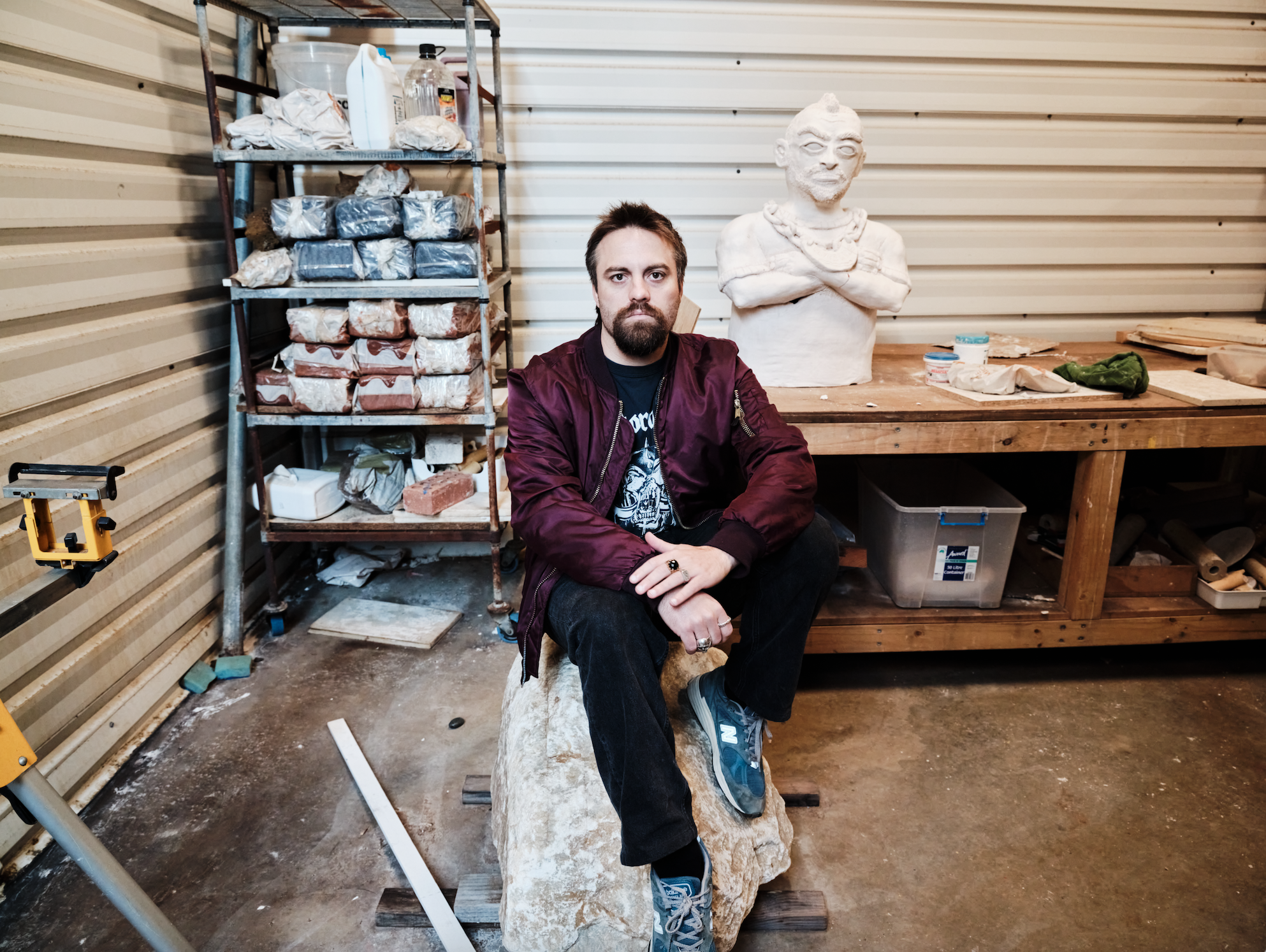
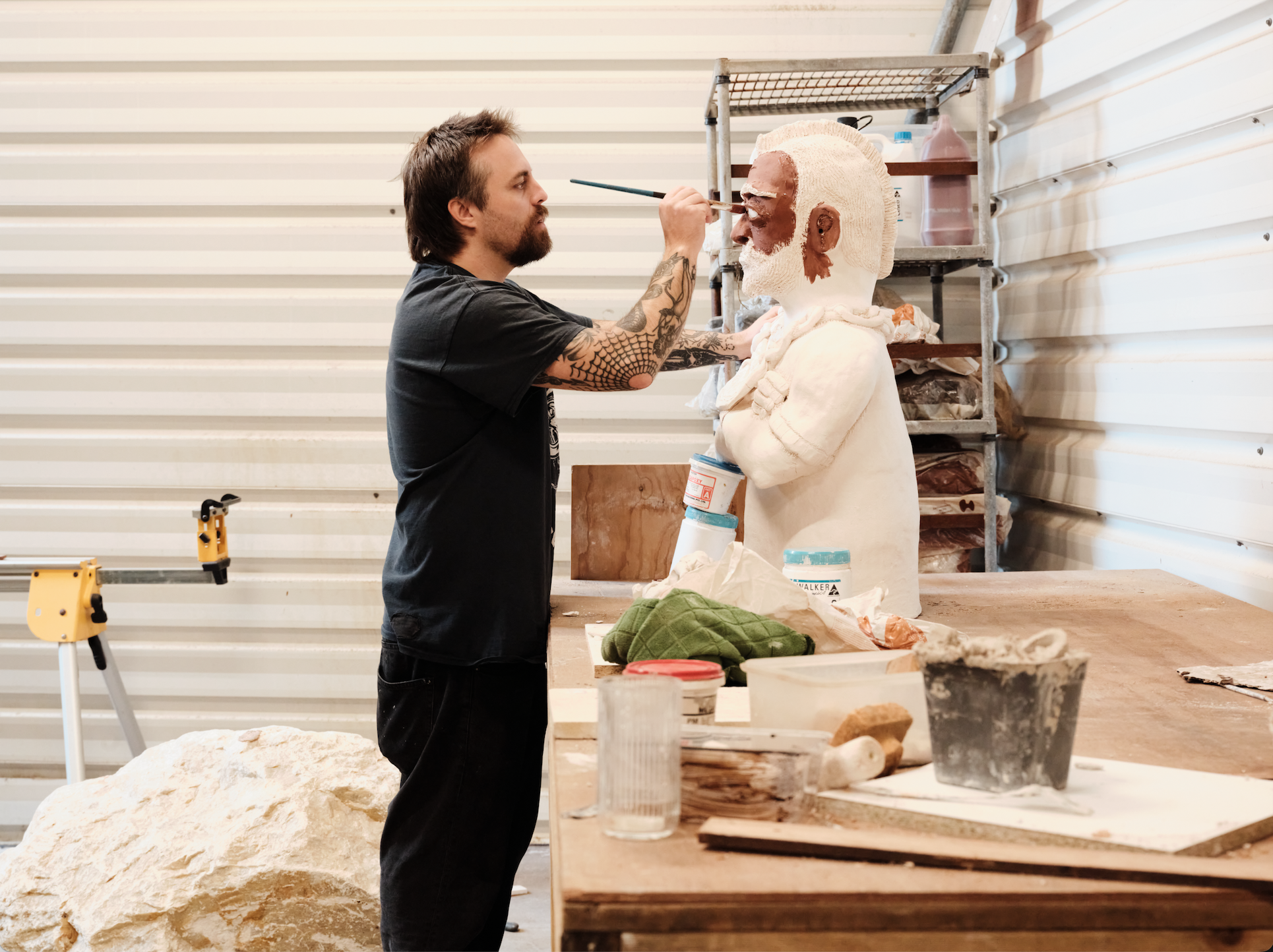
Ahead of his exhibition opening, A-M Journal visited Billy Bain in his studio before speaking with him about the waterways of Sydney, the difference between claiming and belonging in space, and making as a way of being in the world.
LILA DALY-HYATT: Tell us about your upcoming exhibition By the River. What conversations or ideas are you exploring in this new body of work?
BILLY BAIN: By the River responds to Dyarubbin (the Hawkesbury River) as both a place and a metaphor. The exhibition traces my journey as a Dharug person reconnecting with my Boorooberongal roots, which lie further upstream around Windsor and Richmond, while reflecting on growing up downriver on Garigal Country in Avalon on Sydney's Northern Beaches. The river becomes a way of thinking about movement, return and the lifelong process of reconnecting with culture. This journey is mirrored through the long-finned eel, a culturally significant species across Dharug Country that travels between saltwater and freshwater, making its migration a powerful metaphor for my own experience of returning to family, culture and place.
The exhibition brings these ideas together through painting and sculpture. While I've always painted alongside my sculptural practice, this is the first time I've developed painting as a substantial body of work. Curator Erin Vink encouraged me to push that part of my practice further, allowing both mediums to work together in telling this story. Ultimately, By the River is about cultural continuity, family and the enduring relationship between Dharug people and Country.
LDH: Having grown up on Garigal Country in the Northern Beaches, your work often focuses on the beach as a contested space, reflecting on First Nations sovereignty in Australian beach culture. How does By the River build on these ideas?
BB: While much of my earlier work explored the beach as a contested space, particularly through ideas of localism, territoriality and the ways possession is enacted through the body, By the River takes a quieter approach. This is particularly explored through the paintings, which contain traces of human presence through graffiti, altered signs and other marks left on the landscape, while people themselves are largely absent.
Rather than focusing on conflict, I'm more interested in what remains when those human struggles recede into the background.
In contrast, the exhibition's central sculptural installation reintroduces the presence of the surfing family (Mudjin). Here, the human figure is no longer about claiming or possessing space, but about belonging within it. Together, the paintings and sculptures reflect a Dharug understanding that we don't own Country. We belong to it and have a responsibility to care for it. The exhibition shifts the conversation away from contest and towards continuity, custodianship and the enduring presence of Country.
LDH: This is also your first solo exhibition in a state art gallery. How are you thinking about this? Do you feel your work engages differently within an institutional setting?
BB: This is my first major institutional solo exhibition, so it feels like a significant milestone. It's also the first solo exhibition by a Dharug artist in the Art Gallery of New South Wales' 155-year history, which carries both a great sense of responsibility and a real privilege. I'm proud to be able to share Dharug stories within one of Australia's leading cultural institutions, particularly alongside my family, who have been deeply involved in making the work. It feels like an important moment not just for me, but for our community.
Because this is a solo exhibition, it has also given me the space to ask what kind of work I really want to make. Over the past few years I've been working across commissions, group exhibitions and institutional projects, each with their own context. By the River has been an opportunity to develop a body of work that is entirely driven by my own ideas and experiences. There's something really meaningful about telling a deeply local Dharug story in a major Sydney institution, on Country that has shaped my family for generations.
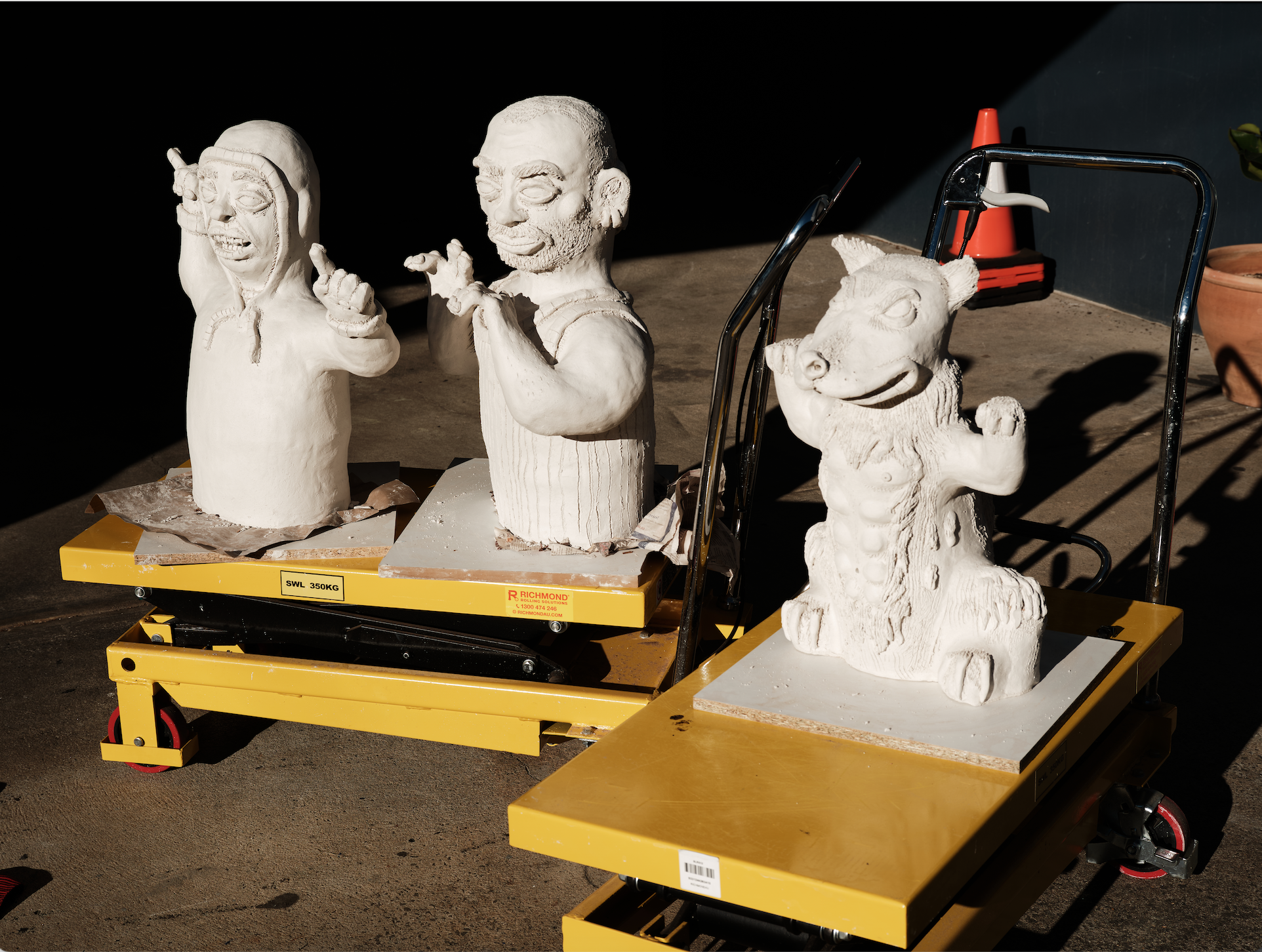
LDH: It’s interesting to see your figurative clay sculptures in the studio before you’ve started painting — even without colour, they have so much personality. They’re incredibly detailed, and also quite humorous. How would you describe the role of humour in your practice?
BB: Humour has always been a way of inviting people into the work. I see it as a storytelling device that can disarm viewers and make them more open to engaging with ideas they might not otherwise expect. I want the work to be accessible, but I also want it to deal with complex questions around identity, history and Country. Humour, playfulness and a sense of familiarity help create that balance.
In By the River, the emphasis is perhaps less on humour itself and more on personality. The sculptural figures each have their own presence and character, and I hope that sense of warmth allows people to connect with them on a human level before engaging with the broader ideas the exhibition explores.
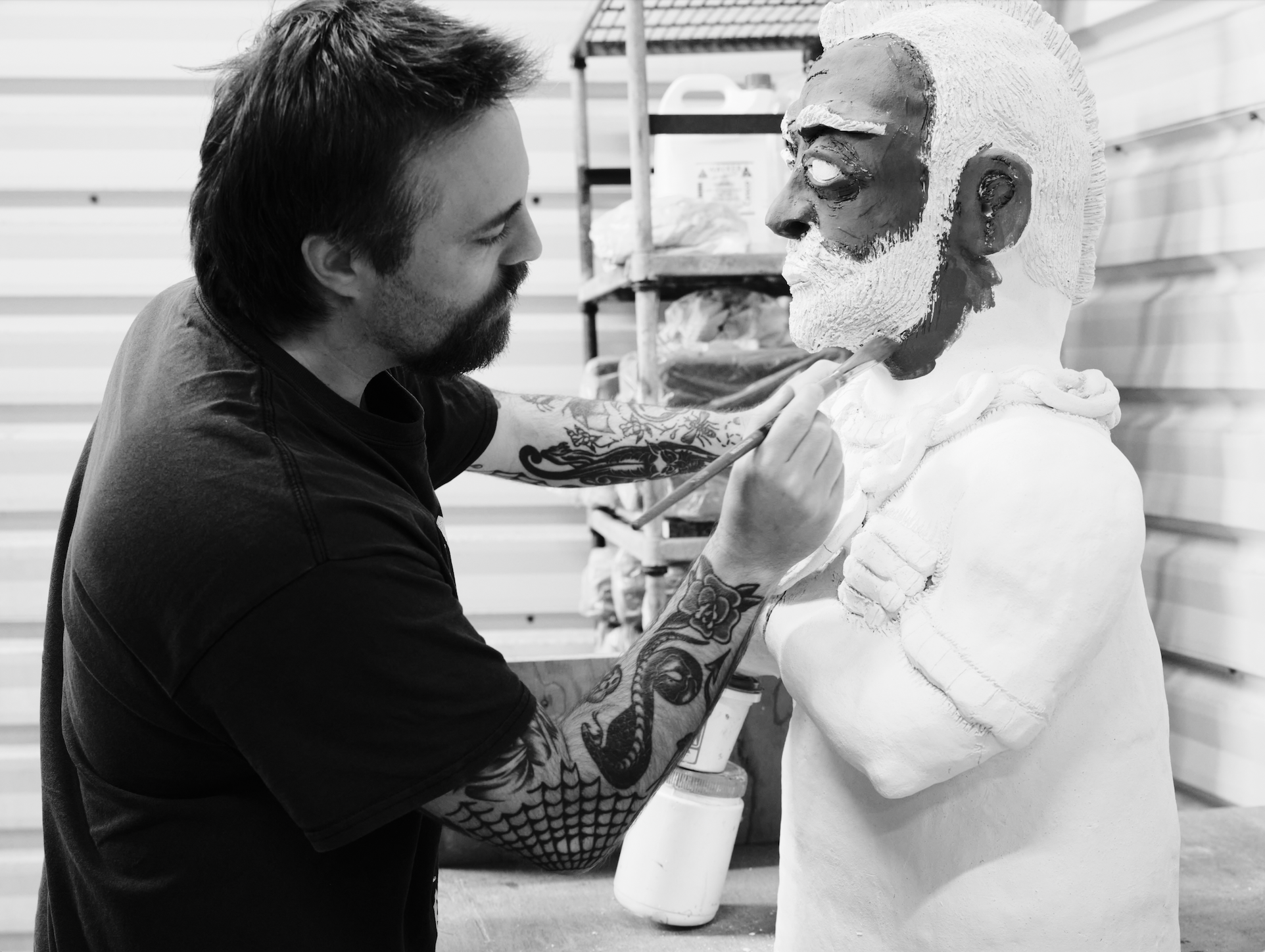
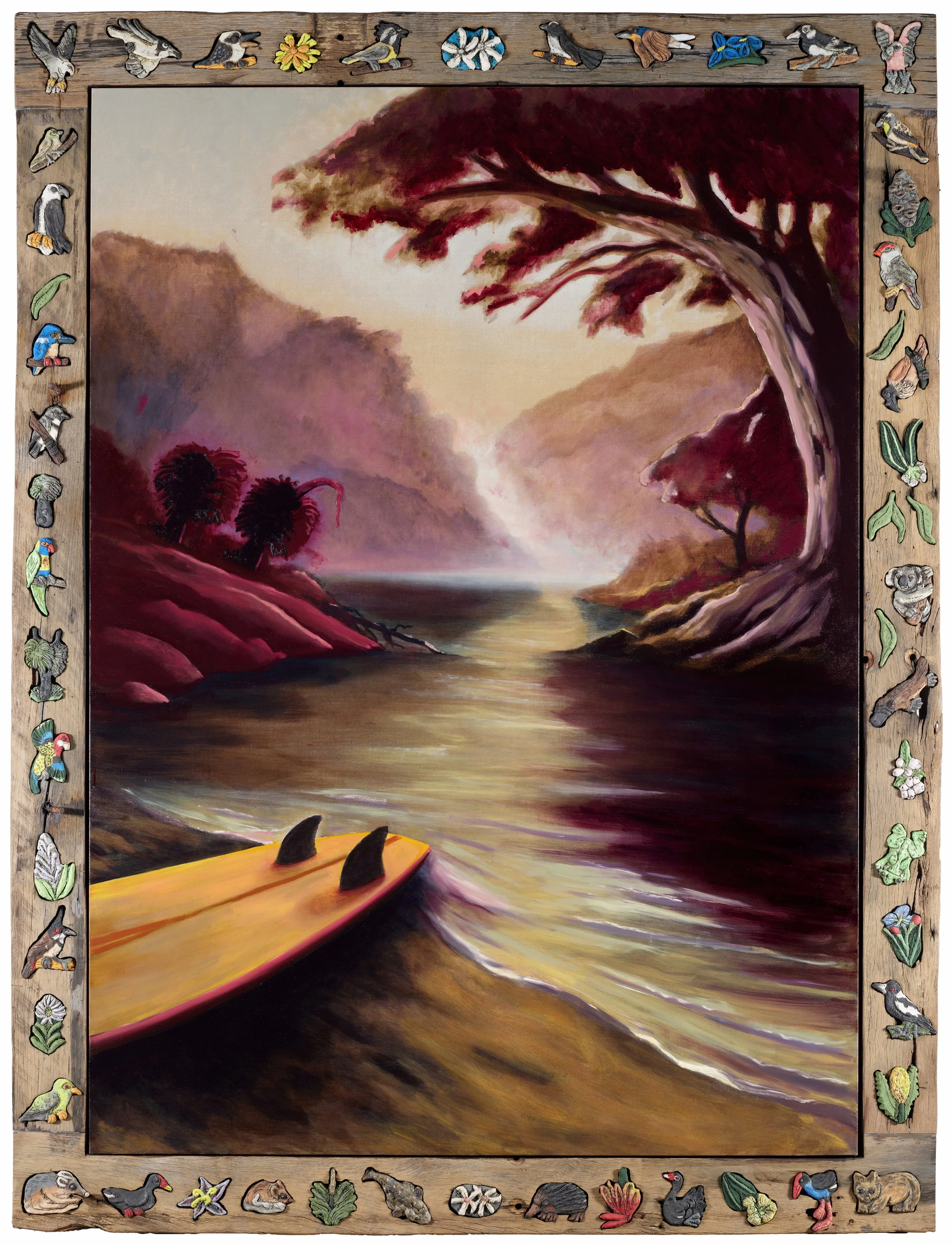
LDH: With this exhibition, you’ve also extended further into landscape painting. Here, framing seems to be a significant element in your practice, both literally and conceptually. How do you think about the idea of “framing” and what drew you to decorating your frames?
BB: I've become interested in the frame as an extension of the artwork rather than something that simply contains it. At first glance, the paintings in By the River borrow from the tradition of Australian landscape painting. They reference a visual language that has historically celebrated and, in many ways, domesticated the landscape through a colonial lens, presenting Country as something to be observed, possessed or conquered. I was interested in working within that tradition while quietly unsettling it.
The frames were built in collaboration with my friend and master craftsman, Will Badger, who also fabricated the frame for my portrait in the Archibald Prize. Working together allowed me to realise increasingly ambitious frame designs while maintaining the handcrafted quality that's so important to the work. The recycled timber frames are then populated with hand-built ceramic elements, birds, animals and other motifs from Dharug Country, extending the narrative beyond the painted image itself.
Rather than simply decorating the paintings, the frames become sculptural objects that reintroduce living relationships to Country.
They remind us that these landscapes are not empty or neutral, but places shaped by deep histories, ongoing cultural connection and living ecologies.
In that sense, the frame becomes both a physical and conceptual device. It asks us to reconsider not only how we look at the landscape, but the perspectives through which it has been represented.
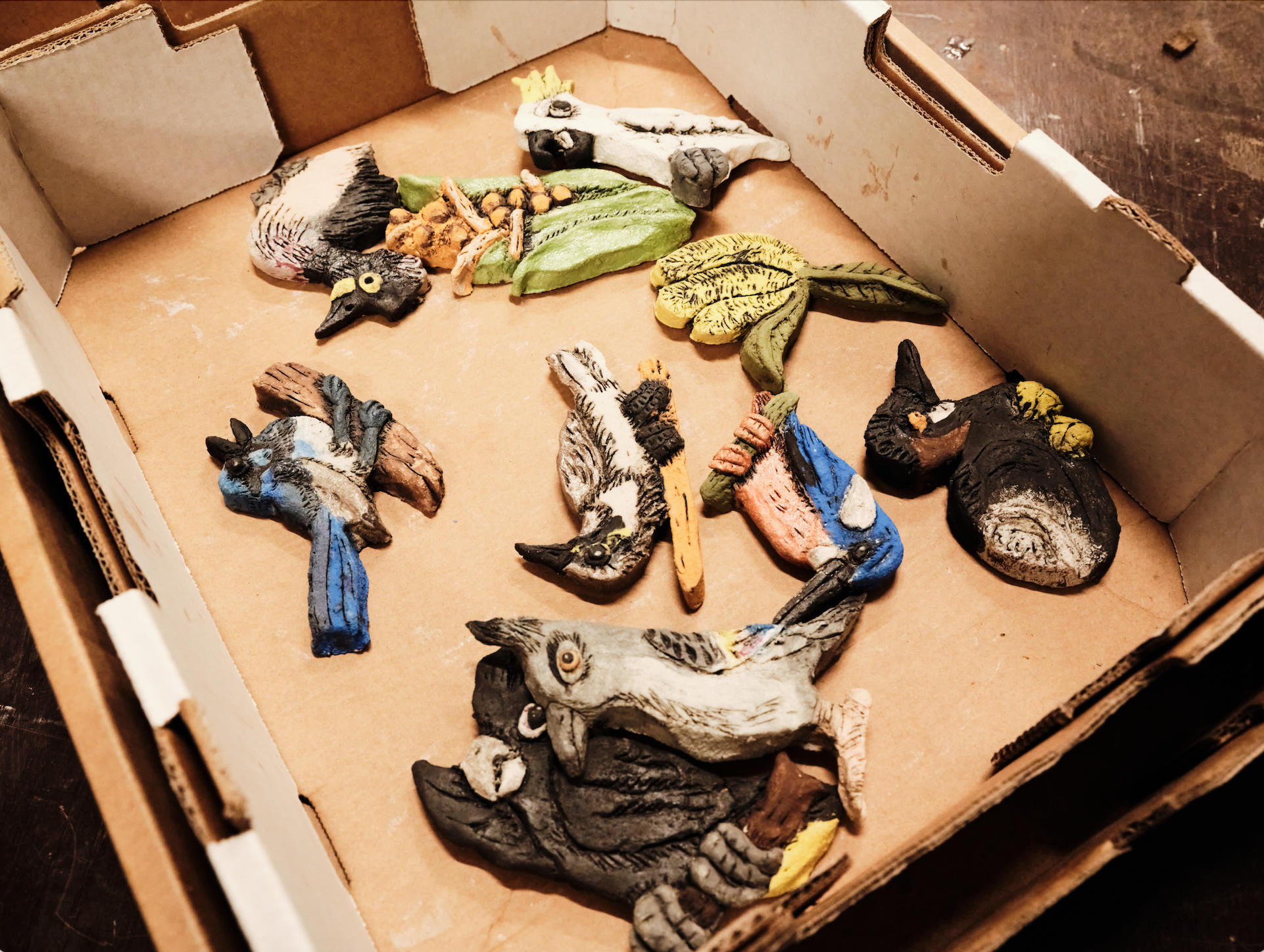
LDH: You also collaborated with your mother, Kathleen Bain, on some of the textile elements in this exhibition. What did this family collaboration mean to you, and how did it shape your work?
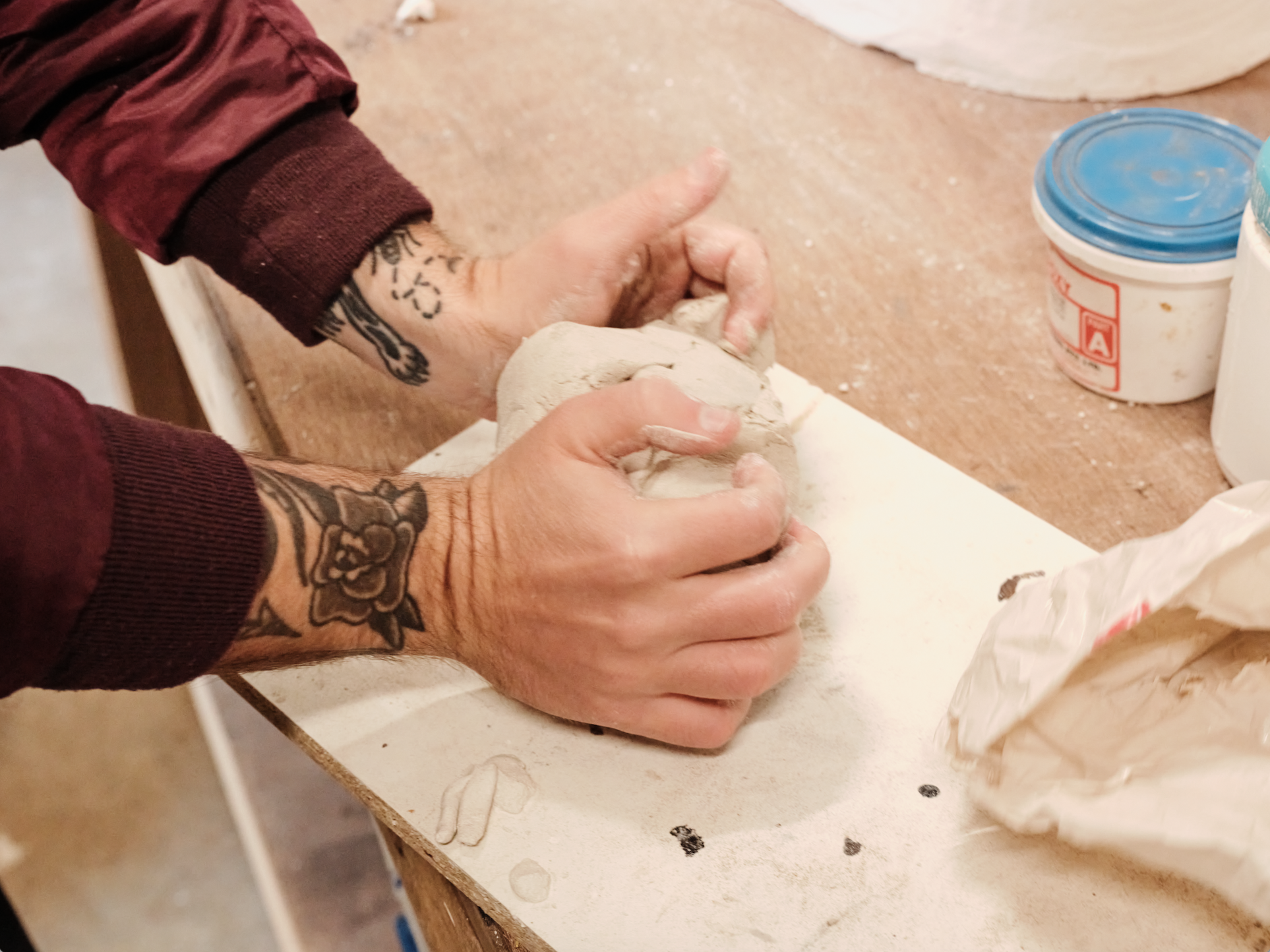
BB: It means everything to me. I honestly don't think I'd be an artist without my mum. From a very young age she encouraged creativity, always putting art materials in front of me and making things together. She taught me that making wasn't something you only did professionally. It was simply a way of being in the world. That love of process, material and creating with your hands has shaped my practice from the very beginning.
Although we've always made things together, By the River was the first opportunity to formally acknowledge that relationship through the exhibition itself. We collaborated on the large soft sculpture eel (burra), with Mum weaving the raffia that forms its skin and the two of us dyeing the canvas together before assembling it with Kit Wu Bylett.
More than producing an artwork, the collaboration reflects something that's central to my practice. Knowledge is shared across generations. As Dharug people, culture is sustained through relationships, conversation and making together, so having my mum contribute to this exhibition felt like a natural extension of the stories the work is already telling.
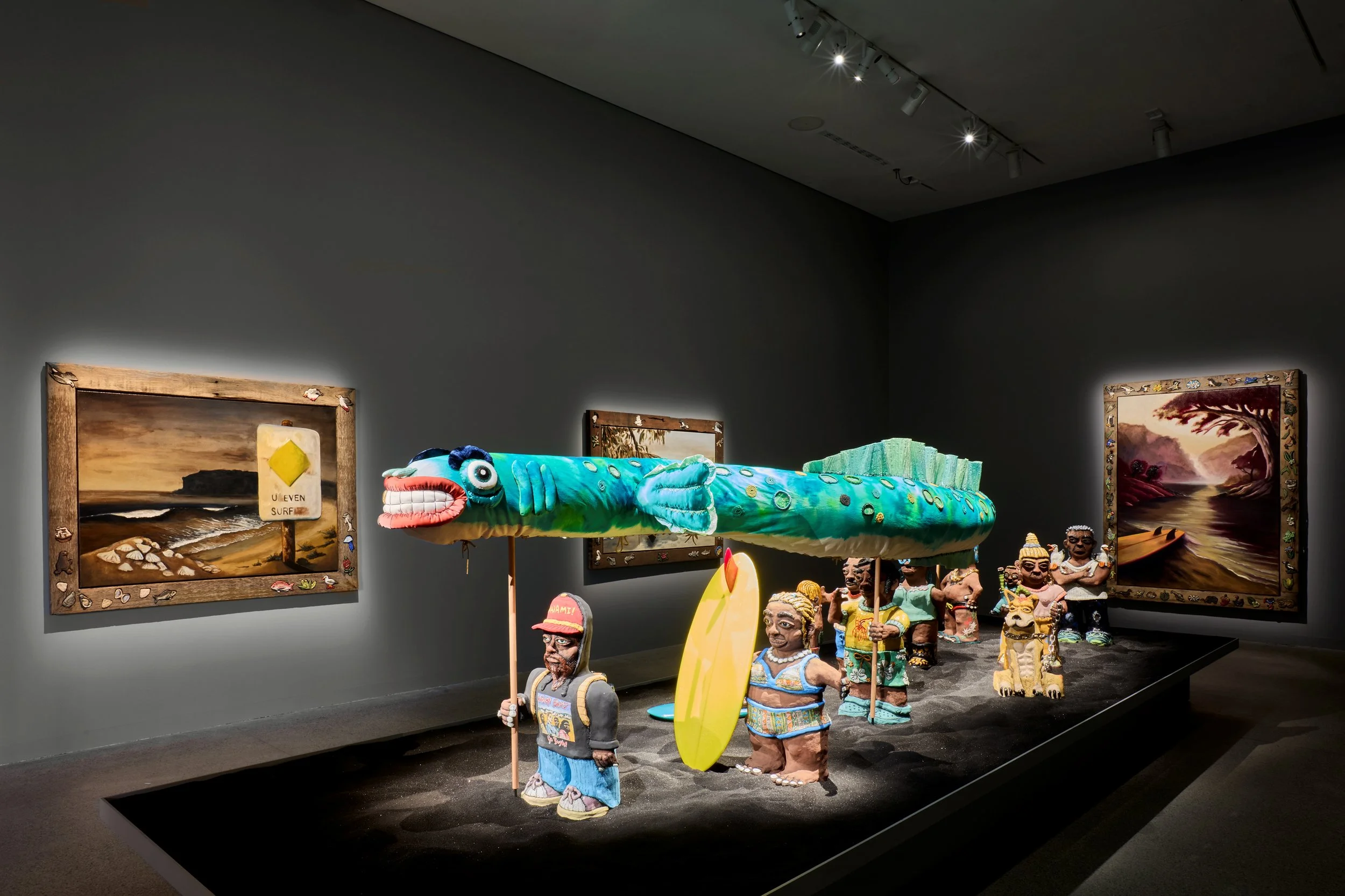
Installation view of the 'Billy Bain: By the River' exhibition at the Art Gallery of New South Wales, 4 July – 8 November 2026, artworks © Billy Bain, photo © Art Gallery of New South Wales, Diana Panuccio
LDH: Knowledge sharing, intergenerational conversation and creating space for this dialogue is so important. What kind of reflections and conversations do you hope the exhibition inspires in audiences?
BB: I hope the exhibition encourages people to look at the places they think they know with fresh eyes. One of the things I love about exhibiting at the Art Gallery of New South Wales is the diversity of people who come through the doors. Rather than expecting everyone to take away the same message, I'm excited by the idea that people from different backgrounds can find their own points of connection with the work.
More than anything, I hope the exhibition leaves people with a deeper appreciation for Dharug Country and the histories that continue to shape it. Dyarubbin has always been a place of life, movement and connection, yet many people who live alongside it know very little about its enduring cultural significance. If visitors leave feeling a stronger connection to the landscapes around them, a greater awareness of Dharug culture and a sense of optimism about the future, then I feel the exhibition has done what I hoped it would.
Billy Bain: By the River is showing at the Art Gallery of New South Wales, Naala Badu building, until Sunday 8 November 2026. Entry is free.