
Michael Rider’s Celine Printemps-Été 2027
Words by Lynn Mathuthu
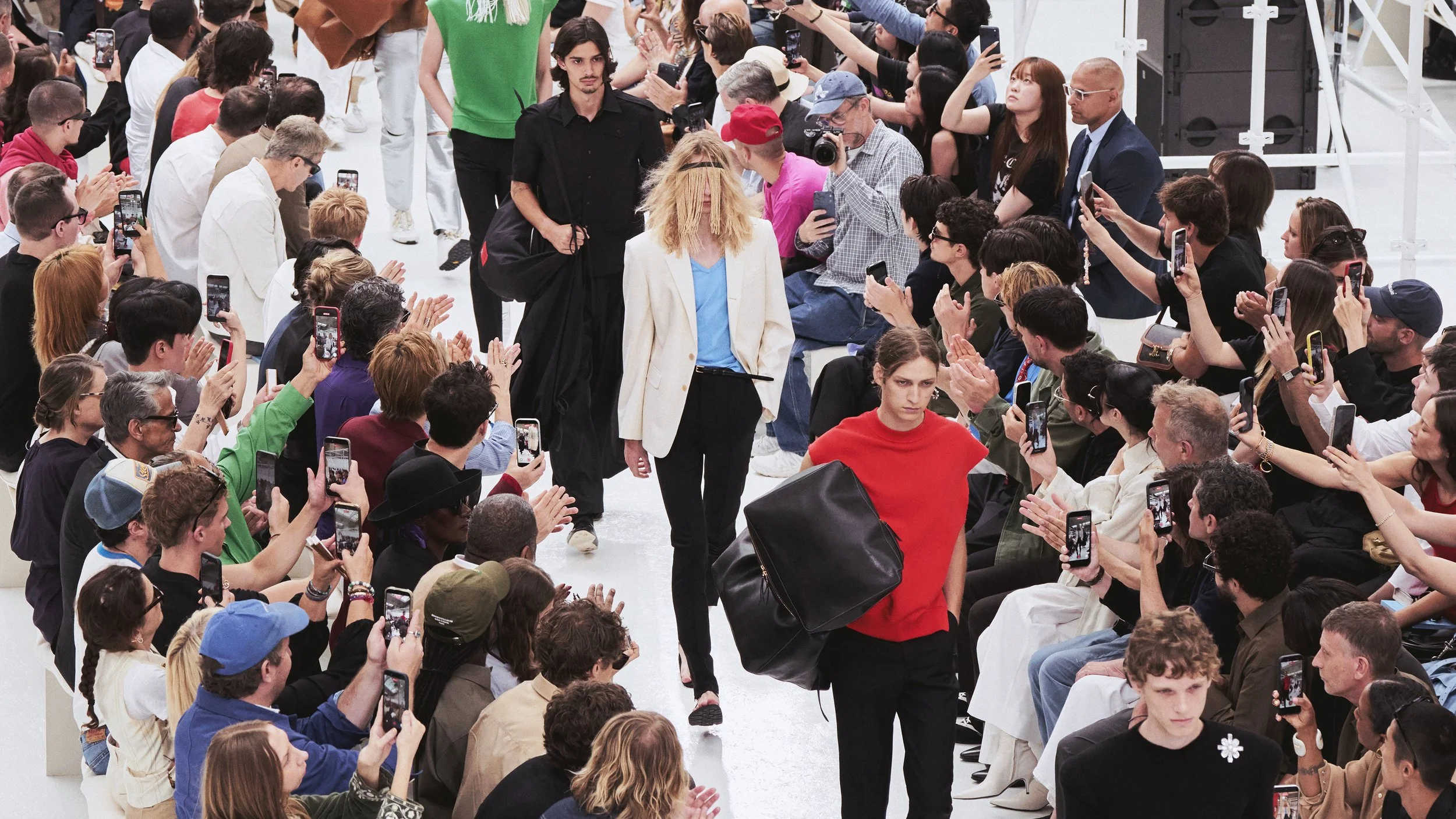
CELINE Men’s Printemps-Été 2027. Courtesy of CELINE.
I remember when Phoebe Philo announced her departure from Celine. Thunderous clouds formed over the fashion and Philophile community, inciting panic and mass hysteria among loyalists such as myself. Chatter grew in dingy alleyways, with hordes of fashion people gathered in dimly lit bars, prophesying about who would fill her seat. Although Hedi Slimane did the job, his Hedi'isms did not replace the highly functional yet understated wardrobe that Phoebe was known for.
That is, until Michael Rider's Spring Summer 2027 men's collection.
Rider describes the collection as, "Panache. And being very unaware of having it," adopting the 2010s indie sleaze manifesto, invoking memories of soundtracks by Blood Orange, MGMT, The 1975, and more. Models stormed down the runway in extremely skinny jeans paired with oversized sweaters, belts with fringed tassels layered over gold-toned pants à la American Apparel, and black leather vests contrasted with white ballet flats. Purple shirts were adorned with giant pins, while jeans were bedazzled with cheetah-like stripes contrasted against azure blue crystals. It was a feast for the eyes, particularly for those not afraid of colour.
Capes billowed down the runway in sage green, white, purple, and butter yellow, making a clear statement in composing individuality with unified clarity. Models wore hats slightly akin to those in Rogier van der Weyden's Portrait of a Young Woman, paired with parachute pants, oversized blazers, and button-down shirts.
The most refreshing aspect of the collection was the clash of textures: buttery leathers against textured Shetlands, against silk scarves. More importantly, Rider understood that dressing needn't be loud to feel expressive. The collection had something for everyone, ensuring the once-scorned Philophiles could return home without compromising on the things they value most: chic, understated pieces that are functional. It wasn't an attempt to recreate Phoebe's Celine, nor should it have been; instead, it felt like an acknowledgement that there is still room for intelligence, restraint, and personality within the house. For the first time in a long time, Philophiles could finally feel at home again.