
Who gets to tell their story? Debbie Millman and Roxane Gay on The Rumpus
Words by Jorgia Burke
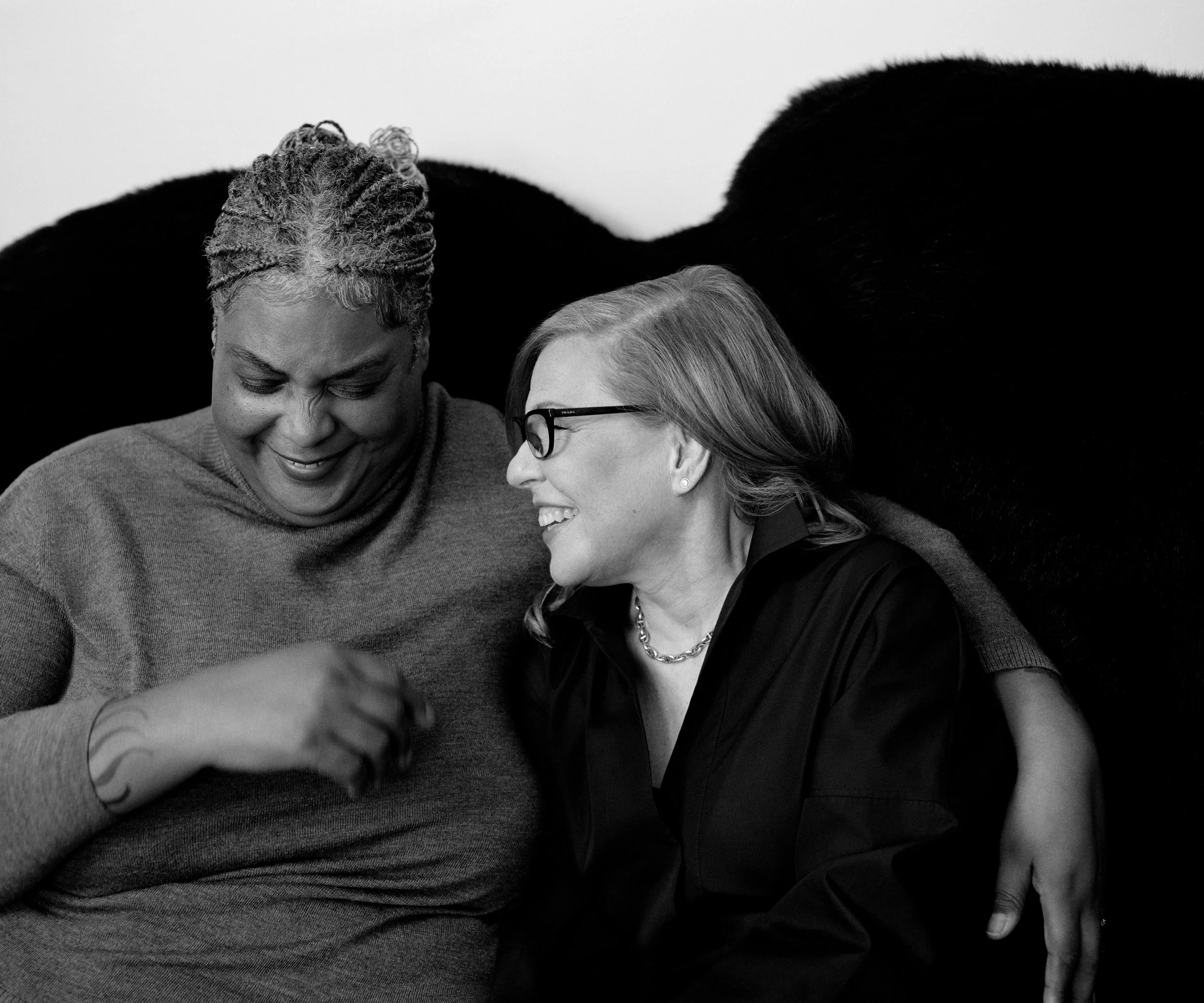
Photograph by Emmie America.
For writers, the current literary landscape feels as though editorial gatekeeping reigns supreme. Securing a byline requires jumping through a battlefield of fabricated hoops – attaining a certain number of followers, having the algorithm in your favour, knowing the Editor-in-Chief’s entire bloodline. Then, one beacon of light shines through, counteracting and erasing the resentment you’ve built up towards the industry. Said beacon, The Rumpus.
Serving as a home for the bold, the unfiltered, and the deeply human, The Rumpus is an independent literary magazine revived by Roxane Gay and Debbie Millman, composed of original poetry, essays, and interviews from artists whose voices often take the backseat – despite shaping conversations that deserve to be front and centre. Speaking with Millman over Zoom, the importance of these conversations is clear.
The Rumpus is helmed by bona fide literary icon Roxane Gay, a New York Times opinion writer and author of pivotal bodies of work including, but not limited to: Bad Feminist, Ayiti, Difficult Women and Hunger, alongside Debbie Millman, founder of notorious podcast Design Matters and Editorial Director of Printmag.com. Millman has published eight books including How to Think Like a Great Graphic Designer, Brand Thinking and Other Noble Pursuits and Why Design Matters: Conversations with the World’s Most Creative People.
The two powerhouses have built their respective careers at the intersection of activism, storytelling and cultural commentary, and are ushering in a new chapter at The Rumpus, building on the platform’s 15-year evolution. Fearless storytelling remains their north star by publishing work that isn’t just welcomed, but needed.
What sets The Rumpus apart is a commitment to prioritising community over metrics – a steep feat in a context obsessed with visibility. The movement they are exercising extends well beyond the page, with initiatives setting out to bridge online engagement with in-person connection, all executed through high-impact cultural programming. The Rumpus is producing immersive live programming and boundary-pushing projects, with the platform taking the shape of a global home – one committed to fostering a thriving and vibrant literary community.
Advocacy remains a defining pillar at The Rumpus, and is the beating heart behind each and every literary decision that the platform makes. Pride 30 is the latest iteration of this commitment to inclusivity, an initiative which celebrates 30 crucial LGBTQIA+ writers and their works from literary archives, curated by Gay, Millman and the entire editorial team. "We're publishing work that we believe in, that we feel has a strong, original voice” says Millman. “We’re championing marginalised voices, the LGBTQIA+ community, and we're also starting a section of our site that will include voices of the formerly incarcerated.”
This ethos was carried over to a complete overhaul of The Rumpus’ visual identity, conducted by designer Santiago Carasquia – founder of art camp – who elevated its online presentation to match the calibre of writing, while remaining aligned with the platform’s original roots “to preserve the voice, soul and integrity of the work,” Millman explains.

Photograph by Emmie America.
A medium that breathes air into empathy, literature inspires us to practice courage and diminish fear, all by finding fragments of our own lives in the temporary inhabitance of someone else’s truth. It immortalises the nuances of the human experience, etching these complexities onto the page and neatly wrapping them up in a paperback to carry with us. Literature orients us within a reality that feels on the periphery of our own, and it is precisely this capacity which cements it as an indispensable tool in the dance of communication. As put by The Rumpus, “There’s something about reading what someone has the courage of putting out, communicating and sharing that can ignite our own.” By “scrutinising the fine print of what is considered freedom,” The Rumpus is providing space for people to take up, through the tool of the written word.
We are in dire need of writers who lay it all bare, and build up complexities to simply break them back down. Call it survival literature if you will – it may well be our lifeline. It holds a mirror up to the messiest contradictions, not as a way to resolve uncertainties, but makes them feel less daunting to confront head-on. Although disciplines evolve, the written word remains one of the most enduring mediums for providing a sense of who we are in this world. “It allows you to clarify your intentions, reality and truths, and just by the sheer virtue of living in someone else’s words, you exchange empathy with the writer and the characters,” Millman assures.
For most writers, a common thread is that magazines are tipping more towards exclusivity, and pitching a piece more often than not feels like you’re sending work into an abyss. The Rumpus inherently rejects every aspect of the aforementioned model, boasting itself on being highly democratised, with inclusivity being an integral pillar of the platform. As Millman places it, “We don’t have AI readers, we don’t have screeners, we are reading everything that is submitted. If they submit, it gets read. There's no obstacle other than the desire to do it.” This protection of slow creativity versus immediate content is a radical approach in an industry obsessed with speed, efficiency, and output.
While AI haemorrhages mass quantities of certified slop, it removes the very aspect that sets creative writing apart: relishing the process. It skips over the mess in all of its glory, and races through the labour of love that involves letting ideas marinate until they reach their final form. Instead, it serves up a formulaic pre-rehearsed response that oscillate between spitting out everything and nothing at all – and most often than not, the latter.
The longevity of print will always be tied to its offering of genuine discovery, which begs readers to surrender to chance, rather than consuming predictable content that feeds off our desire for comfort. Fleeting algorithms and a bombardment of short-form content are an unfortunate yet pervasive shorthand for convenience, and while there will always be a mainstream preference for ease, there will always be a desire for tangibility. “Maybe there aren't as many print magazines being sold, yet hope remains steadfast as the variety, the diversity, the ingenuity is all there”, says Millman. “There's a wonderful sense of discovery when you're going through a magazine. There's no other way to be sort of confronted with something that you weren't looking for the same way as going through a print publication, magazine or a newspaper.”
We have always told stories to make sense of all that swallows us up – and we will never outlive the need for this exchange in experiences. The work cut out for us is perpetual, as the necessity to tell stories will never end – a ceaseless feat, yet never futile in nature. The Rumpus is evidence there’s still ample room for stories that refuse to conform, and space for literature that rejects speed as a method of cultural vitality. In a landscape that feeds off immediacy, The Rumpus makes a compelling case for its antithesis.