
No Permission Needed: Aja Monet on the Rooms We Build Ourselves
Words by Nyaluak Leth l Photography by Grace Bukunmi
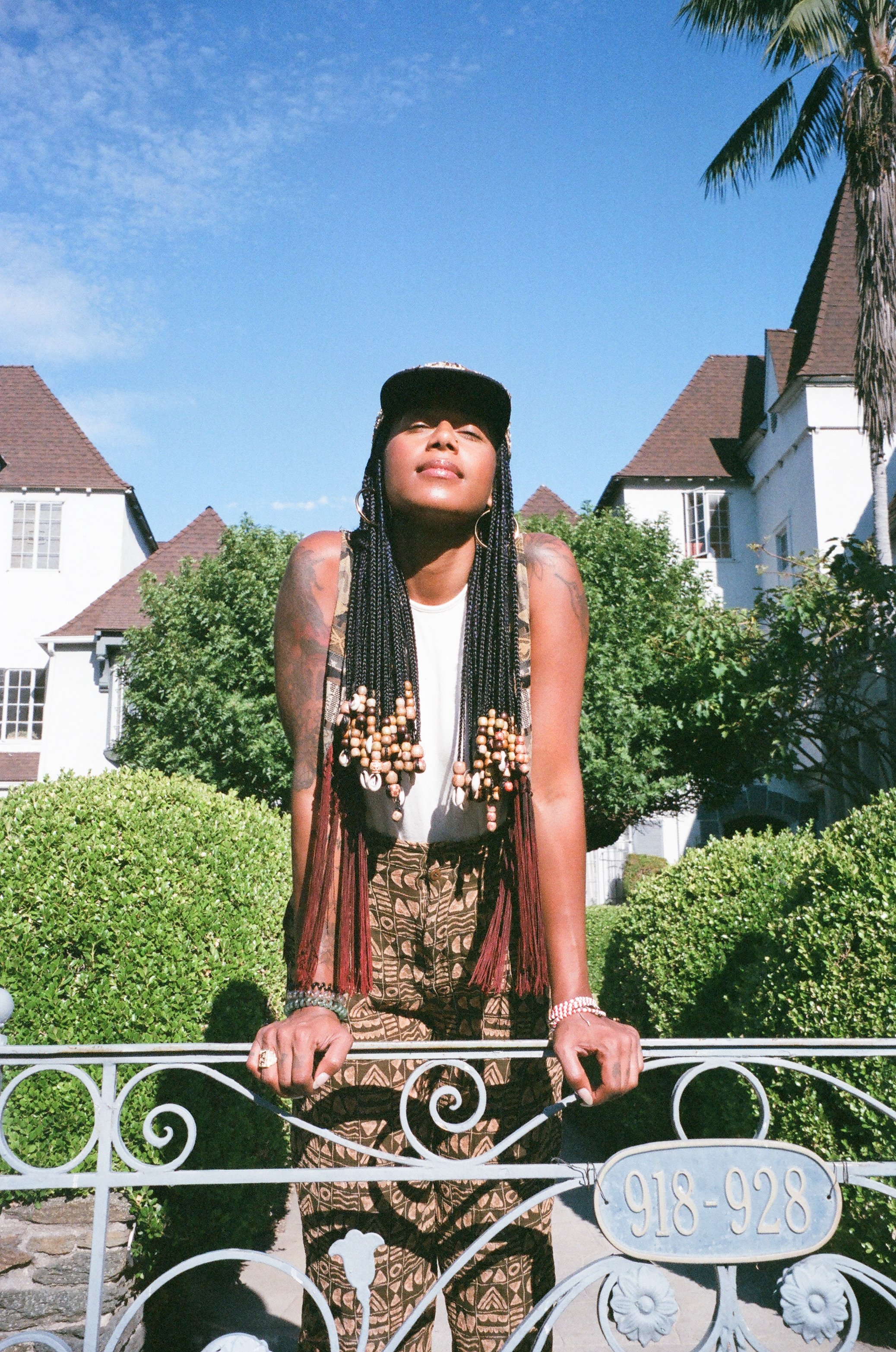
It’s 10:30am on a Newtown morning, and just after 5pm in New York, where Aja Monet is dialling in from. I sit waiting, eager and nervous in equal measure. I don’t know what to expect, as a fan or as a poet. They say never meet your heroes, because they might disappoint you. Aja isn’t quite my hero, but she is indeed a pioneer in the art that has lead me through my forever unravelling purpose. But if anyone left that morning disappointed, it was me, in some of my own views.
Before we begin the interview, I do what I do before every show I host. I acknowledge that we are meeting on Gadigal land, home to one of the oldest storytelling traditions in the world. It feels like the only right way to open a conversation about poetry. I ask for her pre-show ritual, in three words. Monet takes her time. “Prayer, preparation and portal.” I was born and raised in a religious household, so prayer I understand. Portal takes me longer, but by the end of our conversation, I think I know what she means.
Aja Monet is a poet, a cultural organiser and, this October, a first-time visitor to Australia. Born and raised in Brooklyn, she became the youngest poet ever to win the Nuyorican Poets Café Grand Slam, at nineteen. Her debut album, when the poems do what they do, earned a Grammy nomination for Best Spoken Word Poetry Album. Her new record, the color of rain, produced by Meshell Ndegeocello, brings her to the Sydney International Women's Jazz Festival on October 25, 2026.
Those are the credits. The reason she matters right now is harder to fit on a poster.
“The world is normalising meanness,” she says. “A lack of care and compassion, a lack of contemplation. People are reacting more than they are processing.” Anyone who has spent ten minutes online this year knows the feeling. We have more platforms than any generation before us, but less patience to listen.
Monet's first album grew out of years of organising in South Florida. Her latest album, the color of rain, was written on the road, and turns the lens inward. “You can't change the world outside of you,” she says, “if you're not on a day in and day out process of working on you.” She is clear that this is no retreat from the fight. Her worry is what the ‘fight’ does to us, that “we can often be forced out of character” and become the thing we oppose. She wants to embody her values, rather than preach them, and in turn help her listeners do the same. It's an old idea in a new key. Nina Simone said an artist's duty is to reflect the times. In 1983, Toni Cade Bambara told the scholar Claudia Tate that “the inner nation needs building, too.” Black women artists have carried that duty for generations, and Monet carries it into every room she enters.
Rooms matter to me. Since 2020 I've run Poetiq Honesty in Sydney, first as an open mic night and now as a series at The Vanguard in Newtown. The format is simple: voice, sax, keys and percussion, a live audience and a camera. Poets, rappers and singers, with nothing to hide behind. I built it for the moment Monet describes from her first reading aloud. “There is an alteration in the room," she says. “I could feel the energy shift.”
She didn't always have that voice. As a kid she was “the nerdy one,” quiet, into her books, in a family of people who “said it with their chest.” Teachers changed that. “If I didn't have teachers who thought that I was interesting, I probably would have kept quiet.” Then, she learned what a voice is for. “There were other people who could not speak up. If I'm going to do this, I need to do this not just for me.” So, the opening track on her new album, say it with your chest, is a metaphor. “I really mean, do things with your heart,” she says. “Let your heart be the thing that speaks for you.” When our ego steps aside, the voice returns to the people it speaks for.
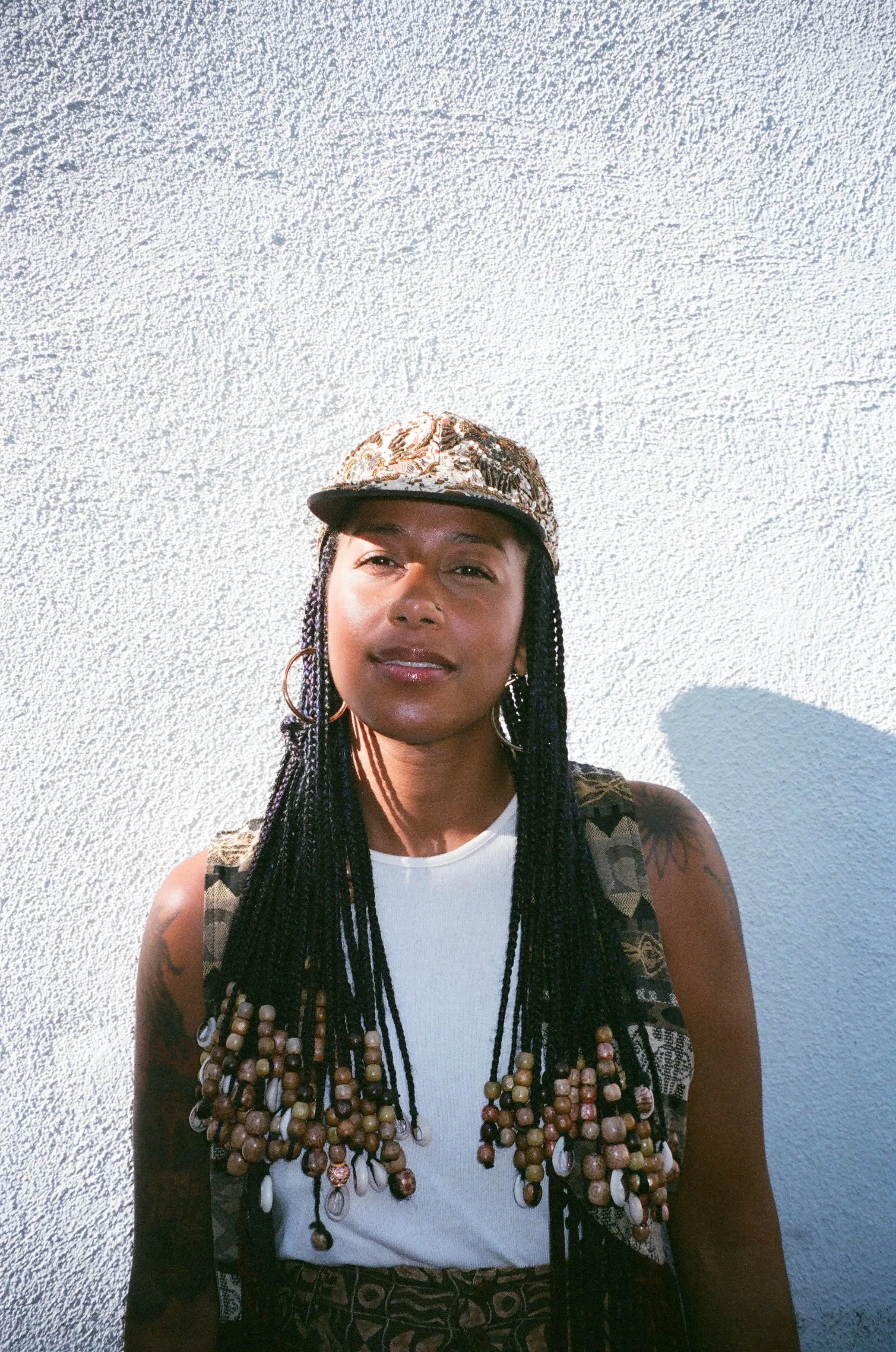
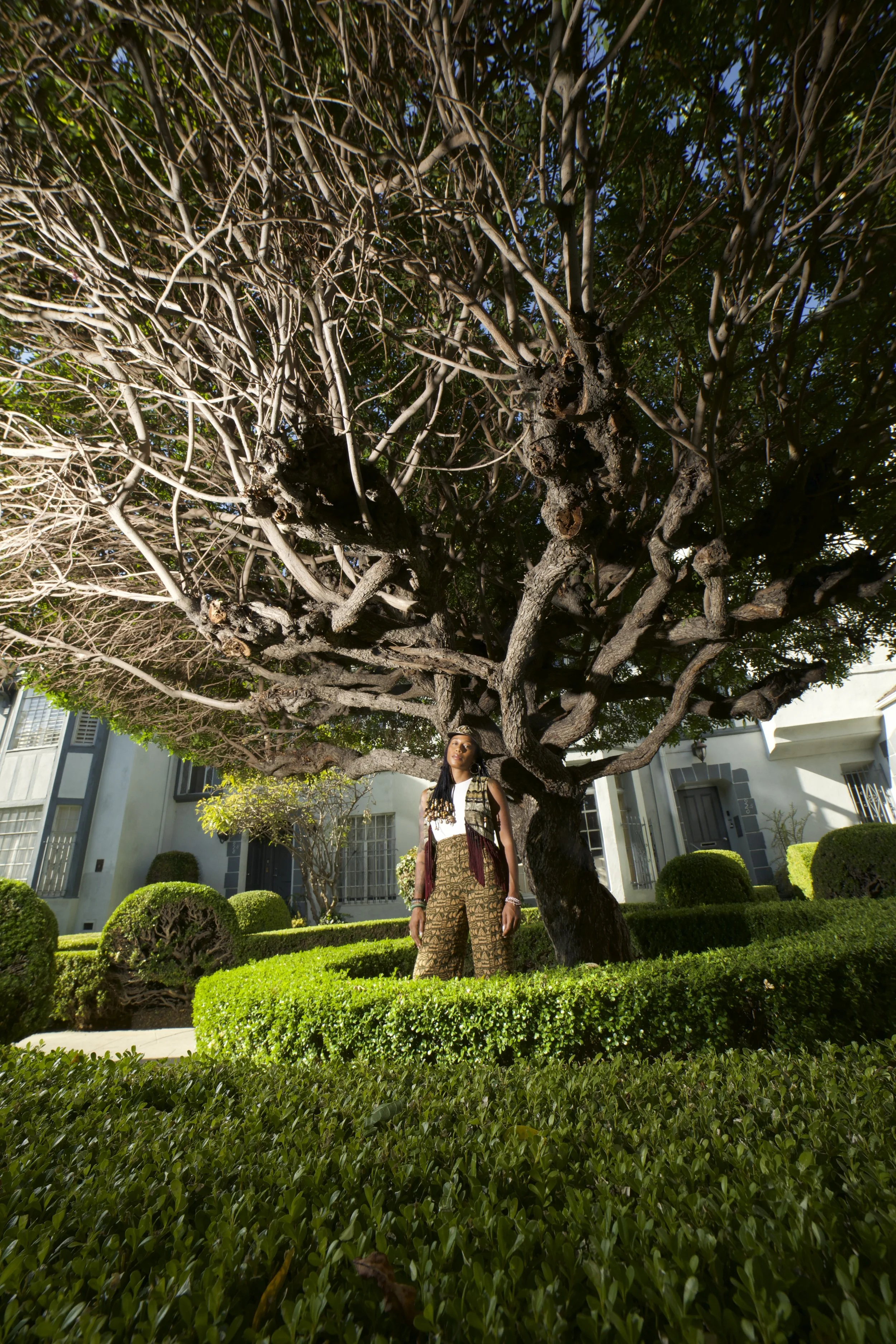
However, speaking from the heart carries a price. Monet has faced threats for speaking about Palestine and pushback for speaking about the Congo. She refuses to count the cost. “My dignity doesn't have a price tag. My humanity doesn't have a price tag. My integrity doesn't have a price tag.” The full story will go in a memoir one day. For now, she names the trade most people make without noticing: “there are rewards for being silent.”
The question I want to ask most comes from my own community. Many of Sydney's young poets cut their teeth in slams, so we ask the youngest-ever Nuyorican champion where she stands on slam now. “I don't really love it anymore,” she says. She hasn't slammed since she was a teenager and doesn't plan to again. Slam, she says, is "more audience-focused" than it is about who we are as poets. “My spirit don't really fuck with it these days”, she laughs. “I wouldn't know how to tell anybody what to do.”
I laugh too, because I've wrestled with the same thing. Slam gets audiences excited about poems. But it also teaches poets to chase the scoreboard. Monet chose depth over winning. “A poem is always a song,” she tells me. “Poetry is the metric of depth, I think, in any craft, not just words.” I ask which poem everyone should read. She answers straight away: A Litany for Survival by Audre Lorde. Lorde handed her poem to Monet. Monet hands it to us. Somewhere in Sydney, a quiet kid with a notebook is waiting for a room that will listen.
Early in our conversation, Monet tells me “say it with your chest” means “let your heart speak.” In her song, to sister, she expresses that “to grieve is to be alive, and that we deserve to be well kept, held close to the chest.” The heart that speaks also needs holding. Building rooms for Black and Brown voices has taught me a quieter grief: the community you pour into can’t always feed you back, not inside a system built on what we can afford. That grief can be shared. It isn’t always understood by people outside the room. Monet’s answer, the inner nation, is the answer here too. “Keep yourself well.” Nobody needs permission for that, either.
So here is the disappointment I promised. I came into that call carrying a belief I didn't know I still held: that someone in power had to make room for us. In my years in Sydney's creative industries, I've watched Black and Brown voices placed at the edges far more often than at the front. That's why Poetiq Honesty exists, a room where those voices go first. But somewhere underneath, I was still waiting for the system to catch up. Early in our conversation, I asked Monet what she'd say to the people in power.
“I don't spend my time giving words to people in power,” she says.
It takes me the rest of the morning to really hear it. We don't need to ask permission to exist, or to thrive. We don't even need to fight for recognition. Being disappointed in a limiting belief is a gift. Build the room. Build the inner nation. Say it with your chest.
Aja Monet performs at the Sydney International Women's Jazz Festival at the Oxford Art Factory on Sunday October 25, 2026 at 7pm.
The color of rain is out now.