
Time Passing, Time Immortal in ‘Bodies of Water’
Interview by Lameah Nayeem
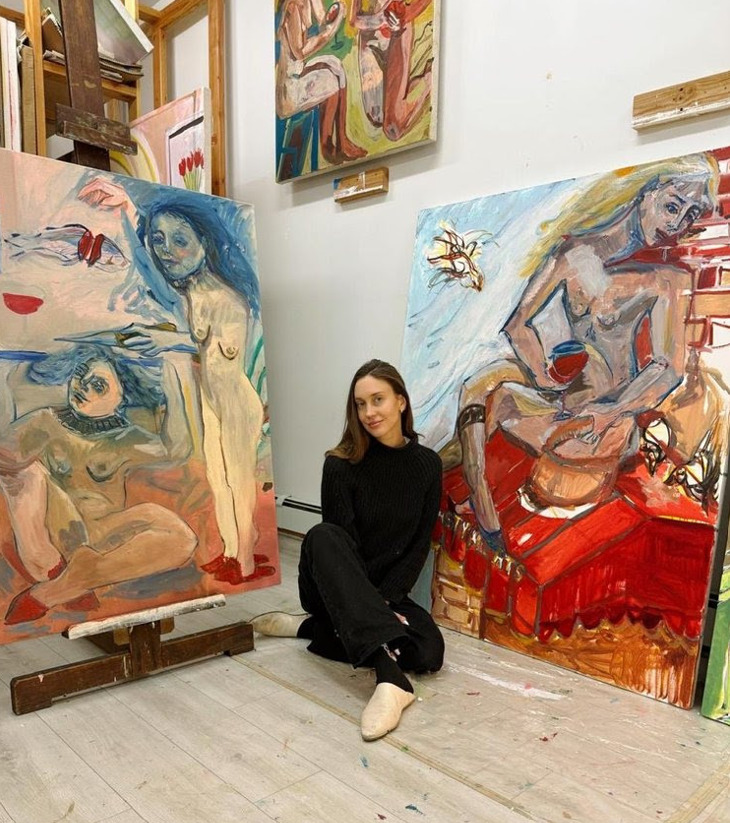
Image courtesy 8 Wall Gallery
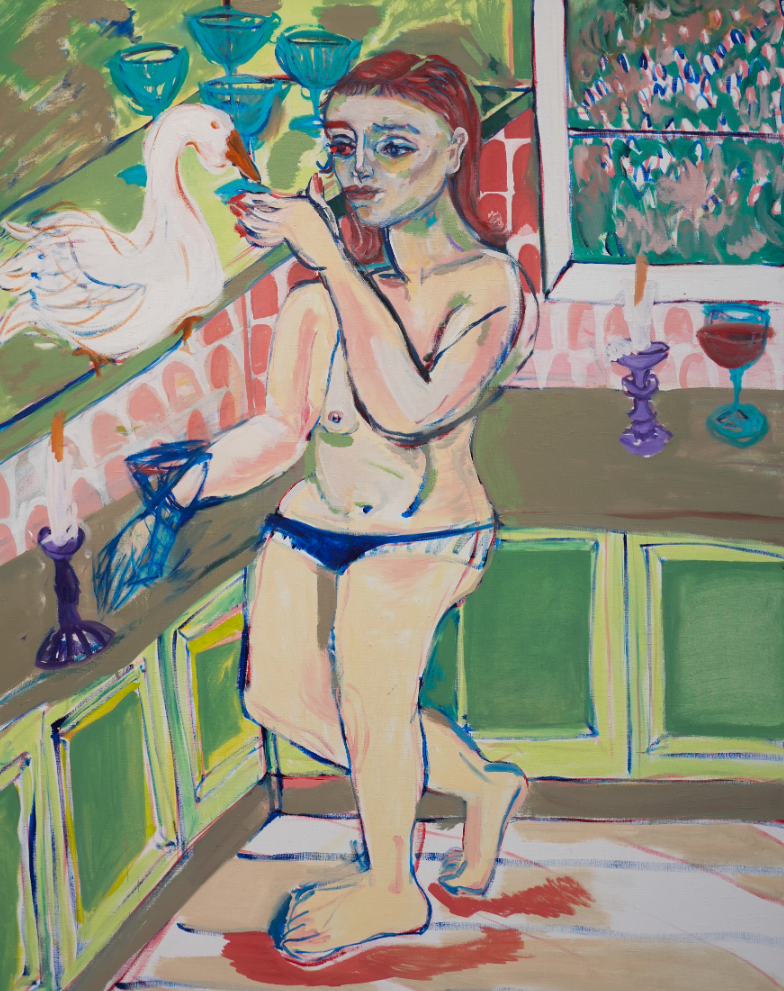
Drawn to moments that often evade notice, the overlooked forms the foundation of Brooklyn-based Jay Miriam's aesthetic inquiry. Casting scenes in vibrant, dreamlike settings, Miriam tests our senses — sight, yes, but also our sense of time. In her works, the futility of the present is scrutinised, yet sanctified. Miriam's works summon familiar, mundane moments: clinking glasses with friends, the perfume of a springtime garden, the soft glow of candlelight. For Miriam, life is constituted by brevity, a collection of fleeting beauty that ought to be remembered. Her practice hinges on personal myth-making, offering us a fragmentary look into her own experiences. Often painting from memory, Miriam translates personal experience onto canvas in untamed brushstrokes.
Bodies of Water, which opened on March 17th at 8 Wall Gallery in collaboration with GRUIN, Los Angeles, beckons us into Miriam's part-fantastical, part-Impressionist, part-memento world. Below, she chats with Lameah Nayeem and further extends the invite.
LAMEAH NAYEEM: In line with your previous works, Bodies of Water depicts a variety of women, this time engaging in domestic rituals. Are there any paintings that feel more personal than others?
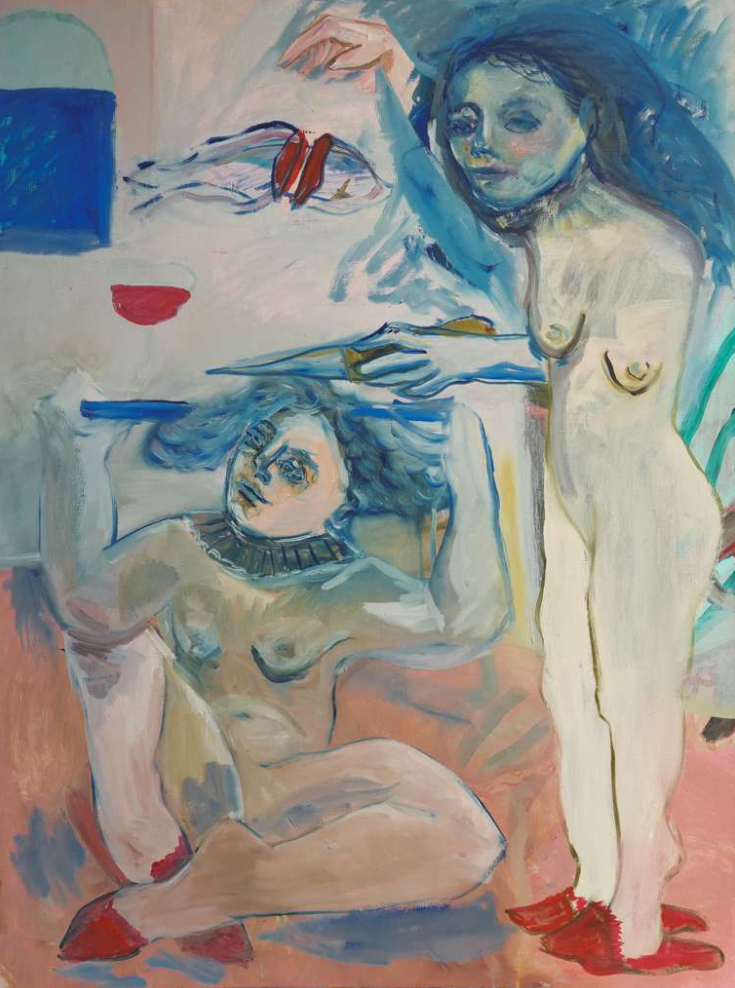
JAY MIRIAM: In some paintings, the bodies appear doubled or slightly misaligned, as if holding multiple emotional states at once. Those works feel personal not because they depict a specific memory, but because they register something internal, a quiet tension between presence and detachment that I recognise.
LN: Did the creation of Bodies of Water function more as catharsis or exploration of your experiences and memories?
JM: It functions more as an exploration, though there are moments where it becomes cathartic. I’m working through gestures, postures, and atmospheres rather than fixed narratives. The process is less about resolving those fragments and more about sitting with them, allowing them to remain open. Any sense of release comes from that act of sustained attention.
LN: With the rise of social media, being ordinary — or perceived as ordinary — is now negatively framed. How do your paintings, which honour the mundane, contend with this new attitude?
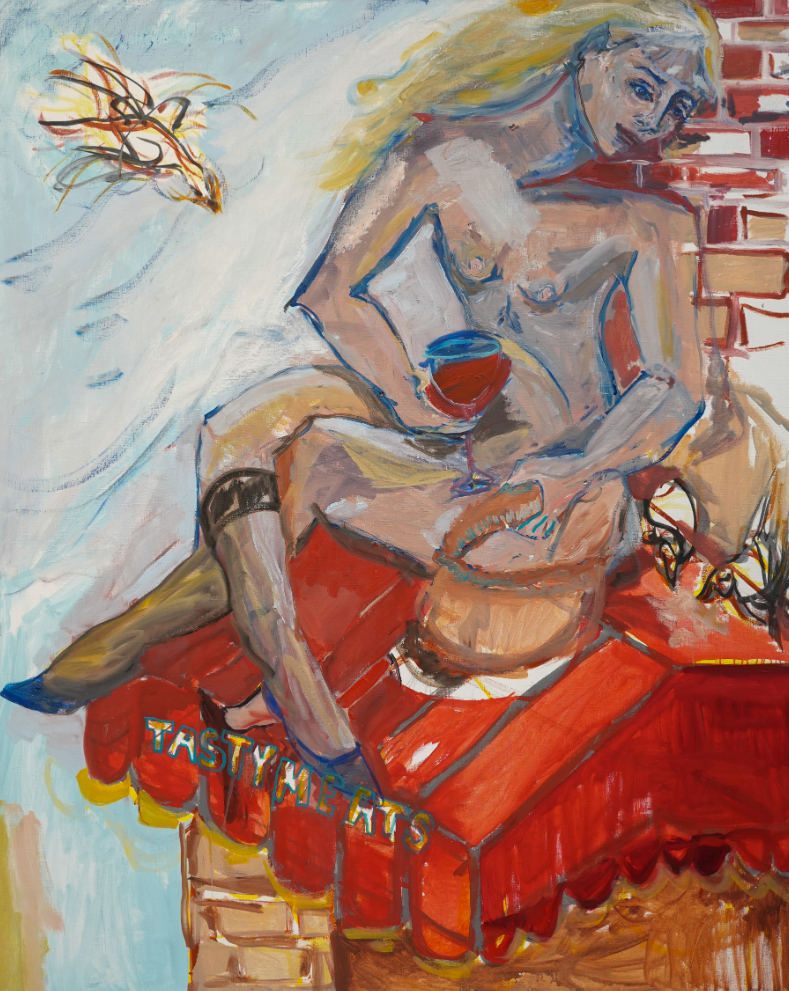
JM: I think the works resist that pressure by slowing things down. The scenes are often very quiet — women sitting, holding, resting — but they’re not passive. There’s a psychological density in those moments. Even something like a hand resting across a body or a shared posture between figures becomes charged. I’m interested in how the ordinary can hold complexity without needing to be performed or elevated.
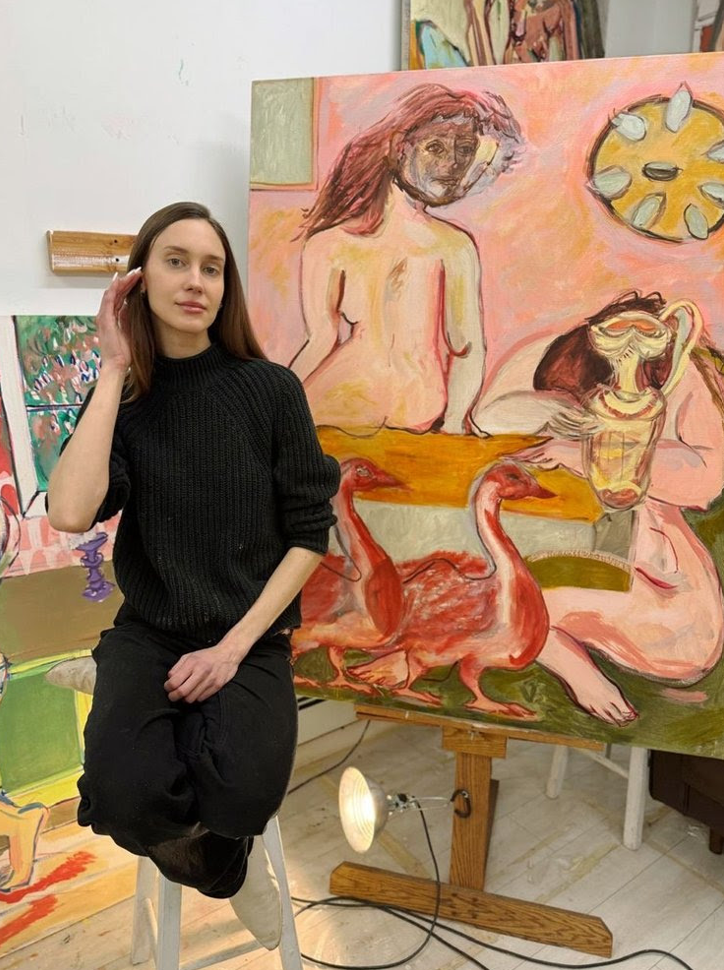
Image courtesy 8 Wall Gallery
LN: As Bodies of Water explores, where might motherhood fit into this?
JM: Motherhood isn’t depicted directly, but it exists in the relationships between the bodies. There’s a recurring sense of holding or merging where figures lean into one another, overlapping or echoing each other’s forms. It’s less about representation and more about a sensibility of care, repetition, and the blurring of boundaries between self and other.
LN: You rely heavily on painting from memory. Does the possibility of misremembering or inaccuracy bleeding into your work inform your process in any way?
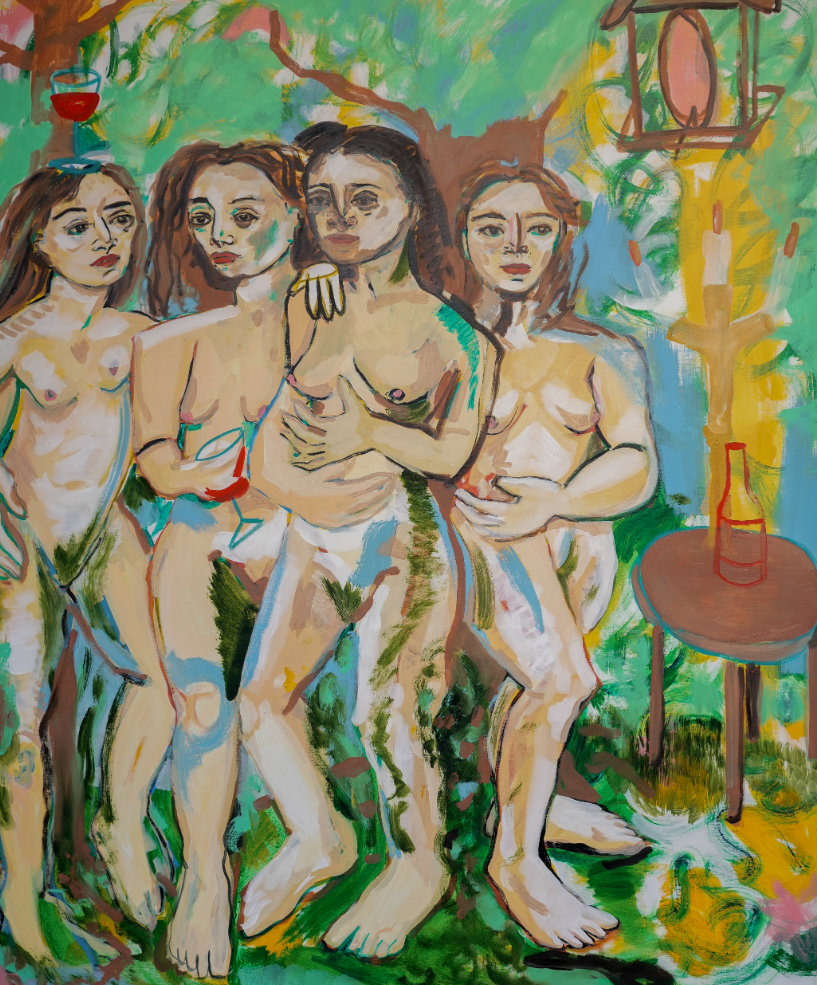
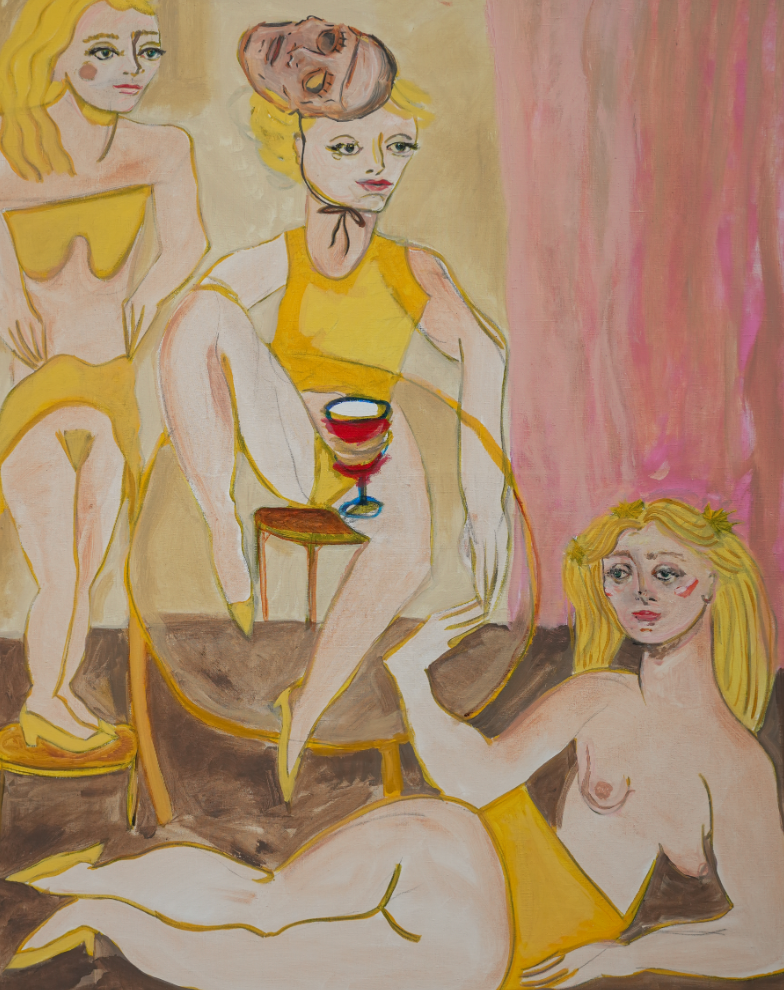
JM: Yes, completely. The distortions — the elongated limbs, the shifting faces, the almost mask-like features — come from that process of remembering imperfectly. I’m not trying to correct those inaccuracies; they’re where the work becomes alive. They allow different temporalities to sit together, so a figure can feel both present and distant at the same time.
LN: The worlds and women within your paintings are fluid, abstract, transcendent. Is this your ‘true’ vision in a way? What are some challenges you encounter in translating your perception of the world onto a canvas?
JM: It feels closer to an internal vision than an external one. I experience things as layered and in flux, and I think that’s where the sense of fluidity in the work comes from. I often think about how water holds and carries things without fixing them in place. I try to approach the paintings in a similar way. Figures slip between identities, spaces dissolve into one another, and nothing feels entirely stable.
The challenge is translating that into a fixed surface. A painting inevitably stills something that, internally, feels in motion. So it becomes a negotiation, allowing enough structure for the image to hold, while preserving that sense of drift, of forms still in the process of becoming.
LN: You’ve been exhibited all across the world, ranging from Sydney to New York. Is there any place that has influenced your art the most?
JM: It’s less about a specific place and more about atmospheres that stay with me. Light and colour play a big role: the soft blues and pinks in some works versus the more saturated greens and yellows in others reflect different environments I’ve moved through. Those shifts aren’t direct representations, but they filter into the emotional tone of the paintings.
LN: How do you prioritise the sensorial, the intuitive and the factual when creating? Did Bodies of Water require a different approach?
JM: The intuitive leads. I usually begin with a loose structure, but the painting quickly moves away from anything fixed. Colour and gesture become guiding forces. Certain elements, like the recurring reds, emerge instinctively and begin to anchor the composition.
With Bodies of Water, I was thinking a lot about the behaviour of water, how particles move, disperse, and gather without a fixed form. That sense of fluidity became a way of approaching the paintings themselves. Rather than trying to control the image too tightly, I allowed it to shift and reorganise, almost as if I were following that movement from within. The figures, like the paint, resist being fully contained; they blur, overlap, and drift between states.
The factual is still present, but more as a trace. What mattered more in this series was allowing the work to remain fluid, to hold that sense of constant motion and subtle transformation.