
Photography and interview by Karin Catt
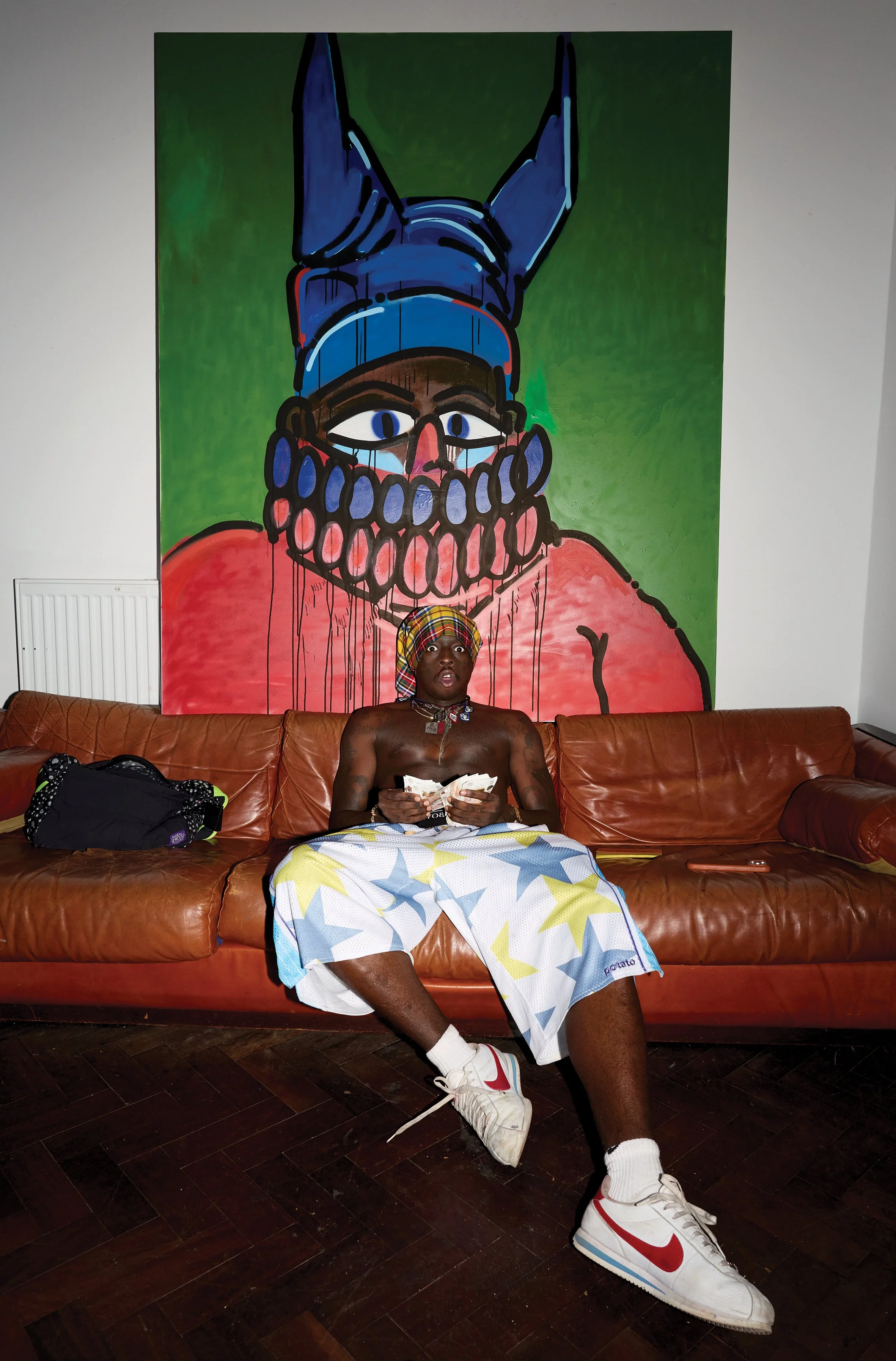
Nigerian-born, London-based artist Olaolu Slawn is often slated as London’s latest enfant terrible: a 26-year-old provocateur prone to artistic stunts, whose practice is built on skate culture’s DIY rebellion and raw, graffitied visual language. But for Slawn, that’s just the story the art world spins when it never wanted to open the door to you in the first place.
Born in Lagos, Slawn got his creative start with a streetwear and graffiti-based practice at Nigeria’s first ever skate shop, WAFFLESNCREAM, before moving to London at 17 to study graphic design. Vibrant, high-contrast and slickly saturated, his works blend a Pop Art sensibility with Nigerian Yoruba influences.
For Slawn, art is something done in public. From attempting the world’s largest crane painting in a car park in London’s South Bank to his ambition to design the packaging for the instant noodles stocked in the pantry of every Nigerian household, Slawn is preoccupied with one thing: scale. “I want to have one of my things in everyone’s house in the world,” he says. Though he’s collaborated with some of the world’s biggest brands and figures, including Louis Vuitton, Nike, A$AP Rocky and Skepta, and is represented by London’s Saatchi Yates gallery, Slawn is concerned with visibility, not status.
Where many artists and galleries skirt around the subject of money with practiced opacity, Slawn approaches the art world with irreverence and commercial directness. Yet despite accusations of being a ‘scam artist’, Slawn’s artistic and commercial rapacity has little to do with greed. Instead, it’s an uncanny kind of resourcefulness. It’s about not being wasteful: of opportunities, of recognition, of a supportive community and a means to give back to them.
For A-M Journal, Slawn sits down with Karin Catt in his Shoreditch studio to talk about the meaning of shock value, why he should curate Virgin Atlantic’s next flight to Lagos, and the reason, in his own words, he’s not an artist – but he might just be a chef.
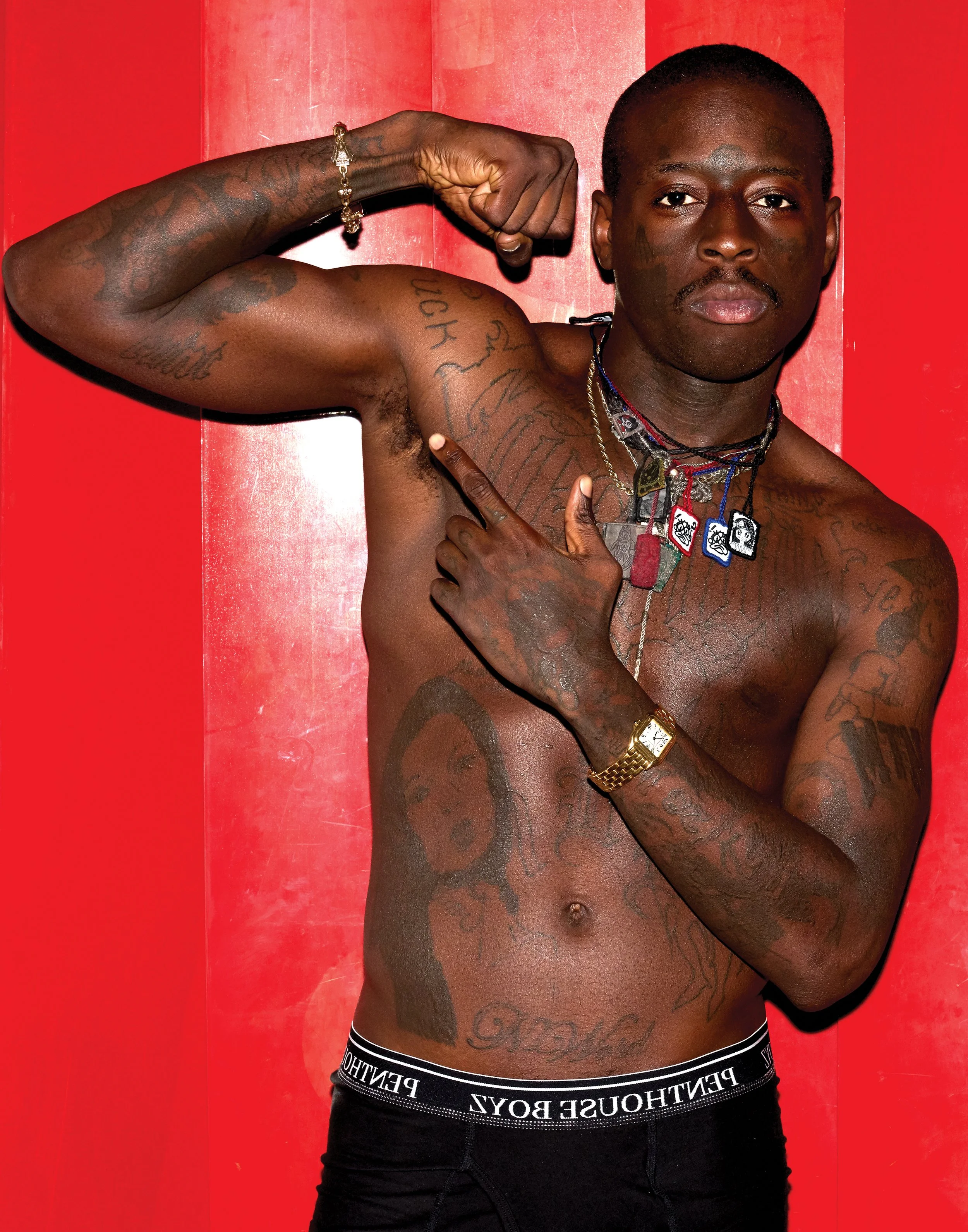
KARIN CATT: You came into art through skate, streetwear, music and underground culture rather than the traditional art world. How much has being an outsider shaped the way you make work – and the way you navigate the art world now?
OLAOLU SLAWN: I'll give you a different answer, not the cool answer. Yeah, it does shape your work a lot, because you have to do things differently to be seen. You feel me? When you're not part of that set of people who get visibility, you have to get creative. Creative in the way you show your work. Like, you have to think of how you get your foot in the door, whether it be the underground music scene, art scene or whatever.
But when you change how you do things, the people in the mainstream do what you do. They take it from you, and then you have to keep being creative, and then suddenly you're mainstream and you're looking to the kids in the underground to find out how to display your work differently. So, we all learn and we take from each other, and that's the one thing you can count on in this world is that you will give something and someone will take it. This is just the truth about the situation when you don't come from these sorts of backgrounds. My son paints differently to me and I learn from him. So I guess, yeah, it does change.
KC: Do you think you're still doing things differently, like the Rolex stuff?
OS: From a bag to a Rolex to a canvas, I mean, the possibilities are a little bit more endless now. Whether it's a hot air balloon or a T-shirt, I'm still gonna enjoy painting it.
KC: What do you think was the biggest thing you did that got you noticed?
OS: The Fight Clubs. The one crime I committed that I don't regret. I'll do that shit right now, again. I would.
KC: Your work is incredibly instinctive and immediate. How much of what you do is genuinely spontaneous and how much is more considered than people might assume?
OS: Everything is instinctive. All of it. It's a gut feeling. The more anxious it makes me, the more right I feel about it. Like now, we've been sued by Rolex. I haven't told anyone about this, it's the first time I'm speaking about it. We've been sweet because we were doing things that maybe they couldn't do. Maybe they've contacted Ronaldinho [Gaúcho, the Brazilian professional footballer] before and he's been like, no I don't want to do this.
Well then why would he want to work with a 25-year-old scumbag that comes from Nigeria and not with this prestigious company? They didn't see me as big enough to sue before, but I don't see them suing me as a bad thing. I think that's a head nod to what I'm doing. I think they've seen 12 collaborators on something they created that they couldn't make happen themselves.
KC: And, so, what does that involve? Does that mean you stop what you're doing?
OS: Yeah. It's 2026 now, this is the last year I'm going to do a Rolex. After this year there's no more Rolexes. They can't stop me from buying it, but the reason why I'm stopping is because people have businesses painting Rolexes, and I don't want [Rolex] to put a restriction on other artists in the world who would have to find another watch to paint and sell to people again so I don't want to be the one that shuts that water fountain off.
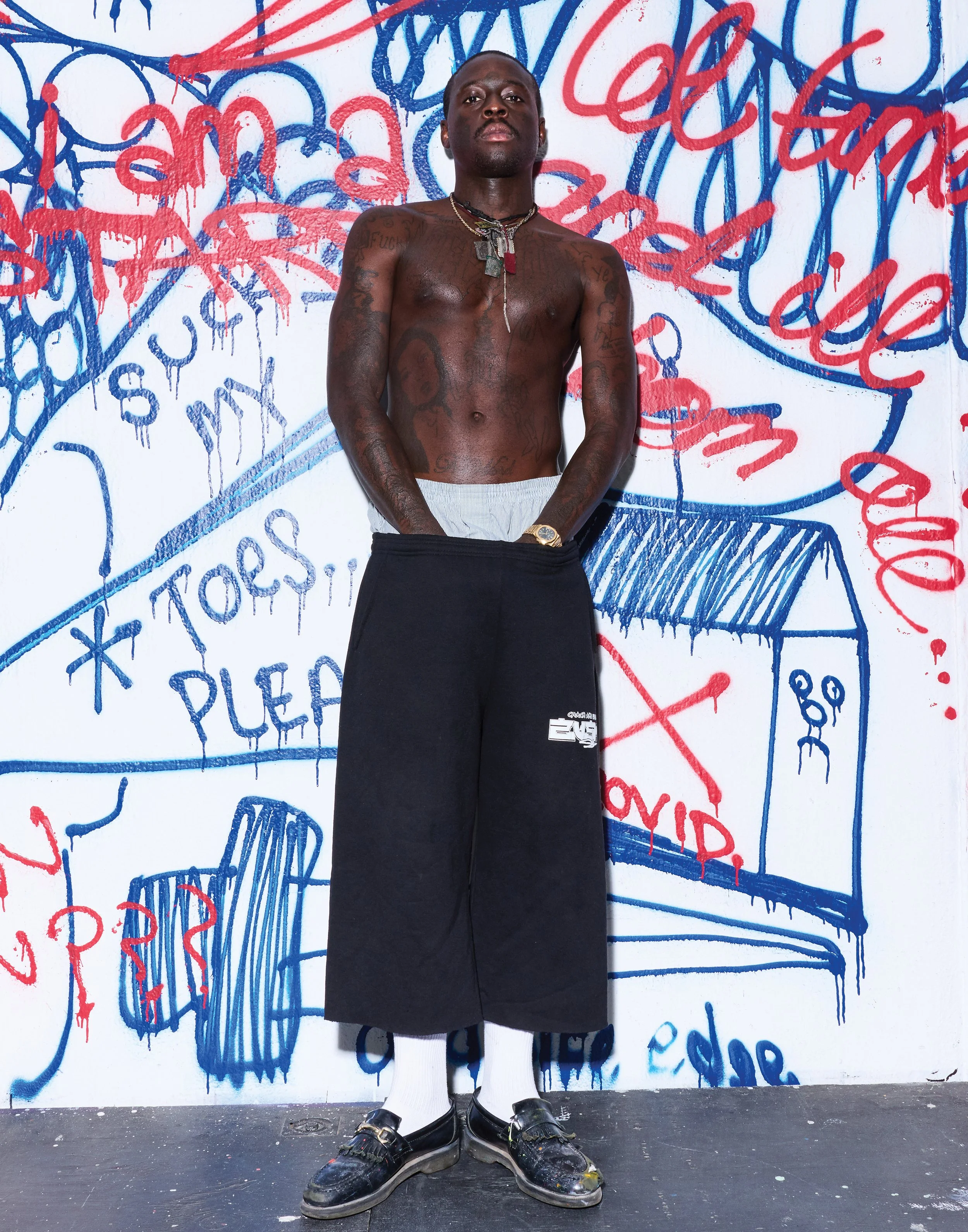
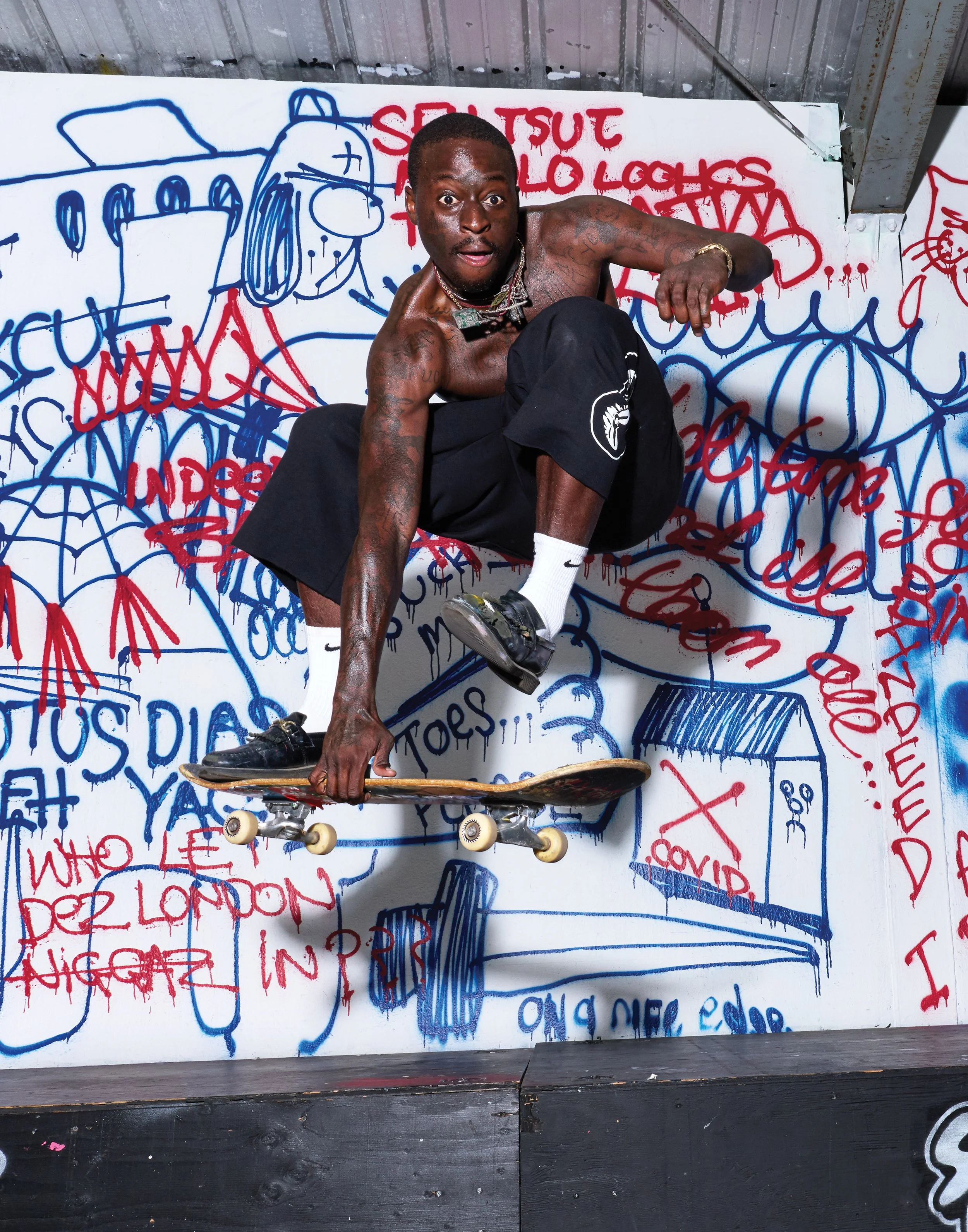
KC: You've gone from painting during lockdown to working with some of the biggest names in fashion, music and sport. What makes you say yes to a collaboration – and what makes you say no?
OS: I'd say yes usually… If Gucci contacted me and said, ‘Hey, we want to do a collab’, I would probably say no. If it was Louis Vuitton and Virgil [Abloh, an American fashion designer] was still alive, I'd probably say yeah, but if Walmart was like, ‘Hey, let's do a collab’, I'm down, 100%. I choose Walmart over Louis Vuitton or Gucci any day.
KC: There's a lot of humour, provocation and chaos in your work, but underneath that, what are you actually trying to communicate? Or do you resist the idea that art always needs to mean something?
OS: No, I think it does. I believe in stumbling on meaning, like Isaac Newton – you stumble on something that was already existing, and you don't know what it is. I believe that as soon as the world gets to the point where we think we know it all, that's when we start devolving.
We don't reach for the stars the way we used to. I feel like the reason why my work is so provocative is because I find something out and I engulf myself in it. So, people think my work is provocative because I want to have shock value. Nah, it's just because I stumbled on something that I found either extremely disturbing or cool, and now it's like I’m subconsciously painting about it, or speaking about it, or doing something about it.
KC: You've managed to move between underground culture and major institutions without losing that sense of irreverence. As your audience and profile get bigger, how do you protect the freedom that made the work exciting in the first place?
OS: Not in a weird way, I just have a lot of kids around me, which keeps things real. I’ve got the same friends that I grew up with around me. There's always something fun happening in here [the studio], whether it's people painting or making music or making videos.
My door is open to people that have an idea. When you get to the position that I'm in, a lot of people just try to surround themselves with people of the same status, and I don't believe in that because I don't believe in status. I think money changes people, but it's also the root of all evil. Money was never a thing for me to have status. I don't go to a restaurant and tell the waiter I need my dinner. I have the same friends and treat you the same whether you’re 13 or fucking 31. I feel like that's what keeps me in the same kind of head space. This place [the studio] has an energy or radiance of… I don't want to say creativity, but something like that.
KC: Like a living organism?
OS: Yeah, it's always moving and changing, and some people come in here they're like, ‘Yo, you need to lock everyone out. Like, it's bad for your business’. I think it's the opposite. I don't think it's bad for business. I think having people in here is what keeps the energy going and flowing.
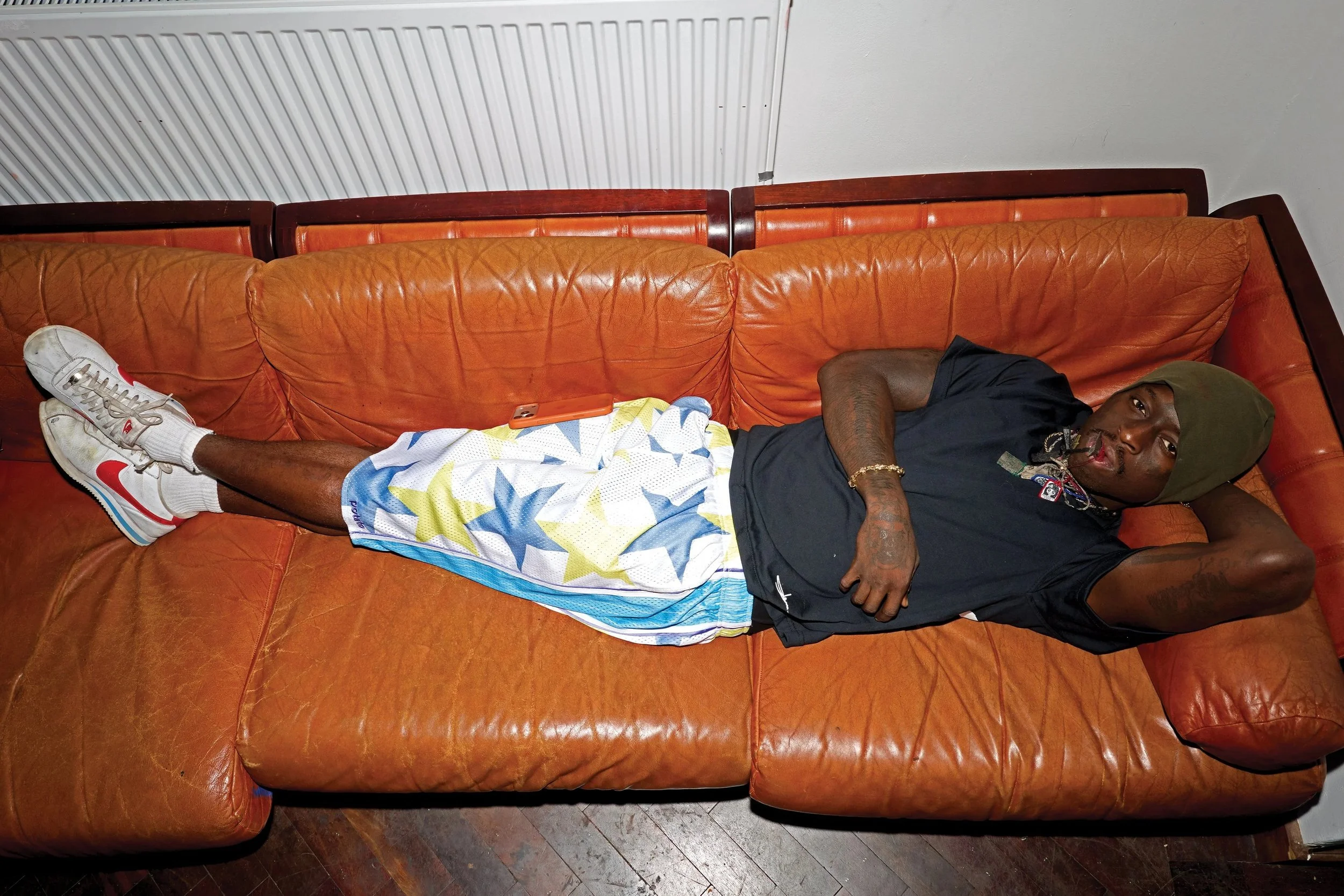
KC: Is there one thing you haven’t been able to do?
OS: Nah, I don't have one of those, but I do want to collaborate with Virgin Atlantic really badly. They have a flight to Lagos, and I want to curate the flight. I think people are really bored on flights, because you have access to all these things, right? You choose this food or that food. I'm like, fuck it. No. I want just one meal that changes every flight that you have to try. There's only six movies – six films that I think are extremely great, an eclectic set of films. Then it's like you're forced to do something that you wouldn't normally do.
KC: So, what else are you working on that you can talk about?
OS: I can talk about everything, fuck it! Right now, we're working on this playground initiative. I hate the government. I hate the idea of a government. But I feel like with the way technology is going, I'm trying to start this initiative of keeping people outside. So, I'm trying to go to the government and build 10 playgrounds that are reactive playgrounds. Kids can go there, but I also think adults want to have a playground, too. And I think it's possible to make something now that works for everyone. That's what I want to do. I want to make the world exciting again.
KC: What are you painting at the moment? You're experimenting with charcoal?
OS: Yeah. Usually with these eras they come and they go quickly. Sometimes I play with ink. But now I'm playing with pastels, colours. It's like colourful charcoal.
Actually, my kids do things and then I'm like, ‘Oh shit, I should try that’. Like the bags I painted before were very structured, like boom, boom, boom. But my son just like [Slawn makes spray can noises] all over the whole bag, and I was like, I should have done that. I'm probably gonna finish that off and then recreate it. Everyone's gonna be like, ‘Wow, that's sick’. Like, yeah, I just stole it from my son.
KC: So, who did you idolise or were interested in as an artist when you were growing up?
OS: Just Mark Gonzalez [US skateboarder and artist]. [Laughs.] And a lot of really, really old Nigerian sculptors. Mark Gonzalez would paint and would draw a second G stick man on a skateboard and put it on the t-shirt and I was like, ‘Oh, that's fire’. And it was this thing of skateboarders not being able to pay this amazing artist to make this thing for them, and just using what they could get.
KC: We know you probably get comparisons to Basquiat and Haring – do you take it as a compliment?
OS: I take it as a compliment. I didn’t know any of that growing up. I didn’t know who Basquiat was. I did not know who Keith Haring was. I knew none of these people until I came to the UK.
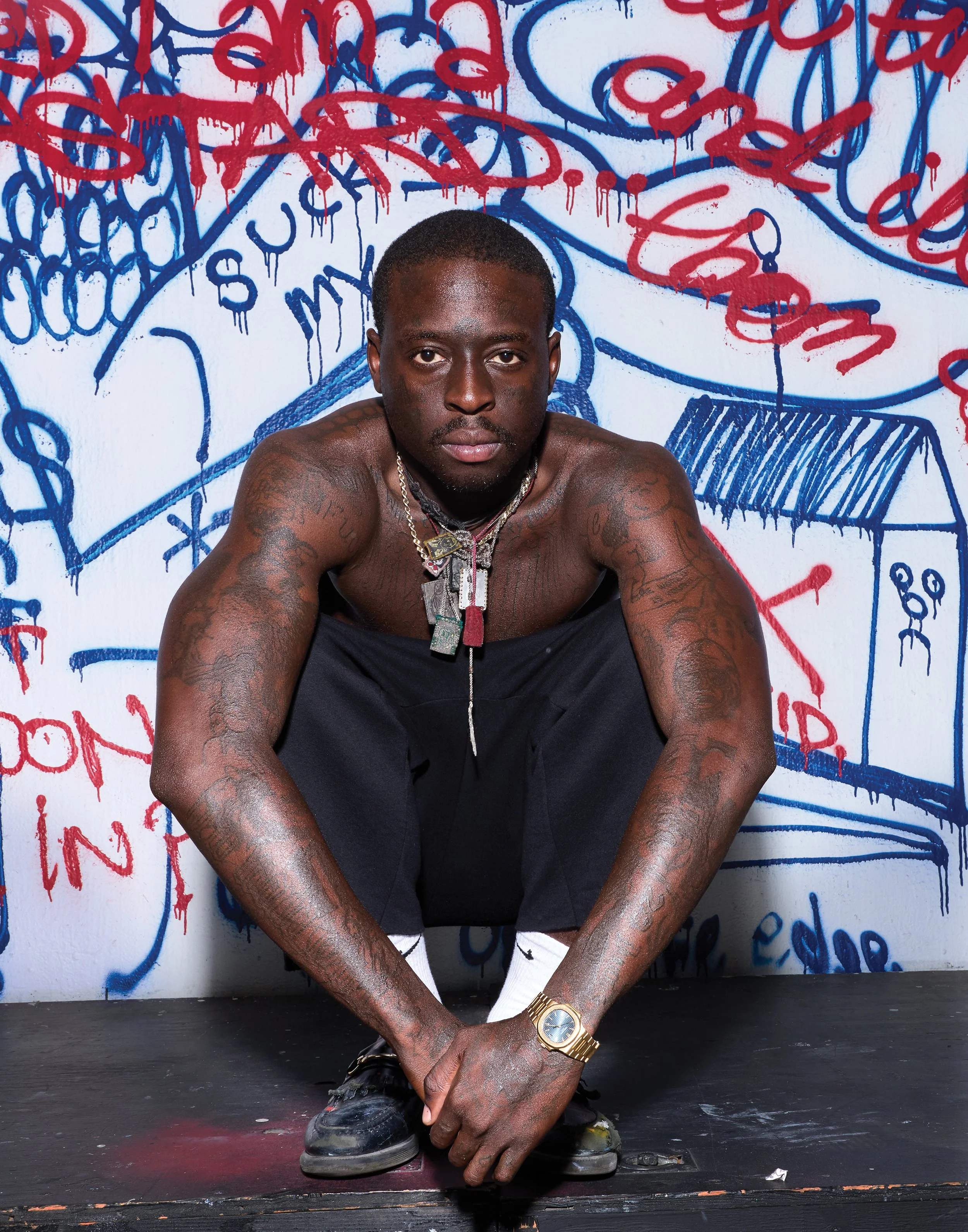
KC: Whose work would you collect now?
OS: Joanna Van Son did an exhibition after me at Saatchi Yates. Her work is incredible. Like, I'm a hypocrite when it comes to art. I wouldn't keep my [own] artwork in my house. I wouldn't see my art if I was someone else and be like, ‘I want to buy that’. [Laughs.] I like pictures, I like photographs. But yeah, I wouldn't buy my work. Just me being honest. I love creating it, but I don't think it's phenomenal. I think it's the idea behind it that a lot of people are attracted to. I would buy Basquiat’s work if I had that kind of money.
KC: Are you an artist or a marketer, or both?
OS: I don't think I'm either of those. I think I’m a chef that cuts a cow and uses the insides… I think that's what I am. I find a cow, and I'm not just taking the meat from it, I'm taking everything. If I can make a football, I’ll make a football. If I can make a jet, I'll make a jet. Or I could wake up tomorrow and be like, ‘Oh actually, I want to work with a chef’. I'll make a meal that looks like a Slawn face.
KC: Is there a top thing that you want to do?
OS: Definitely architecture. I want to make a building that people would marvel at. Or maybe like you stand and you walk 45 degrees and you turn your head this way and then you can finally see the Slawn face on the building. I wanted to be an architect growing up.
KC: So, from architecture to anything in between?
OS: I want to collaborate with Indomie, the instant noodles company. I eat it every day, I swear. I didn't know it was Indonesian until this year, I thought it was a Nigerian company. We grew up eating that as breakfast.
I think it's just grand. Architecture is grand, it's the whole building. Noodles are grand, like you go into anyone's cupboard and there's a cup of noodles or Indomie. It’s like I tell people – I don't want to be the biggest artist. I want to be like Lego. I want to have one of my things in everyone's house in the world, whether it's in Nigeria or in Thailand. I just haven't found that thing yet.