
Words by Lila Daly l Photography by Rebekah Campbell
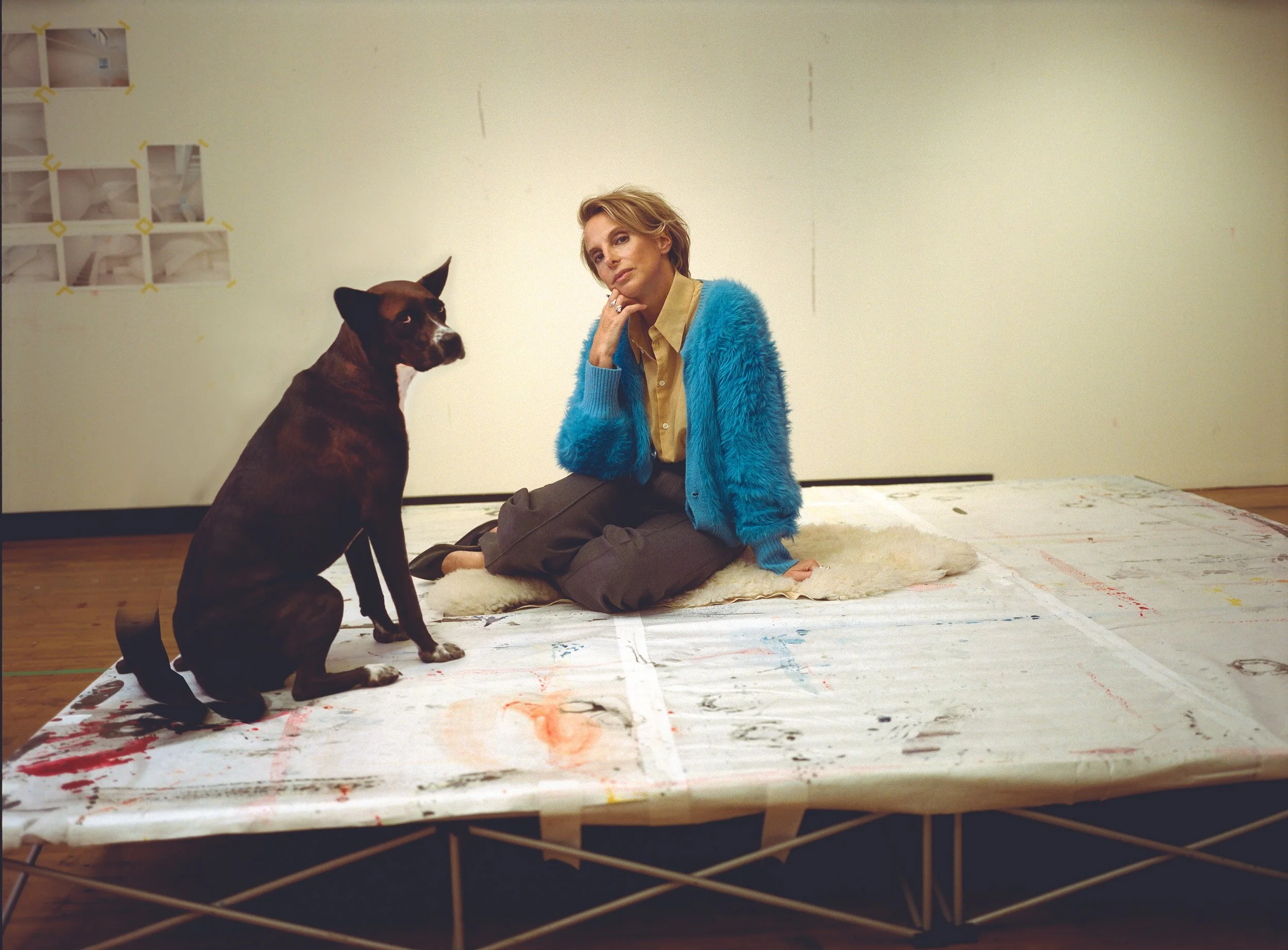
Shirt 6397, sweater Undercover, pants and belt Nili Lotan, heels Jil sander, jewellery Camille Henrot’s own.
A lot can be held within silence. Sometimes, the most movement is embedded in a pause, the leap into the unknown from an ellipsis. For French multidisciplinary artist Camille Henrot, moments of quietude are the necessary interludes in a practice constantly in motion.
A pause is also a moment of inhalation, of air and ideas.
Working across film, sculpture, bronze, drawing, painting and installation, Henrot draws on literature, cultural anthropology and digital media to question the systems and relations which structure everyday life. For all their conceptual complexity and depth of thought, Henrot’s works don’t wear their concepts heavily. Her agile and eclectic practice draws the viewer in through beauty and intrigue, figuration and abstraction, with a sense of play and curiosity. It’s a lightness she brings even to the solidity of bronze sculpture and cast metal, whose curving and flexing forms reify these conceptual shifts from heavy to light.
“I haven't made up my mind about why I need to work with different mediums,” she tells me. “I feel like other artists are maybe just better at restraining themselves. Maybe they have more discipline.”
Born in Paris, Henrot studied film animation, trained as a cartoonist and spent time working in advertising and across commercial photography and music videos. With an international reputation for large-scale, ambitious projects that bridge digital media, sculpture and installation, she has held solo shows worldwide, including her current exhibition, Paper Planes (2026), at Copenhagen Contemporary, as well as presentations at the Palais de Tokyo in Paris, Art Sonje Center in Seoul and the National Gallery of Victoria in Melbourne, among others. Her breakthrough short film, Grosse Fatigue (2013), was awarded the Silver Lion at the 55th Venice Biennale. Across her practice, she returns to the connections between the individual and the collective, ecology, ideas of social order and the systematisation of knowledge.
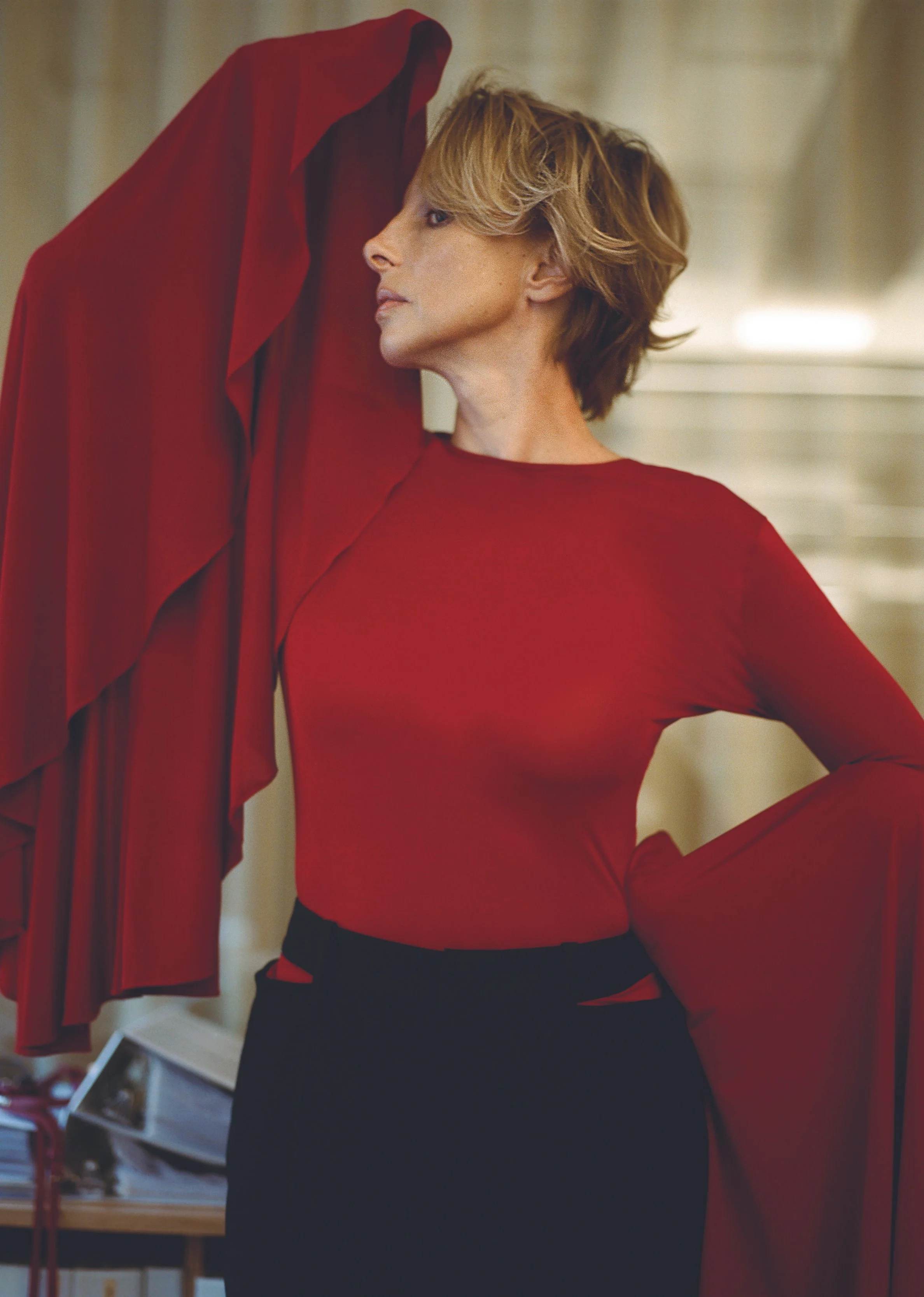
Top Duran Lantink, pants and shoes Jil Sander.
Henrot moved to New York City in 2011, where she’s lived ever since. For an artist whose work is attuned to the natural world and ecology, the urban density of New York might seem an unlikely setting. But for Henrot, the city has its own kind of wildness, offering ways to encounter nature through its chaos, movement and fleeting interactions. “It is a bit like Italo Calvino describing Milan as a kind of wild environment,” she explains. “There are still ways to dream about nature through the way you perceive the city. There’s enough chaos that you do feel you're in a natural environment.”
“But everything is fugitive, and ephemeral as well. Like in New York, you catch somebody's eye, then that person has already disappeared, and you pet someone’s dog for a few seconds on the subway, and then it gets off at the next stop.” These fleeting encounters demand a particular kind of attention: a willingness to pause and notice something, however briefly, before it fades away.
This year, Henrot has expanded her practice into live performance to bring this particular kind of attention to the stage. Her production, Commedia dell’arte (2026), which references the Italian Renaissance form of theatre, is a tragi-comedy that plucks the stock characters of this tradition and drops them into a contemporary New York apartment building.
“It felt really amazing to hear the whole room, the audience, laughing all together,” she says. “It’s fascinating because the success of one actor’s line depends on the other actor giving him space.” Time is a collaborator, as is space, as is silence.
“The silence, the empty space and the moment of pause are actually the most important secret ingredient of an artwork,” says Henrot. These occasions of pause and silence form a thread throughout our conversation, as they do across Henrot’s practice. “It’s a bit like when you paint, if you want to highlight a colour, you have to surround it by its opposite,” she elaborates. “If you really want to put an accent on a word, sometimes the most efficient way is to have it followed by silence. We human beings are made a little bit uncomfortable with silence, especially when it's a shared experience, and so that makes us think.”
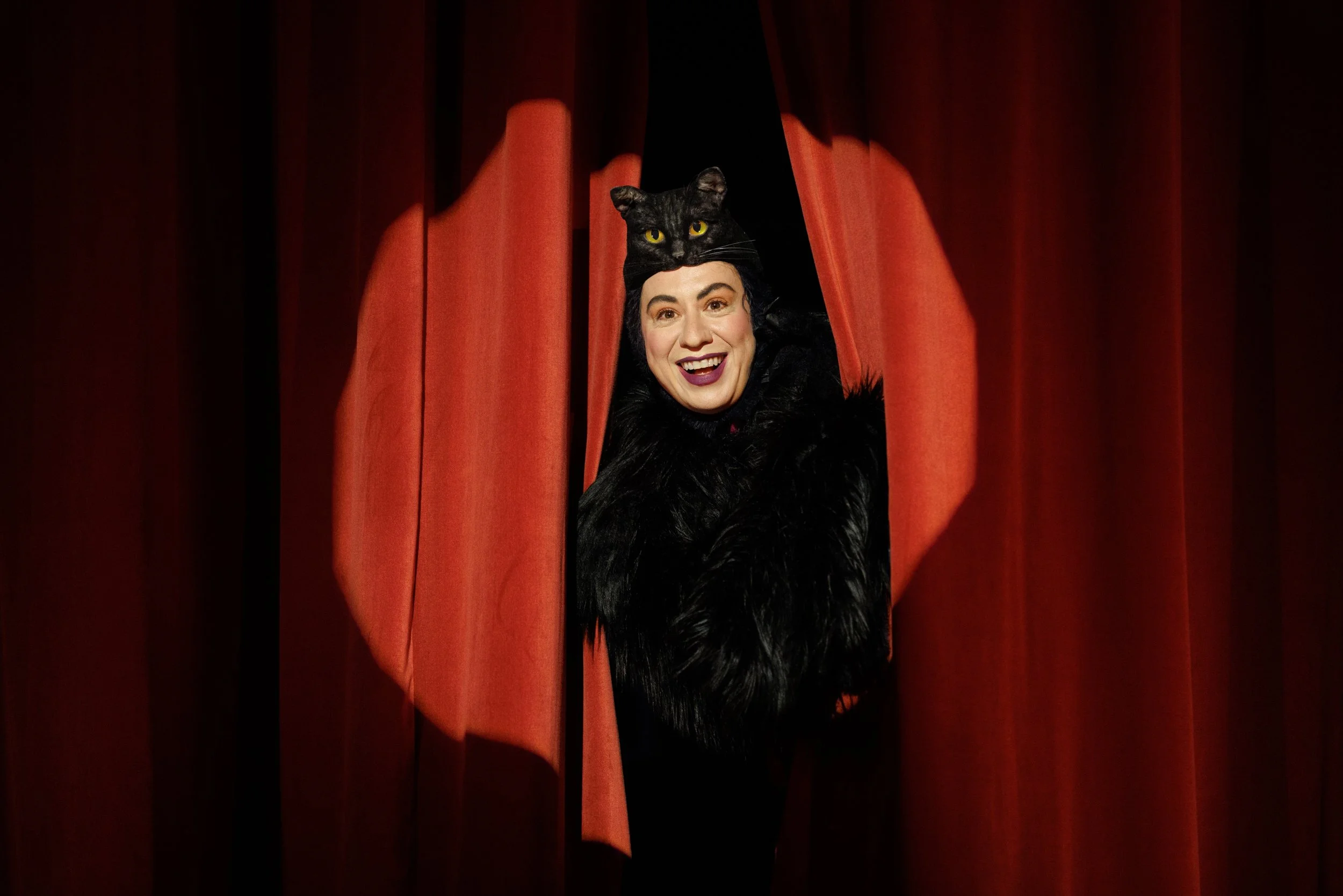
Camille Henrot, Commedia dell’arte, 2026. Performance still, Florence Gould Theater, New York, NY. Co-commissioned by Performa, Aspen Art Museum / Wheeler Opera House, and LYRA Art Foundation. Co-presented by L’Alliance New York. Photo: Nina Wurtzel. © ADAGP Camille Henrot, courtesy of the artist and L’Alliance New York.
In theatre, silence becomes a collective experience. Here, in the crowd, our reactions to the theatrical happenings on stage might be entangled, as Henrot suggests, with deeper ethical questioning. In the darkness of the theatre, there’s commensality in the ethical dilemma: the moment of pause before we know whether it’s appropriate to laugh, the collective intake of breath signalling a gasp – whether of shock or amusement can only be known by the people in the room. This is the tenor of Commedia dell’arte; the throw and catch of being a spectator.
The moment of pause, the silence, captures our slippery ethics; even if we’re swept up in the laugh track, “You, on your own, are making a decision about what to make of the situation,” she says. For Henrot, considerations of how we arrive at a decision, our collective responsibilities and the ethical choices we make extend far beyond the theatre.
This question of how we reach a judgement, and what becomes possible in the moment of pause before making one, is a consideration built into her own process. “I was talking about it with a friend who's a painter about how we are both very quick to finish and very slow to start,” she says. The pause is key to Henrot’s studio practice and how new works come together. “I never act immediately on an idea because I always have a lot of ideas, a lot of desire, a lot of impulse.”
Rigorous research, making lists, taking notes, collecting images and reading and engaging with literature are equally central to her process, with the time spent preparing often far exceeding the time spent making. “After that research, generally the time of execution itself is actually quite fast,” she explains. “Sometimes I do it in one day, but after that I also let it rest for a really long time, because I don’t want to judge it with these eyes. It’s almost incestuous to look at your work in the same period.”
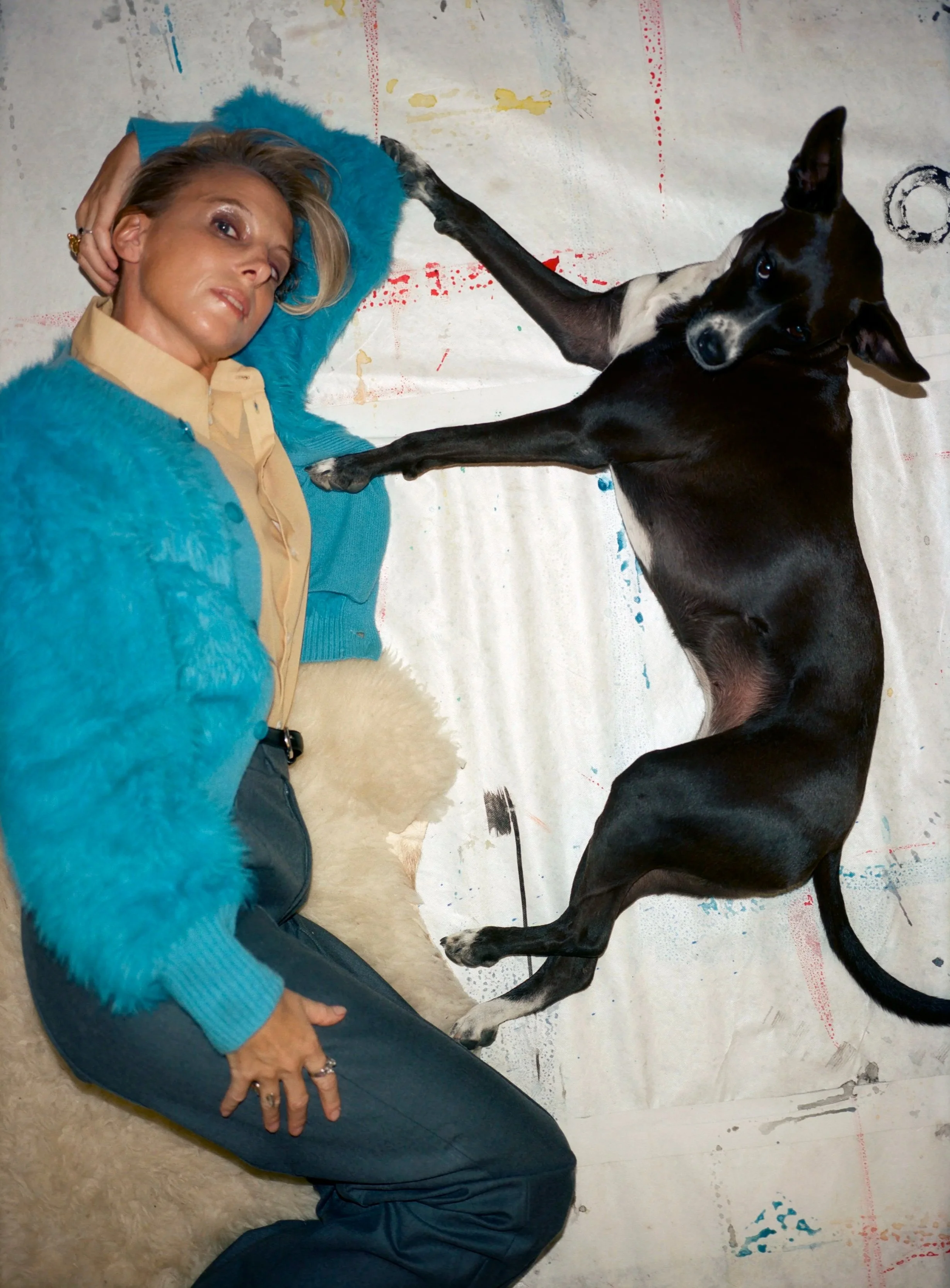
Shirt 6397, sweater Undercover, pants and belt Nili Lotan, heels Jil sander, jewellery Camille Henrot’s own.
There is a critical distance required between the artist and the work itself. For Henrot, this distance is not simply about gaining perspective, but about unravelling and letting go of attachment to the act of making, encountering the familiar as strange. It’s an idea that extends beyond her studio practice, echoing her interest in unpacking social structures and tacit assumptions: the things we often lack the critical distance to recognise as constructed.
There is an abrogation of self, she explains: “If you don't have an attachment, you avoid worshiping your own action, because you want to give value to your labour. And in order to not have that, you need to have forgotten how much time and how much effort was put into it. When we say, ‘With fresh eyes’, actually what we mean is like the eyes of another person, because a few months later, I'm a different person.”
Across mediums, Henrot’s work moves between questions of caregiving, our ethical commitments to the environment in the face of climate change and mass extinction, and the systems of knowledge that govern how we behave towards one another – from questions of normative ethics and digital technologies to the everyday conventions of manners and ‘right’ behaviour. Across her artistic practice, Henrot often returns to an interest in the politics of care and caregiving.
Recent works attend to notions of care through control, domestication and gentle restraint, from the leashed canines in Dogs, a commission by the New York Public Art Fund and her first major public installation in New York, featuring 12 dog sculptures in Central Park, to her ongoing series Dos and Don’ts, which blends painting, printing and collage to unearth the complex ideas of care enmeshed within codes of conduct and etiquette manuals.
For Henrot, Dogs was an opportunity to unentangle the connections between care and labour through a visual language intelligible to the everyday New Yorker. “I found that it was kind of an efficient way to talk about care, and care as labour, specifically because a lot of people in New York hire a dog walker,” she says. “It's kind of ironic, because the nicest thing about having a dog is just to walk with your dog,” she laughs. “And I don't judge, because I also have somebody to help me walk my dog in the morning.”
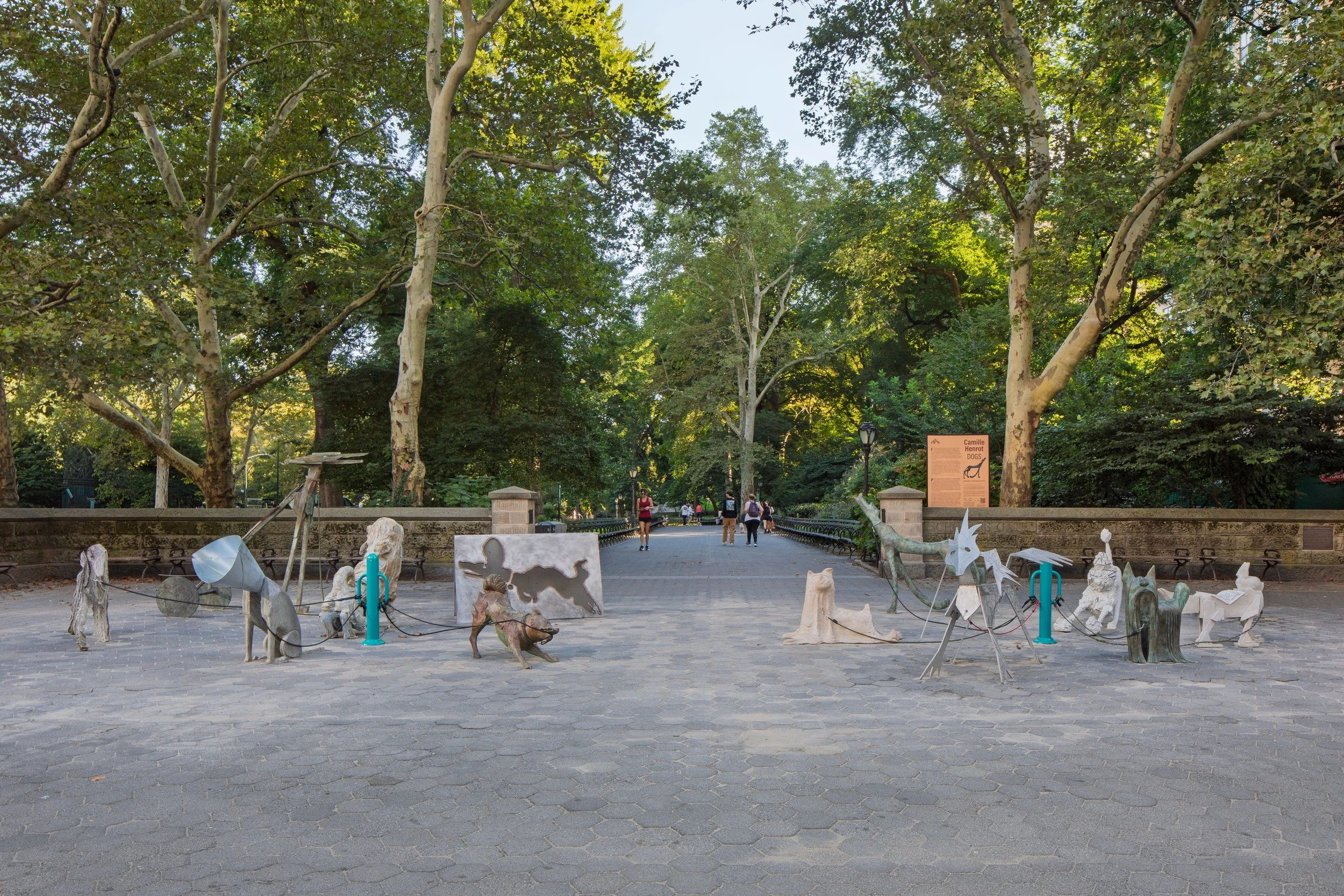
Camille Henrot Dogs © ADAGP Camille Henrot. Courtesy of the artist, Mennour, Hauser & Wirth and Esther Schipper. Photography by Nicholas Knight, courtesy of Public Art Fund, NY. Presented by Public Art Fund as a part of Camille Henrot: Dogs at Doris C. Freedman Plaza, Central Park, September 9, 2026 – August 29, 2027.
Reflective of her background as a cartoonist and film animator, across Henrot’s works, absurdity is an analytical lens: “It [my work] often does have a silly little trace,” she reflects. “I love to look at cartoons, and like to use a lot of different references.”
Shelves filled with white plastic binders line the walls of her New York studio, a library which chronicles an ongoing process of gathering diverse reference material. Her binders for Dogs tell a rapid-fire history of the canine form and provide a glimpse into her unruly process and sense of humour; 19th century etchings of aristocratic hounds cohabit with social-media screenshots of men carrying large, fluffy dogs as if they were babies. Henrot positions different sources and forms of knowledge as equally worthy of attention, emphasising the hybridity of our contemporary era through a playful disregard of hierarchy.
“I was looking at Egyptian sculpture, English 19th Century engravings, Tex Avery cartoons, Disney, Japanese manga,” Henrot recalls as she flicks through plastic sleeves, “And there are also pictures people post on Instagram of their dogs in strange positions,” she laughs.
Humour is also an entry point into the deeper consideration of systemic inequalities which underscore Henrot’s work. In the series System of Attachment (2018-20), for example, her bronze sculptural forms evoke swollen breasts and breast pumps in Learning to Loose (2019), while Mon Corps de Femme (2019) presents a hollowed yet sharpened figure, both alluding to the often invisibilised and gendered labour of care involved in nurturing young children. Within this ongoing series, Henrot sits with ideas of dependence, revealing an economy of care in how we understand the “soft labour” of caregiving, who provides it and how child-rearing is valued, gendered and tied to class, race, history and migration.
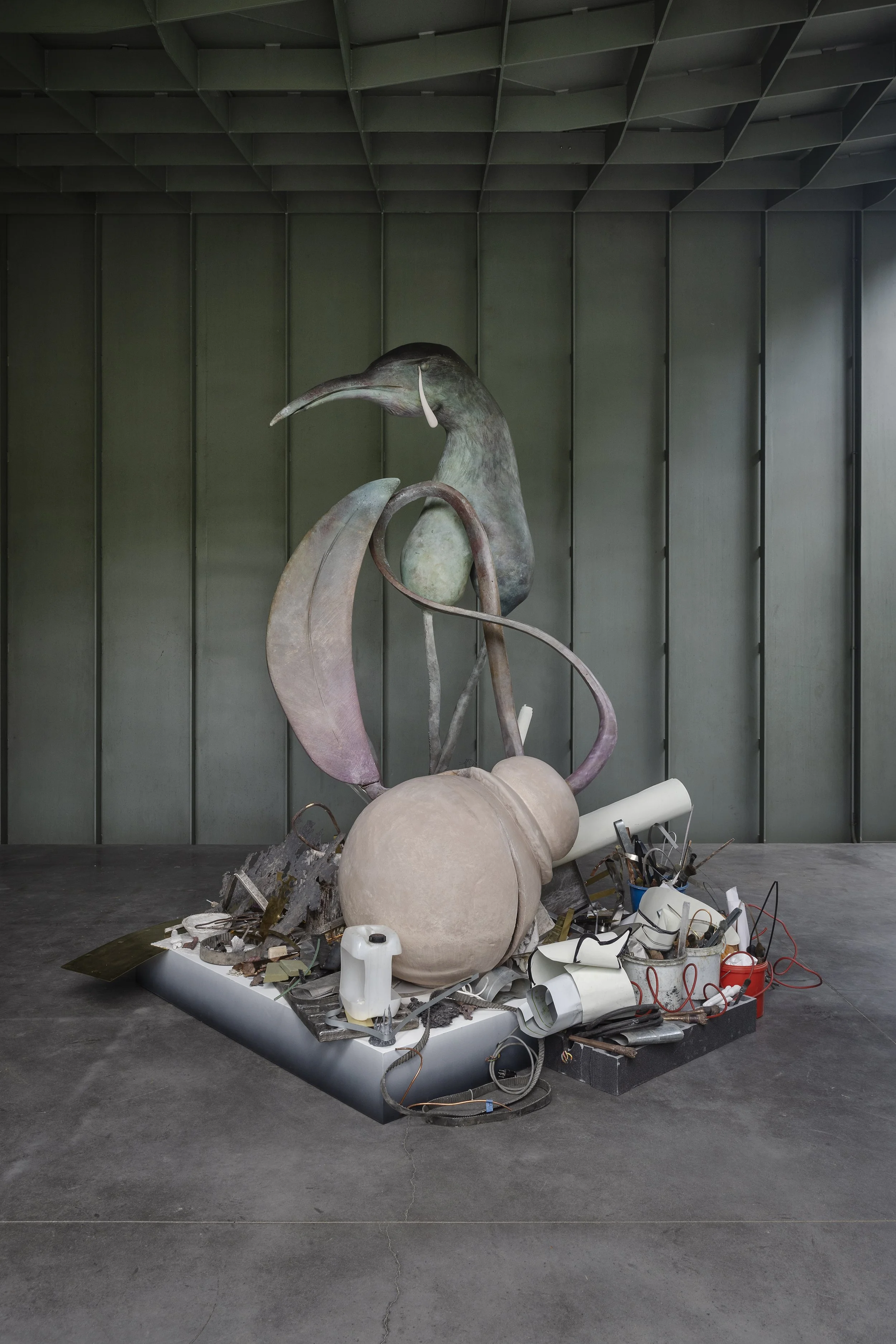

Henrot has a sustained interest in the defamiliarisation of the meanings which amass and settle in the mundane; the relationships, social codes and ways of being we take as a given. Without ascribing to Straussian-structuralist binds of animals as being “good to think with”, for Henrot, the dog is nonetheless an apt example. “How much do we project of our own emotional life [onto the dog]?” she asks. A cultural patina of references and stories, of domestication, submission, culture and pedigree, wildness and companionship is layered onto the subject of the dog.
“I like this double edge of the dog,” she explains. “You see it all the time, it’s everywhere, and I feel like when something is very banal, there's always a lot of accumulation of meaning that has been sedimenting around it. It's an interesting place to dig – as Roland Barthes said.”
In our conversation, the crux of care’s ambiguity is elaborated in a single example. “Do you know the story of the dodo?” Henrot asks. Flustered, I say no. “It was almost extinct, and the Museums of Natural History, especially the British and French, who were always competing against each other, they made the dodo extinct by collecting specimens.”
Notions of care can be tied to colonial mindsets of possession and mastery; the fierceness of our protective instincts can be destructive. ‘Care’ becomes a vernacular of domination. For Henrot, the tale of the dodo is the “kind of story that illustrates that the effort of conservation, like museum conservation, sometimes really plays against life and living.” The ethics, and the output, of care can be confusing. “Care is a very vague word,” she says.
This tension between preservation and destruction, tied to modalities of ‘care’, is mapped across the cyclical pulse of In the Veins (2026), Henrot’s latest film, which explores the climate crisis, mass extinction and feelings of ecological grief through the lens of raising children.
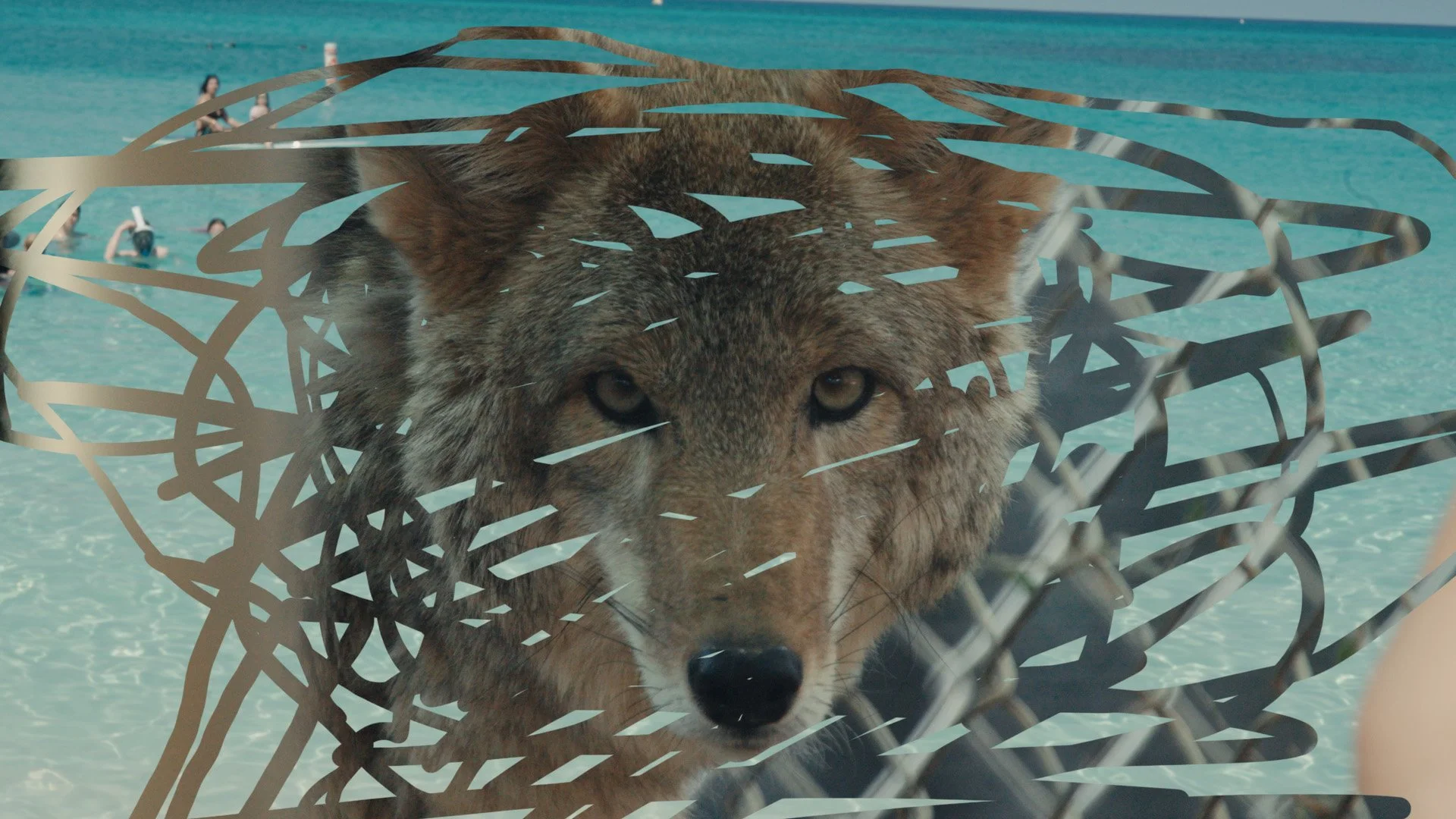
Camille Henrot, In The Veins (still), 2026. © ADAGP Camille Henrot. Courtesy of the artist, Mennour and Hauser & Wirth.
Henrot’s interest in collective ethics was amplified when she was expecting her first child. “I had a sort of completely out-of-proportion sense of justice that grew in me,” she says. “When I was pregnant, I was convinced that if I would be really active, I could maybe change the world before my child was born,” she laughs.
It was during this period of frenetic activism that In the Veins began to take shape. She initially thought to contact environmental organisations and offer to produce short clips for their campaigns, hoping to contribute something immediate to the climate movement. Instead, what began as an impulse to act became a longer project. While filming across five years, her motivation shifted, “from the idea of fragility of life and the idea of spreading awareness and a sense of urgency, to the feeling of wonder and beauty, which brought a lot of grief.”
For Henrot, part of the challenge in addressing mass extinction is making the accompanying grief visible, despite the distance we often feel from the loss itself. Care makes the abstract idea of ecological loss more immediate. The film brings the ecological into intimate dialogue with ideas of parenting and the labour of caregiving, layering scenes of wildlife rehabilitation and conservation upon images of the everyday, hidden labour of caring for young children.
Yet in her work, Henrot is interested in something beyond the familiar, anticipatory framing of environmental responsibility solely around the world our children will inherit: “It needs to change for you, as well.” The experience of new life, she suggests, makes us more conscious of what is already disappearing. “I feel like it's really the experience of being around small children which brings to mind a lot of awareness towards the beauty of nature, but also how fragile it is, and how ephemeral everything is, including that beauty”, she adds. “The idea that everything could disappear and could vanish becomes very tangible.”
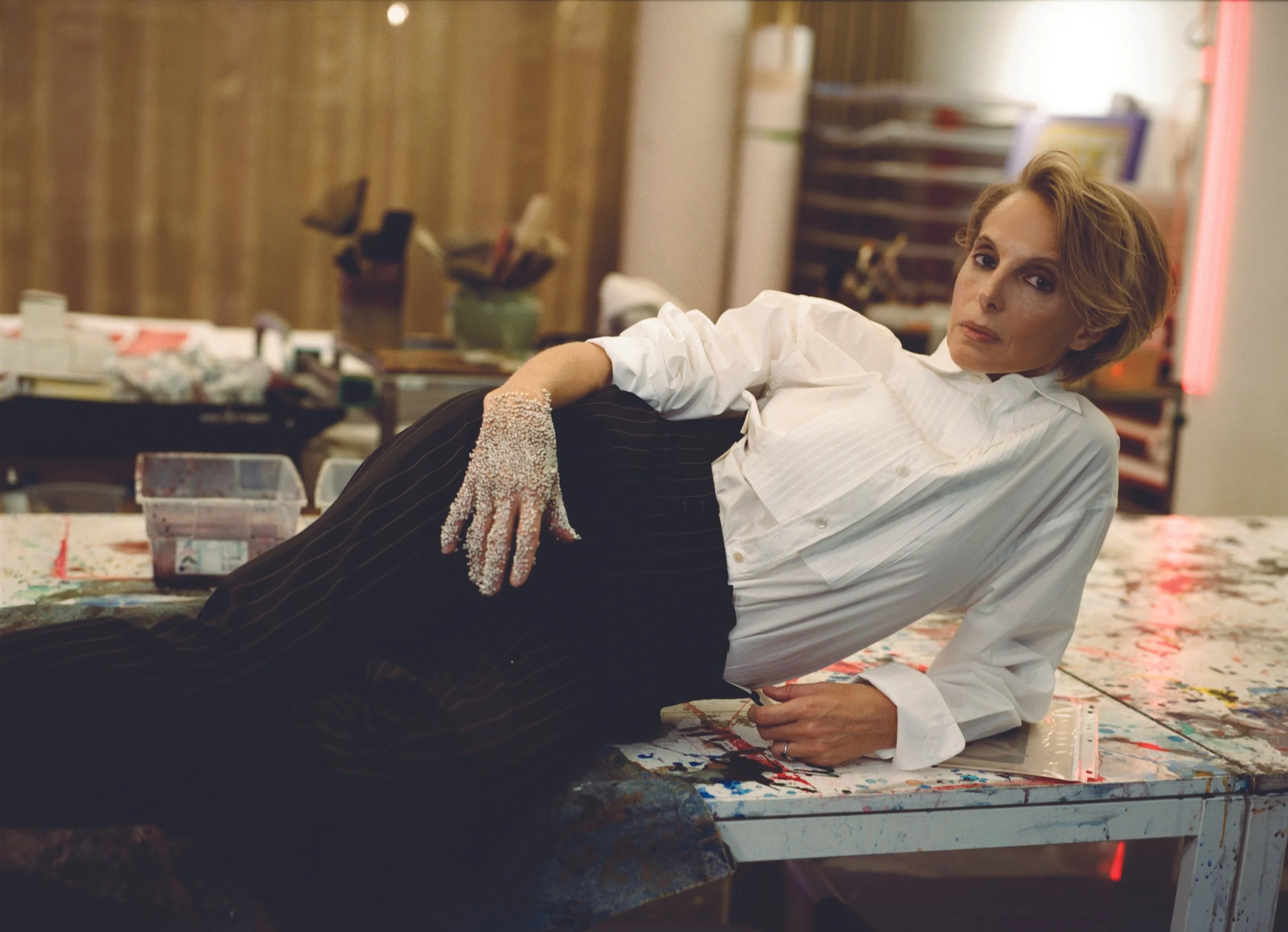
Shirt Nili Lotan, pants Jean Paul Gaultier.
“When you are with small children, you see how quickly they need new socks and then new shoes and then new pants, and how the baby with the super fleshy cheeks has disappeared and instead you have a little boy,” she says. “I feel like this idea that you can lose something at any time, that death is lurking around any corner, is made very visible by the freshness of life.”
Here, the moment of quietness is one of contemplating regeneration and moving beyond our own spheres of thought. “I don't believe we're only motivated by our self-interest,” she says. Sometimes, Henrot suggests, we need time to do everything all at once, and nothing in particular: “Maybe I’m multidisciplinary because I use these interludes to not get overly fixated on a technical process. I allow myself to be 'born again’ to a new practice.”
We end where we began, in reflection: “Maybe I will have some new ideas, after the pause.”