
Sculpting Instincts with Kennedy Yanko
Words by Karen Leong | Photography by Chad Moore
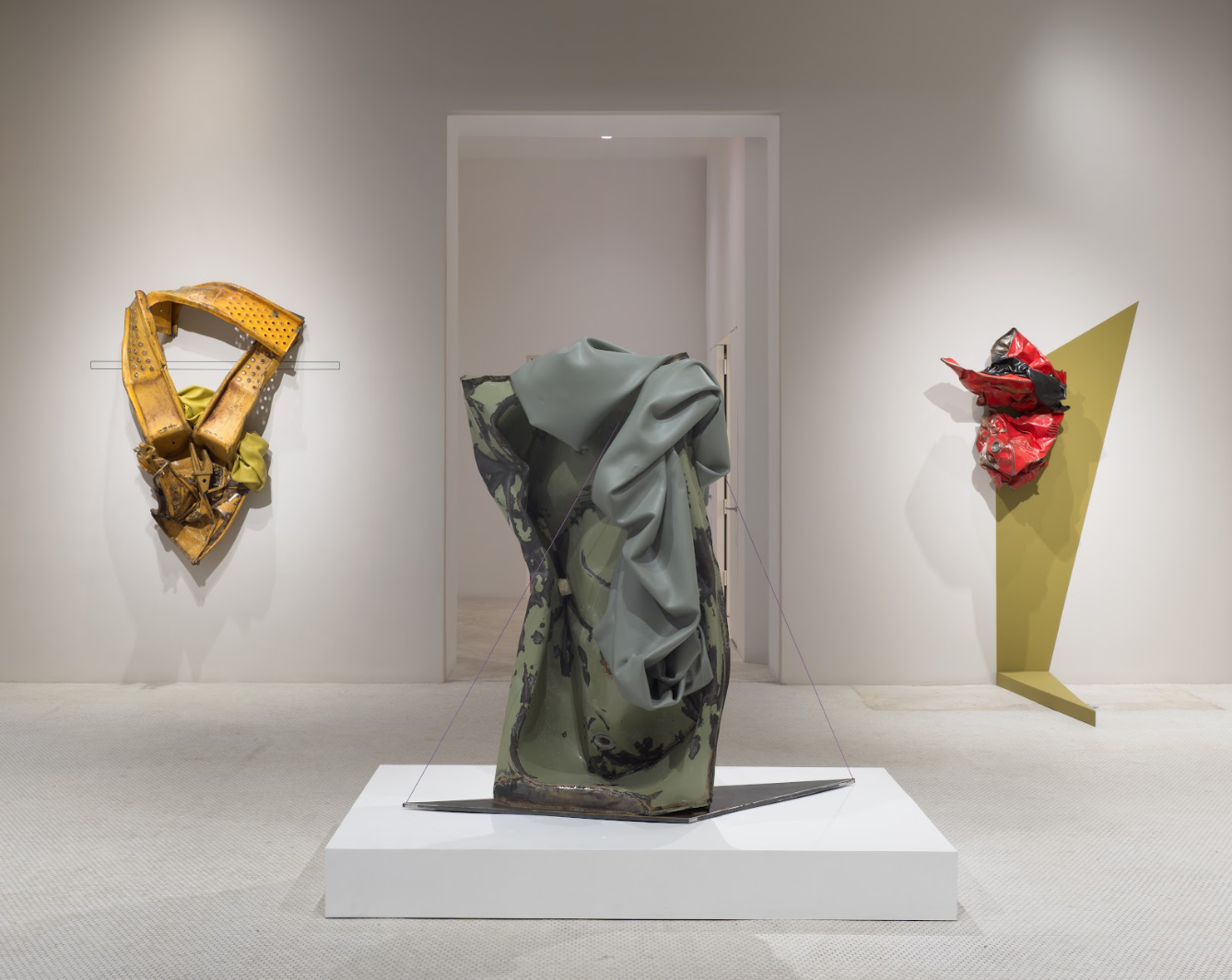
Installation image of Kennedy Yanko’s solo exhibition, Retro Future, at Salon 94. Courtesy Kennedy Yanko and Salon 94. Photo by Elisabeth Bernstein, 2025.
Before she was a sculptor, Kennedy Yanko was a young girl from the Midwest of America who had desires. Before she could put a name to what those desires were, she did watercolour classes with the elderly. Yanko also found a home in the music of Pink Floyd, The Cranberries and Fiona Apple – the ‘screamers’. Today, Kennedy Yanko is a momentum painter who makes sculptures. Hailing from the strain of action-painting and abstract expressionism, her body of work is a contortionist act of form, function and gravity. Her sculpture work is painstakingly slow, logistical, and by her standards, “incredibly ugly” until formed. As an artist, her role is to make herself available to that end.
Yanko is farm-to-table when it comes to her practice. She drives to junk-strewn recycling centres and tips to source materials from scrap metal. The hunt is explorative. Finding fragments of colours and textures that catch her eye, Yanko assembles, manipulates and arranges, working with machines that crush. Her approach, she says, is: “Fucking them up until they look good.” She wields a plasma and fire cutter, responding to compositions made by chance.
Yanko sculpts large sheets of paint onto metal, and she might be the first to do so. The choreography includes moving heaving vats of paint and responding to compositions she makes. It’s become a special technique she’s fine-tuned over the past decade. Everything is left to the wayside and turned on its head. Her physical existence is reified by this practice. Heavy machinery aside, Yanko has faced more problems with people's perceptions, fetishised as a woman working in metal. For her, that becomes destructive: “As a biracial woman who is White-passing, there’s a longing and deep desire for people to evolve in how they appraise others.”
There’s an inherent bend to abstraction in Yanko’s work. She’s always had a certain level of understanding of what sensorially makes sense, and her levels of taste and understanding surrender to that process. When she made the pivot from painting to sculpture, it built over time. Refinement and nuance are pillars that the artist pulls from. It’s a slow process to alchemise on instinct.
“You’ve got metal, this seemingly heavy thing that’s floating in the air. It looks like it’s breathing and living,” Yanko observes. “And then you’ve got this soft fabric – paint – historically, how can it be a material? My work is always dismantling. It’s a nice little gift.”
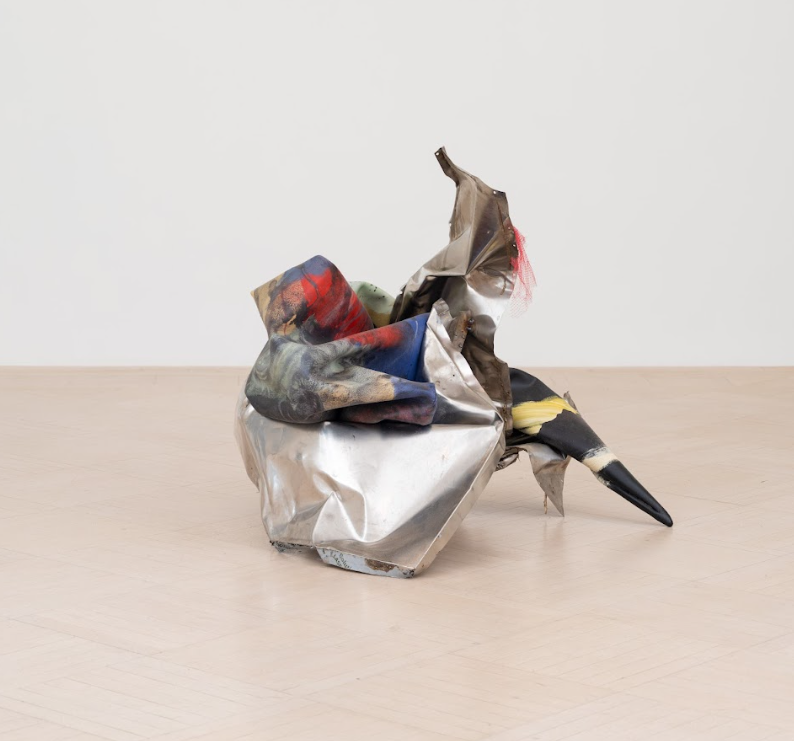
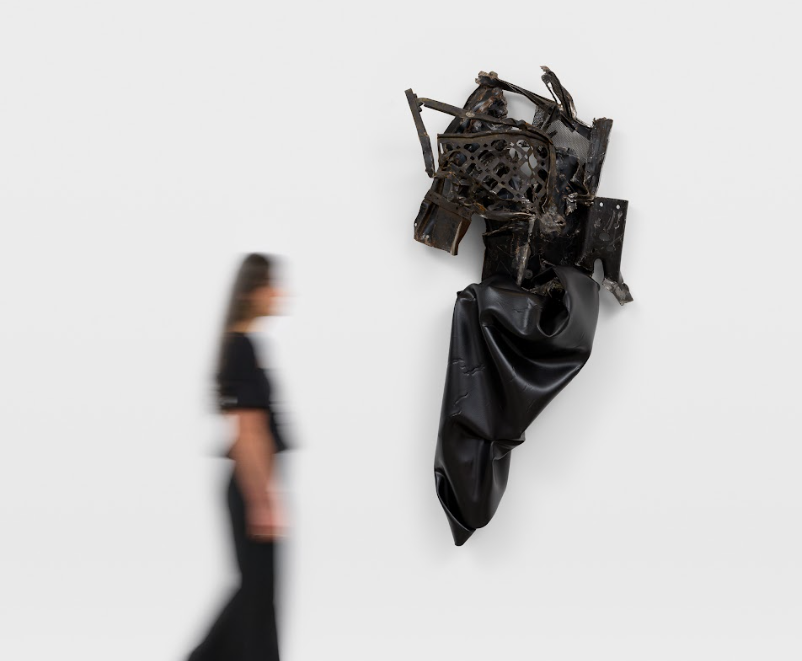
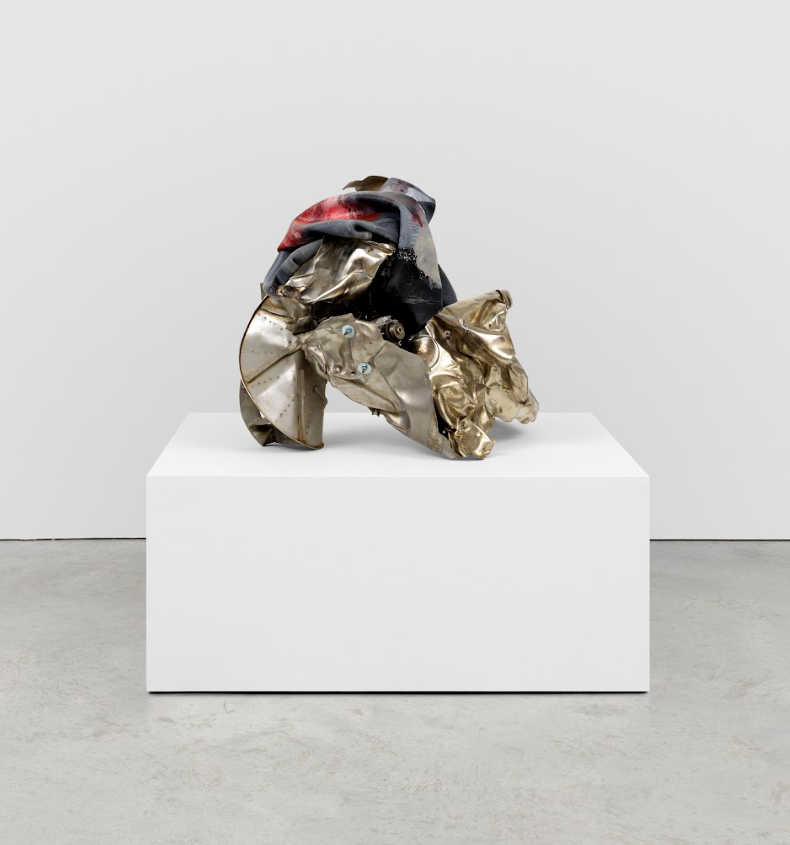
In 2009, Yanko painted works on canvas. At one exhibition, she looked around the room and thought to herself: I want to take the paint off the canvas. From 2010, she expanded her artistic vocabulary to include jars and walls, before finally alighting on metal.
“What does it mean to approach an object or a person from neutrality? To absorb something without naming or placing it, experiencing it as it shares itself with you? That’s what abstraction has the power to do,” says the artist. “It’s so incredible what life can be when you're there to experience it in the present moment. And that’s what colour can do for you.”
Lately, she’s been working with more muted tones. There’s a budding attraction to off-colours: Pepto-Bismol pinks, faded blues, non-dynamic greys. At her core, Yanko is a painter who makes sculptures. That is how colour remains a present source of excitement.
“It’s so clear… This thing is feeding me,” she explains. “It’s like a food you keep eating over and over again. I’m always searching for that clarity of yes. How do you know when you’re in love? Completeness is completeness. Wholeness is wholeness. It’s just so undeniable and clear. The smallest punctuation can cause the biggest difference. It’s a compass only I am moved by.”
A big part of Yanko’s job is protecting her work. If she needs to get a day job to cover rent, she will. If she can only yield a certain number of sculptures, she sticks to that. Yanko protects her work and process. She stays true to it. Nothing leaves her studio unless she is satisfied, and yet she remains elastic in the face of her ebb and flow. The cyclical nature of her process mirrors a woman’s luteal phase. Yanko knows when it’s time to leave the studio, or when to “lock in”. She trusts that this web will loop back, and she builds her life around this metric.
These dimensions of her practice have diversified over the last six or seven years, with moves to potentially integrate performance art as the next stage of development. However, those dated mediums are very much still in play. They still excite her. Currently, she’s making impressionistic 2-D paintings on paper. She’s tinkering with sound and film. Other mediums give her the space to chew and create before returning to the studio. She will always infuse what she learns back into the sculptures.