
'Humans and Tigers' at Waitingroom Gallery, Tokyo
Words by Lameah Nayeem
Follow A-M Journal’s features editor, Lameah Nayeem, as she traverses through Tokyo’s art districts.
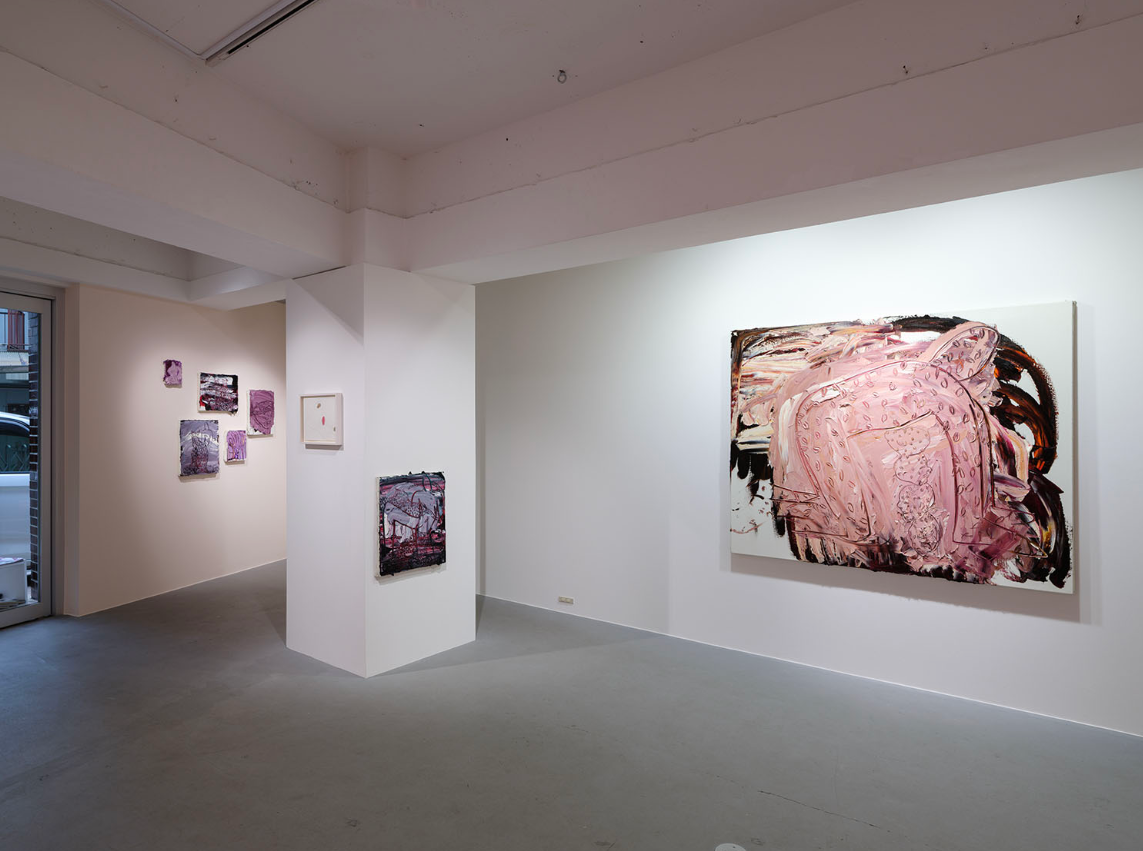
‘Humans and Tigers’ installation view. All images courtesy of Waitingroom Gallery
Looking up at Rikako Kawauchi’s fleshy beasts, I’m reminded of a recent visit to Taronga Zoo. Amongst the foliage, I watched a tiger pace back and forth in its enclosure, staring back at me. Zoochosis is used to describe the heightened distress sometimes observed in confined animals, stemming from their inability to express natural instincts. This longing for freedom, concentrated and expelled through nervous movements of the body — a frenzied look in the eye, a keen understanding of their trappings — is instantly recognisable and all too human. It’s this destabilising proximity between animal and human that animates Humans and Tigers, Kawauchi’s exhibition at Waitingroom Gallery, presented as part of Art Week Tokyo 2025.
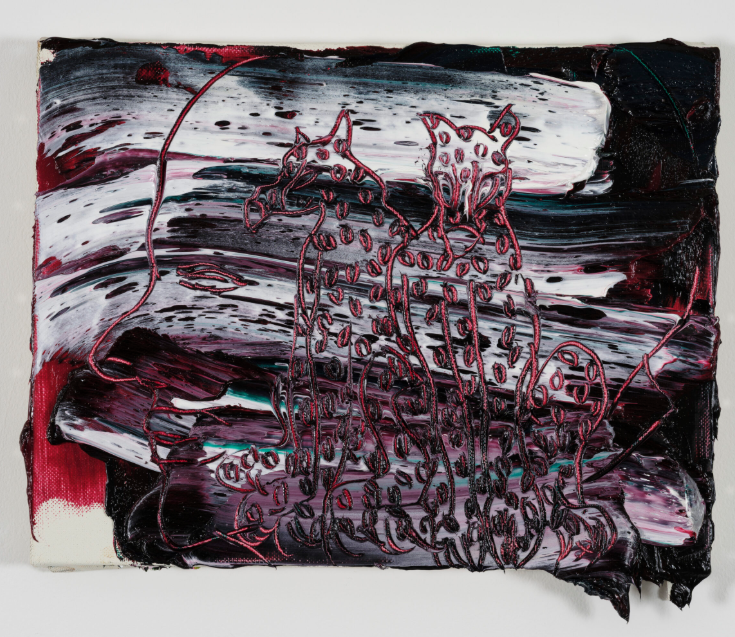
Rikako Kawauchi, 'Home sweet home', 2025, oil on canvas, 410 × 318 mm.
Drawing on her background in cultural anthropology and the poetry of William Blake — whose work professes the beauty and terror of tigers — Kawauchi explores how the binary opposition in humans and tigers is transcended. As she states, “Both can be understood as symbiotic and interchangeable entities. This holds true not only in myths, but also for us who inhabit the real world. Beneath the clothes we wear and the human lives that appear to be underwritten by cultural considerations, the raw flame of instinct continues to burn.”
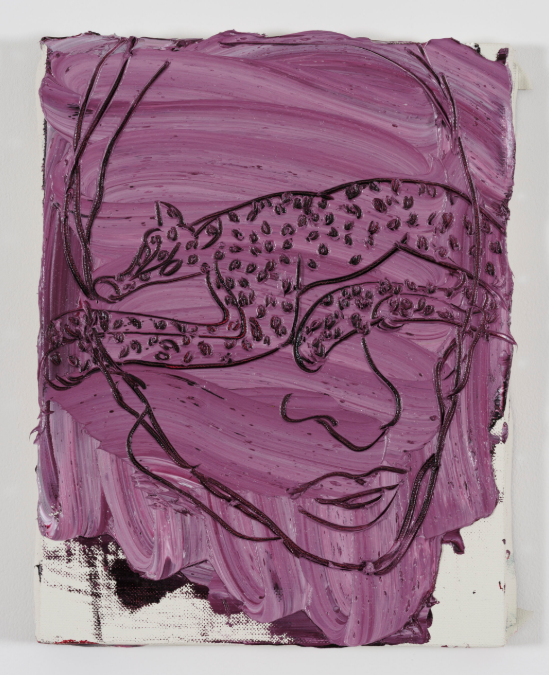
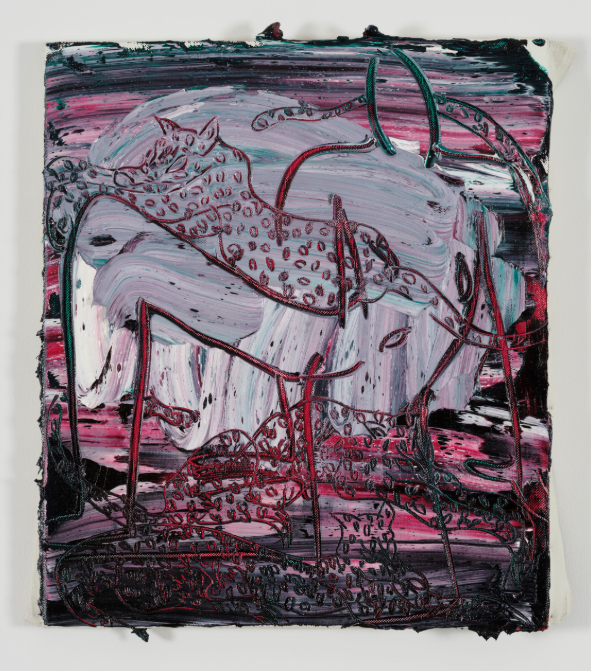
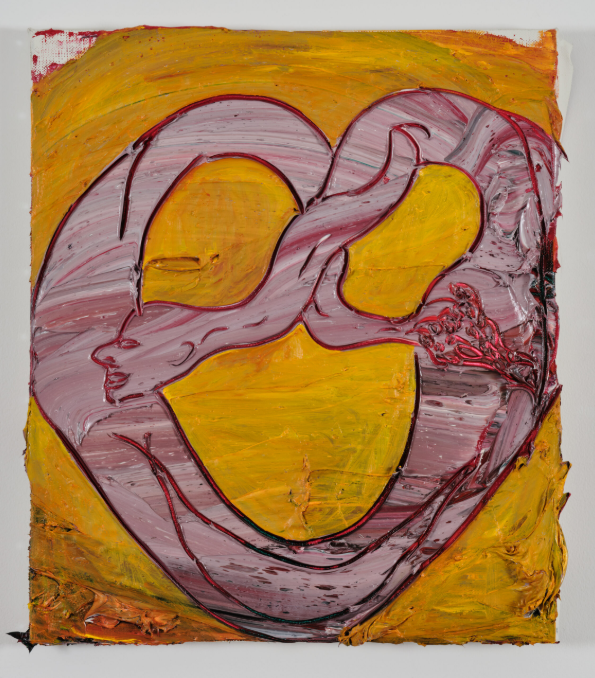
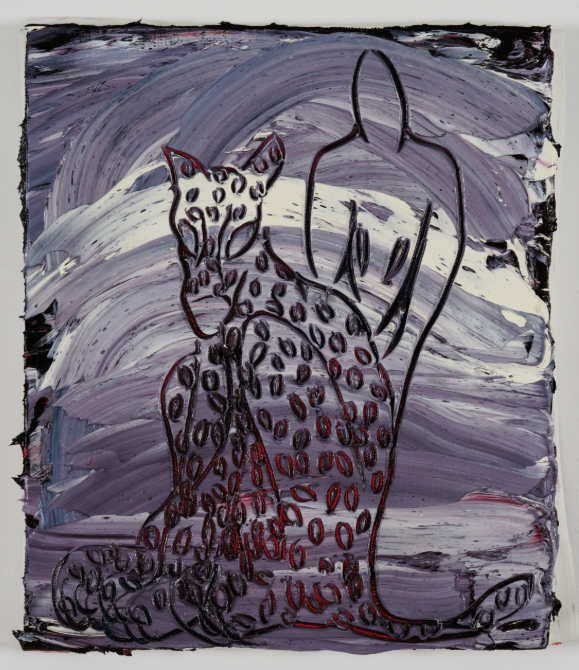
Kawauchi's Humans and Tigers excels at demonstrating how similarity between man and animal is most visible through peculiarity. Take Loop (2025), where a tiger is stretched into a parabola, entering a face through the mouth and eyes. It’s clear Kawauchi honours no fidelity to anatomical accuracy, furthered in Where the Tiger Has Touched (2024). Here, Kawauchi creates her own ouroboros of sorts, depicting two arms forming a lopsided circle, linked by a tiger cradled in the palms. The abandonment of realism wagers on plurality and our understanding of boundaries across species. “What ought to be gleaned from this ambivalent relationship between humans and tigers,” Kawauchi explains, “is a feeling of doubt surrounding the very essence of self and other, as well as the potential for generative change.”
This doubt allows tension to simmer between Kawauchi’s subjects and the viewer. In Humans and Tigers, the subject of the literal is most effective when evaporated into the figurative. She asks, "Where does the wisdom of animals come from? Is it something etched into their bodily memory... Or perhaps within instinct, within the body itself, there exists a form of wisdom and thinking that cannot be verbalised.” Kawauchi’s abstractions accentuate an underlying spirituality through wild gestures and elusive shapes. Her drawing method involves dredging forms from multilayered planes of colour, and as the viscous surface hardens, speed becomes essential. Kawauchi only has a matter of minutes to carve out her ideal pictures, imbuing each work with urgency. Often impromptu, the excavation of her figures from the layers of pigment are matters of first instinct and chaos.
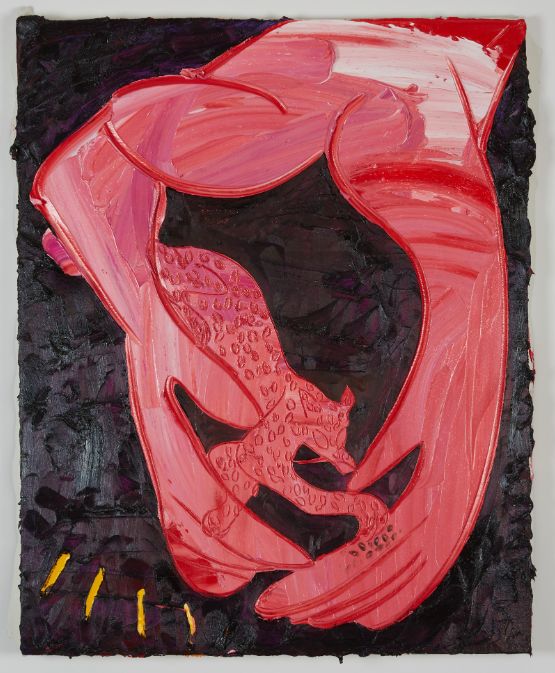
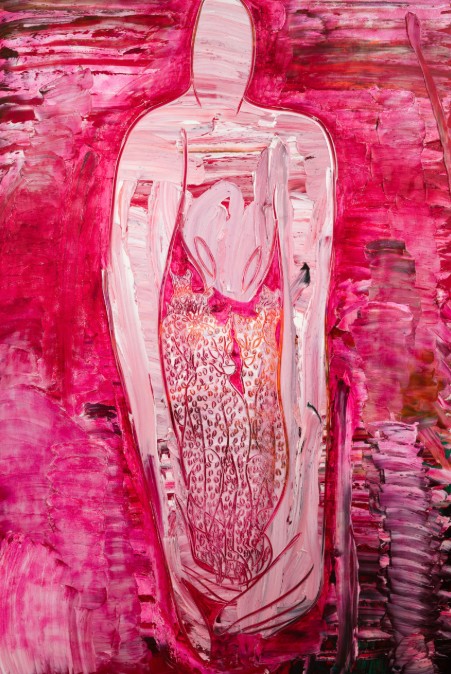
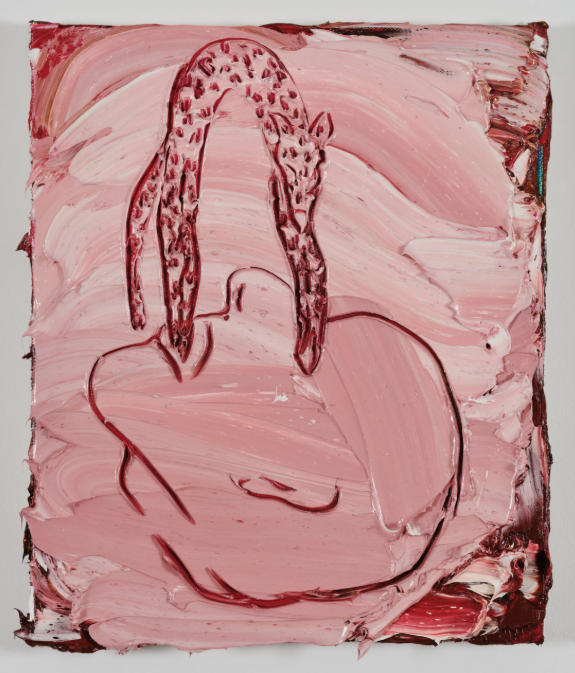
In House of the garden (2025), Kawauchi depicts a human and tiger as a singular, conjoined entity. “We often conceive of humans and animals as separate entities, but just as with the duality of body and mind, the fundamental relationship between us is one of coexistence. A tiger slumbers within us — and we can also see humanity within it,” she states. House of the garden gives form to the union Kawauchi describes, echoing Claude Lévi-Strauss in his structural analyses of myth. The tiger in House of the garden protrudes from the figure as if swelling from the womb. Curled up, the figure embraces it in a maternal position, almost equal in height to the human. Within the South American and African myths Kawauchi pulls from, “the tiger is described as representing the food that constitutes the body.” By situating the tiger as our core, she gives shape to the unseen forces that shape our lives and purpose.