
Interview by Emily Rae Pellerin l Photography by Chad Moore
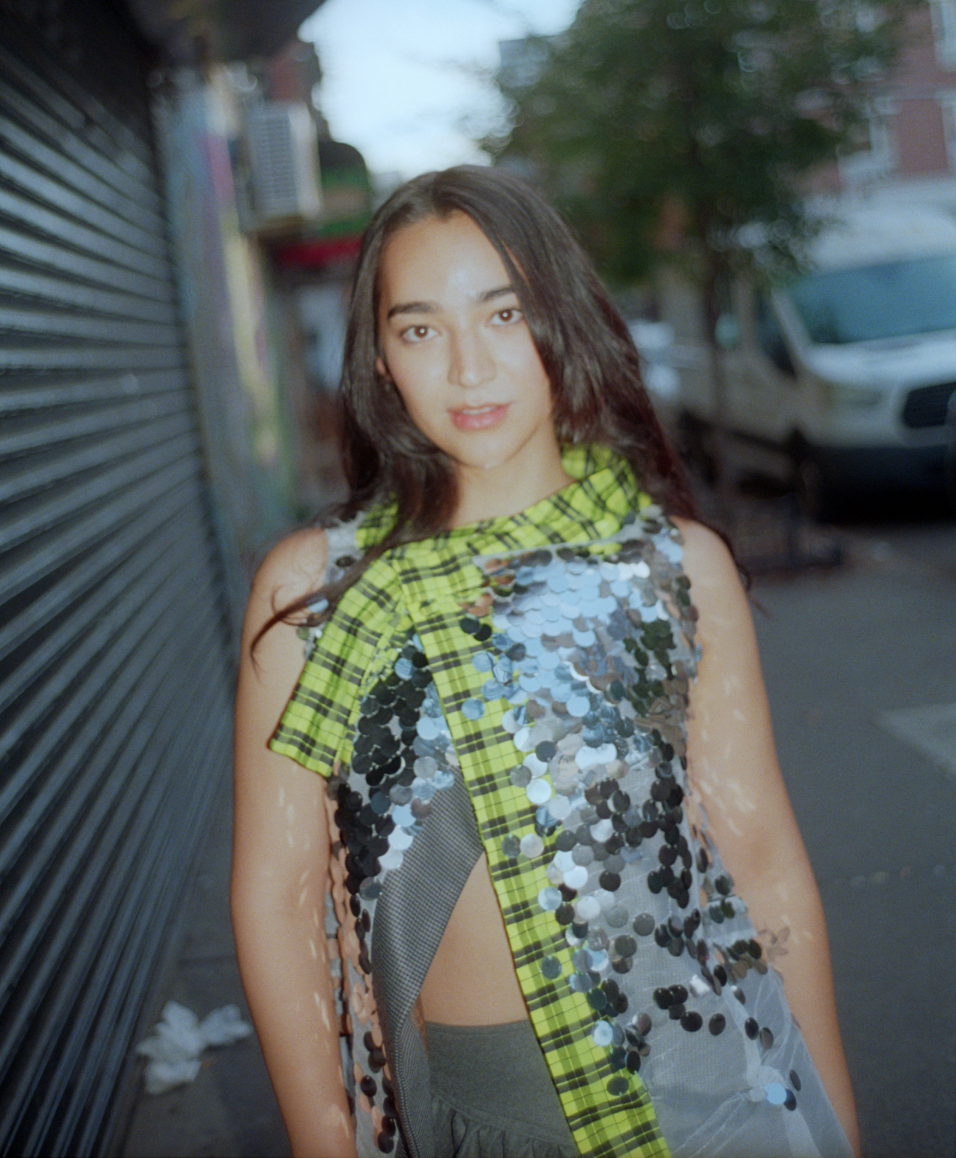
Top Ben Doctor, skirt Everyone’s Mother
“I do a million jobs, but the biggest thing I have is the gift of gab,” says Miss Benny. It’s with this openness that the 27-year-old actor and writer seems to offer an immediate inclusion in her world—a disarming invitation that, despite the requisite privacy of celebrity, feels quickly like kinship. For Miss Benny, this characteristic carries outsized importance as her world explodes across the big screen and the red carpet.
Intimacy feels different within fame. Yet, amidst the whirlwind of her career, Miss Benny has found her footing in New York, carving out warrens of community within its wilderness. Here, the multihyphenate milieu suits her perfectly. Coming from Los Angeles (and, originally, Texas), the kineticism of New York City, where people are out and about at all hours and the seasons change with proper regularity, has provided her a welcome foundation. It’s the city that also provides the backdrop for Club Kid (2026), which debuted at Cannes to a seven-minute standing ovation and whose filming brought Miss Benny here in the first place.
From a place of sure-footedness, Miss Benny nonetheless maintains the fanciful sensitivities of a true creative. This balance is perhaps what grants her such dexterity and empathy as a performer, and lends to her expansiveness as a storyteller, in both subject and medium.
Across two interviews in New York City, Miss Benny sits down with her dog Petite Pute and writer Emily Rae Pellerin to gab about the provenance of her preternatural assurance, the evolution of her identity, and what the future holds for her own story.
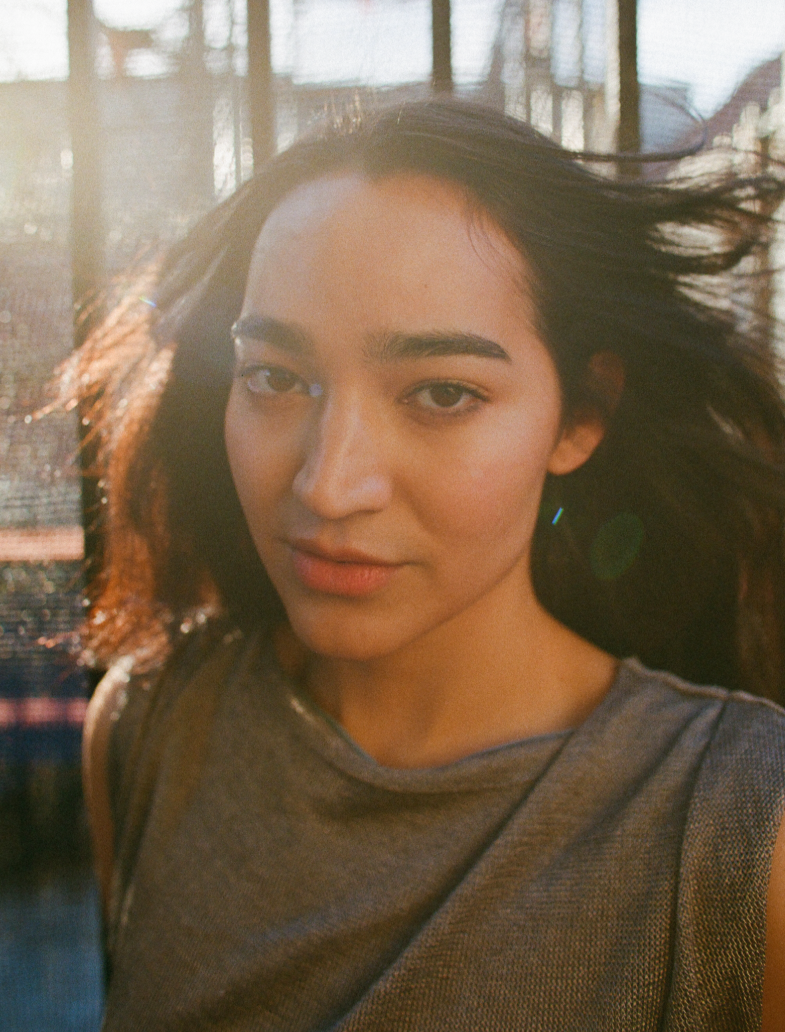
Top Eckhaus Latta, shoes Miss Benny’s own.
EMILY RAE PELLERIN: From the campaigns you’ve modelled in to the roles written for you, or you’ve been cast in, it’s clear that you’ve become a muse. What does it feel like being the centripetal force to so many people's creativity?
MISS BENNY: Well, first of all, thank you. Second of all, it feels correct! [Laughs.] I feel a bit taken aback, because I'm someone who likes to hold onto this idea that I have control, and I have the ability to make things happen for myself.
That's always been a sort of self-imposed narrative that I've had, but the reality of my career and a lot of my most joyful successes are the times that I was sort of captured – or just seen and responded to. The ironic thing is the two people that have changed my life the most are both gay guys named Jordan: Jordon Nardino is the creator of Glamorous and Jordan Firstman is, obviously, the creator of Club Kid. In both cases, these are two people who saw me in other situations unrelated to positioning myself for a job. And they connected with me in some way, to use me as a tool in their creative output.
When I met Jordan [Firstman] and he told me about the movie for the first time, we're at this fancy dinner at Chateau Marmont in LA. I'm feeling on cloud nine and talking about my life and how turbulent things are. Sort of unfiltered, treating him like a friend in the same way that Almi [her character in Club Kid] does in the movie. And at the end of it, he asked me what I was doing in October. I was like, “I don't know, girl!”
When I'm my most disarmed is when people typically respond to me the most. The mantra of my life lately, that has really affected the way I walk into every room, is that – somehow – I seemingly always get what I want. I don't have to make it happen for myself. It will come to me. I'm really grateful for that.
And I like myself now more than I ever have. So, I'm stepping into this time in my life where I feel more complete or more whole, and I'm being seen for that. Part of the reason I’m so aware of this now is that I spent six or seven years of my life as a journeyman actor in the Disney and Nickelodeon casting circuit. It was really hard for me because I was going into these rooms and begging everyone to see me, and to affirm what I believed to be true about myself and what I was capable of. But I wasn't myself yet. As soon as I became who I needed to be was when all this other stuff came.
I say all of this to say, it's wonderful to be a muse. [Laughs.] Obviously I can giggle about it now because I went through almost a decade of trying to fit myself into something, and it wasn't until I stopped doing that, that I actually started to be rewarded. I’m really grateful because that gave me an appreciation for what I'm going through now.
ERP: You play the role of Almi so naturally. She definitely feels like a fit for you, and you for her. One thing I was really impressed by was how comedic the character was, often in unexpected moments. You were using humour to either break tension or to elevate it. Hearing more about your childhood I think maybe speaks to this, but I'm curious if ‘funny’ has always been natural for you.
MB: Comedy has always been a huge part of my life. That said, I think I've resisted it at times because I felt like walking the line between being a class clown and being laughed at is a little tricky. But I spent years doing comedy and standup. I was a touring sketch comedian from YouTube – that was how I got by creatively in the years when I wasn't working.
I got so much fulfillment out of it, and then I was like, I'm done. I want to be a dramatic actor! I started getting these more dramatic roles but getting to be funny in them. That was really wonderful for me, because I never have had any inhibitions when it comes to being able to make a room of people feel charmed or laugh. I think that's a skill that a lot of girls like me have. I'm going to draw attention somehow, and so I'm going to find a way to hold and calculate attention.
I also think that we're in a really delicious time in the arts where people are realising that comedy is an inherent emotion to everything. There’s a phrase in comedy, that you have to play stupidity at the height of its intelligence. You’re not being funny because it's going to get a laugh within a scene – you're being funny because your character genuinely believes what they are saying and doing, and that is the funny part.
For Club Kid, the movie's so funny, and a lot of that is the incredible writing on Jordan's part. He’s also someone who comes from comedy, so getting to bring that to drama is really seamless. It's inspiring to me. Everything that I'm writing now and that I'm inspired by is like, how can I write about serious topics, but bring my comedic voice to it?
Because in real life we laugh at very serious moments all the time. One of my comedy touchstones is that if you can make someone laugh, you can make them cry. It takes the same level of vulnerability and safety to get that trust from someone: if you can laugh with me, then you're going to feel way safer to cry with me.
ERP: As creative people, I believe we carve worlds within our existing worlds, in times or in spaces that we may feel in conflict or contradiction with. I imagine performance can be like that. Growing up, do you have any memories of forging your own world in some way, where either in the moment or looking back, you realised you were a performer?
MB: I was really sheltered growing up. We were homeschooled and we were at church like almost five days a week. There were so many of us – I have three siblings, my two parents and a bunch of dogs. We were all big personalities. So, what that meant was we had a camcorder and we had a backyard! We would make movies or put on productions, and we had a costume bin that we would constantly make things out of. Being the youngest, I was always the punchline or the comedic relief. I gravitated towards feeling special, like everyone was wanting to see me do something. That was the seed.
I think my mum would also say that I was constantly bringing her little miniature books. I would get a bunch of paper and tape it together, and then I would write books [for her]. I made a fake globe once, that was like a fake world with fake countries. That was just the way. Fortunately, it was something my parents really allowed me to do. They would give me paper and markers and say, ‘Do your thing’.
I'm also really fortunate with something you have to have in a creative field, which is that as I got older, I was just really delusional. I always felt like the only difference between me and somebody who has something I want, is that they got it. And, so, I just have to get it. I'm going to put myself in situations where I'm going to be seen the way I want to be seen.
And somehow one thing just kept leading to another, and I started to realise that, at one point, I was doing it. I think I got my first paycheque for an acting job when I was 11. I remember being like, I got this! And then I had to pay taxes for the first time when I was 12. And I was like, this is awful!
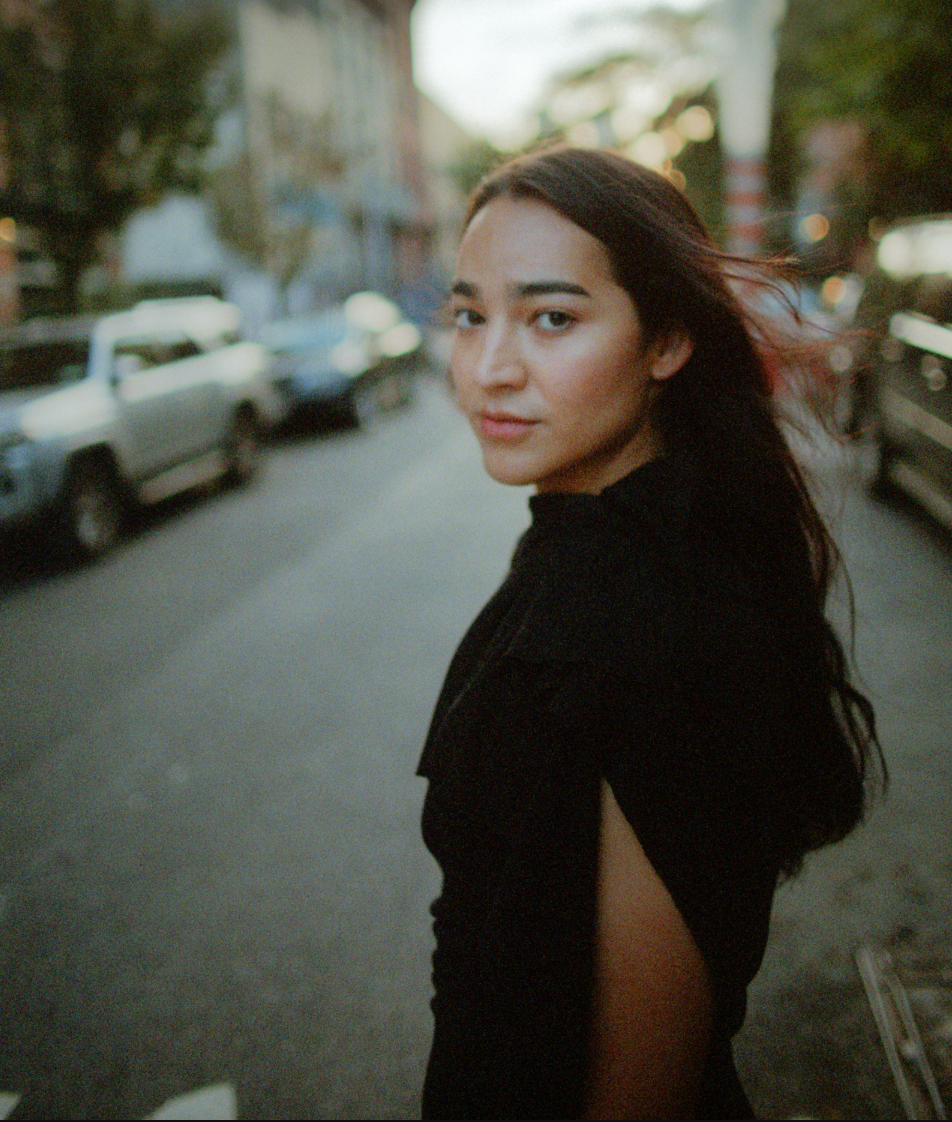
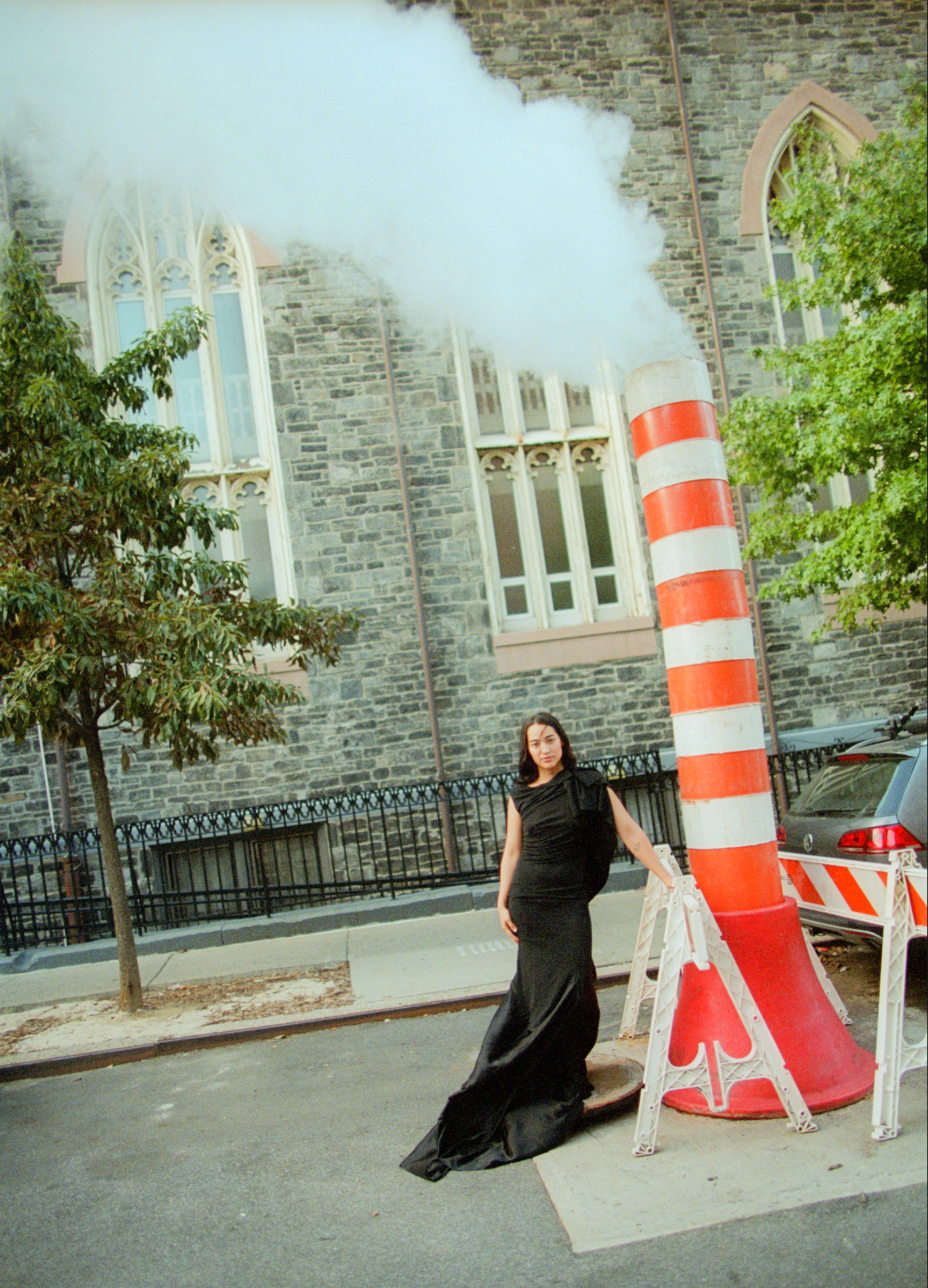
Dress Zankov
ERP: There was clearly a lot of creativity in your household and upbringing. But I imagine your inspiration for artistry, style and beauty didn’t just come from playing dress-ups out of the costume box at home.
MB: When I think of my style and glamour icons‚ I mean, my mum is so beautiful and wonderful, but my mum is a woman of ‘natural’ means. She wears a BB cream and a pantsuit – that's her vibe. My true beauty icon – she is everything to me – is my oldest sister, who’s actually a very successful burlesque performer. Her name's Layna D’Luna. She legitimately makes me look like the most boring person in the world.
Thank God I have a burlesque sister. She really, really saved me. Growing up, she was so punk. She dyed her hair; she wore emo clothes. She was listening to music we weren't supposed to be listening to. She was the only one who had makeup and cool clothes in my household. And she was really in love with movies. I got my love of all things arts because of her.
She used to dress me and my siblings up. We would do fashion shows at home. And she of course mostly had women's stuff, which my brother hated but I loved. I remember the first time she ever put me in what I would consider full drag. I did Queen Amidala from Star Wars, and I had this huge robe that made me feel so rich and cool, and I was like, I love this! Something about sitting in front of a mirror and doing your makeup and putting on the garment – that ritual was completely gifted to me from her.
We were always called the bookends because we look alike, we sound alike, we act alike. And then when I started transitioning, one of the biggest gifts was that I started to look more and more like her, and more and more like my mum. I realised that the woman I had always admired is here [points to herself]. I saw myself reflected back through them.
ERP: I’m excited for them to read this. That’s really special.
Aside from the wild ride of Club Kid entering the world, and seeing your fabulous sister when she tours, what else is inspiring you right now? What’s fuelling your creativity?
MB: I've always been a writer for screenplay, television, film, all of that. But I haven't ever felt comfortable bringing it forward because when I was younger, I didn't want to take a swing at it until I felt like I knew about what I wanted to talk about.
I thought I was going to write these really grand, world-building stories. And to do that required life experience. I was like, I need to go fall in love. I need to fall on my face. Instead, now I find the most fulfillment from writing the stuff that's very small and very relatable. One of the reasons Club Kid is so inspiring to me is that it talks about family, and specifically about queer people who are deciding what their future looks like. Jordan had such a clear vision and I'm just so, so, so glad that I somehow was a part of that vision.
So now I’m at the stage where I’m thinking about what happens next. Do I want motherhood? Do I want to return to my southern roots? Right now, I'm writing a lot of that. It’s family stuff, things that unite all of us. When I think about a topic, in this case, as a trans woman, I actually find it most interesting to think about what I experience that other people also experience. So instead of thinking, ‘Well, my life is hard because I'm a trans woman’, it's ‘Well, being a woman is hard in general’. Let me write about that and then allow a trans flavour to influence – not take over – the topic.
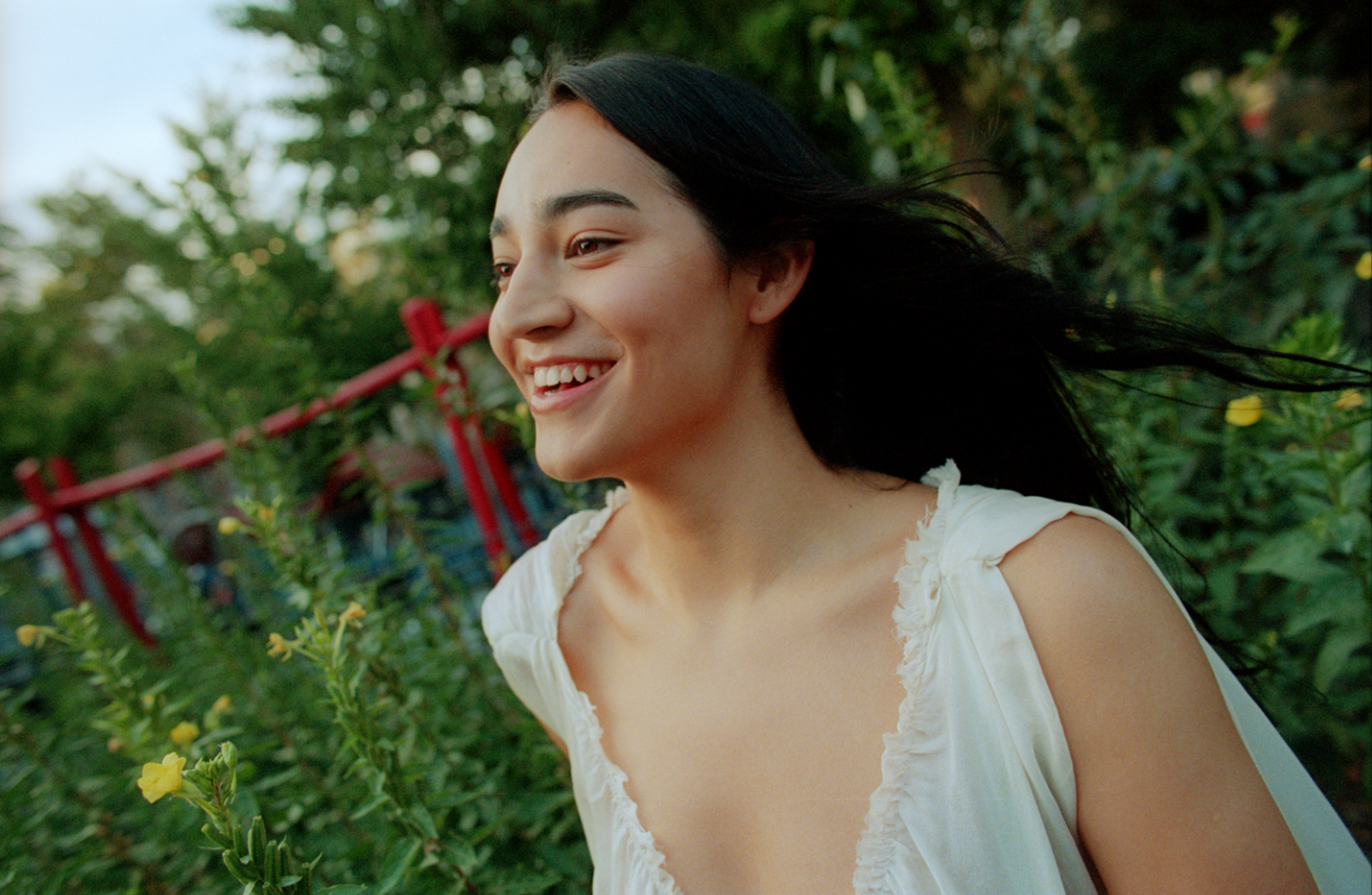
Dress Everyone’s Mother
ERP: With the new film and now getting more of your own writing into the world, you’re becoming even more of a public figure. There’s a heightened, global sense of fervour. Your stories are out there, louder now. Have you felt the need to recalibrate your sense of self-protection or privacy?
MB: I always had a niche following, but the first time I really felt like I came into the public lexicon was with Glamorous. That was coinciding with the beginning of my public transition. I remember one of my favourite trans artists, Macy Rodman, talked about how when you're first transitioning and you're first out, you feel like you are the most overflowing source of fascination. You really believe you're the only woman in the world who's ever done this, and everyone's going to want to know about it. And then years go on, and you realise it’s not that interesting – and that's good. So, the way I engaged with the public when I first came out was really outward. Anything that I'm feeling or thinking, the world can know and should know! There are so many parts of yourself that you're so excited to have clarity on that you want to scream it.
Versus now, years later, I see the value in protecting certain parts of my life for myself. At the same time, I actually feel safe being able to reference me as a person, publicly. Because I know, fundamentally, that's a person I'm going to protect.
ERP: Like you said earlier, you’re feeling complete, feeling whole. And you’ve clearly developed a really confident way to safeguard that within the circumstances of being in the public eye. I imagine this is freeing, in terms of opening up to the opportunities that lie ahead. What feels as though it’s on the horizon for you?
MB: Now I have a weird proximity to Sean Baker because of Alex Coco [producer on Club Kid and Anora]. Sean Baker made a movie that was so impactful to me, Tangerine, which was shot in my neighbourhood in LA when I was living there. I was always like, listen, if Sean Baker ever wants to return to trans people and return to Silver Lake, I'm here, baby! I'm ready!
I guess what I'll also say is, thank you to everyone. Also, if you want a general meeting with me, I have materials. If you have a cheque, I have a script. [Laughs.] And I live in New York now. If you see me on a stage soon, that wouldn't be shocking.
Photographer - Chad Moore @chadmooreholla_
Stylist - Sam Knoll @samwknoll
Makeup - Tomoyo Pattou @tomoyopattou
Hair - Yu Nakata @yunkt