
Interview by Lila Daly
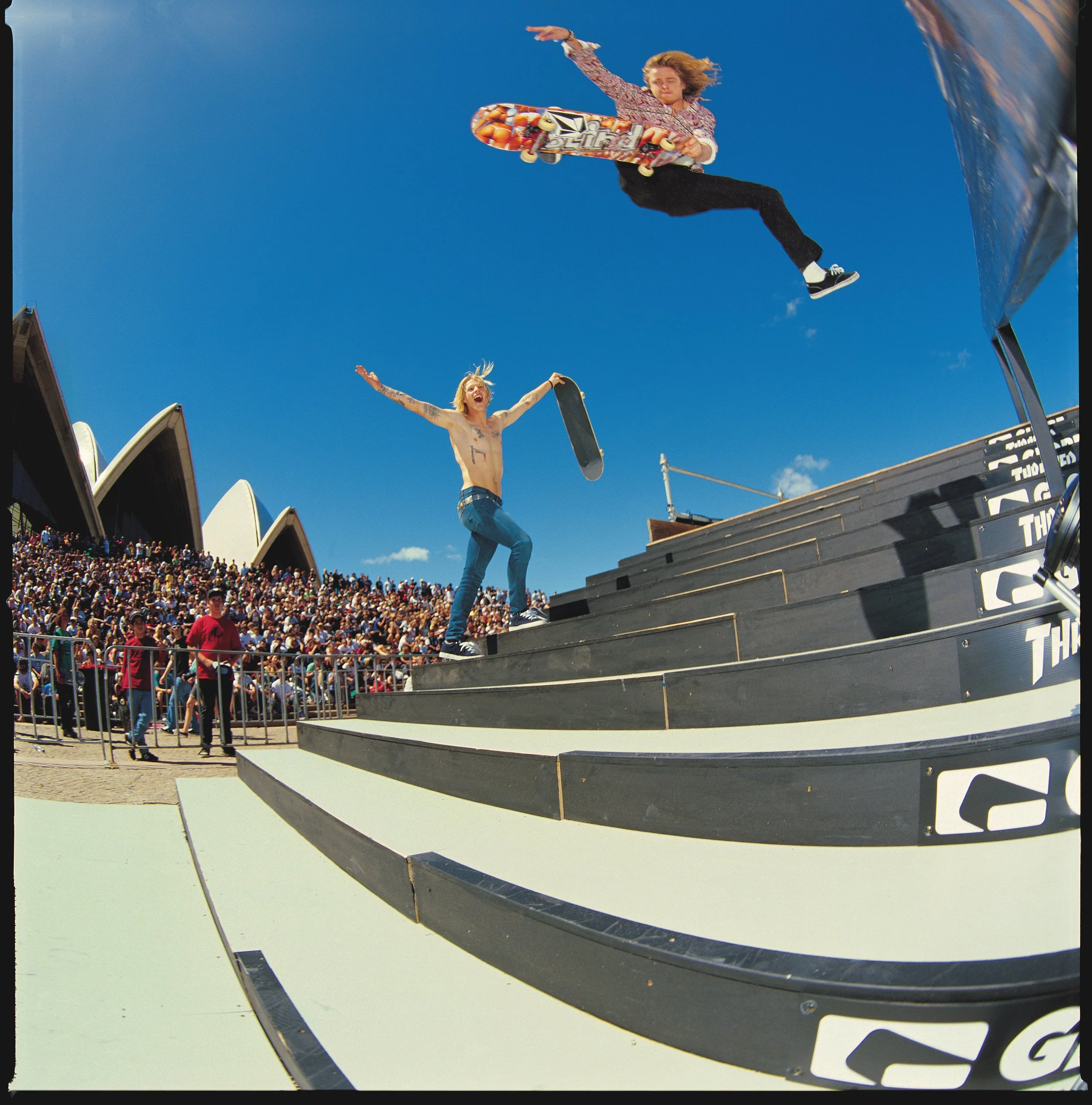
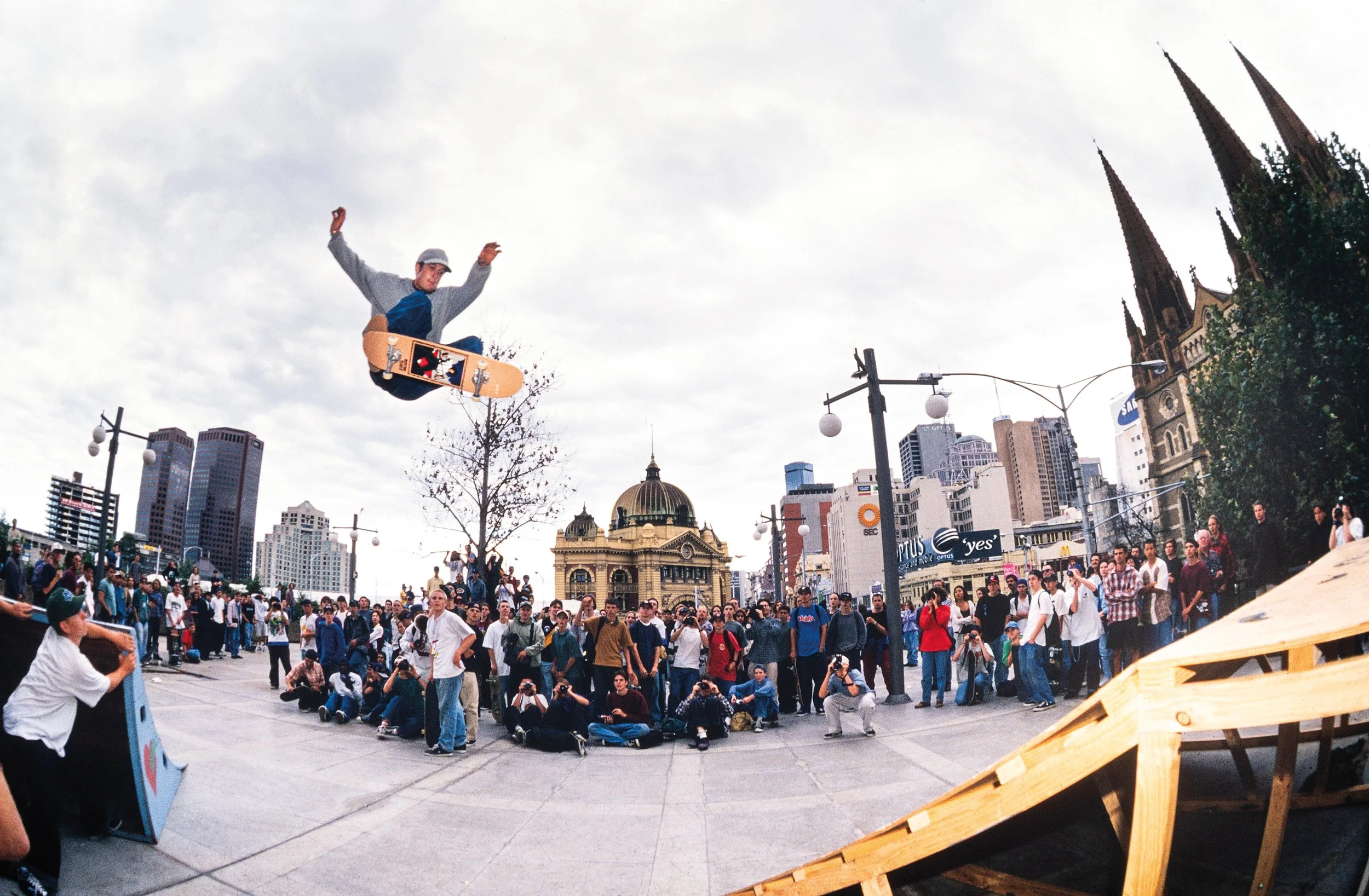
Jake Duncombe at the Sydney Opera House, 2008
The surfers on Australia’s coastlines needed something to do when the waves were flat: enter a different kind of board, one that would go on to shape a culture of movement and creativity.
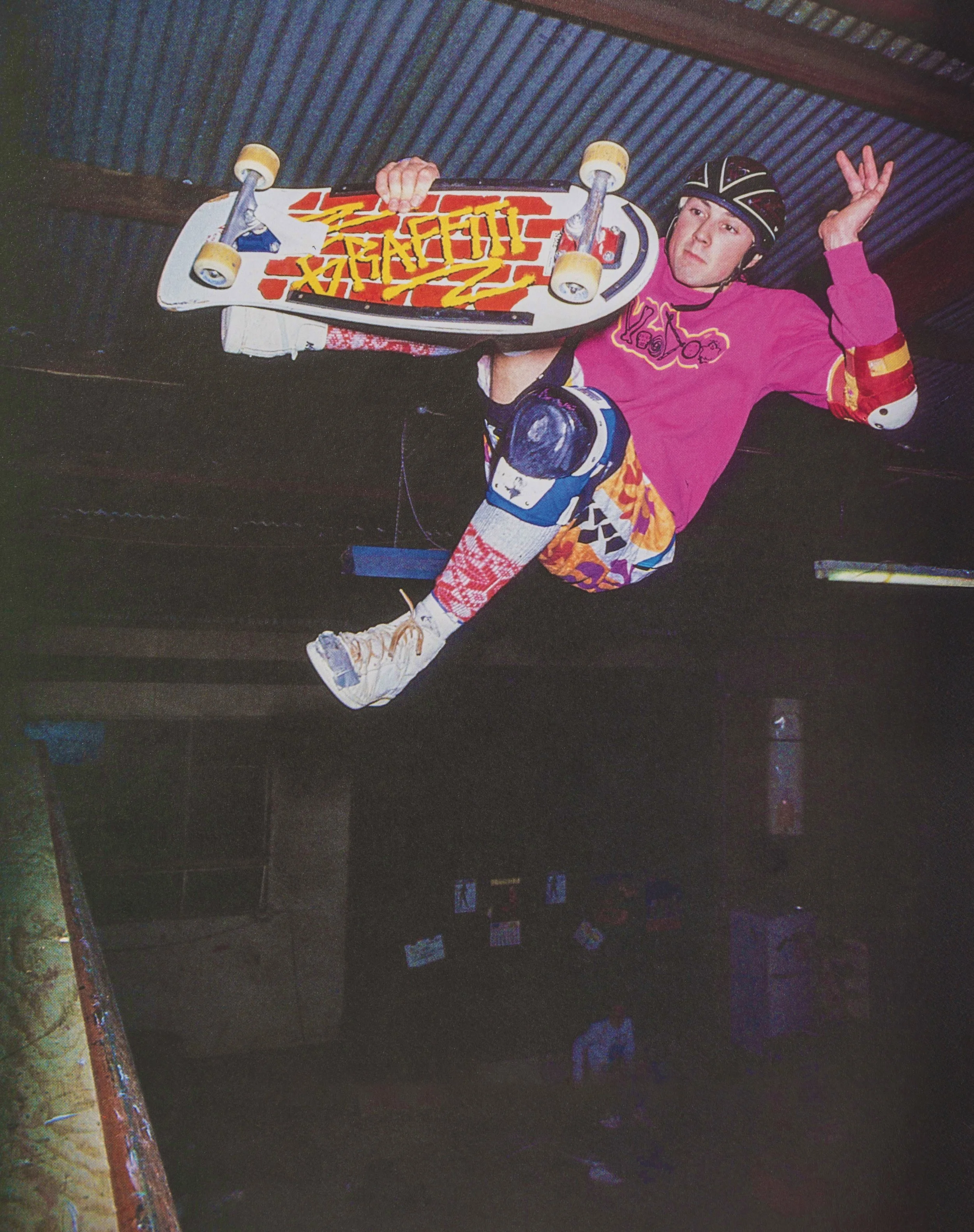
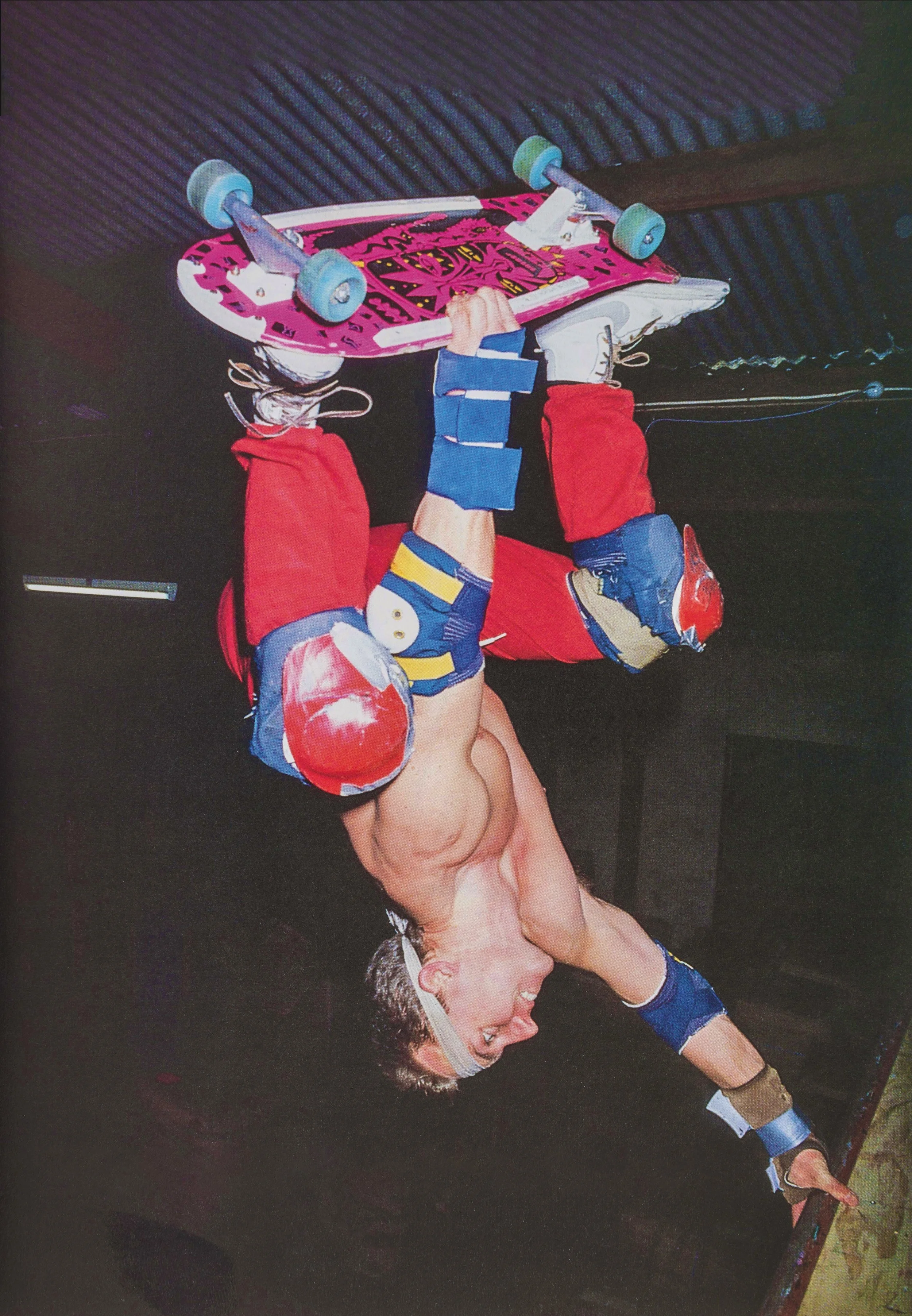
HARDCORE: 50 Years of Skateboarding in Australia (2026), written by Jason Boulter and published by Thames & Hudson, traces the evolution of this culture, beginning in the 1970s with Hill brothers, who founded Hardcore Enterprises and GLOBE out of Melbourne’s underground skate culture, following its trajectory through to skateboarding’s inclusion in the Olympics. From extracting photographs from corroded hard drives to conversations with some of the world’s most well-known skaters, like Mark Gonzalez and gold medallist Arisa Trew, the book brings together never-before-seen archival images, zines, posters and ephemera to offer a visual history of Australian skate culture and the creative communities and personalities who defined it.
Reflecting on 50 years of Australian skateboarding, author Jason Boulter catches up with Lila Daly to talk about what happens when counterculture becomes mainstream, the unwritten ethics of skate videos, and the excitement of flicking through old skate magazines.
LILA DALY: Reflecting on 50 years of Australian skateboarding, was there anything that emerged as distinct about Australian skate culture? Are there particular characteristics, attitudes or circumstances that set it apart from skate scenes elsewhere?
JASON BOULTER: Yeah, definitely. One of the reasons we started this particular book was because we wanted to look at this case where some people say that Australia performs in skateboarding way out of proportion to its own population and the size of its industry, compared to the US, Europe and South America, for example. There have been a lot of Australian pro skaters, we do well in the Olympics now, and it seems a bit out of whack given how few of us there actually are.
I think the advantage that Australia had is that we’ve got a very healthy skateboarding industry, and that means you've got a healthy skateboarding culture with it. We’ve had the consistency of Hardcore, but also so many others as well.
LD: Skateboarding has had such a wide cultural impact beyond the sport itself. What do you think it is about skateboarding that allows it to interact with so many different creative disciplines?
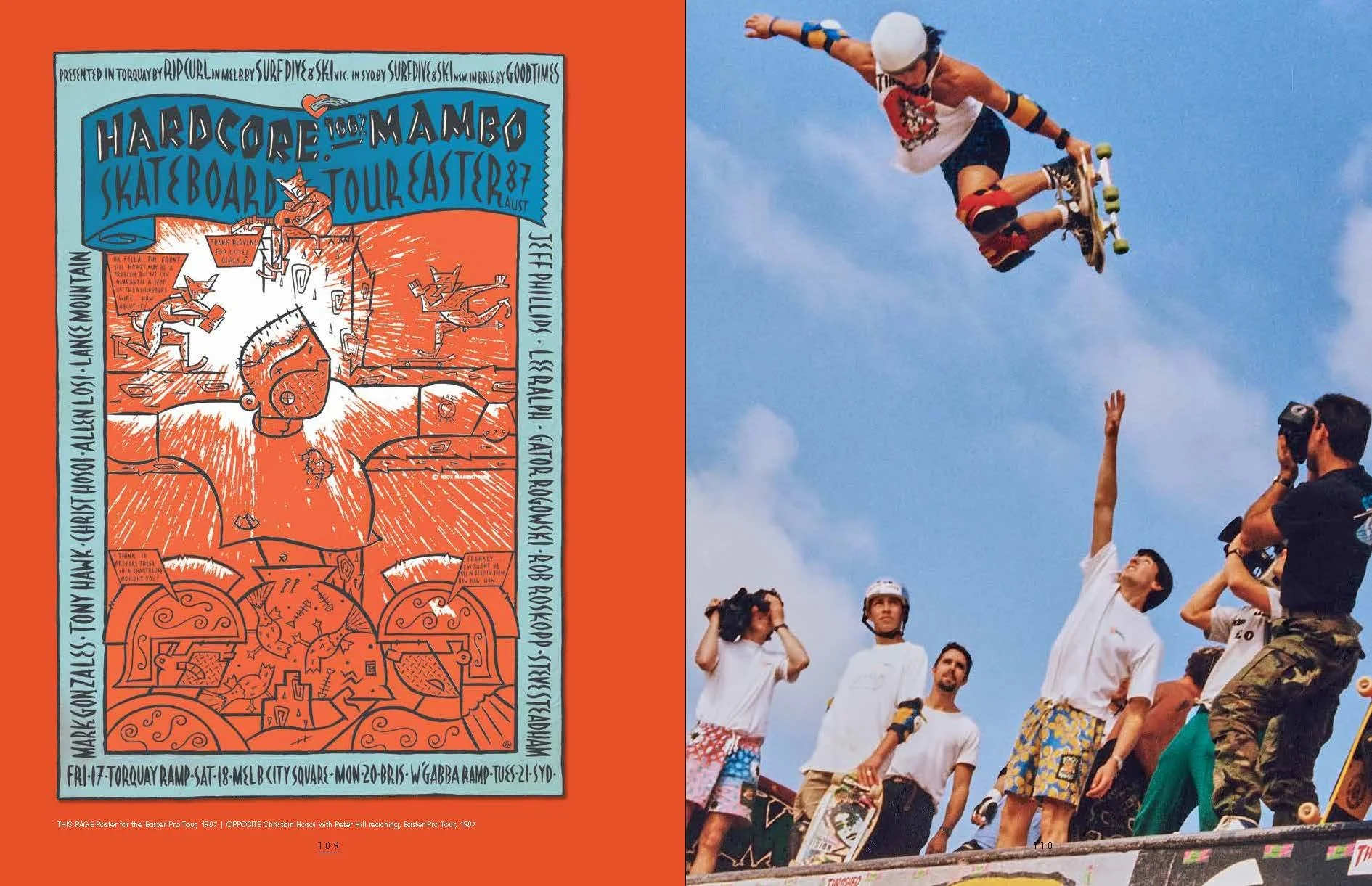
JB: I think skateboarding has always had an amazing artistic aspect because of how important the art and graphics are on the skateboards themselves, other pieces of skate equipment, and the posters for demos as well. It's always been an outlet for anyone with a creative side who wants to get involved, and the way that brands over time have had different approaches to their art and artists is amazing, and a really important part of the culture. And then on top of that, you have artists like Shaun Gladwell and others, who transition into the visual poetry of the movement.
LD: You’re also a filmmaker, and in skate culture, skate videos are interesting as a kind of multimedia project, combining these displays of athleticism with music, fashion, funny sketches and the skater’s own identity. Do you think this way of documenting and presenting skateboarding helped establish its relationship with art, photography and other creative practices?
JB: Absolutely, and I’ve always loved the connections between skateboarding, photography and video too. There's these sort of unwritten codes and ethics about what you can show in skate videos, compared to other sports and activities. If you show a trick, it has to be what they call a ‘make’. You’ve got to have actually done the trick, as opposed to just a sequence. You can’t just share one photo out of a sequence that looked good.
I think part of it is also because they’re young people, and young people like to try and experiment, push the boundaries too far, and the ability to have a video camera and just run around with it is part of it too. Because you know at the same time you're sorting out who you are in your life. You're learning skateboarding and getting better at it, or throwing yourself into it.
Skateboarding is also different in that it's way more accessible than surfing, because it's not about being living close to a geographic coast; it’s not about the right wave conditions. You can pretty much go and skate as long as you've got a bit of concrete, though this is skewed to urban areas. So skateboarding, to me, has always been a lot broader in who it attracts, and there’s a higher chance of connecting all of these different interests.
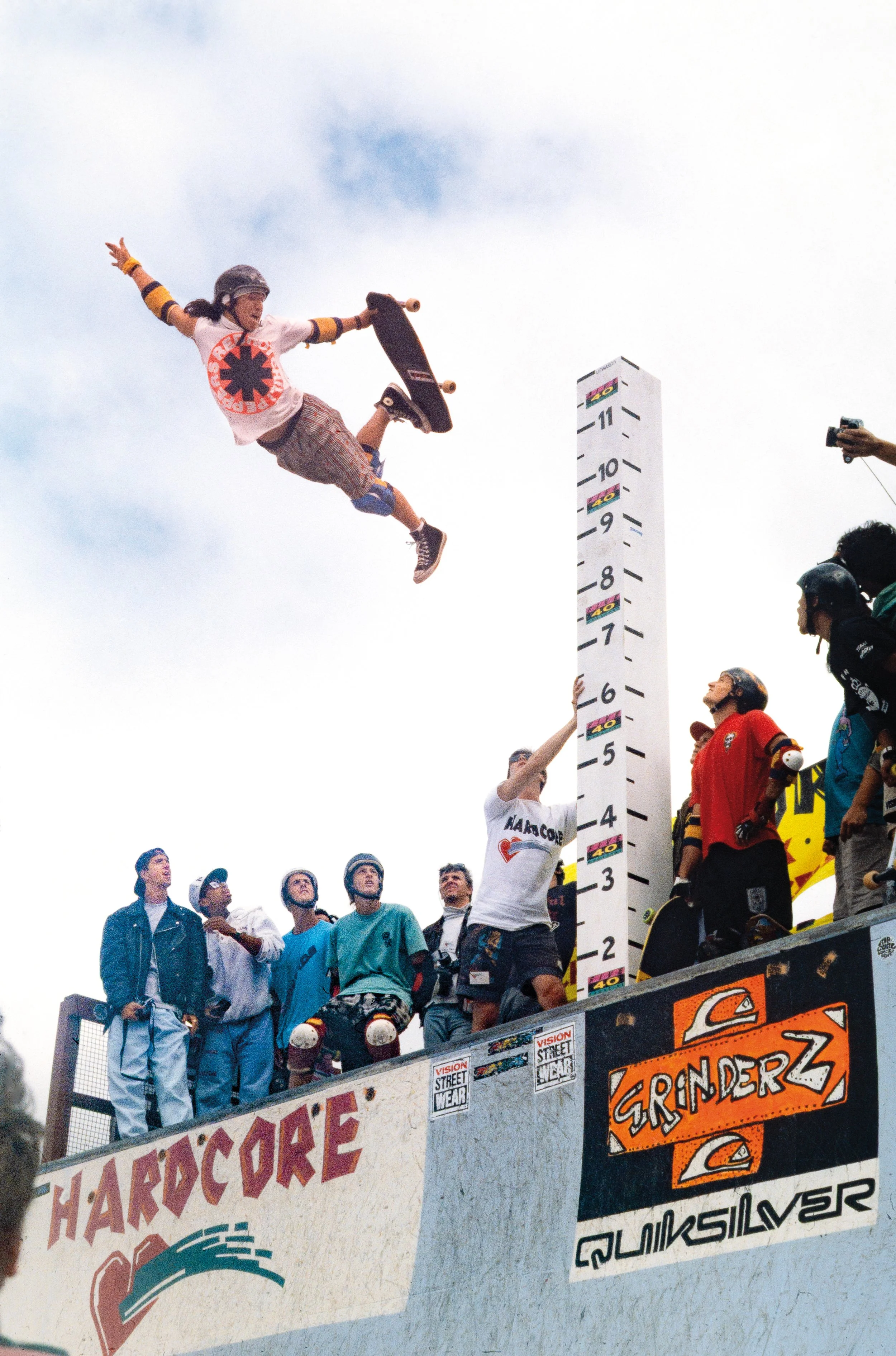
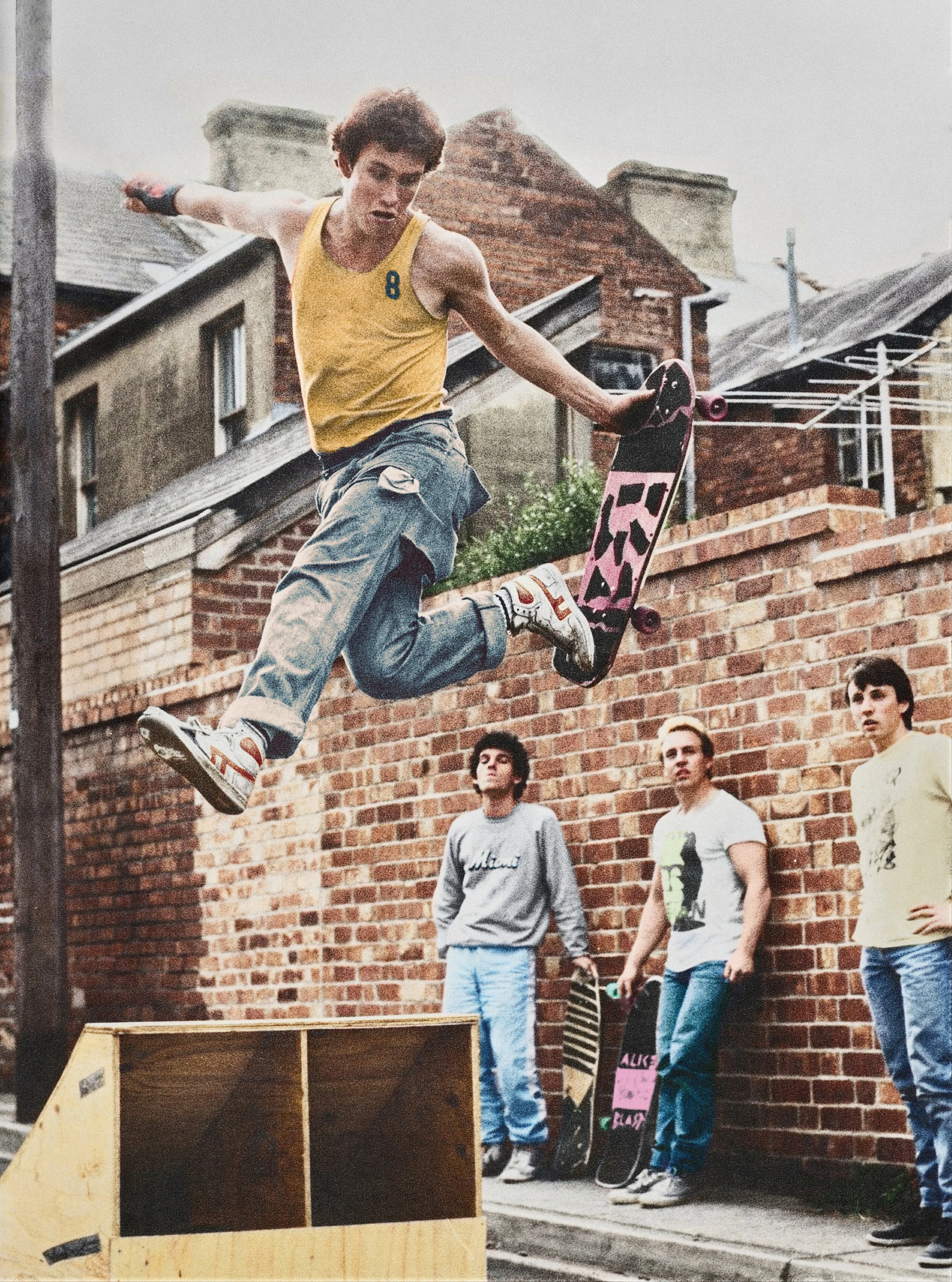
LD: The Olympics brought up a lot of renewed conversation surrounding skateboarding. I feel like we saw a bit of a divide between ideas of skateboarding as a lifestyle versus a professional sport. Was this tension interesting to look into in the book?
JB: I find it really fascinating. At the end of the day I think skateboarding being something in the Olympics is great because it exposes it to people that wouldn't have thought about trying it and getting into it, but as you said, it's a lifestyle for some people, where it's just an activity for others. But that whole culture around it is connected to how they how they reconcile the rebellious, anti-establishment side of it with winning a gold medal.
The commercialisation is also astounding. In terms of skateboarding as an industry, skater-owned companies became really big. Then, in the 2000s, major footwear companies outside of skateboarding got involved and started throwing around more money than any skate company could afford. Suddenly, you had very professional skate teams backed by companies like Nike, and it’s interesting to see how skateboarding deals with that.
LD: So, do you think that skateboarding still has that kind of countercultural spirit?
JB: I think it always has that spirit when it's done at the grassroots level, and people are creating their own cultures as they go. There's an underground scene of skateboarding that’s always been there and bubbles along, but twists and changes over time as well.

Sparx team featuring Bret Connolly and Noel Forsyth, Nunawading, 1978, from the Noel Forsyth Collection.
LD: Across your research, were there any favourite moments from Australian skate history that stood out to you? Did anything surprise you?
JB: That's a good question. I think just realising the sheer amount of skateboarding events that have been going on since the 1970s onwards. Every generation has a sort of nostalgia about the the events they saw as teenagers around skateboarding. I was really conscious of how little coverage most of these events had been given, so just being able to start documenting the sheer volume of things that went on, both grassroots and commercial, right across the country and even regionally, was really fun.
You went from the Hill brothers putting on early demos, going to the Ballarat flower show, where they literally just had the ramp on a trailer, and there were four of them putting on on on a demo. And then only 10 years later, they're at Festival Hall in Melbourne, and they've got a who's who of skateboarding from around the world competing, and a packed auditorium. By the 2000s, they start putting on events at the Rod Laver Arena in Melbourne, which, in some ways, were bigger than some of the early X Games. It’s astounding.
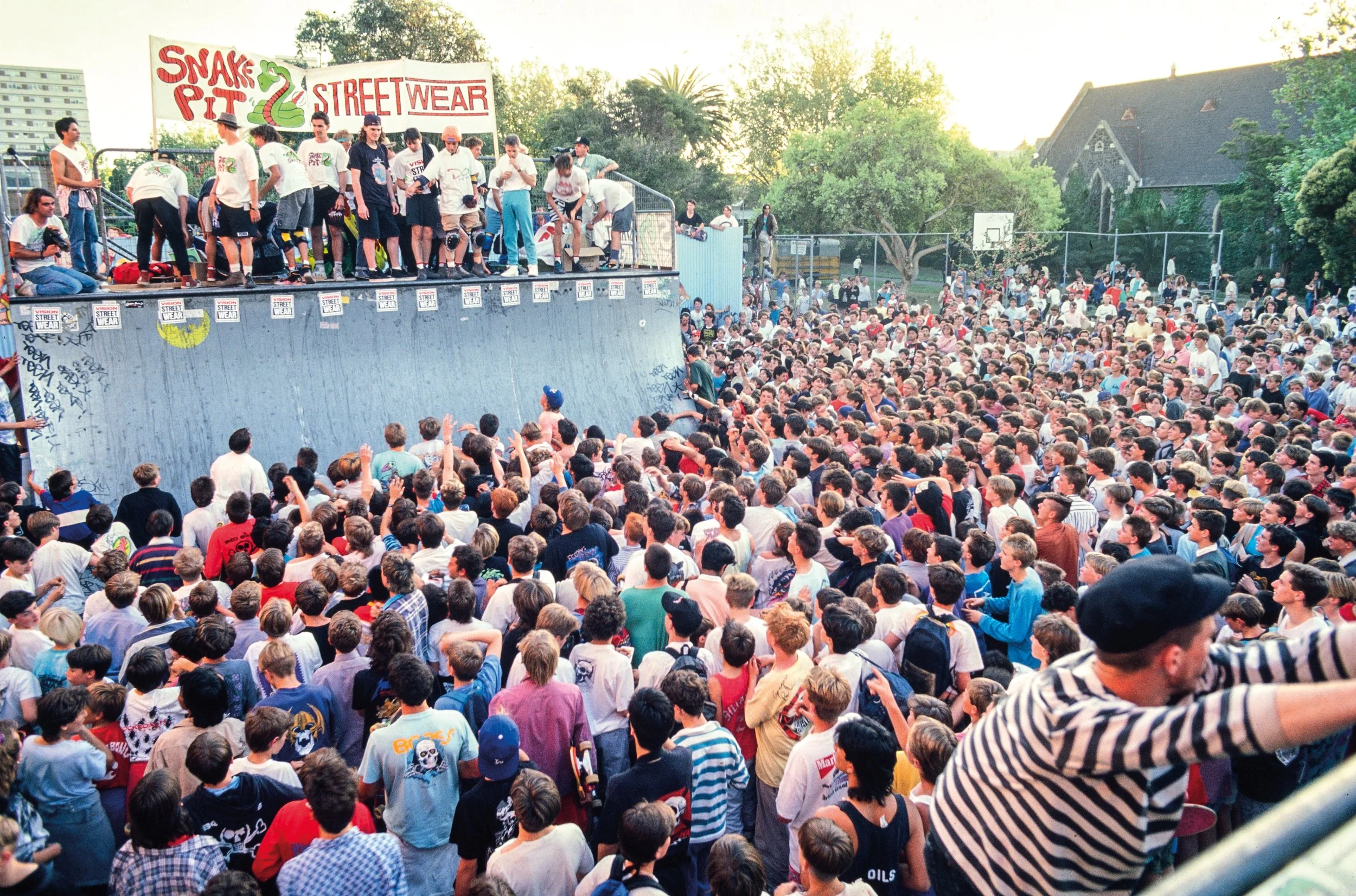
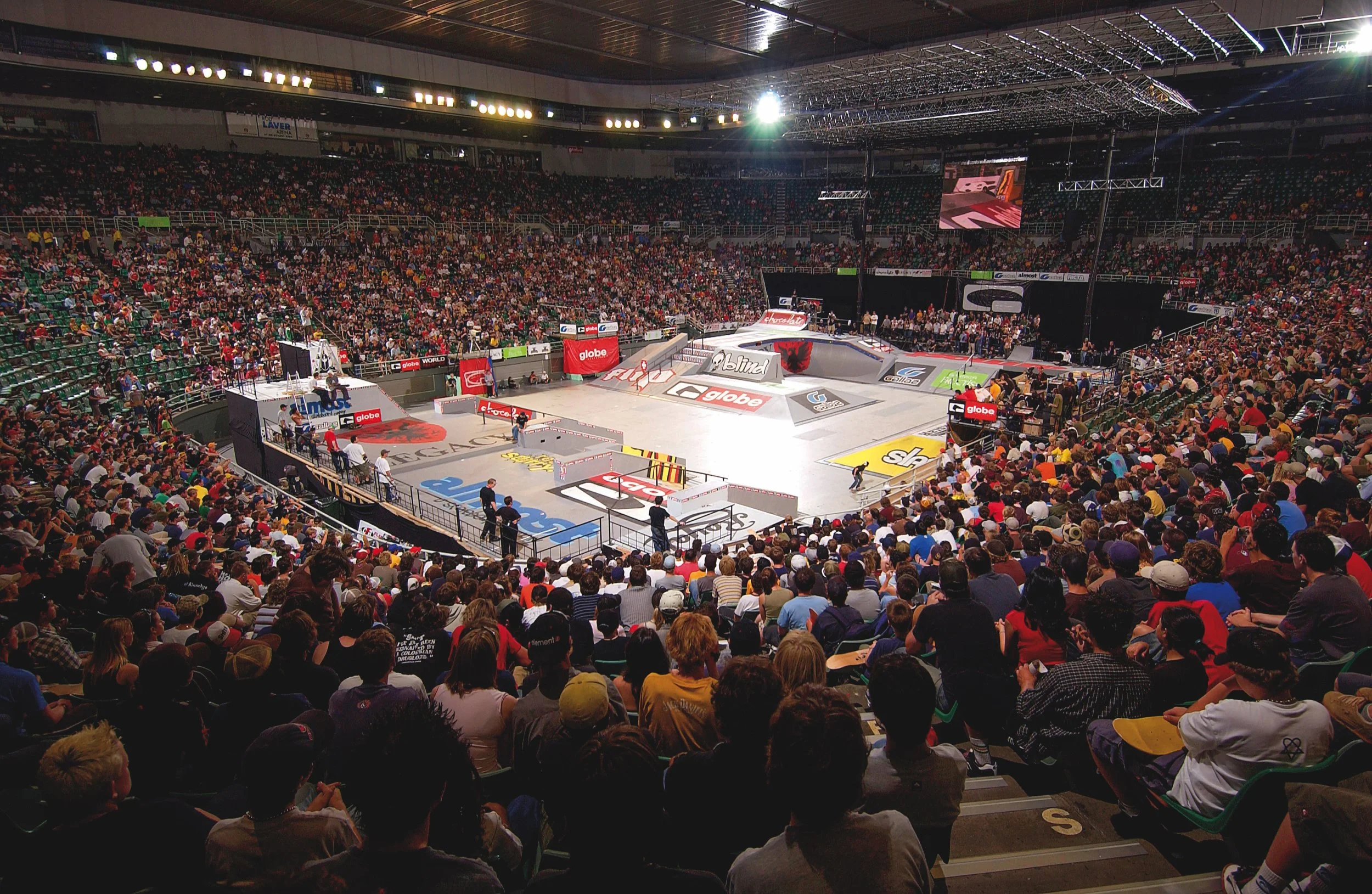
LD: What do you think informs these kinds of transitions? Looking through the archives, are there moments you can see the culture changing?
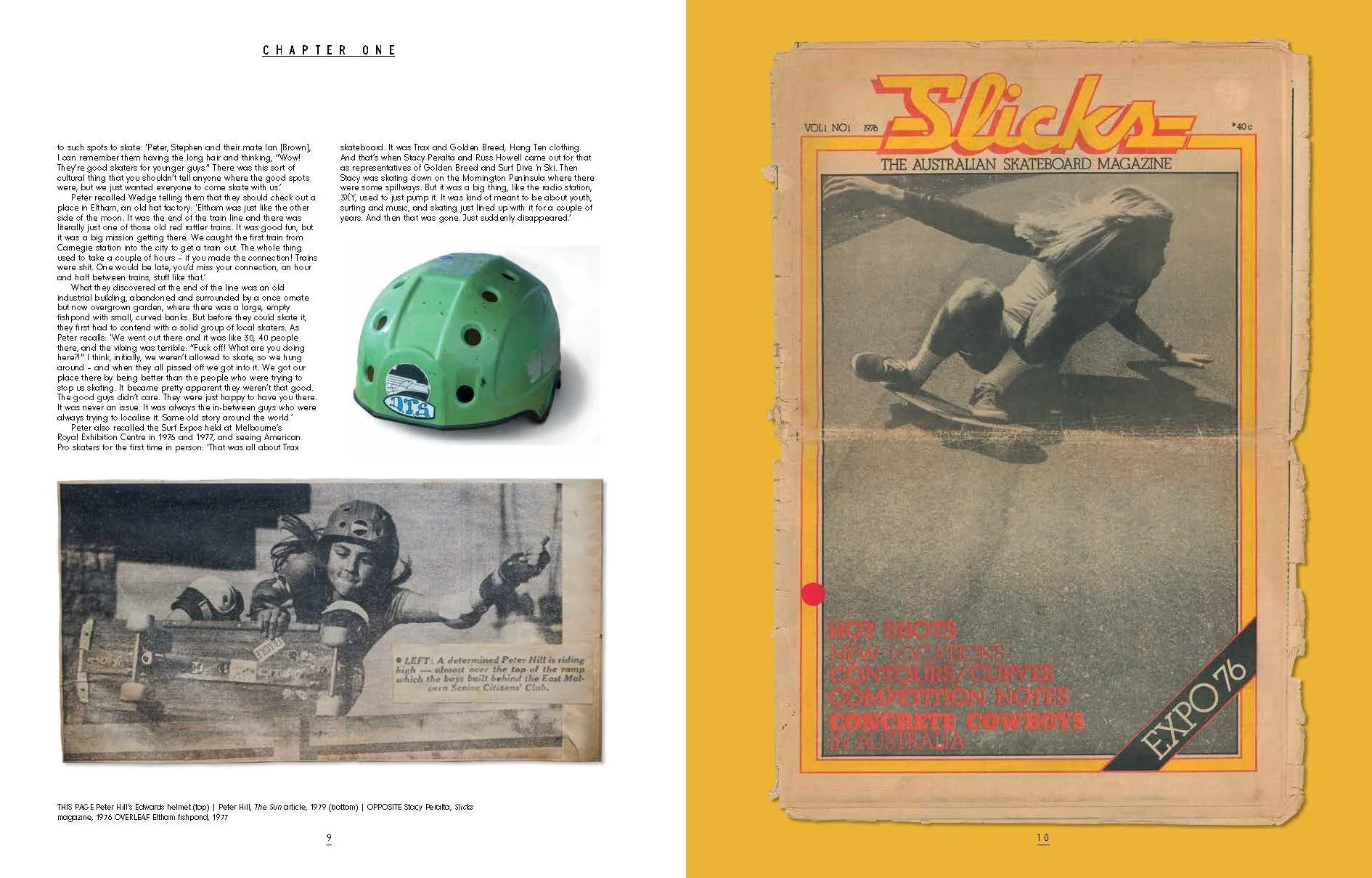
JB: Yeah, absolutely, and the materials themselves change as technology changes. You go from skateboarding magazines, and in the early days, there are both professional and semi-professional magazines. SLAM magazine in Australia has been a continuous one, and even Thrasher magazine, the huge US skate magazine, would send their photographer on Australian tours, and made their archives accessible to us. Then there are zines made by enthusiasts, and seeing the original versions of those are amazing.
There's a writer, archivist and zine-maker, James Turvey, who I think has the most comprehensive collection of Australian skate magazines and zines, which were amazing to look at. These sorts of documents are so important to understanding the culture. It’s really fun to see how rough and ready the culture was, and then see it become more professional. As they get more advertising money, you see the transition to video and VHS.
There are still a couple of important skate magazines around now, so photography is still vital. But you can see how quickly video took over. For the book, we also talked to older skate photographers to find out who still had their own archives. We actually had one photographer who had lost all his digital stuff from the late 90s on a drive that was broken, but we were able to get the drive repaired and recovered the data, and all of these amazing photographs.
LD: Thinking about this history and these archives, I’m interested in how women and First Nations peoples have contributed to Australian skateboarding history. When researching and documenting 50 years of skateboarding, how did you approach gaps in the historical record?
JB: There's definitely definitely lots of gaps. I spoke with Natalie Porter, who'd done a really amazing history on women's skateboarding worldwide, and she's built this amazing website [Womxn Skateboard History]. And we [Hardcore] put on women's events in the 90s, so our company archives were important here as well. But what's been great is when we had the final flick through the book, which we decided to structure chronologically, is that you can just see the diversity change in the skaters themselves over time.
Women always been skating, same with First Nations skaters — we've got incredible skaters like Nicky Hayes, and skating is so much better represented than it ever was. There's an argument that skateboarders are always a bit more accepting and more open, and I think that's true because there's a sense of, well, “if you're on a skateboard, I'm on a skateboard too”, so we can connect.
HARDCORE: 50 Years of Skateboarding in Australia is available now, published by Thames & Hudson Australia.