
‘Revealing Dress: Fashion as Portraiture’ takes over Liverpool Powerhouse
Words by Lameah Nayeem | Photography by Chantel Bann
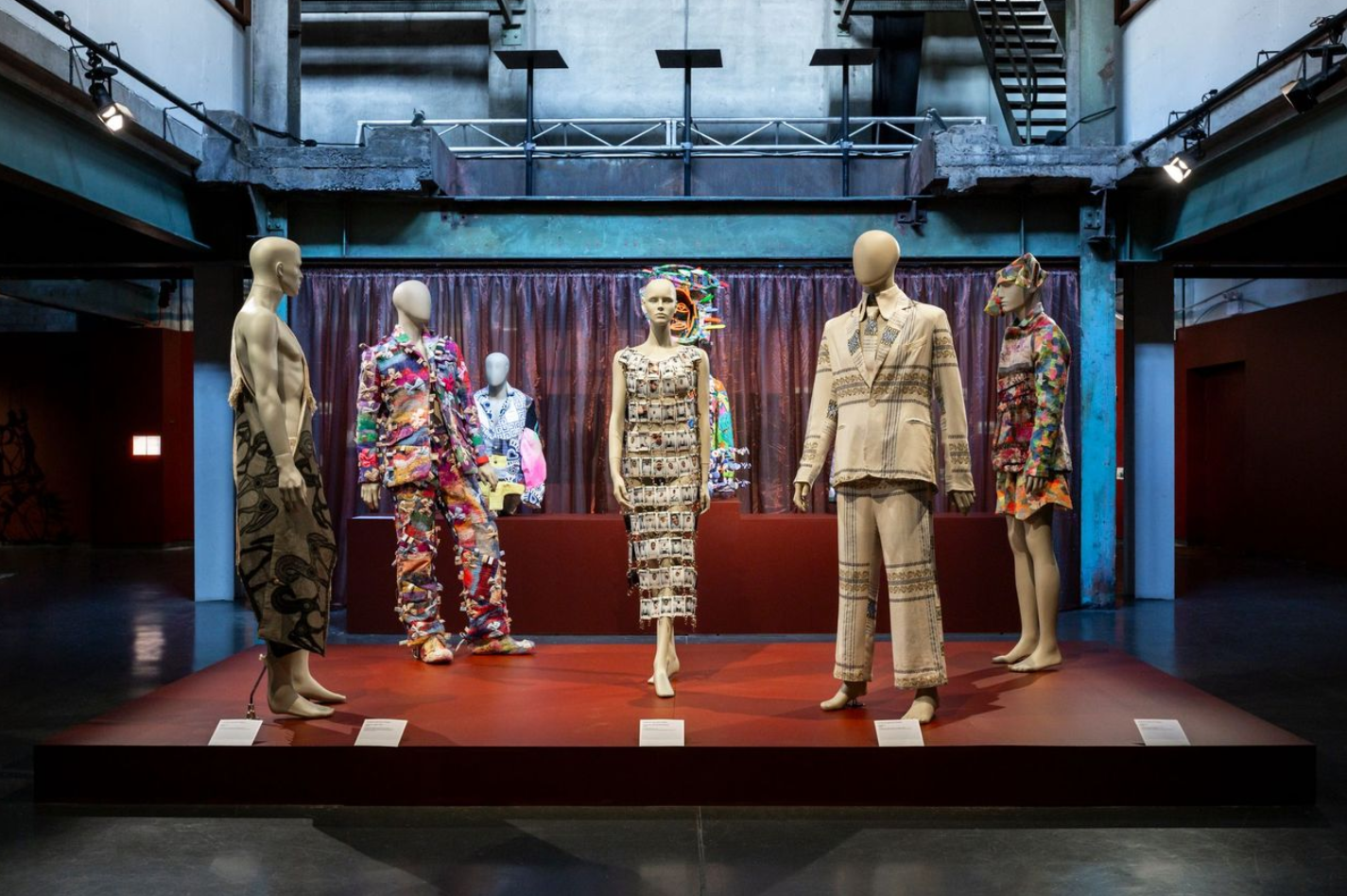
Jordan Gogos. Installation of garments from Iordanes Spyridon Gogos label, 2021-2025.
‘Revealing Dress: Fashion as Portraiture’ centres on the mutability of the body in fashion and how its constrictions, contortions and accentuations function as storytelling codes. Curated by Luke Létourneau at the Liverpool Powerhouse, it explores the “embodied language” of dress and how clothing becomes the mechanism for "negotiations between the body and adornment." Létourneau explains, "With dress, we're so concerned with visibility and concealment . It's about speaking beyond language and letting the body talk." The exhibition unfolds across distinct categories, presenting works by contemporary designers and artists, including Jordan Gogos, Nicol & Ford, Alix Higgins, Lily Golightly and Hannah Gartside.
At first impression, the severity of Liverpool Powerhouse asserts itself as its own character that must be accommodated during exhibitions. "The building wasn't meant to be an arts space,” says Létourneau, referencing its history: in 1951, the NSW Electricity Commission constructed the building to supplement the city’s electricity supply, before it was converted into a gallery in the 1980s. “You can't fight the space. The space will always win," Létourneau regards the exhibition’s piecemeal presentation, being spread across the Switch and Hopper galleries, with additional works displayed upstairs on the Upper Turbine Floor. Létourneau jokes that the show was initially conceived as a ‘day’ and ‘night’ theme, which was abandoned as the exhibition’s five distinct categories took shape: 'Heritage in Motion', 'Being Seen Through a Mask', 'Muses and Slow Craft', 'Redressing Power', and 'Emotional Enchantments Cast through Dress'.
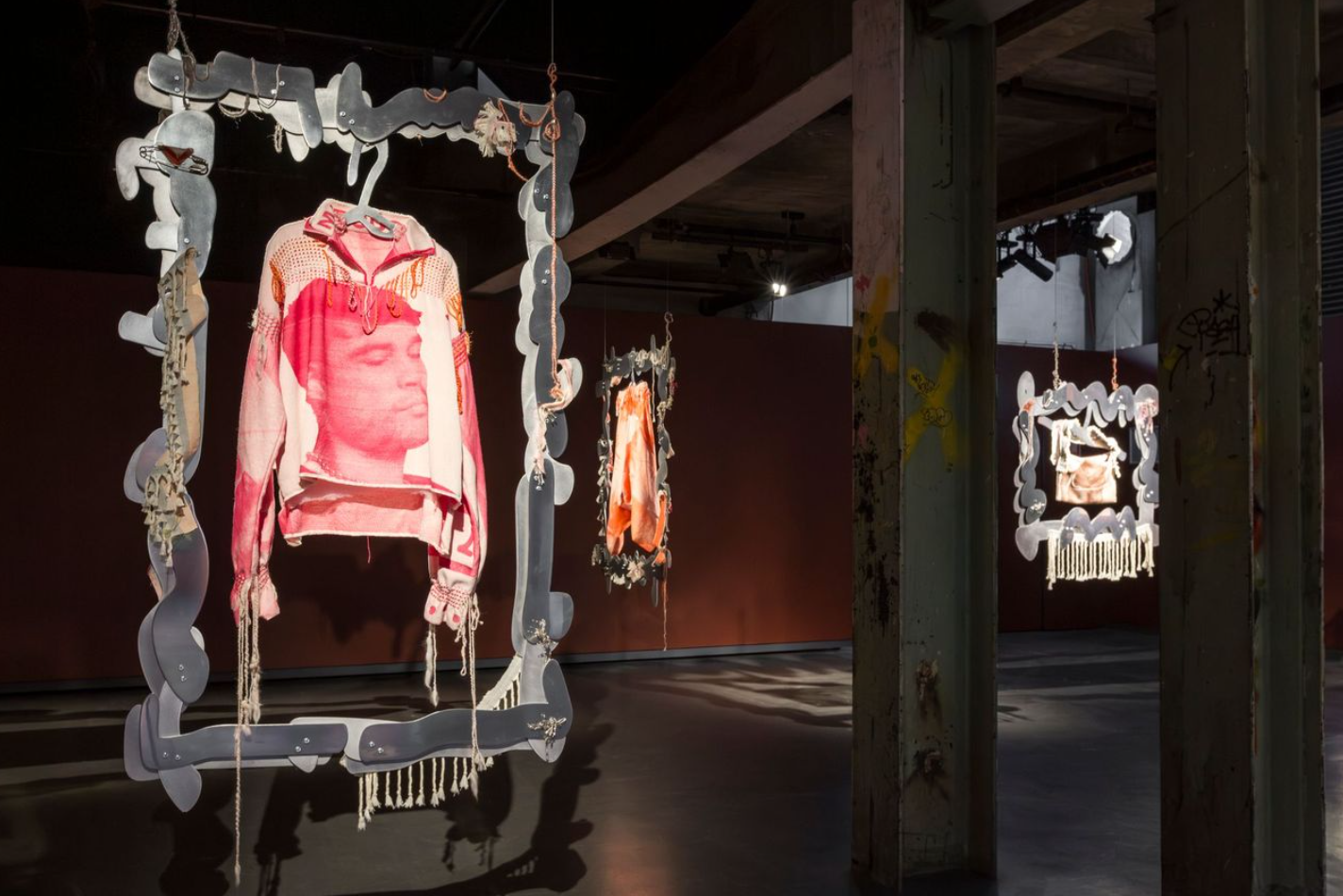
Megan Hanson, Synthesis (Marcus), 2025.
The first category takes shape through garments from Jordan Gogos’ 2025 Australian Fashion Week collection in the Switch Gallery. Létourneau’s interest in fashion sustainability echoes throughout Gogos’ practice, which revitalises discarded or deadstock fabrics and domestic textiles such as doilies. The textiles reference Gogos’ Greek heritage and the often-unseen labour of women who beautify the home, whose efforts become increasingly anonymous with passing time. The centerpiece dresses, composed of handmade tapestries and interlinked Polaroids, literalise memory and give body to the past.
Further inside, Grace Lillian Lee’s variations of Future Woven Floral Forms use Torres Strait Islander ‘grasshopper’ weaving techniques passed down from her grandfather to create spiny, hollowed structures. Cage-like and bristling with splinters, Lee’s pieces summon questions of pain, enticement and risk. They recall corset boning and the conical rings of crinoline underskirts, prompting viewers to ask what a body must endure to give life to a garment.
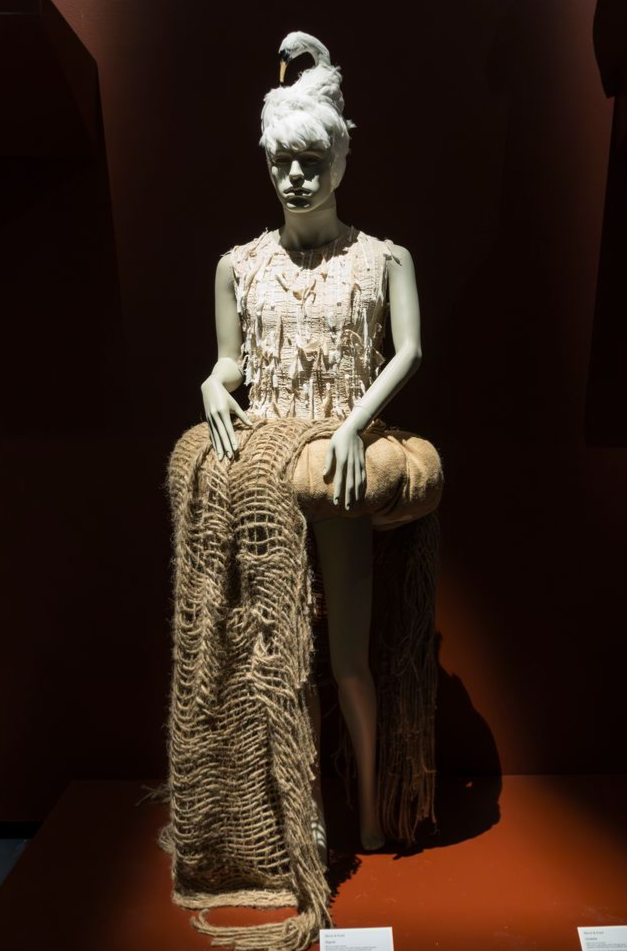
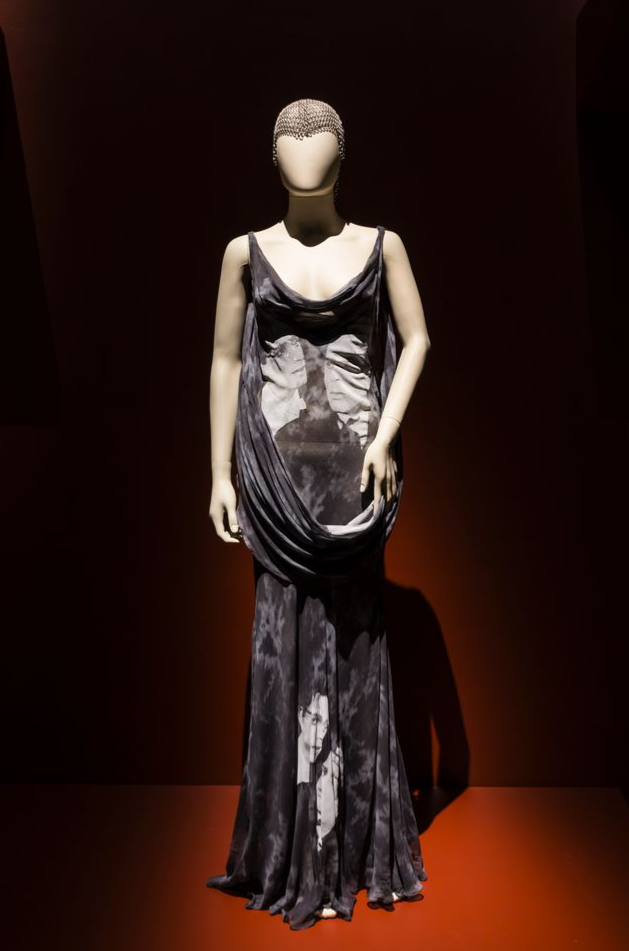
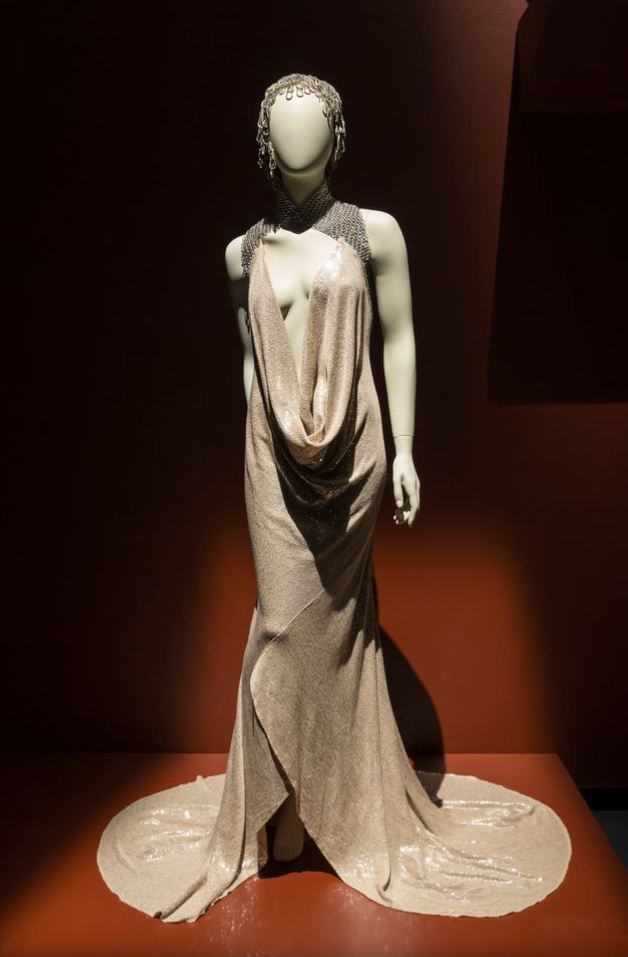
The exhibition then flows into the Hopper Gallery, presenting the apotheosis of Létourneau’s vision, "We tried to utilise mannequins in an interesting way throughout the exhibition. In Hopper, we used them to honour the drama of the runway. We want the clothes to sing.” The back wall features mannequins donning garments from Nicol & Ford’s Australian Fashion Week collection, Parrhesia, which draws on 1930s porcelain boudoir half-dolls and sexologist Magnus Hirschfeld’s research in the 1920s. The collection reimagines the Weimar queer milieu amid contemporary sociopolitical threats. Spotlit against a burgundy backdrop, Nicol and Ford’s swan headdresses, chainmail bras and sumptuous silk gowns catch the attention of any passerby. Létourneau offsets this spectacle with Nik Pantazopoulos’ photographic series. Beneath the austerity of cotton and leather draped over a reclined back or loosely extended arm is the unmistakable presence of the body beneath. In Shirt II, fabric pulled taut suggests a moment of tension or constriction at the midsection; in Shirt IV, the rippled bunching of cloth alludes to two faces meeting.
Patrick McDavitt’s Desborough Mirrors functions as a display cabinet and expanded fitting room. Multiple mirrors situate viewers within the apparatus of display, inviting reflection on the histories of jewellery and wieldable objects. From earrings to scythes, McDavitt’s jagged forms operate as both talismans and armour, simultaneously capable of protection and injury—the possibility of pinching skin while fastening a closure, leaving scratches when sliding on a ring. Made from brooches, chariot fittings and horse-bridle components, the works reveal how adornment contours images of power and submission.
Hannah Gartside’s Waiting and Show-bow moths fly towards a streetlight offer a more fluid stance on clothing, focusing on party garments and the “energy, glamour and enchantment” they retain. Gartside observes that clothes absorb both the physicality of our bodies and our emotional experiences of “yearnings, pains and delights.” Waiting features limp, tubular forms attached to a semi-circle. Once animated by bodies, they now hang as reminders of fleeting joys and changing forms.
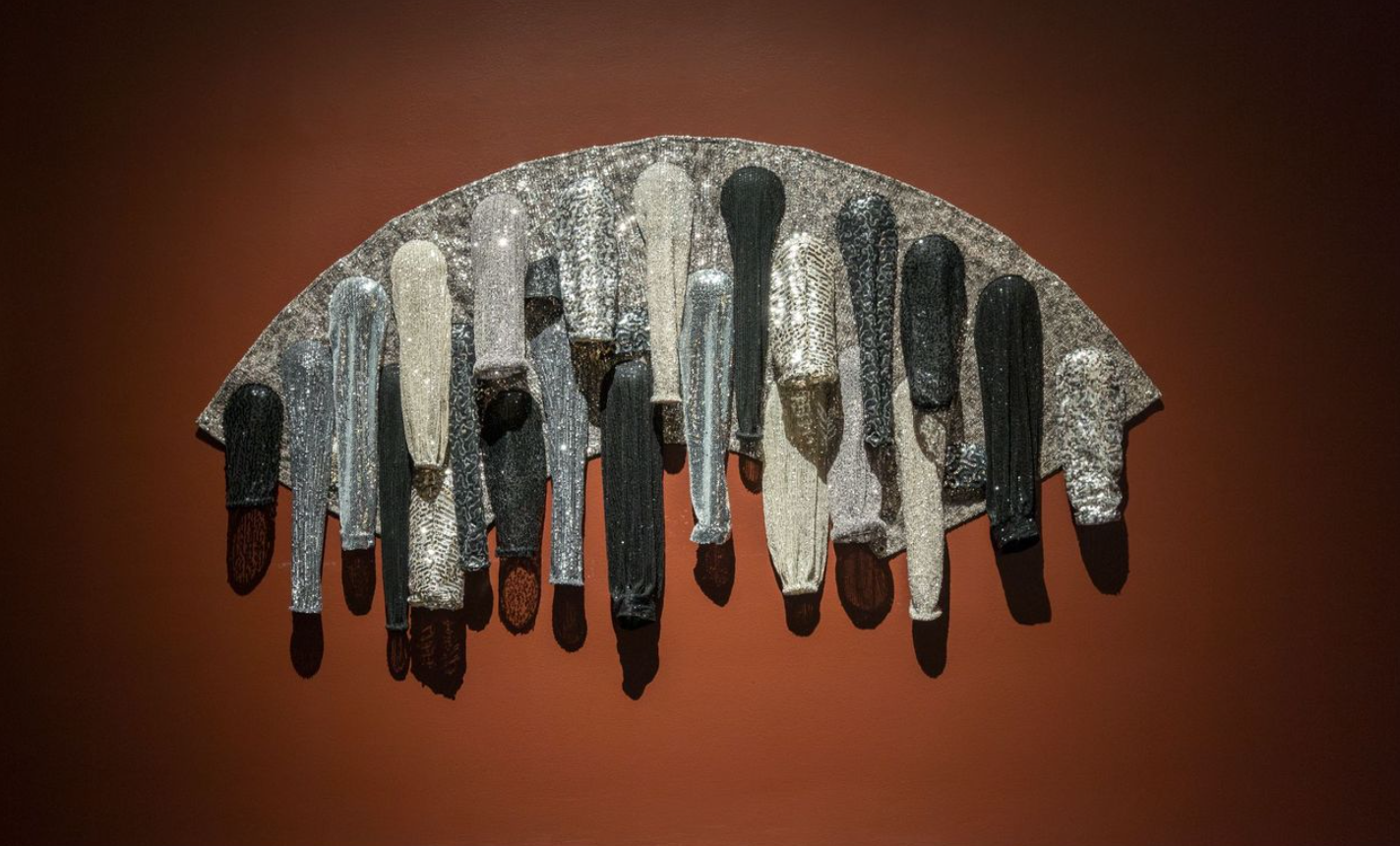
Hannah Gartside, Waiting, 2023.
‘Revealing Dress’ is ambitious and polyphonic, stretching the limits of what dress can represent. It reconciles every mode through which the body and dress can be articulated, reflecting our own multiplicity. Through fashion, we are an ever-changing state of matter, subject to the throes of our external and internal worlds—shifting, shifting.
‘Revealing Dress: Fashion as Portraiture’ is open until Sunday 19 April 2026.