
Razzle Dazzle: Hiding in Plain Sight with Jo Duck
Interview by Lila Daly-Hyatt
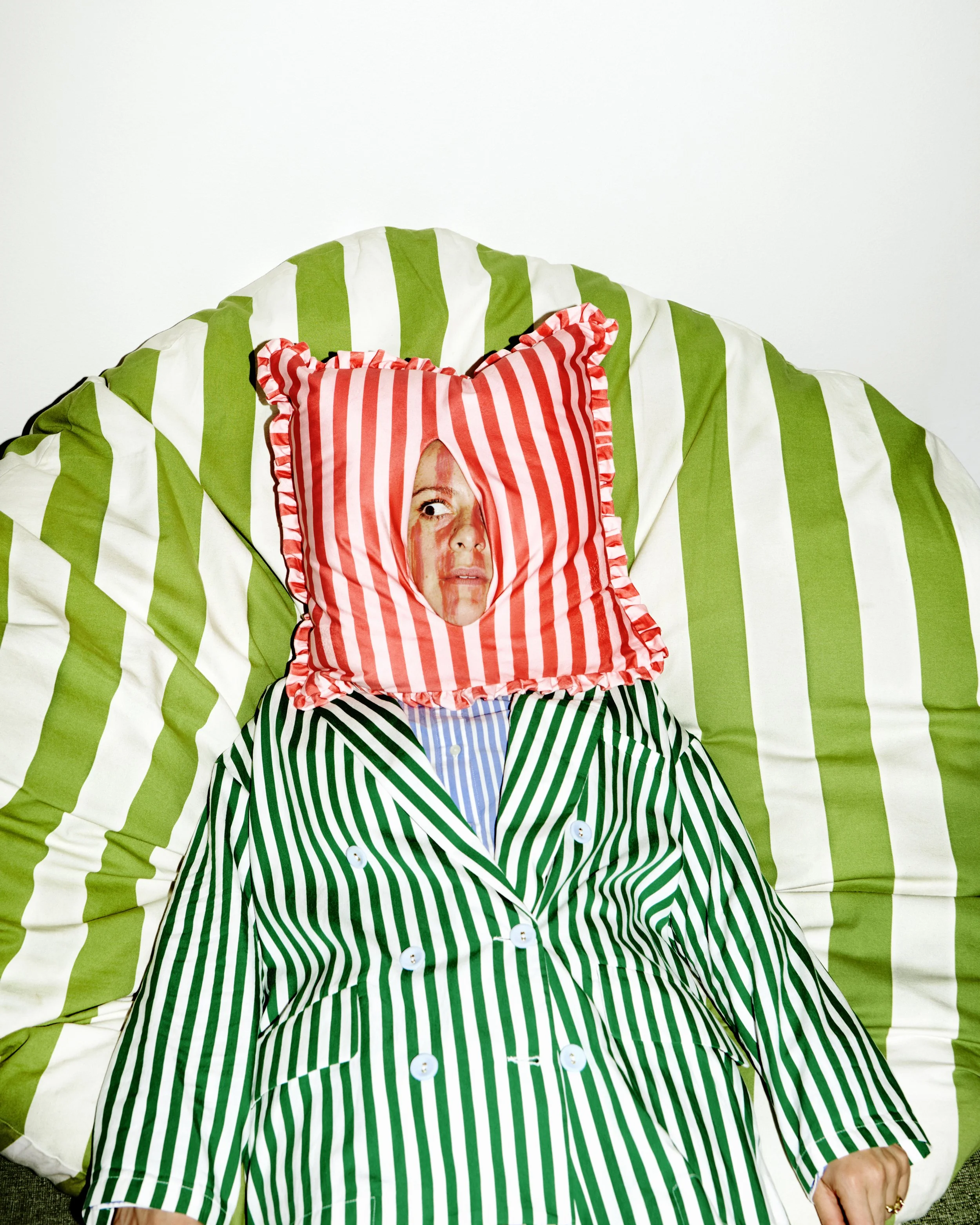
Stripe Search
The supermarket traces your spending habits, your phone knows your face, and ‘privacy’ is just a word that we skim in the terms and conditions. For photographer Jo Duck, the simplest methods to avoid surveillance might also be the most absurd. In Duck’s series of portraits, Razzle Dazzle, the irrationality and strangeness of people playfully combats the frightening logic and weaponisation of increasingly advanced surveillance technologies.
Originally commissioned for Melbourne’s PHOTO 2024 Festival, this September, Duck’s photo series confronts the creeping reality of facial recognition technology at Finland’s Backlight Photo Festival. This year’s theme, ‘The Art of Lying’, explores the tenuous relationships between truth, fiction, technology and photographic representation.
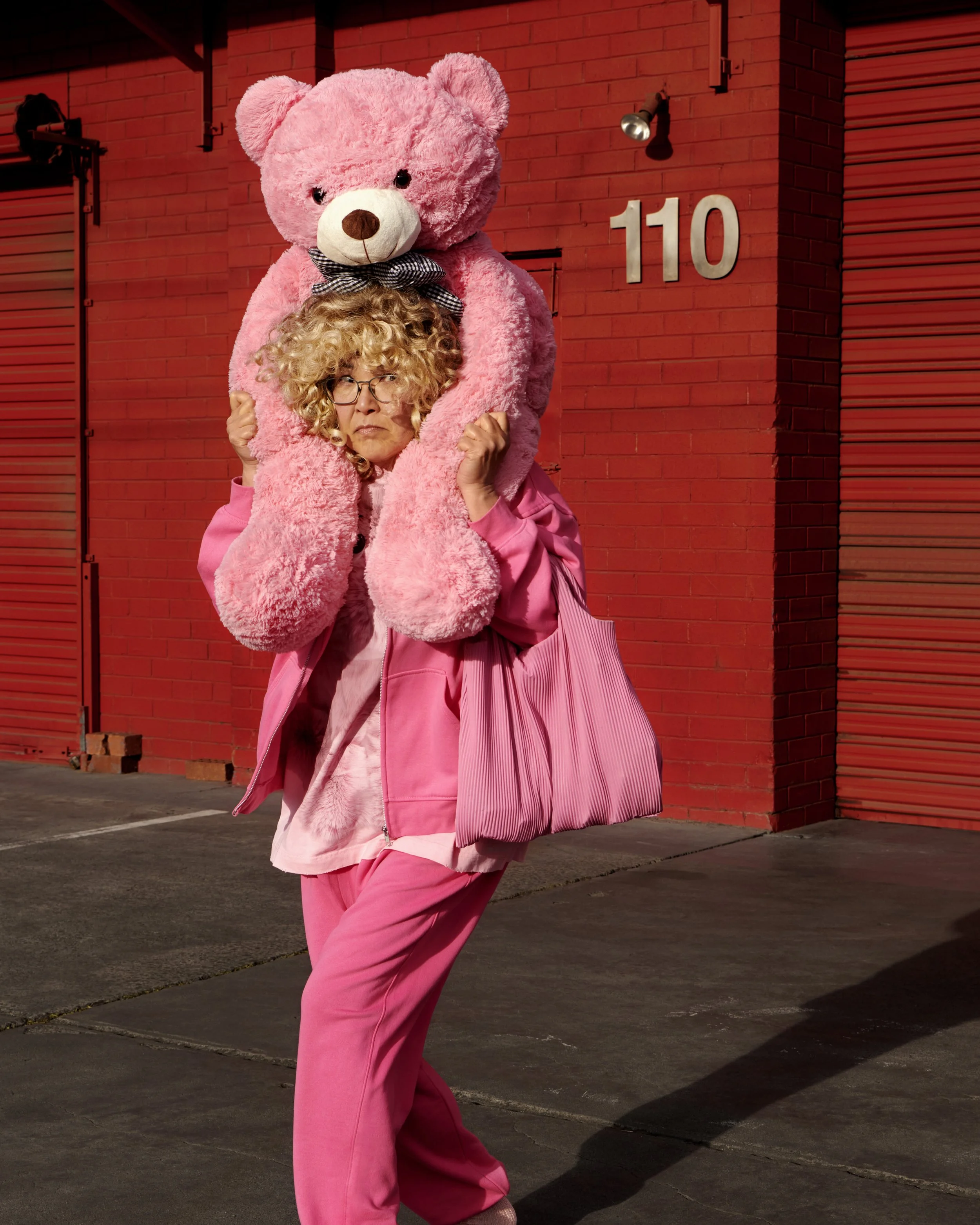
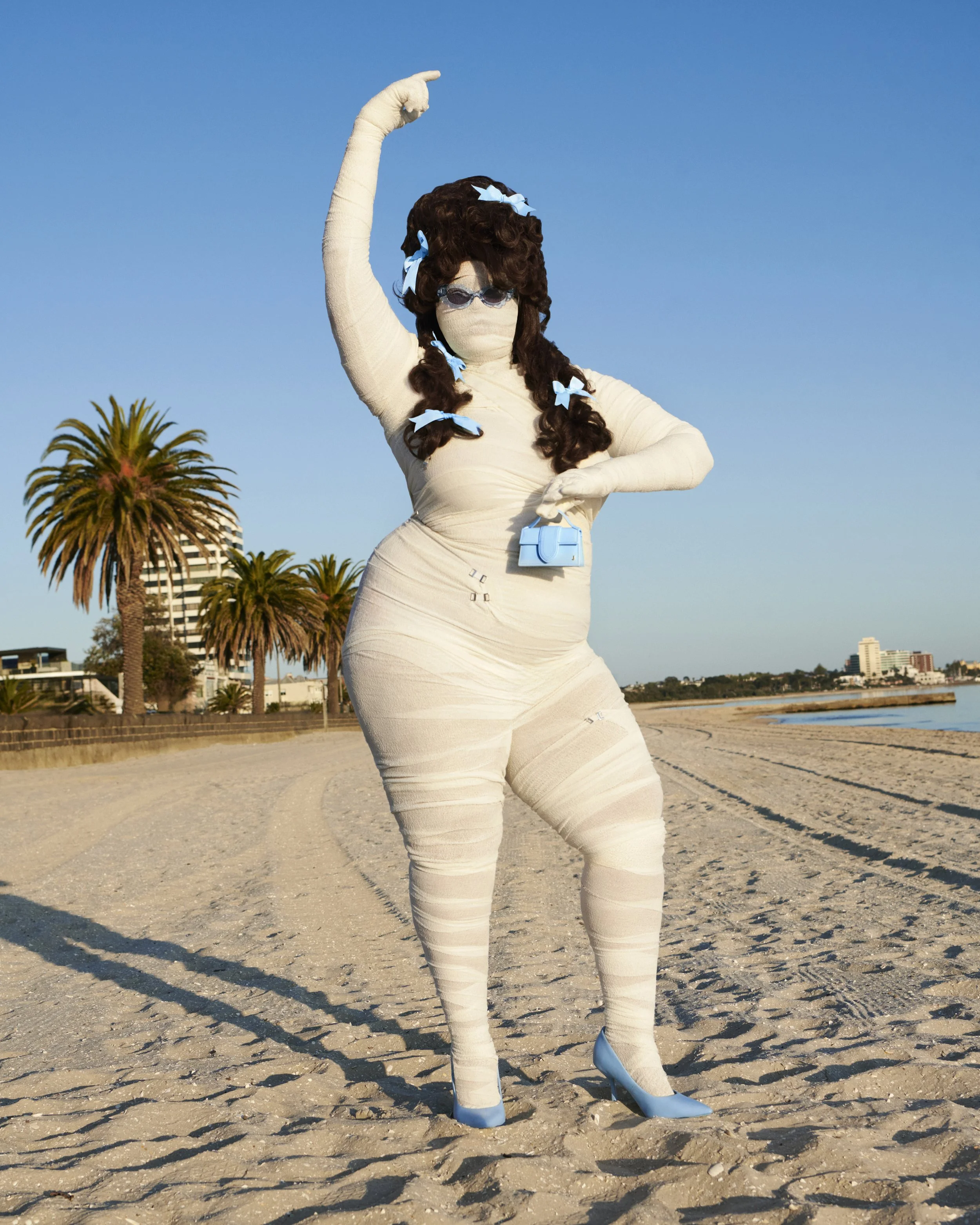
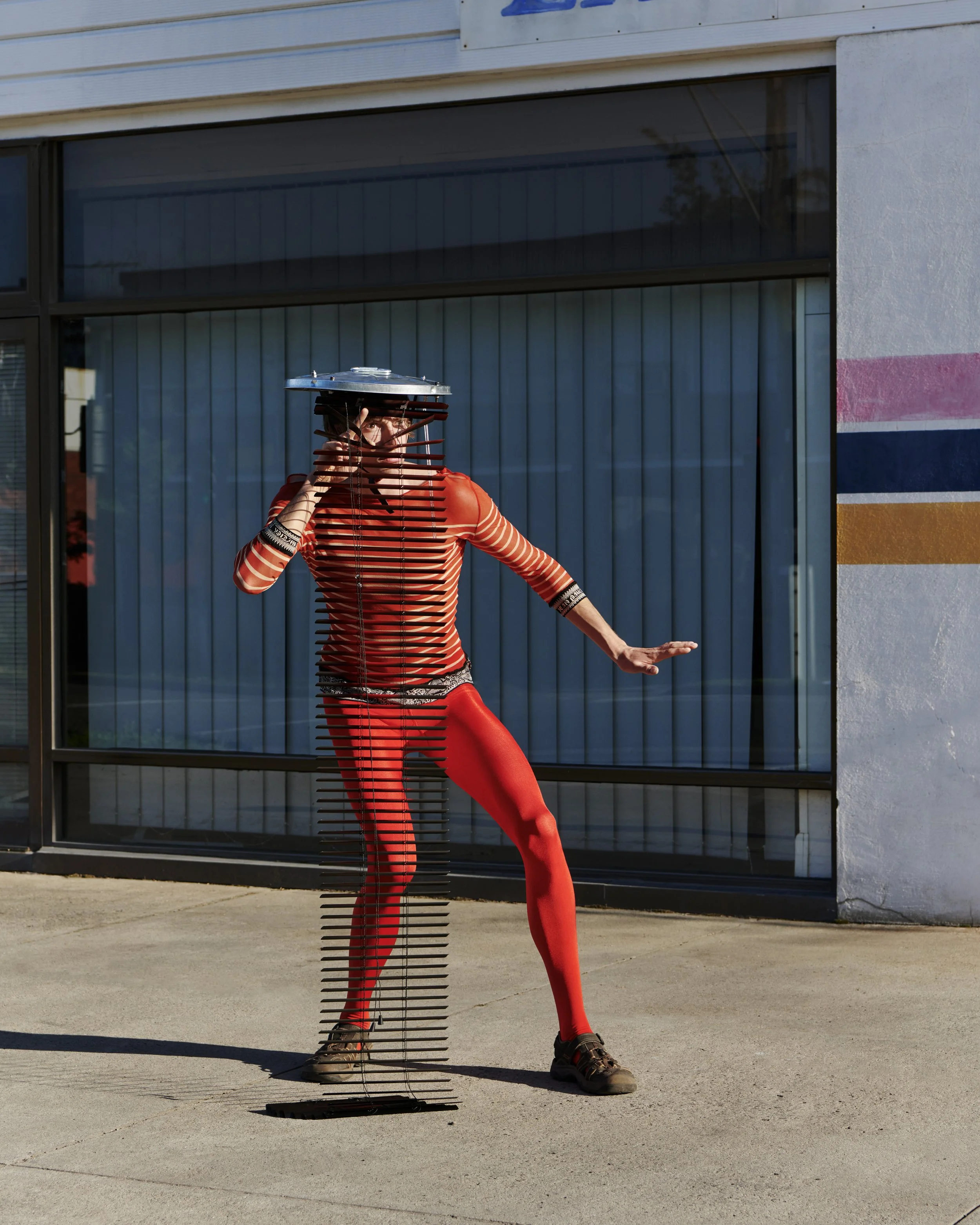
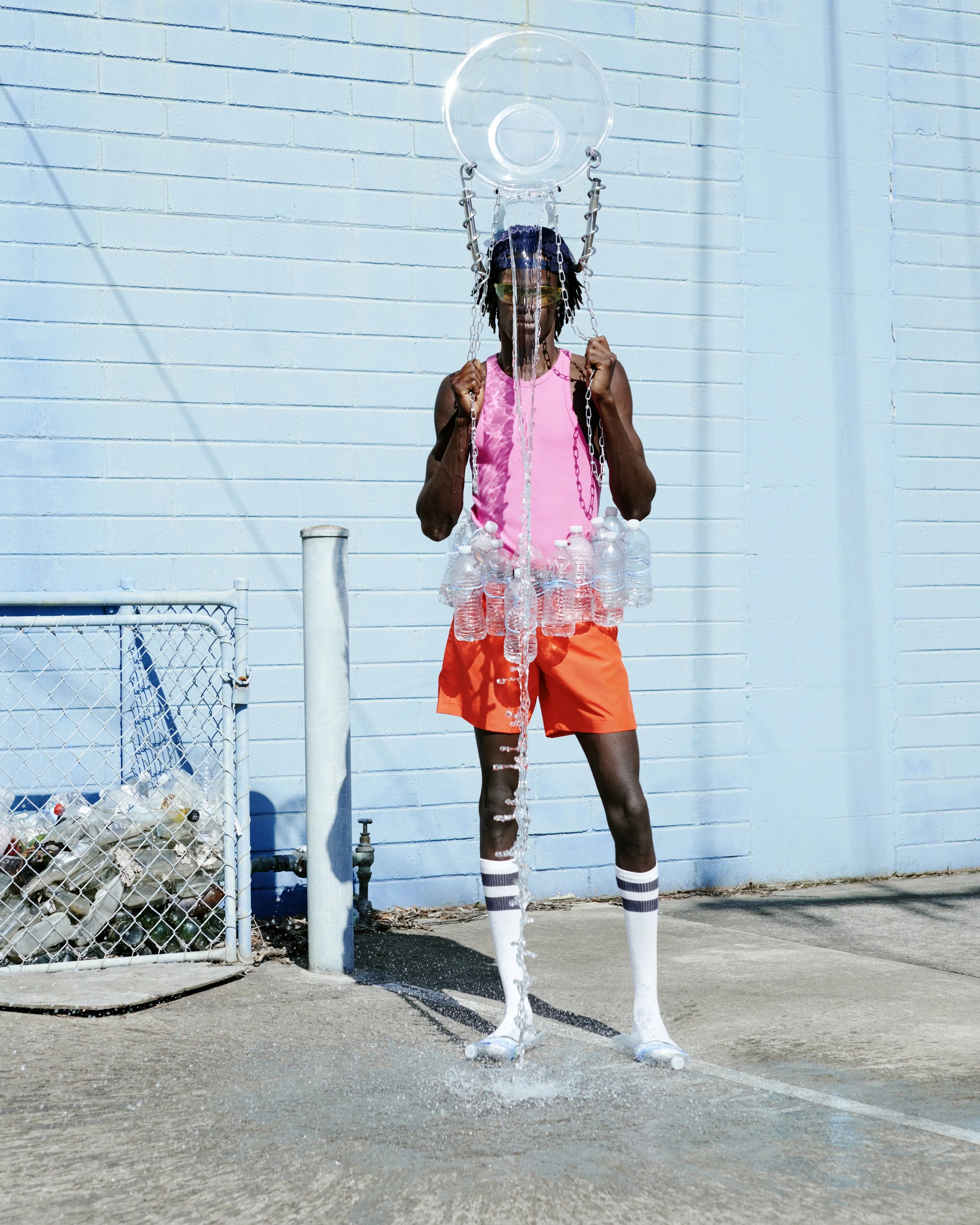
Though theatrical, Razzle Dazzle isn't about show business. During World War One, the Allied Forces employed a new form of camouflage, termed Razzle Dazzle. Bold optical illusions, geometric patterns and distorted lines were painted on naval fleets to confuse enemy forces about their speed and direction. While we now invest in a VPN, decline cookies and clear our cache, some form of the old Razzle Dazzle might be the only way to protect our privacy against mass surveillance. In Duck’s world, you can go off-grid, or proudly hop on the bus with a teddy bear shrouding your face; stroll to brunch in a full-body monster suit. The choice is (not) yours.
As the festival draws to a close, A-M Journal chats with Jo Duck about inversion and disguise, the ramifications of mass surveillance, and the feeling of inside-outness that comes with a great photograph.
LILA DALY-HYATT: Your series, Razzle Dazzle, is being presented alongside international artists in 'The Art of Lying' at Backlight Photo Festival in Finland, exploring the relationship between truth, fiction, technology and photographic representation. What does Razzle Dazzle bring to this conversation?
JO DUCK: Razzle Dazzle brings an absurd representation of a concerning concept into the conversation. Mass surveillance and facial recognition technology is everywhere, framed as protection and safety, but its use in law enforcement has led to wrongful arrests because minority groups are underrepresented and misclassified in training data. The ramifications spread wider from use within ICE targeting immigrant communities, domestic violence victims tracked through the same tools meant to protect them, and in job hiring as facial recognition combined with AI can now screen candidates by reading micro-expressions, penalising anyone whose gaze patterns or expressions fall outside a narrow neurotypical standard.
In supermarkets, our consumer behaviour is being watched and scrutinised. Soon digital pricing could literally see you coming using facial recognition technology, and based on your spending habits, jack the price of your favourite items up to what they predict is the maximum you’d be willing to spend. This is a world we didn’t opt into, but unless we all want to go off grid or start wearing disguises, we are being tracked constantly in mainstream society.
I hope that Razzle Dazzle makes people consider how they move around their world, if they’re comfortable being tracked, and if not, what action can they take against it?
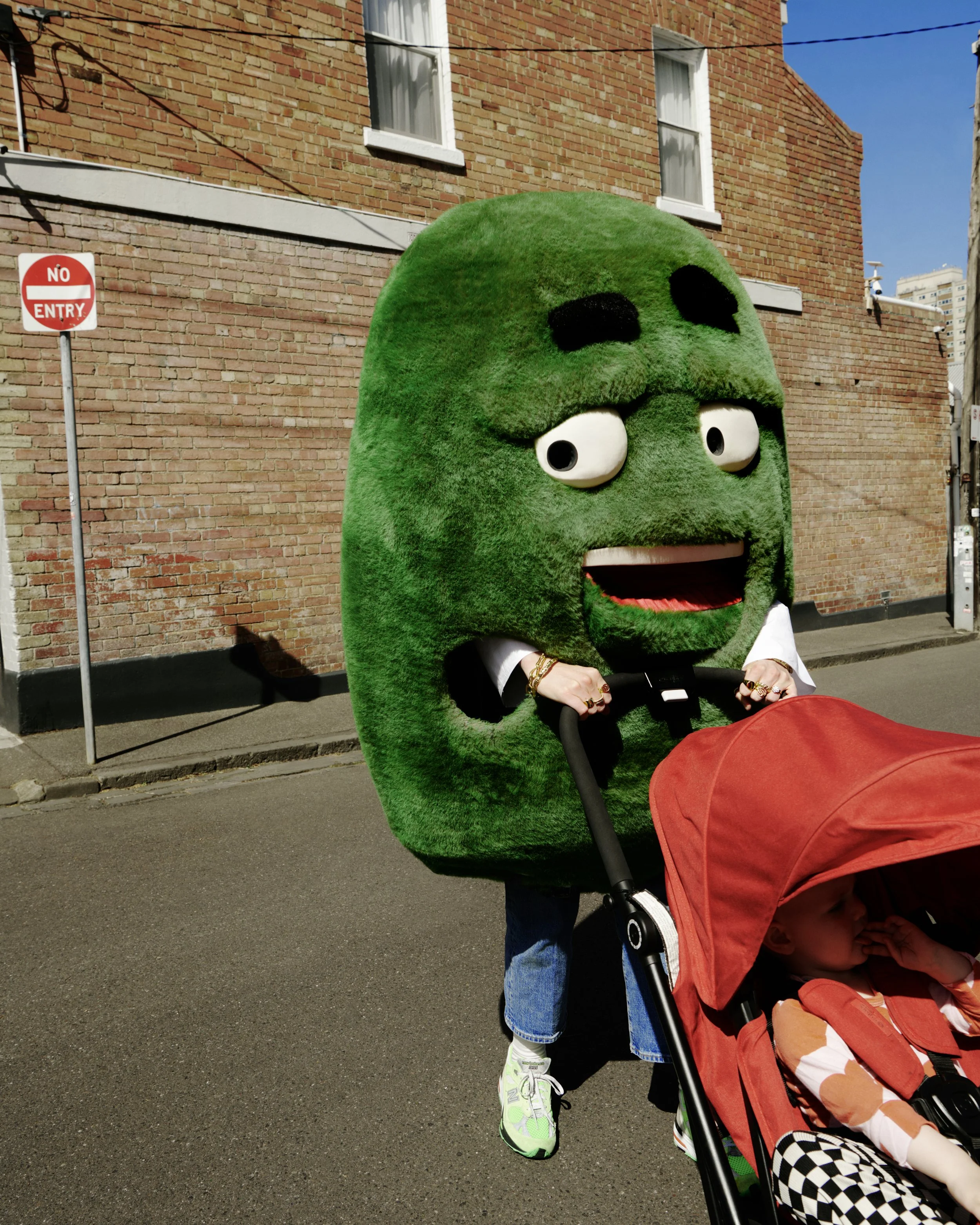
Monster Mum
LDH: If you had to evade facial recognition technologies for 24 hours, what would you wear? Are you a 'Decoy Teddy' or a 'Venetian Sandwich’?
JD: Venetian Sandwich, hands down. Instead of wearing a gondola-inspired Venetian outfit like the character in my series, I think I’d like to wear an obscenely large Venetian ball gown behind my Venetian blinds. Creating more mystique (and inconvenience) for both humans and machines.
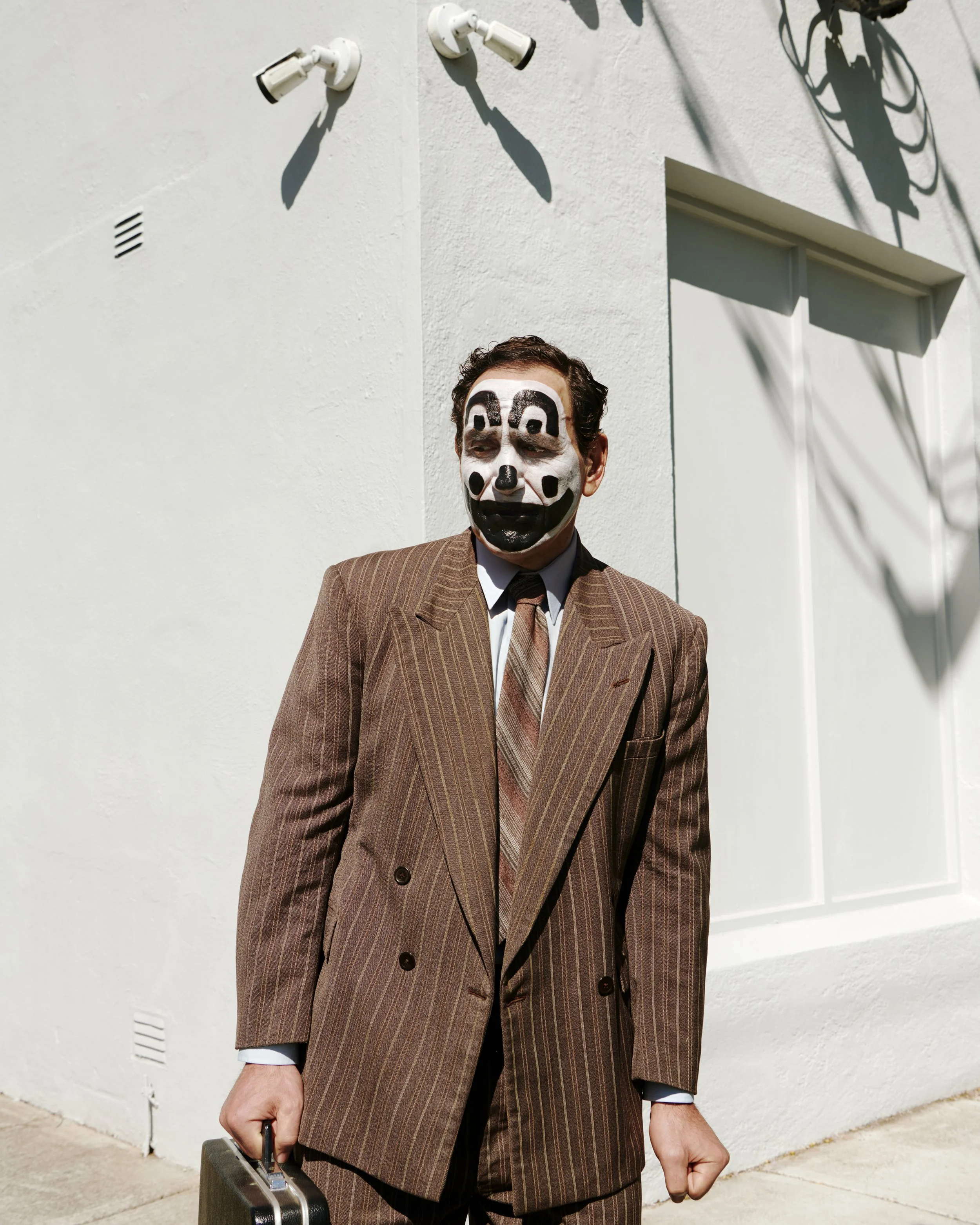
LDH: Speaking of mystique, we love your character’s backstories — from the Monster Mum who just wants to get to brunch without being surveilled to the corporate suit donning clown-face just so he can get to the office. They’re both ordinary and absurd. When it comes to exploring these themes of surveillance, privacy and technology, what does humour allow you to do that fear might not?
JD: Humour and absurdity is just where my brain goes. I wouldn’t actually know how to approach this topic with earnestness, it might end up looking like stills from the opening titles of the X-Files.
LDH: Which of your characters do you think would be most fun at a party?
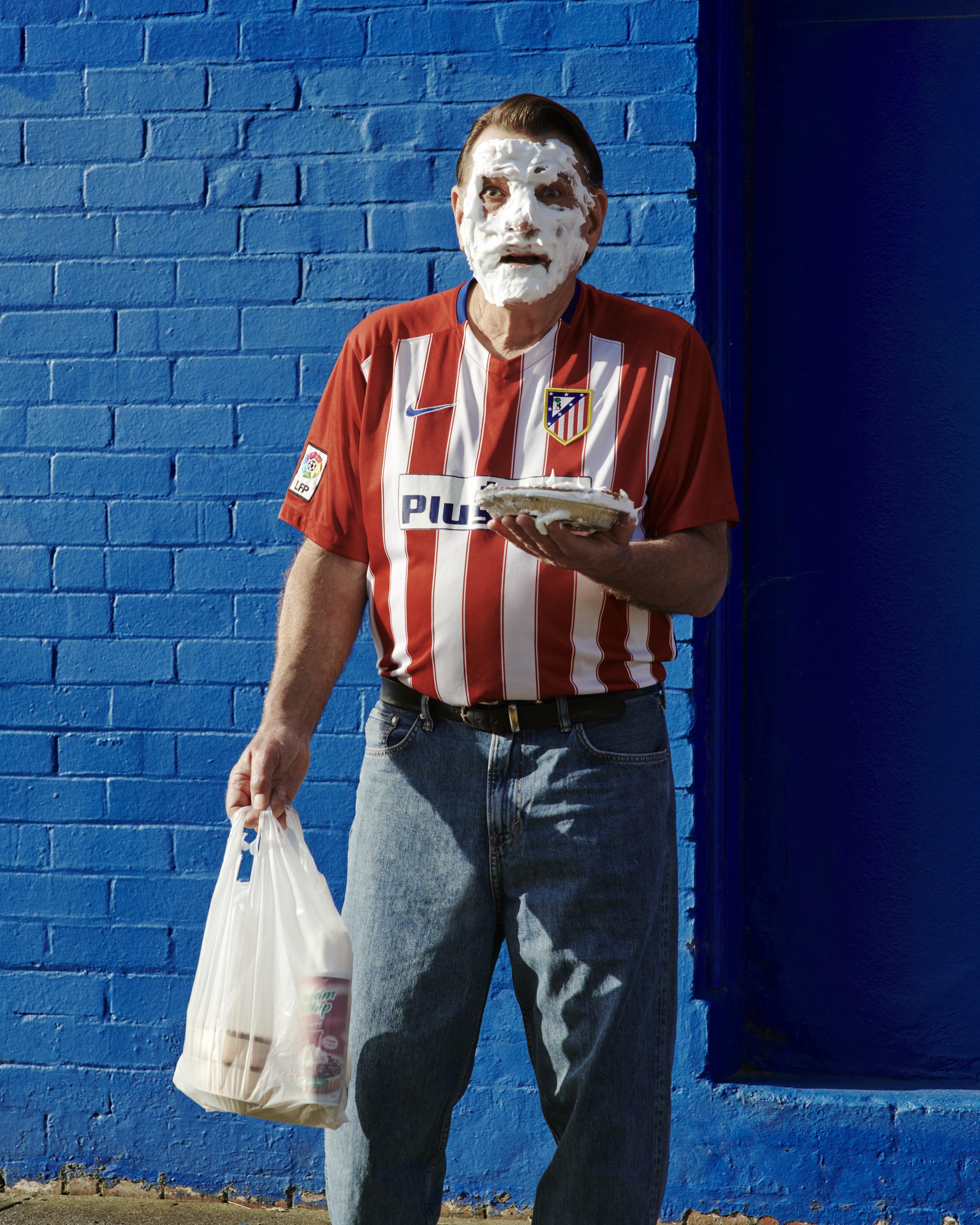
JD: I think the Invisible Woman would walk around knocking things over and not giving a damn. Which would be funny for a while, but I imagine she would get too tipsy sipping a cocktail through a straw between tight bandages, and I’d get bored of her shenanigans. Whipped cream pie man is obviously a Mrs Doubtfire fan (he clearly ripped that idea straight from the movie) so I feel like we’d share a few interests. I’d like to stand with him in a corner, shoot the breeze and watch parts of his face inevitably plop off.
LDH: Given your background in fashion photography, have you always been drawn to dress-up and disguise?
JD: I remember being enraptured by the brunette ‘evil’ twin and cousin characters on I Dream of Jeannie and Bewitched. The evil characters were simply the blonde lead actors in brunette wigs. I loved the simple method to invert a character and create mischief. I was also thrilled by the reveals in Scooby Doo, who not only used masks to conceal their true identities, but often wires, complex pulley systems or specialised machinery to allow themselves to fly across rooms, convincing all in town that they’re ghostly apparitions.
I hadn’t really explored the tropes of disguise much photographically until 2022 when I did a series called Disguises with stylist Sarah Pritchard. We enjoyed creating the classic ‘two kids in a trench coat’, but also found reference in two minor criminals who had coloured in their own faces using markers before attempting to rob a home. The lack of complexity and abundance of confidence is a joyful intersection to explore.
LDH: Has working across commercial photography made you more conscious of the power of images, and how they can manufacture desire, identity and consent?
JD: I’ve seen behind the curtain and know how the wheels turn. It means as a consumer, I’m much more wary of the sparkle. Although my personal work can influence the kind of commercial work I get, the commercial work helps fund the personal work so I can continue to bring imaginary worlds in to the real one in ways which make me laugh.
LDH: We increasingly live in a time where being photographed is almost unavoidable. Has this changed your own relationship with photography?
JD: My relationship to photography is utter adoration, nothing will change that. When I see an incredible photograph I feel like I can implode. Insides on the outsides. Outsides on the insides. Nothing will change the inside-outness I feel when I see a great photograph. However, being photographed, surveilled and tracked makes me feel like I’m in The Truman Show.
I’ve spoken to people about the surveillance we all encounter and some people say ‘it doesn’t matter to me, I have nothing to hide’ but I hate the idea that my kid is growing up being tracked and marketed to, without any of us having any consent over it. In my work, I like that my characters have concocted such human and analogue disguises to protect their anonymity. I’m always on the look out for a new way to Razzle Dazzle ‘em.
Razzle Dazzle is on view at Backlight Photo Festival 2026 until 20 September.