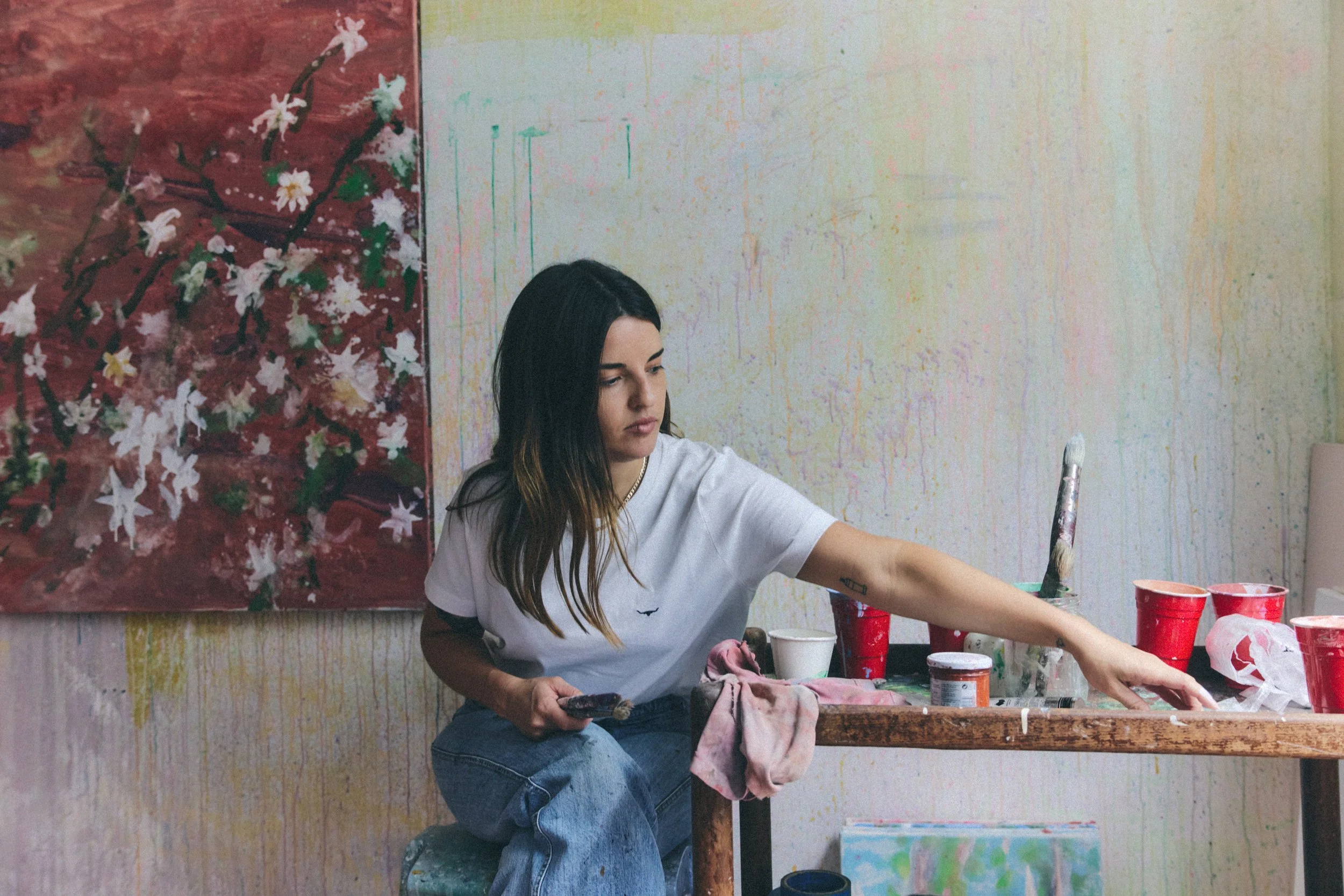
‘Turn Turn Turn’: Painting Place with Ondine Seabrook at R.M. Williams
Interview by Lila Daly-Hyatt l Photography by Seung Rok Baek
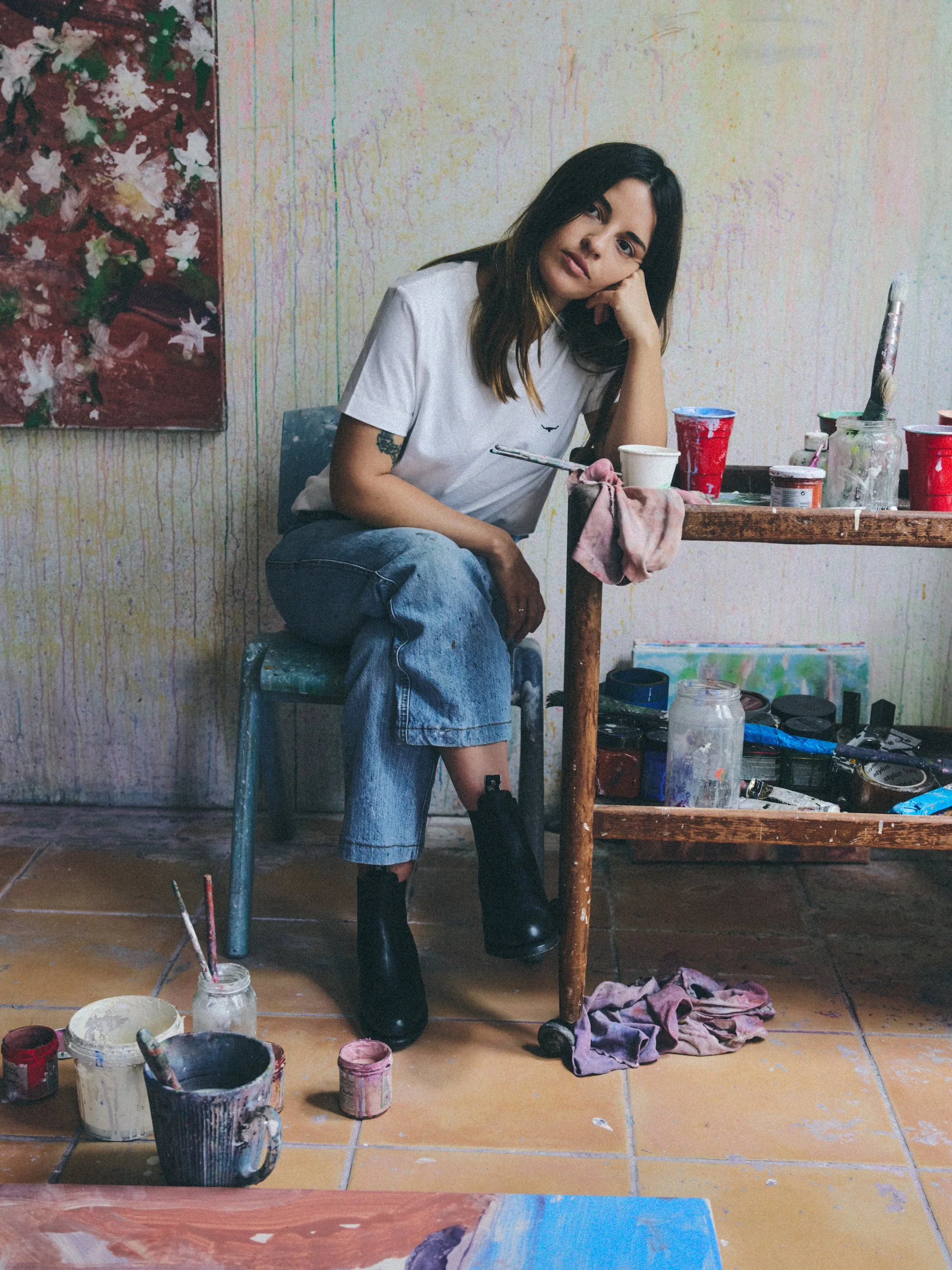
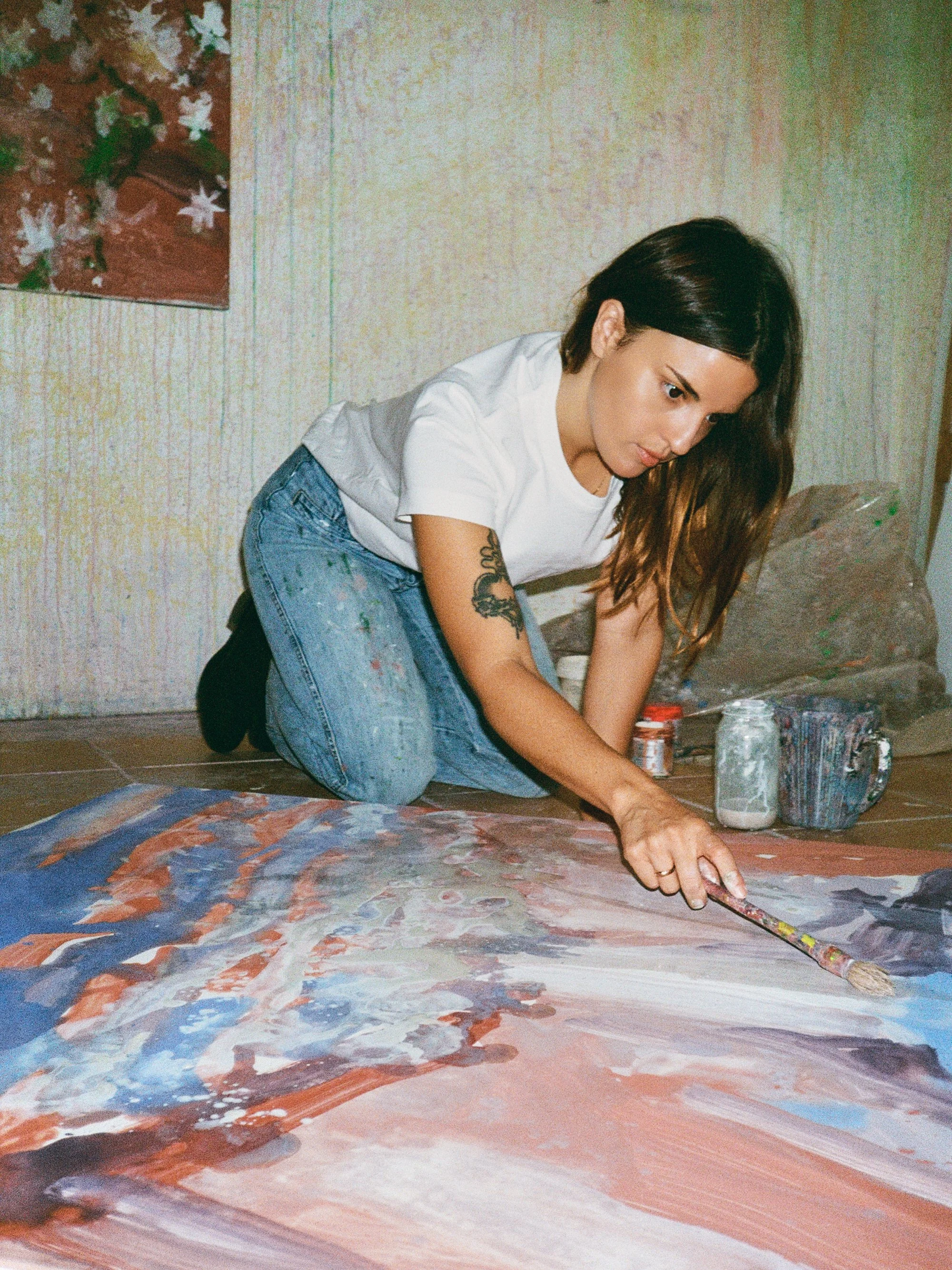
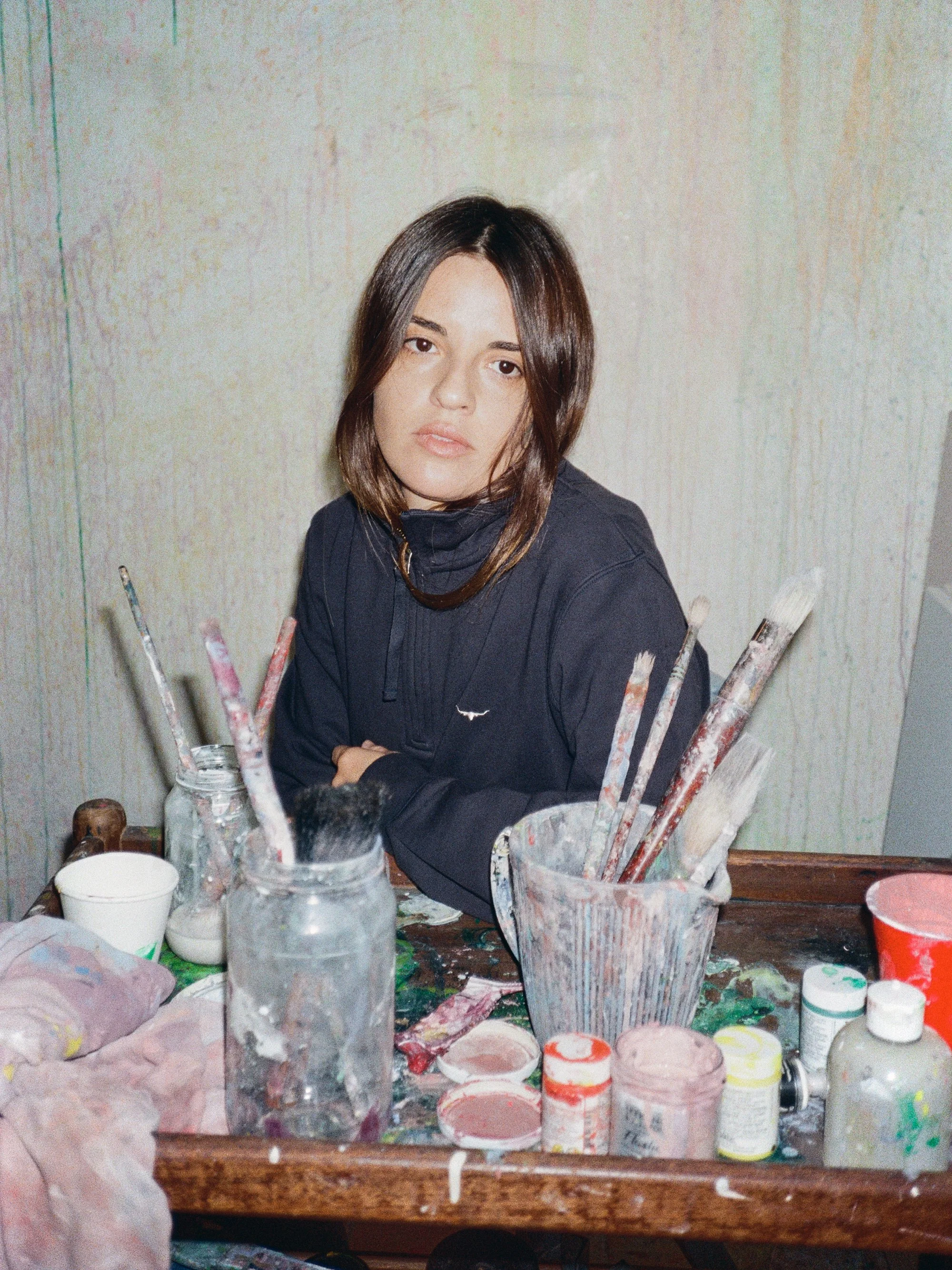
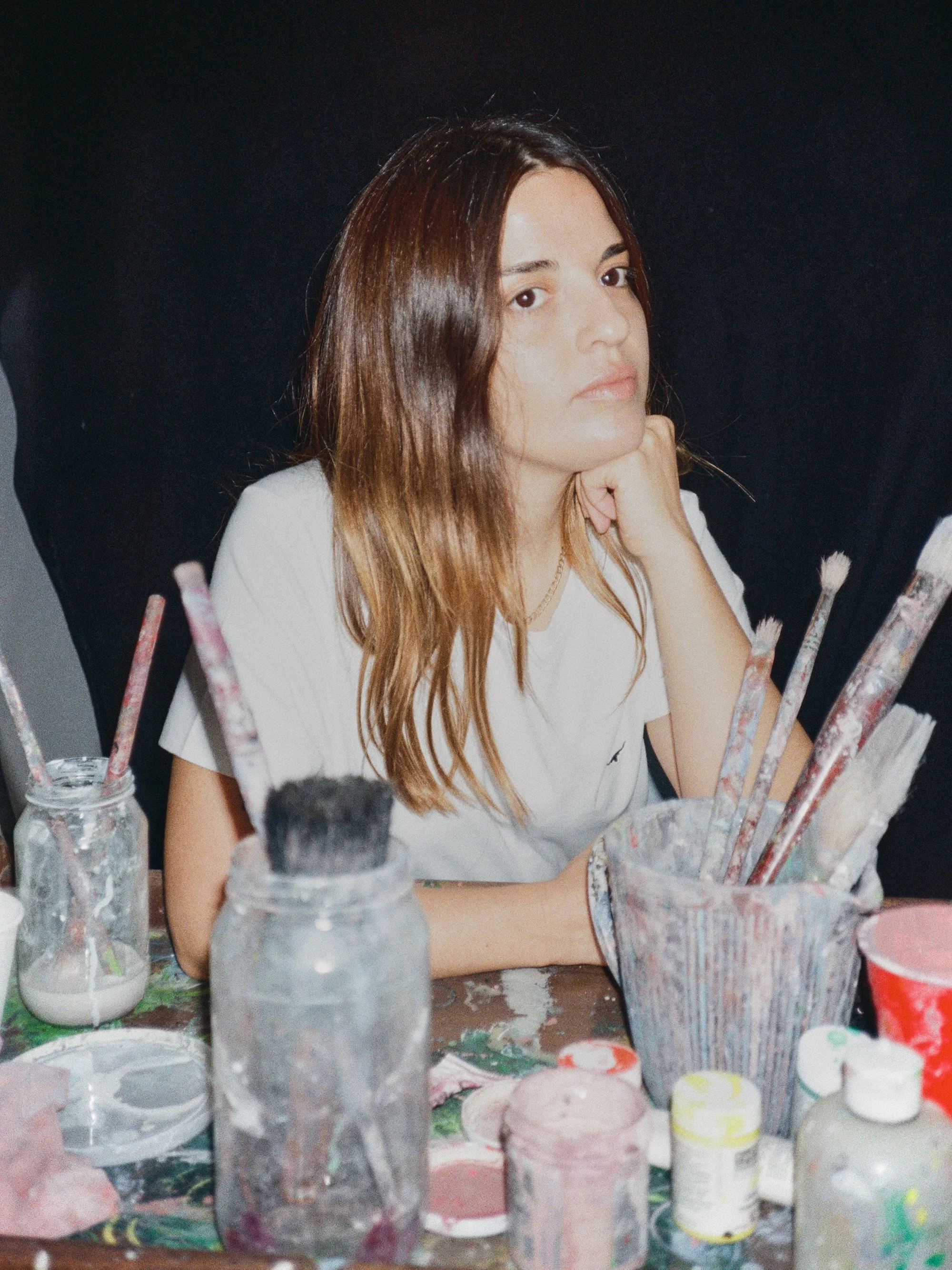
From cracked, salty mud to a silky, shining lake, it takes time to see a landscape turn and change. For Sydney-based painter Ondine Seabrook, it’s this quiet and contemplative time, stretched over years and seasons, which builds a body of work. Carving the space to sit and observe before even pulling out her paints and brushes, Seabrook’s practice attends to the ephemeral, from capturing a speckled moth or flowering Silverton gum to the sun setting over Lake Pamamaroo. With a nostalgic and hazy colour palette that builds in washed, sensitive layers, her paintings mirror her memories of place. As R.M. Williams’ latest Artist in Residence, Ondine Seabrook brings these intimate observations of the Australian landscape into the centre of the city through her recent body of work, ‘Turn Turn Turn’.
Reflecting on her residency with R.M. Williams, Ondine Seabrook chats with A-M Journal about camping with friends, noticing the details, and painting the country from the crowded inner-city.
LILA DALY-HYATT: For ‘Turn Turn Turn’, you spent prolonged periods camping and painting across Silverton, the Menindee Lakes, Mutawintji National Park, and Broken Hill, returning to these landscapes over several years. Why is spending extended time within the environment, and revisiting these settings, important to your practice?
ONDINE SEABROOK: It’s important because all of these places are continually changing in both subtle and dramatic ways. For me it's meaningful to spend several nights camping in one place. I don’t even paint for the first day — I just observe, and my mind starts to quieten down from the noises of wherever I’ve been before. Often there is no phone reception too, which helps a lot. I start to pick up on little nuances in the landscape around me. I have to let myself sink in to my surroundings before painting, witnessing the colours changing throughout the day with the light, and then I get my paints out.
Revisiting these landscapes after some time and in the opposite seasons allowed us to witness unparalleled change, especially for a desert area which is often thought of as barren and fixed. We witnessed the Menindee Lakes turning from lifeless cracked salty mud to being filled with water and teaming with life. This was extraordinary to paint. By spending time in these places and observing the long and short term cycles, we were really just observing the tip of the iceberg, and it was an honour to see and paint.
LDH: What informed the title of this body of work, ‘Turn Turn Turn’?
OS: I was thinking of these landscapes constantly changing and the tremendous difference between them in summer compared to winter, and the song ‘Turn! Turn! Turn!’ by Pete Seeger naturally came to mind. I love the lyrics — for me, nature is kind of like a religion and knows when there is a time for everything. Also, when I was camping in Mutawintji with Holly and Bronte, we were laughing at how you literally couldn’t turn your back without something changing in this landscape.
LDH: Much like R.M. Williams, this body of work sits within a broader tradition of craft — and often, true craft lies in noticing the details. In these works, you capture intimate observations of the landscape as well as its constant transformation. How do you balance these quiet moments of observation with conveying the mutability of the landscape?
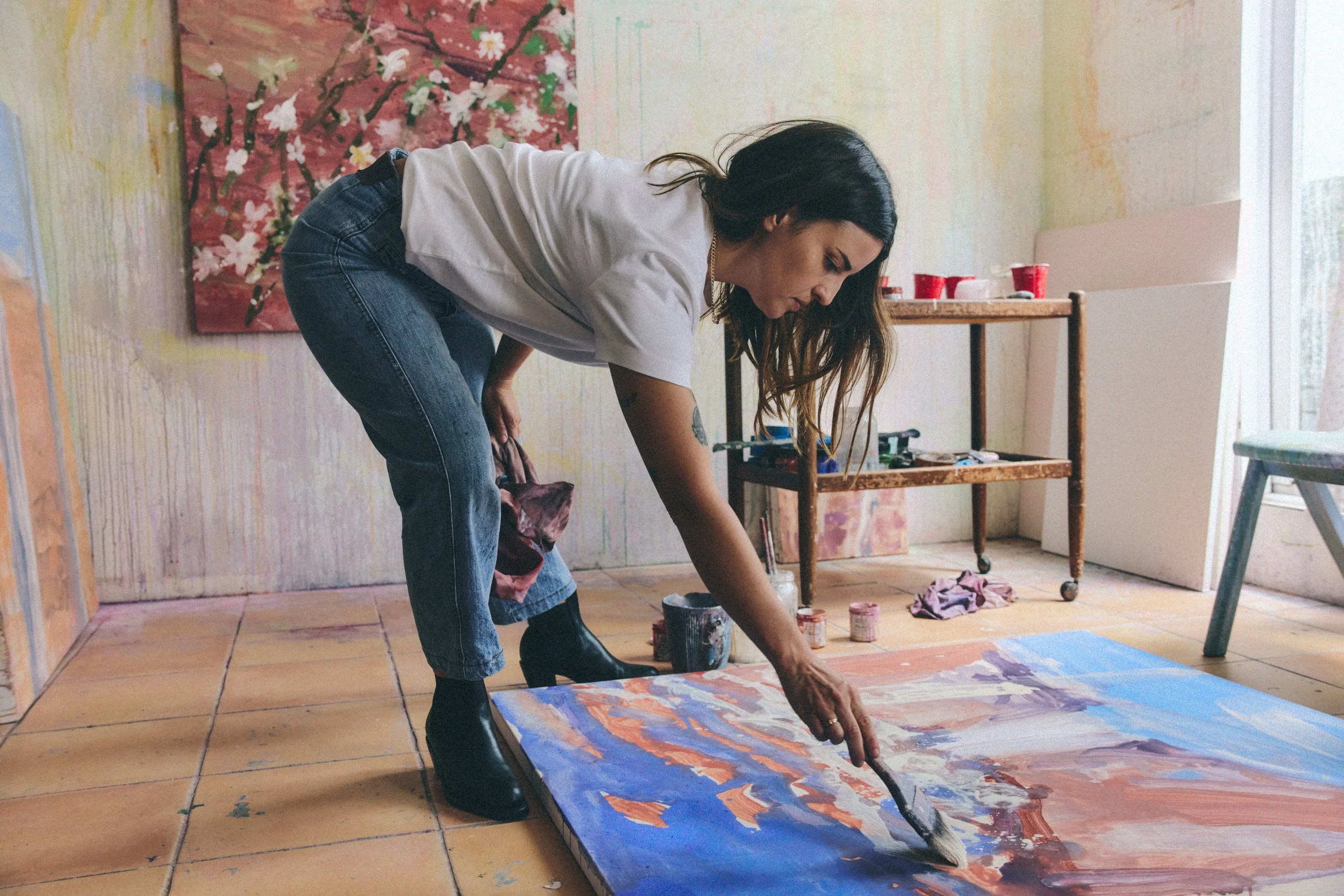
OS: When I’m in the landscape, or any environment really, I’m constantly picking up on the general atmosphere, but also noticing obscure details and honing in on that. I feel my paintings are a balancing act between that. There is a tension between fluid and fixed and the dynamism and calm. I think that’s how I am as a person too.
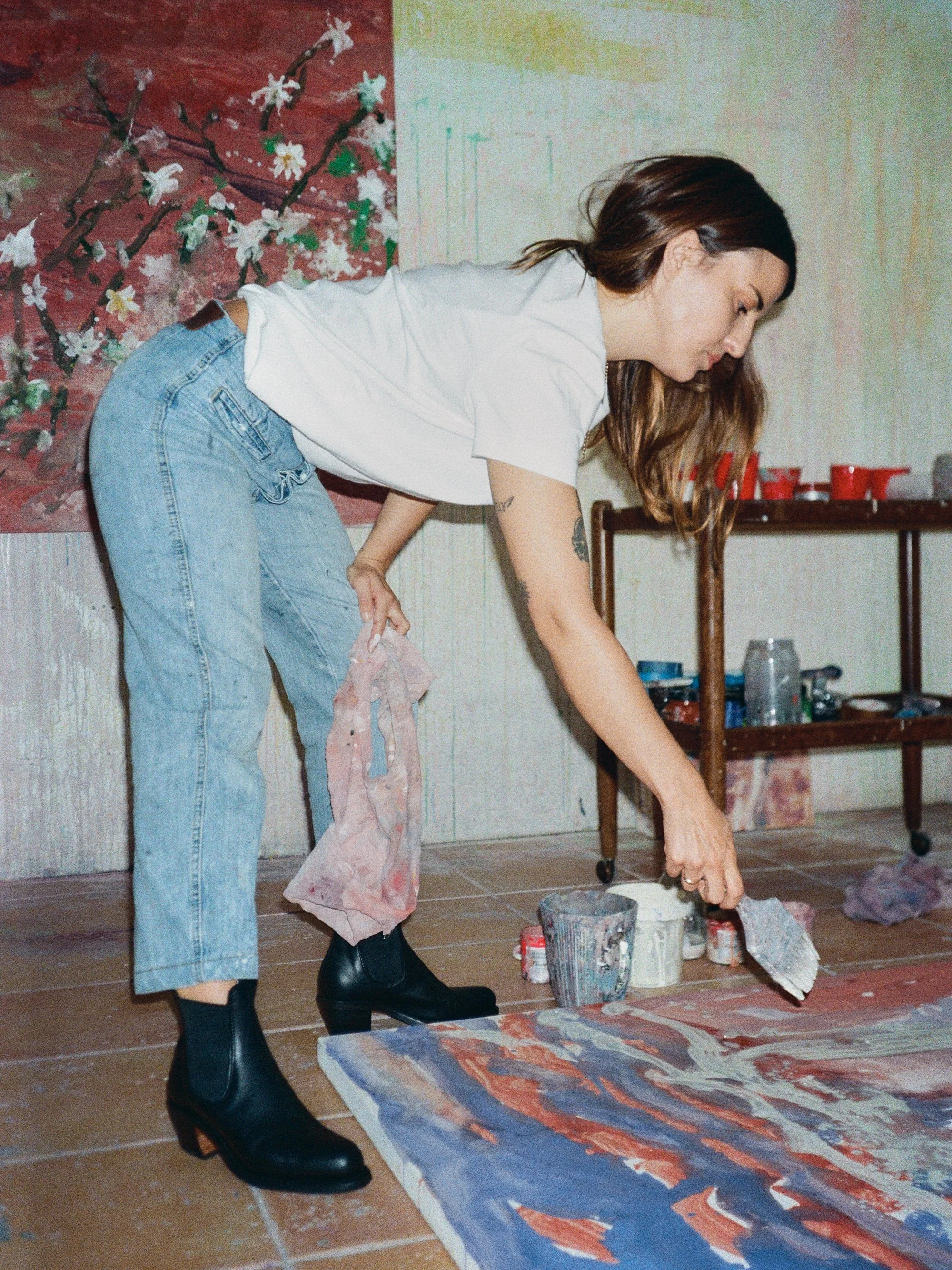
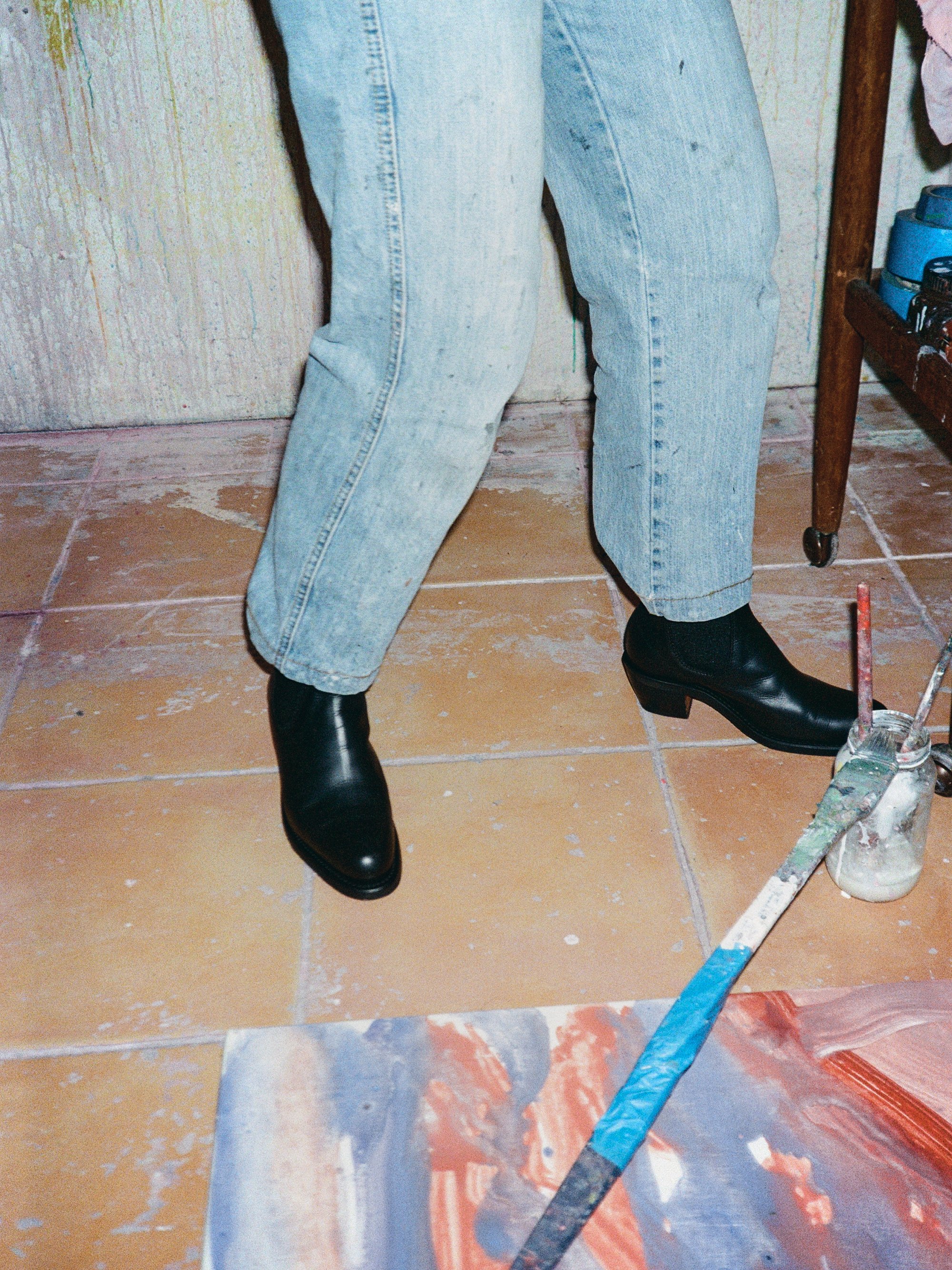
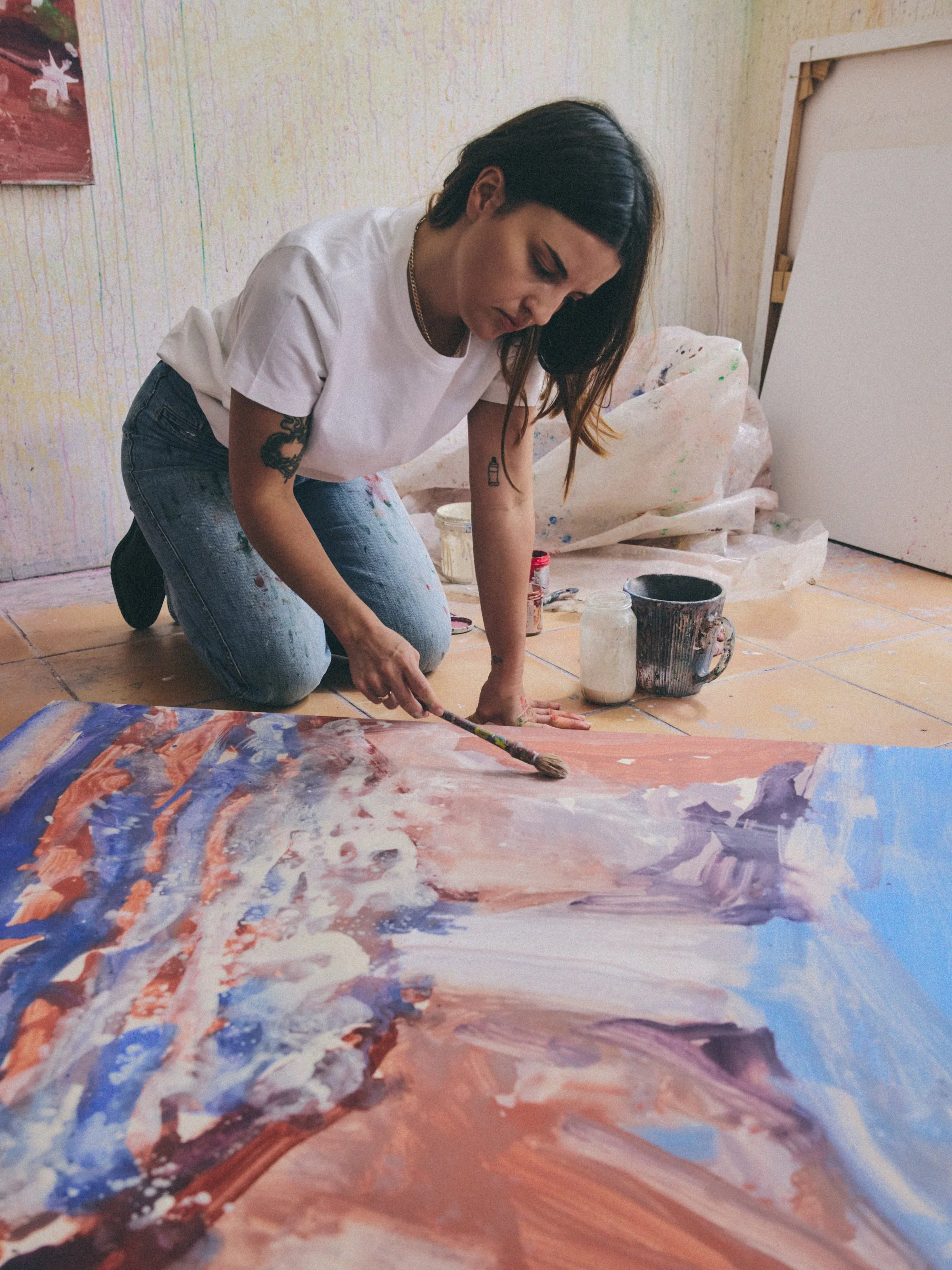
I use lots of water in my paint and paint on the ground, wet on wet with large gestures to create this movement in the initial layer. I often use more pared back colour in my first layer. I then come back, once this first layer has dried, with more solid marks or pops of colour and fixed motifs. I like the conversation that arises from these two uses of colour and mark-making. There is a harmony, but there can also be an awkward tension between the fixed and fluid.
LDH: Reflecting on ideas of tradition, how do you situate your practice within the long history of Australian landscape painting and its layered associations?
OS: I grew up on Scotland Island on Sydney’s Northern beaches and spent a lot of time hiking and camping. This early absorption and comfortability with the landscape has definitely informed my practice through a love for the natural world. I would say that more recently, my practice has extended to painting the natural world in general, which could be anything anywhere, like a moth, for example. I'm just responding to the natural environment around me through personal experience of it, and through an unapologetically female lens.
LDH: You’ve previously spoken about ephemerality and memory as important to your practice. Working from an inner-city studio, do memory and recollection become tools for returning to the landscapes you paint?
OS: Definitely. I also refer back to studies I’ve done in a landscape but loosely follow them or combine different elements of different studies together. It's all quite spontaneous and I always allow the paintings I'm working on at the time to have a life of their own. I also like relying on memory and getting into the zone of what felt like to be in the place I am painting. I like how using memory and having to mentally teleport makes the work less literal and more subjective, from my own lens.
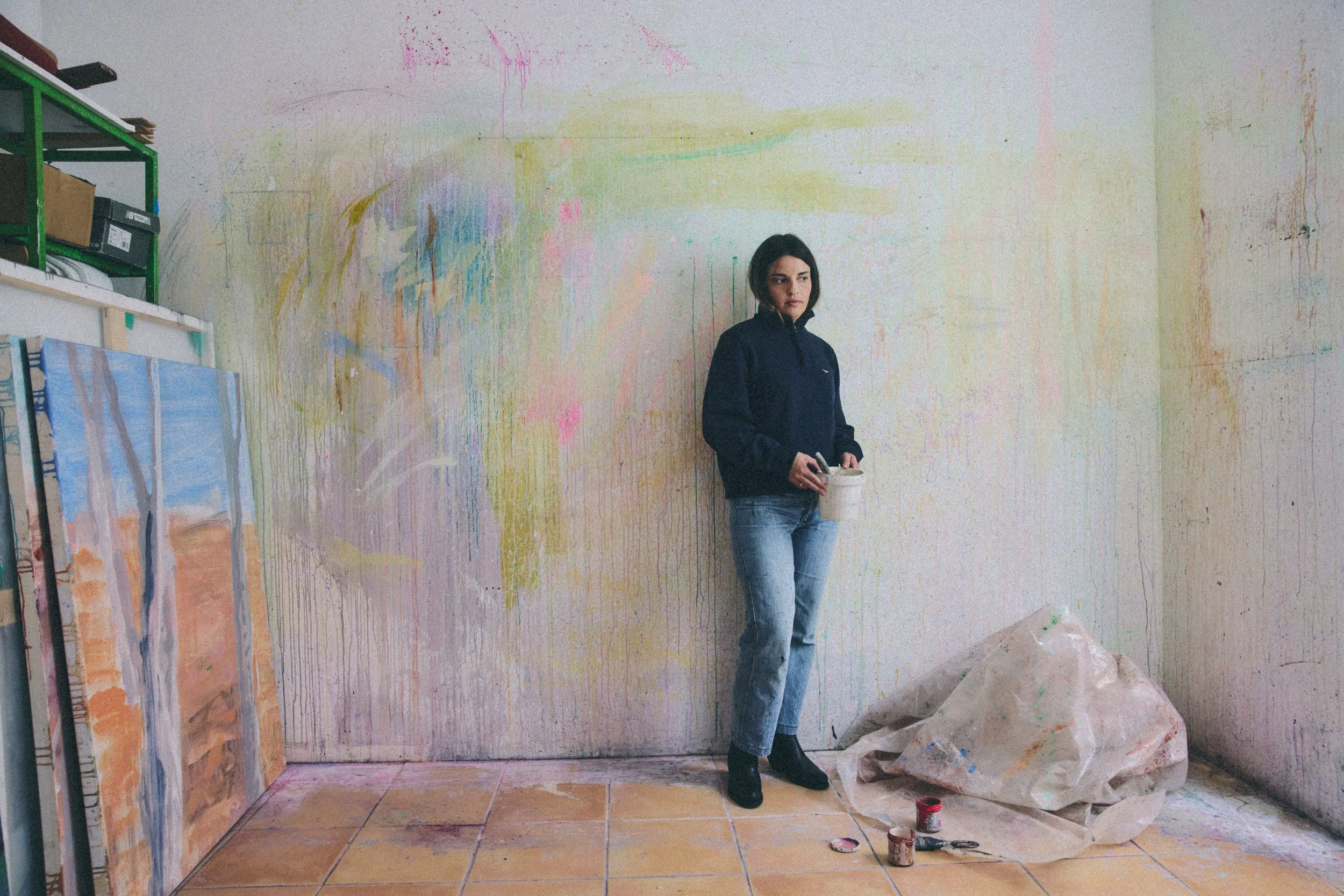
This adds another layer of ephemerality, and an emotional one as well, in dealing with the fleeting moments of the landscape and re-painting them in a city studio. I also find that connecting with nature before going to the studio, even if it’s an entirely different landscape, is important to my practice and my mental health. This could be going for a swim or patting a gum tree on the walk to the studio.
LDH: What kind of conversations or reflections do you hope emerge for audiences experiencing ‘Turn Turn Turn’?
OS: My favourite paintings are the ones that make you feel something directly, and aren’t a vessel for concept you have to decode after. I hope that people feel something when they look at these paintings and have more of an appreciation or a wanting to connect with nature.
Especially in the context of ‘Turn Turn Turn’ being exhibited in the middle of the city, I would love if they even just make someone feel a little bit relaxed after a busy day.