
In Conversation: Loewe Craft Prize Winner, Jongjin Park
Interview by April-Rose Desalegn l Translation by Howie Choi

Jongjin Park next to his award-winning piece ‘Strata of Illusion; (2025). Image courtesy of Loewe.
Jongjin Park’s recent triumph proves when an accident is reframed as discovery, innovation will emerge. The South Korean ceramicist’s ethereal, seat-like form, Strata of Illusion (2025) cut through 5,100 entries across 133 countries to take home the top spot at the distinguished LOEWE FOUNDATION Craft Prize 2026. 30 finalists, hand selected by a panel of leading figures in design, craft and museum curation (including LOEWE’s creative directors Jack McCollough and Lazaro Hernandez) are exhibiting their works in the National Gallery Singapore until June 14th, each ushering in their own unique vision for the future. Park’s vision is one of living and working with a sense of harmonious self —to be the craftsman, father, and educator he embodies requires material release.
Park’s work shows that if you can surprise, you can crack the human heart wide open— unsuspecting, delighted— to leave behind a deeper story. Underpinned by his values of ‘intuition, agility, and responsiveness’ Jongjin leads the new world cohort of craft rooted in materiality and experimentation — and takes home €50,000 for his efforts.
April-Rose Desalegn speaks with Jongjin Park about his journey leading up to the monumental win.
APRIL-ROSE DESALEGN: Congratulations on your win! How has your journey been in the LOEWE FOUNDATION Craft Prize 2026, and what does taking home the top spot mean to you?
2026 로에베 재단 공예상 (LOEWE FOUNDATION Craft Prize) 수상을 진심으로 축하드립니다! 이번 대회에서의 여정은 어떠셨나요? 최종 수상자로 선정되신 소감과 이번 수상이 본인에게 갖는 의미를 들려주실 수 있을까요?
JONGJIN PARK: Regardless of the final outcome, participating in the 2026 LOEWE FOUNDATION Craft Prize has been an incredibly significant and deeply meaningful experience in its own right. As a high-level competition that I had always hoped to challenge myself with at least once in my artistic career, simply being named one of the 30 finalists was already an overwhelming joy. In particular, the five-day journey spent in Singapore alongside the other 29 global finalists and the Loewe Foundation team was nothing short of extraordinary. It was a precious time filled with deep connections and exchanges with diverse artists, offering fresh stimulation and immense inspiration for my practice.
When my name was called as the final winner, I was incredibly nervous and felt a wave of deep emotion — so much so that I found myself wondering, “Is this moment truly real?”. This recognition serves as a poignant reminder to reassess the balance among the three major roles I strive to fulfill in my life: my identity as an artist, my responsibility as an educator, and my role as a father at home. I have resolved to hold this counterweight firmly, ensuring that these three pillars of my life do not lean too far in any one direction, and to continue walking my path with quiet determination. Moving forward, I will dedicate myself even more rigorously to my practice, carrying a greater sense of responsibility as a craft artist who wishes to contribute a meaningful page to the history of contemporary craft and ceramics.
이번 2026년 로에베 재단 공예상은 저에게 최종 수상 여부를 떠나 그 자체만으로도 너무나도 중요하고 뜻깊은 경험이었습니다. 작가로서 언젠가 꼭 한 번은 도전해보고 싶었던 높은 수준의 공모전이었기에, 최종 결선 진출자(Finalist) 30인에 선정되었다는 사실만으로도 이미 과분할 만큼 기뻤습니다.
특히 싱가포르에서 다른 29분의 글로벌 결선 작가들, 그리고 로에베 파운데이션 팀과 함께 보낸 4박 5일간의 여정은 그야말로 환상적이었습니다. 다양한 작가들과 깊이 있게 교류하며 작업에 신선한 자극과 많은 영감을 받을 수 있었던 소중한 시간이었습니다.
최종 수상자로 제 이름이 호명되었을 때는 무척이나 떨렸고, ‘이 감정이 정말 현실이 맞나’ 싶을 정도로 얼떨떨하면서도 감격스러웠습니다.
이번 수상을 계기로 제가 평소 지향해 온 세 가지 역할에 대한 균형 감각을 다시금 되새기게 됩니다. 작가로서의 정체성, 교육자로서의 책임감, 그리고 집에서는 한 가정의 아버지로서의 역할. 이 세 가지 삶의 축이 어느 한쪽으로 치우치지 않도록 균형추를 단단히 잡고, 흔들림 없이 묵묵히 제 길을 걸어가야겠다는 다짐을 했습니다. 아울러 현대 공예와 도예의 역사에 의미 있는 한 페이지를 장식할 수 있는 공예가로서, 보다 큰 책임감을 가지고 작품 활동에 매진하겠습니다.

‘Strata of Illusion’ (2025). Image courtesy of Loewe.
AD: What was your initial inspiration for Strata of Illusion (2025)?
"Strata of Illusion (2025)"의 첫 영감은 어디서 받으셨나요?
JP: The award-winning piece, Strata of Illusion, was conceptualized and developed from the 'Patch' series, which is a subset of my ongoing Artistic Stratum body of work. In my previous Patch series, the creation process was strictly guided by pre-determined plans regarding color tones and dimensions, usually taking the form of rectangular, box-shaped vessels. For this specific project, while maintaining the same underlying grammar and mechanism, my primary objective was to drastically scale up the vessels to an overwhelming, monumental size. Furthermore, by evenly incorporating every single pigment in my collection, I sought to maximize and amplify the visual expression to its absolute limit.
The catalyst that allowed for such a bold experiment was an invitation to exhibit at Design Miami/ Asia in Seoul (Design Miami in SITU). Since the work was being unveiled locally, it was free from the logistical and physical constraints typically associated with international transport. This favorable environment empowered me to aggressively push past previous boundaries of scale and expression without hesitation. What is fascinating is that during the firing process inside the kiln, this massive form—born out of such meticulous planning—unexpectedly collapsed and deformed. Consequently, the perfect, deliberate intention of the artist and the unpredictable serendipity of the kiln came to coexist in exquisite harmony. This provokes a deceptive and illusionic energy, giving birth to the unique and original masterpiece that stands today.
이번 수상작인 〈Strata of Illusion〉은 제가 기존에 작업해 오던 〈Artistic Stratum〉 시리즈 중 하나인 ‘패치(Patch)’ 시리즈에서 착안하여 발전시킨 작품입니다.
기존의 패치 시리즈는 특정한 색톤(Color Tone)과 크기에 대한 계획을 바탕으로 작업을 진행해 왔으며, 대개 사각형 박스 형태의 기물 형태를 띠고 있었습니다.
이번 작업에서는 기존의 문법과 메커니즘은 동일하게 유지하되, "기물의 사이즈를 압도적인 크기로 대폭 확장해보자"는 것을 첫 번째 목표로 삼았습니다. 그리고 제가 보유하고 있던 모든 안료의 색감을 골고루 활용하여, 시각적인 표현을 최대한 극대화해보고자 했습니다.
이러한 과감한 시도를 할 수 있었던 배경에는 '디자인 마이애미 서울(Design Miami in SITU)' 전시에 초청받았던 계기가 있었습니다. 국내에서 선보이는 작품이다 보니 해외 전시와 달리 운송에 대한 물리적 부담이 적었고, 덕분에 크기와 표현의 한계를 시험하는 도전적인 작업을 과감하게 추진할 수 있었습니다.
재미있는 점은, 이렇게 치밀하게 의도된 계획 속에서 탄생한 거대한 형상이 가마 안에서 소성되는 과정 중 우연히 무너지며 변형이 일어났다는 것입니다. 결과적으로 작가가 의도한 완벽한 계획과 가마 속에서 일어난 예기치 못한 우연성이 절묘하게 공존하게 되었고, 이를 통해 더욱 기만적이고 환상적인(Illusionic) 에너지를 품은 지금의 독창적인 작품으로 탄생하게 되었습니다.
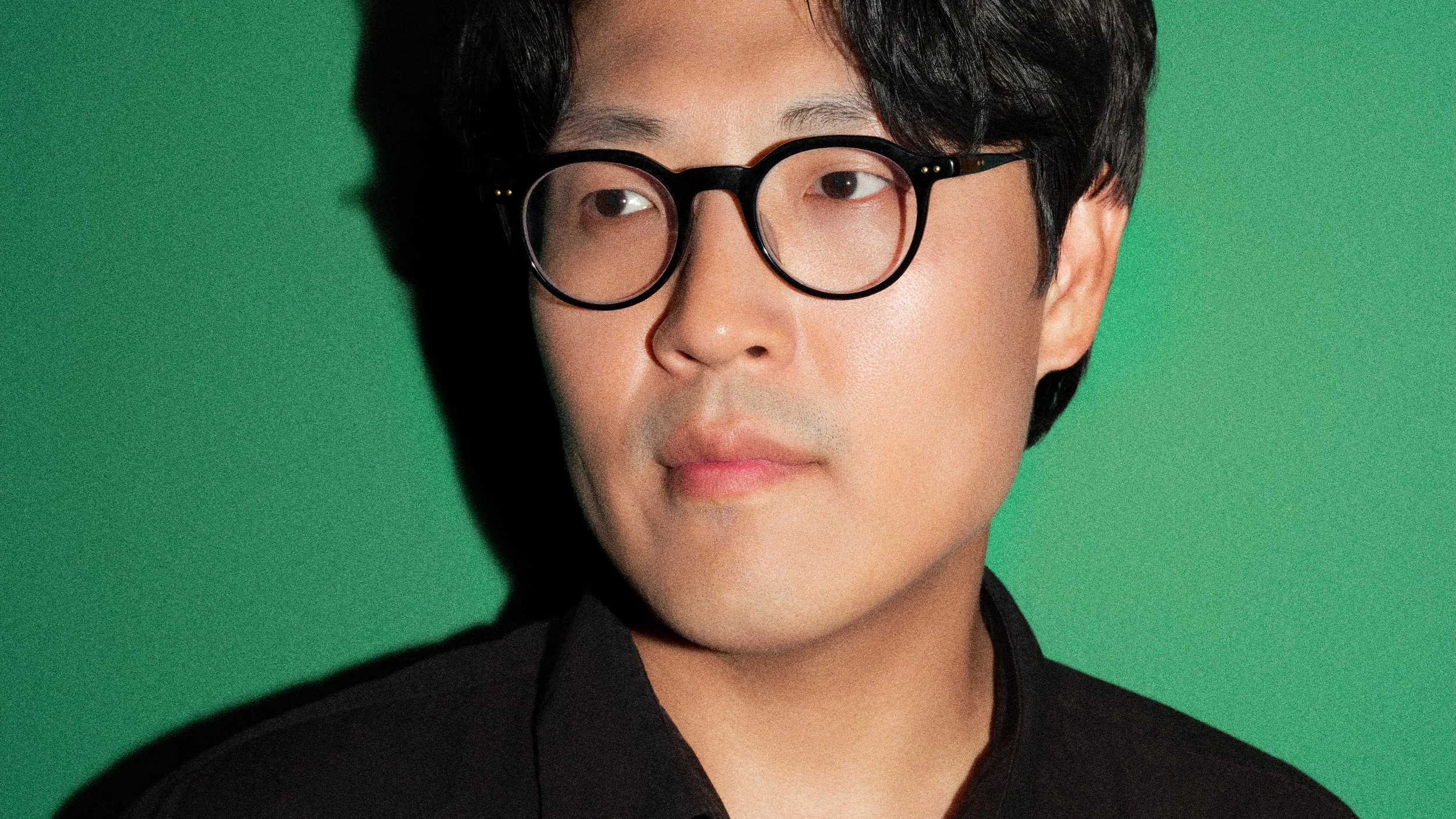
Jongjin Park. Image courtesy of Loewe.
AD: Experimentation plays a big role in your work. How will experimentation continue to shape your practice?
작가님의 작품들에게선 도전과 실험이 중요한 요소로 보이는데, 앞으로의 작업들에 실험정신이 어떻게 영향을 줄 것이라고 생각하시나요?
JP: From my early research into ceramic wheel-throwing techniques rooted in traditional Joseon white porcelain to my current practice in contemporary ceramics centered on materiality, my work has always involved a process of deconstructing and transforming existing stereotypes.
When I first majored in ceramics, I often encountered a distinct institutional sentiment—one that emphasized long history, craftsmanship, or the rigid conventional wisdom that "one must strictly adhere to established rules for decades." I have consistently maintained a stance of confronting and challenging these fixed preconceptions head-on. My future endeavors will be no different. I do not view winning the LOEWE FOUNDATION Craft Prize as the final destination of my artistic journey. Rather, I will use this recognition as a stepping stone to further expand my experimental and daring approach. Guided by intuition, agility, and responsiveness, I intend to continuously present experimental works that testify to my unique artistic attitude, primarily using clay while actively integrating various alternative media.
저는 과거 조선백자에 기반한 물레 성형 도자연구부터, 현재 물성 중심의 현대 도예 작업을 하는 지금까지, 항상 기존의 고정 관념을 해체하고 변형하는 과정을 거쳐왔습니다.
처음 도예를 전공하며 느꼈던 도자 특유의 감성, 이를테면 오랜 역사나 장인 정신, 혹은 ‘수십 년간 정해진 규칙을 철저히 따라야 한다’는 식의 고정 관념에 저는 늘 전면적으로 도전하는 태도를 지녀왔습니다.
앞으로의 작업 역시 마찬가지일 것입니다. 이번 로에베 재단 공예상 수상이 제 작업의 여정을 마무리 짓는 종착지라고 생각하지 않습니다. 오히려 이 수상을 발판 삼아, 앞으로 더욱 실험적이고 도전적인 태도를 확장해 나갈 것입니다. 앞으로도 직관성과 기민함, 순발력을 바탕으로 흙을 주로 하되 다양한 매체를 활용해 저만의 예술적 태도를 증명할 수 있는 실험적인 작업들을 계속해서 선보이고자 합니다.


AD: You have stated that your art “asks us to consider what is real”. What is the role of deception and surprise in your work for telling a story?
감상자들이 “무엇이 진짜임을 묻게 하고 싶다”하셨는데요, 작품 속에서 이야기를 전달할 때 속임수나 반전은 어떤 역할을 하나요?
JP: For me, 'deception' and 'reversal' serve as the most pivotal formal elements in my recent practice. They instill a sense of visual tension in viewers and act as a powerful allure that compels them to take a step closer to the artwork. Engaging the audience's curiosity and prompting them to examine the piece intimately holds immense significance for me. Traditionally, craft has always emphasised 'utility' (functionality), carrying a strong connotation of seamlessly blending into everyday life rather than standing out. In contrast, contemporary craft has increasingly embraced the ethos of 'Collectible Design,' asserting a commanding presence rooted in rigorous material research. Within this context, the unexpected twist inherent in my work—or its 'tricky' sensibility that captivates the viewer's gaze — serves as a vital catalyst that ignites an initial, profound interest in my art.
Furthermore, from the perspective of ceramic history, masterpieces such as the celadon of China's Song Dynasty or Islamic lusterware originally began as endeavors to mimic and substitute the precious materials of their respective eras using 'clay' — the most accessible and pliable material available. Similarly, by fusing paper and clay to meticulously mimic the textures of everyday substances, I embed this historical lineage of ceramics and its contemporary mutation directly into my work.
저에게 ‘속임수’나 ‘반전’은 최근 작업에서 가장 핵심적인 조형적 요소입니다. 이는 관람객에게 시각적 긴장감을 부여하고, 작품에 한 발짝 더 가까이 다가오게 만드는 강력한 유인책이 됩니다. 관람객이 작품을 궁금해하고, 더 가까이서 들여다보게 만드는 것 자체가 저에게는 매우 큰 의미가 있습니다.
전통적인 틀 안에서의 공예는 언제나 ‘쓰임(기능성)’이 강조되거나, 튀기보다는 삶 속에 자연스럽게 녹아드는 이미지가 강했습니다. 반면, 최근의 현대 공예는 물성 연구를 바탕으로 독보적인 존재감을 드러내는 ‘소장 가치 있는 디자인(Collectible Design)’의 개념을 적극적으로 수용하고 있습니다.
이러한 맥락에서 작품이 지닌 반전 매력이나 관람객의 눈을 사로잡는 일종의 '트릭(Tricky)'한 감성은, 사람들이 제 작품에 일차적으로 깊은 관심을 갖게 만드는 가장 중요한 촉매제 역할을 한다고 볼 수 있습니다.
더불어 도자사(陶瓷史)적인 측면에서 바라보아도, 과거 중국 송대의 청자나 이슬람의 러스터(Luster) 도기 등은 모두 당대의 귀한 재료들을 주변에서 가장 구하기 쉽고 유연한 재료인 ‘흙’으로 모방하고 치환하려는 노력에서 시작되었습니다. 저 역시 종이와 흙을 결합해 일상적인 물질의 텍스처를 도자로 정교하게 모방(Mimicking)함으로써, 이러한 도자사의 역사적 맥락과 현대적 변용을 작품 속에 담아내고 있습니다.
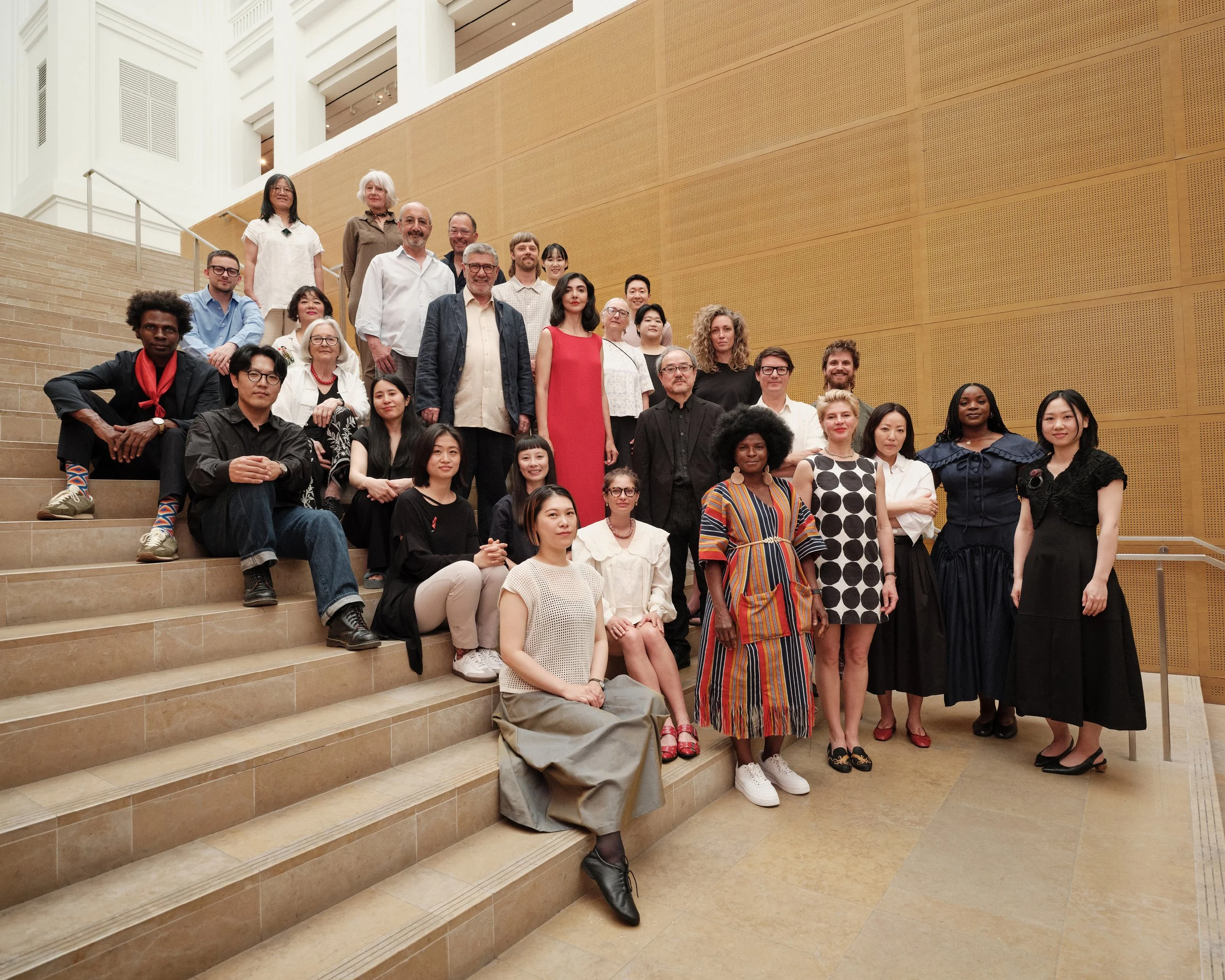
The short-listed artists for the LOEWE FOUNDATION Craft Prize 2026. Image courtesy of Loewe.
AD: In the age of AI, why do you think human touch is still so important?
AI의 세대에서 인간적인 감성은 왜 아직도 중요할까요?
JP: As an educator teaching at the university level, I have intuitively experienced the monumental shifts and cultural tides brought about by AI over the past few years, which has led me to ponder deeply on how we should respond. The core of human sensibility, in my view, lies in a 'human-centered capacity for thought'—the ability to independently utilize AI for what it is, rather than becoming subservient to technology. If we rely entirely on AI for all judgments and creative processes, it will inevitably result in humanity becoming subjugated to technology.
Therefore, we must firmly ground ourselves in a distinctly human sensibility. It is undeniable that AI in this day and age serves as an excellent tool for rapidly materializing and simulating diverse ideas, and has already become a useful technology deeply embedded in our daily lives. Yet, precisely because of this reality, the emotional resonance that flows from human fingertips and the rigorous research into craft materiality acquire an even more powerful mandate, making their significance more prominent than ever before.
저는 대학에서 학생들을 가르치는 교육자의 위치에 있다 보니, 최근 몇 년간 AI가 가져온 거대한 시대적 파도와 흐름을 더욱 직관적으로 체감하며 이에 어떻게 대응해야 할지 깊이 고민해 왔습니다.
제가 생각하는 인간적 감성의 핵심은, 기술에 종속되지 않고 AI를 'AI답게' 주체적으로 활용할 수 있는 ‘인간 중심의 사유 능력’에 있습니다. 만약 우리가 모든 판단과 과정을 AI에 전적으로 의존한다면, 결국 인간이 기술에 종속되는 결과를 초래할 것입니다.
따라서 우리는 ‘인간 다운 감수성’을 굳건한 바탕에 두어야 합니다. 이 시대에 AI는 다양한 아이디어를 빠르게 구현하고 시뮬레이션해 볼 수 있는 훌륭한 도구이자 우리 삶 깊숙이 침투한 유용한 기술임이 자명합니다. 이러한 상황일수록 인간의 손끝에서 나오는 감성과 공예적 물성에 대한 깊이 있는 연구는 더욱 강력한 당위성을 지니며, 그 중요성 또한 그 어느 때보다 대두될 수밖에 없습니다.
AD: You are also an educator, working as a professor at Seoul Women’s University. Do the students inspire you?
작가님은 교육인이기도 하신데요. 서울여대에서 교수님으로서 제자들에게 영감을 받기도 하시나요?
JP: Since my appointment as a full-time faculty member in 2021, I have been leading the ceramics curriculum at Seoul Women’s University. Overseeing the entire ceramics department from undergraduates to graduate students, I closely work alongside my students, yet I never look at education as a one-way street where I simply 'impart' inspiration.
Education is a process of 'sharing' inspiration. In the crucible where my professional experience and my students' fresh perspectives intertwine, intellectual or creative friction occasionally arises. Yet, it is within that very friction that I often witness tremendous synergy and unexpected bursts of inspiration come to life.
Within my life and artistic universe, dialogues with my students and the profound emotion I feel when looking at their finished masterpieces serve as a monumental driving force that continuously fuels my creative energy. It is also a powerful motivation that keeps me firmly grounded in my identity and calling as an educator, pushing me to constantly refine my path.
Winning the LOEWE FOUNDATION Craft Prize has given birth to another precious dream of mine. It is the dream of witnessing a future moment where one of the disciples I have mentored challenges themselves for this very prize, ultimately becoming a finalist or even a winner. For an educator, I believe there could be no greater or more profound happiness than watching one's own students flourish and outgrow their master.
저는 2021년부터 전임교원으로 임용되어 서울여자대학교에서 도자 교육을 담당하고 있습니다. 학부생부터 대학원생까지 도자 파트를 전담하며 학생들과 함께 작업하고 있는데, 저는 제가 일방적으로 영감을 ‘준다’고 생각하지 않습니다.
교육은 영감을 ‘나누는 과정’입니다. 저의 경험과 학생들의 신선한 경험이 한데 어우러지는 과정에서 때로는 충돌이 생기기도 하지만, 그 충돌 속에서 엄청난 시너지와 영감이 피어나는 것을 목격하곤 합니다.
제 삶과 작업 세계에 있어 학생들과의 대화, 그리고 학생들이 완성해 낸 작품을 보며 느끼는 감동은 지속적인 창작 에너지를 공급해 주는 거대한 원동력입니다. 교육자로서의 사명감과 정체성을 잃지 않고 끊임없이 정진하게 만드는 강력한 동기이기도 합니다.
이번 로에베 재단 공예상 수상을 계기로 저에게 또 하나의 소중한 꿈이 생겼습니다. 훗날 제가 가르친 제자 중 누군가가 이 로에베 공예상에 도전하여 최종 결선에 오르거나 수상자가 되는 기쁜 순간을 마주하는 것입니다. 제자들의 성장을 보는 것만큼 교육자로서 더할 나위 없이 행복한 일은 없을 것 같습니다.
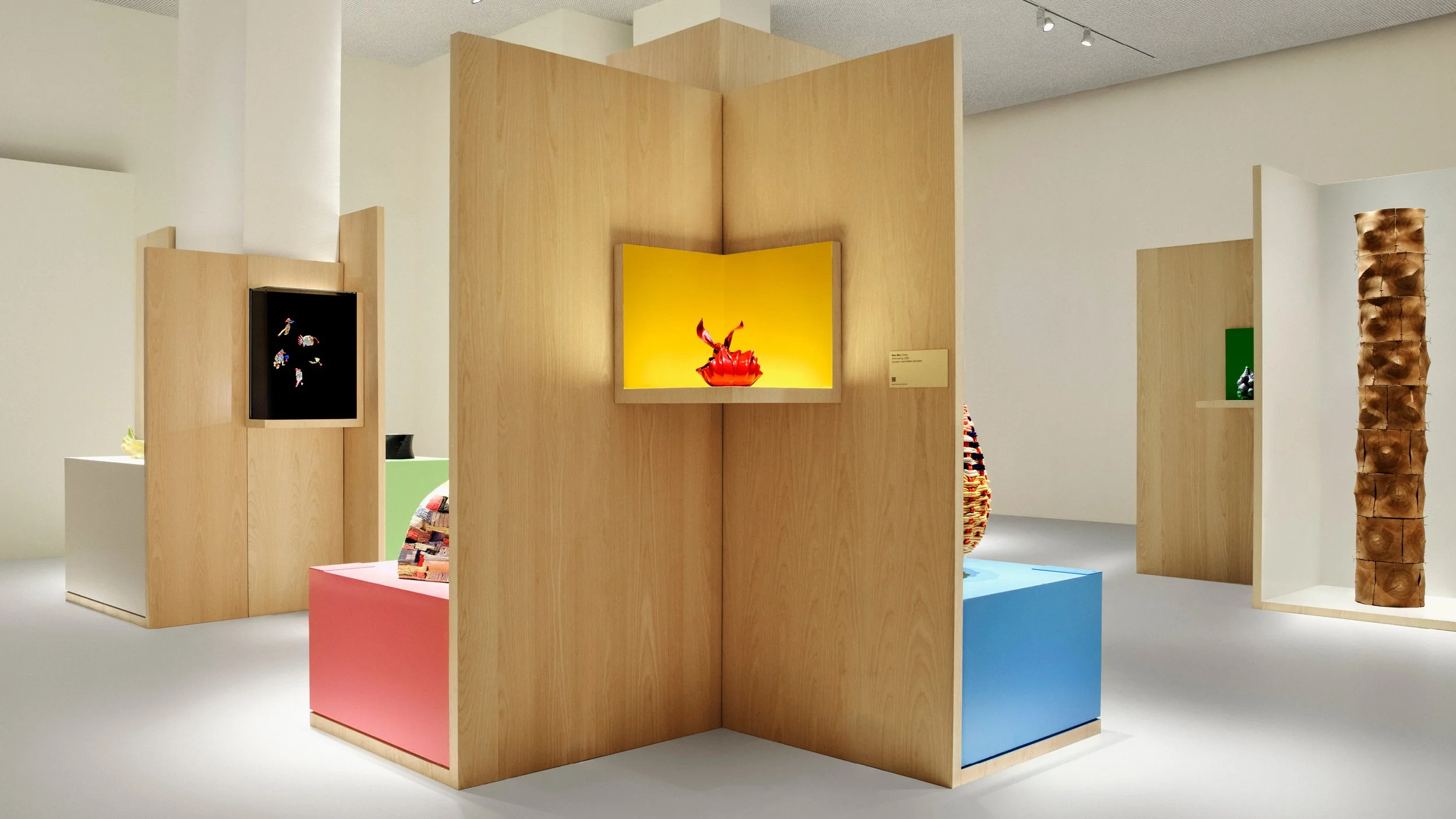
LOEWE CRAFT PRIZE Exhbition space. Image courtesy of Loewe.
AD: What is the significance of porcelain and colour in your work?
작품 속 도자기라는 자재와 색상들의 의미와 중요성 설명 부탁드립니다.
JP: As mentioned previously, I initiated my porcelain sculptural practice based on the Eopdaji technique (the traditional upper-and-lower joining method used for Joseon moon jars). For me, 'porcelain' is the very first material that established my identity as a ceramic artist and remains my core artistic character. The distinct aesthetics, asymmetry, and the fluid, free-spirited temperament that blossomed within the historical context of Joseon white porcelain continue to provide my greatest artistic inspiration. In particular, for my porcelain slip-layered paper technique, porcelain is the optimal material to flawlessly realize its innate materiality.
Conversely, 'colour' signifies a form of 'liberation and freedom' to me. Due to the technological and historical constraints of the Joseon Dynasty, ceramic coloration was confined to high-fire underglaze techniques, restrictively employing only four colours: the reddish tones from copper oxide, black glaze, the cobalt blues, and white.
In the early stages of my career, I also felt an obsession with adhering to these traditional chromatic standards. However, as I deepened my research into the paper-layering technique, a fundamental question arose: “Why must I stubbornly cling solely to this traditional grammar?” There are countless beautiful colour combinations in the world, and I, too, was drawing inspiration daily from contemporary visual media and the myriad of colours in everyday life.
Once I resolved to 'express myself freely without limits,' I actively introduced numerous commercial ceramic stains into my studio and embarked on daring chromatic experiments. To summarize, for me, clay in the form of porcelain represents an 'identity' that sustains my artistic roots while serving as the most materially rational choice. Meanwhile, a diverse palette holds vital significance as a 'liberating alternative' that shatters traditional preconceptions to achieve visual maximalism.
앞서 말씀드렸듯이, 저는 조선백자의 달항아리 제작 기법인 ' '업다지 기법'을 바탕으로 백자 조형 작업을 시작했습니다. 저에게 ‘백자(Porcelain)’는 도예가로서 정체성을 확립하게 해 준 첫 번째 재료이자 핵심 캐릭터입니다. 조선백자가 지닌 특유의 미학, 비정형성, 그리고 시대적 상황 속에서 피어난 유연하고 자유분방한 기질은 여전히 저에게 가장 큰 예술적 영감을 줍니다. 특히 종이슬립적층기법에서 백자는 그 물성을 가장 완벽하게 구현해 낼 수 있는 최적의 재료이기도 합니다.
반면 '색상(Color)'은 저에게 일종의 '해방과 자유'를 의미합니다. 과거 조선 시대에는 기술적, 시대적 배경으로 인해 고화도 유하채(Underglaze) 기법에 머물렀으며, 산화동을 이용한 붉은색, 흑유, 코발트를 이용한 청색, 그리고 백색까지 오직 네 가지 색상만을 제한적으로 사용했습니다.
저 역시 초반에는 이러한 전통적인 색채 기준을 고수해야 한다는 강박이 있었습니다. 그러나 종이 적층 기법 연구를 심화하면서 '내가 왜 이 전통적인 문법만을 고집해야 하는가?'에 대한 근본적인 의문이 생겼습니다. 세상에는 아름다운 색의 조합이 너무나도 많고, 저 또한 매일 현대적인 시각 매체와 일상 속 수많은 색채로부터 영감을 받고 있었기 때문입니다.
‘한번 한계 없이 자유롭게 표현해 보자’는 결심이 선 이후, 시중에 존재하는 수많은 도자용 스테인(안료)을 적극적으로 도입해 과감한 색채 실험을 시작했습니다. 요약하자면, 저에게 백자라는 흙은 작가적 뿌리를 지탱하는 ‘정체성’인 동시에 물성적으로 가장 합리적인 선택이며, 다채로운 색상은 전통의 편견을 깨고 시각적 극대화를 이루어내는 ‘자유로운 선택지’로서 중요한 의미를 지닙니다.