
In Conversation: Julie Kegels X Cour Gallery
Interview by Lynn Mathuthu
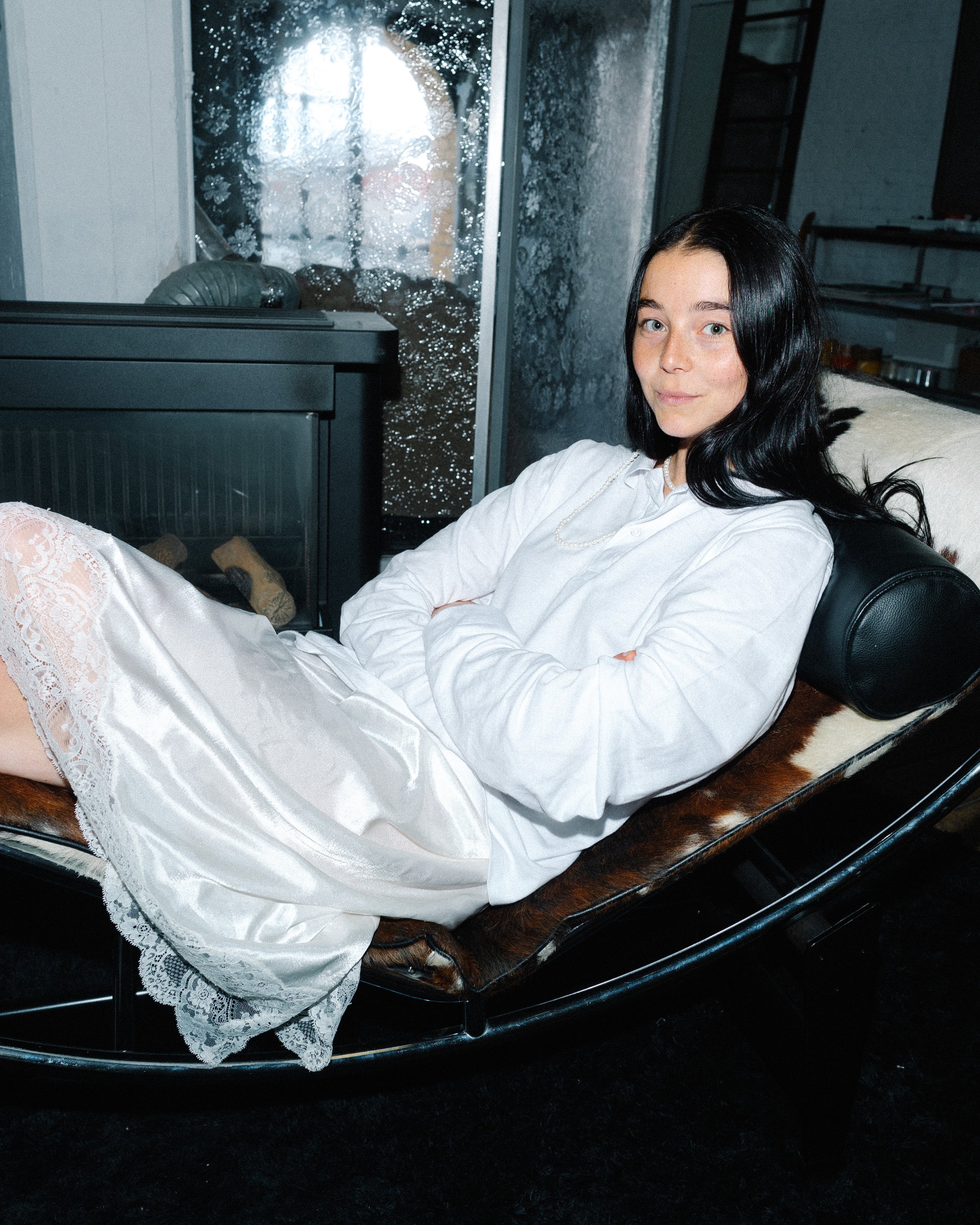
Julie Kegels, photographed by Tom Delaisse
Julie Kegels is a formidable force. In just two years, she has presented five collections, three of which were shown during Paris Fashion Week, and was recently announced as a finalist for the 2026 LVMH Prize for Young Designers, presenting her collection before an esteemed jury including Jonathan Anderson (Dior), Sarah Burton (Givenchy) and Marc Jacobs. The Belgian designer is unafraid to recontextualise and deconstruct, ensuring her collections (Aura, Executive Style, 50/50) juxtapose effortless style with a playful flair. Her Autumn/Winter 2026 collection explored the idea of appearance, noting that the Julie Kegels woman will always want to be in control, but not necessarily perfect. This June, Julie presents ‘After Work’ at Cour Gallery, an exhibition that blends fashion, design and art. Overlooking Antwerp Cathedral and known for its intimate, homely atmosphere, the space provides the perfect setting for the collaborative project between Julie and her friends.
Each participant is invited to develop a work in response to the “Julie Kegels woman”, as she has been consistently defined since the first season of the label: a contemporary working woman who combines multiple roles at the same time and, despite everything, somehow manages to make it work. The exhibition reflects this condition as a continuous state of both work and play, without a clear separation between the two. Participants include a mix of emerging and established voices, including Antwerp icons Walter Van Beirendonck and Dirk Van Saene, to which COUR responds with a selection of international and intergenerational positions that expand the network beyond Julie's immediate circle. The exhibition runs from 30 May to 6 June 2026.
Lynn Mathuthu speaks with Julie Kegels about her origins ahead of her upcoming exhibition.
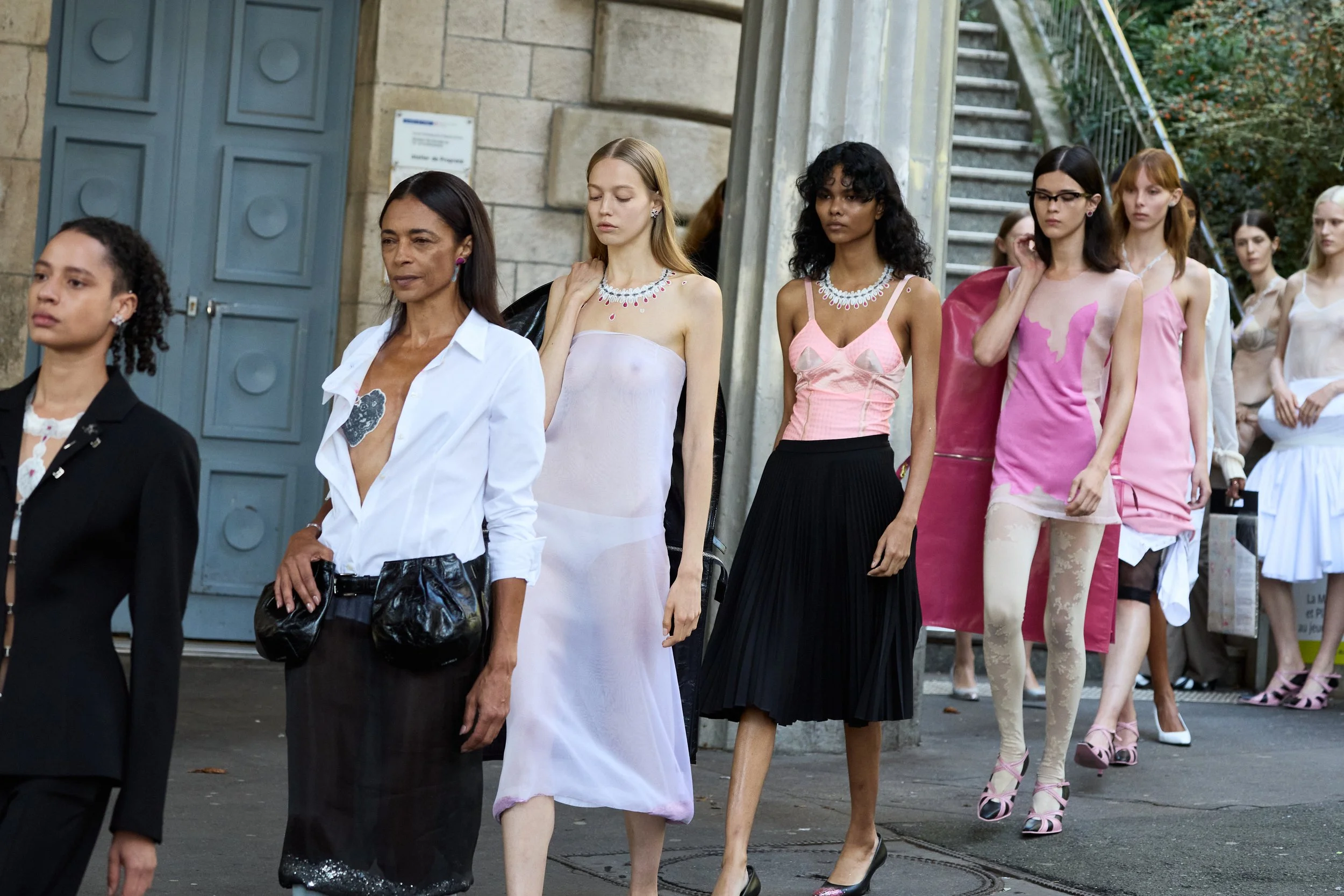
Julie Kegels S/S 2026, Paris Fashion Week
Lynn Mathuthu: When you were younger, your parents encouraged you to visit churches, museums and exhibitions. Did this influence your design ethos in any way?
Julie Kegels: At a very young age, you are constantly studying without even knowing it because you are just following your parents. Most of the time, you are thinking, “Do I really need to be here?” and sometimes I wasn't happy about having to go to these spaces with them. But honestly, looking back, it was really amazing and such a big gift. I created a lot of memories, received a lot of inspiration and formed my vision as well. I found that objects have meaning, and an object can exist outside of just providing function. Learning that there is an explanation, a story and history was very informative too, and that you can create something with other people was really important. I also remember the reflection on identity in that quiet space because, even at a young age, you might not be fully aware of it, but you can appreciate the quiet by looking at the things surrounding you.
LM: What was it like studying at the Royal Academy of Fine Arts and did it change your design aesthetic and process in any way?
JK: We had really amazing teachers. It was very brutal and there was a lot of pressure, but it was very good for me. I was 18 years old at the time, so I was very flexible and it was really nice to be able to reinvent myself if something was not necessarily working. Finding my identity took time, but you have the freedom to do that and the teachers would encourage you to go in a direction they thought you would be very confident with. For instance, they would be very honest and say, “This fits your character more,” but you still had the freedom to follow your own decision. They would also encourage you to go out of your comfort zone and try a new creative direction or vision. But when it was not good, you would feel it right away and you would not be happy. I also think it’s very important to be happy with your work. You have to feel a good shock and not feel that you are doing something against your will. That was a really nice part of the school in that they would let you know directly if something was not working, but you were given the freedom to follow yourself.
LM: And then when you graduated, did you feel that the protection offered by studying at school was different from actually doing it on your own?
JK: Yes, but I also think that’s something really good about the Academy. They never wanted you to do something for them. It was really like, you have to do it for yourself. So I think we already experienced that at school, but of course it’s still different. I mean, you're there and you want to say something, you want to create clothes, and it's for another audience. But no, it was a very nice experience at the Academy.
LM: Your collections tend to emphasise the importance of contrasts or opposing forces. Is there a reason why this is so important for you as a designer?
JK: It's very important for me to have contrast in my work because I'm very realistic in one way, but in another way, I'm also very dreamy. I try to find that balance in my work and put it together to create another story and something new and refreshing that might be a weird combination, but as a designer, it makes me feel good.
LM: How do you synthesise an entire collection from a single idea such as your previous collections Aura, Executive Style and 50/50?
JK: You start with a feeling, and then you start to collect visuals, maybe an artwork or a movie that you're very interested in to capture that feeling. Then you start to look for other topics that could also embody it. Of course, you have to be sure that you want to work on it for six months. But I never really think about that because it has become quite intuitive and just starts with an obsession. I think it's like making a puzzle. You see the visuals and references as you develop the collection and find where you want to place them and then, when it all fits together, you're like, “Ah, I'm done.” You get this good feeling.
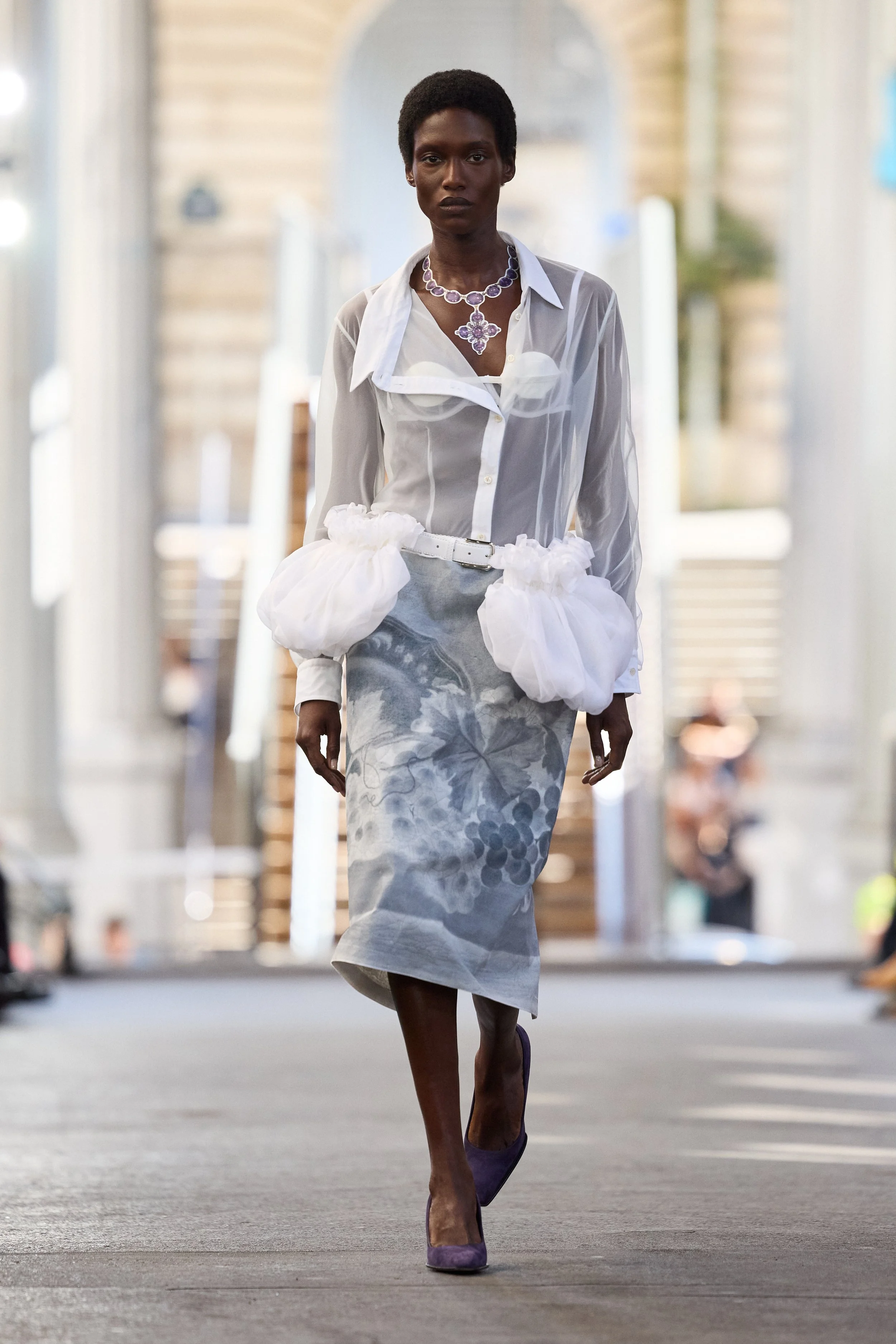
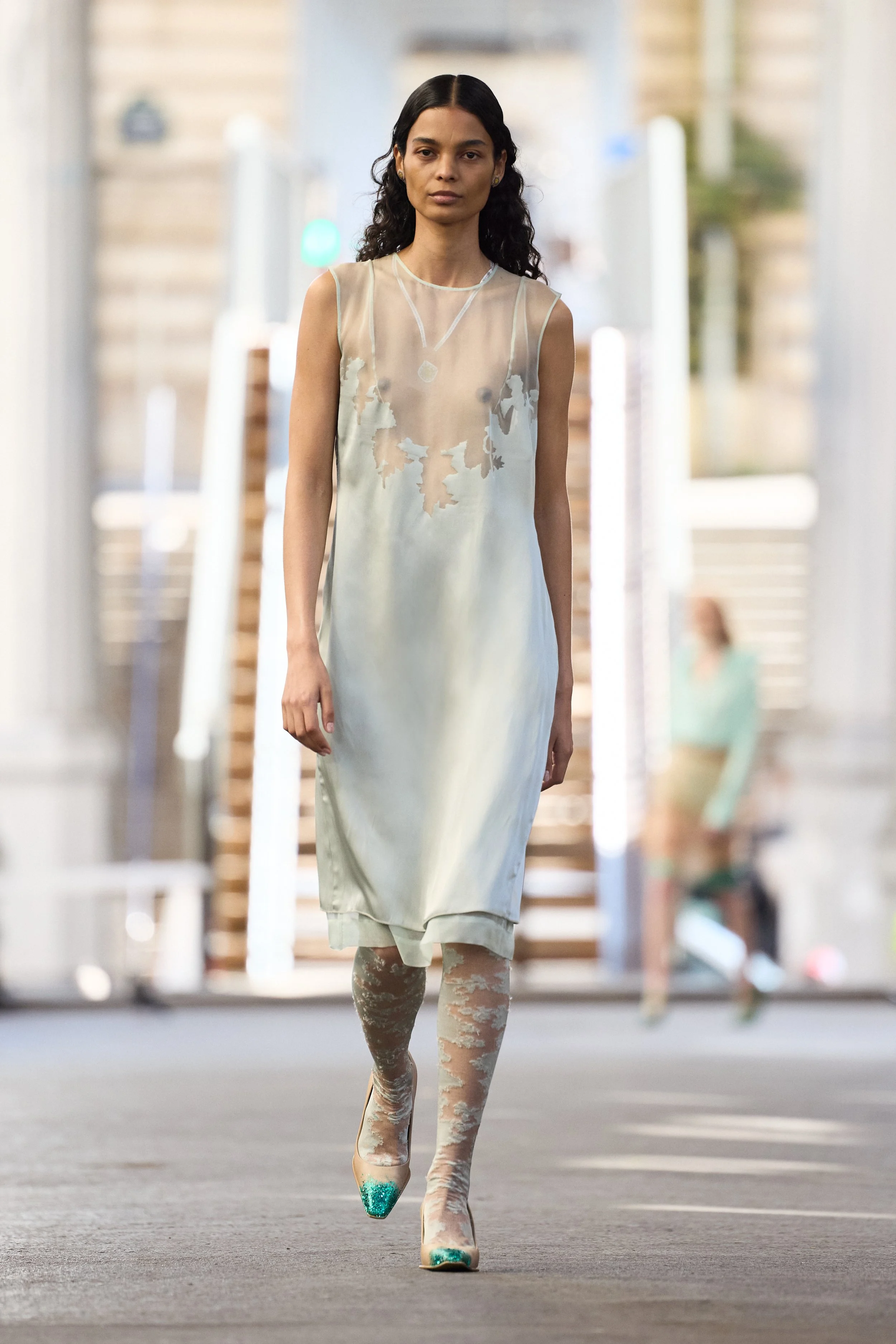
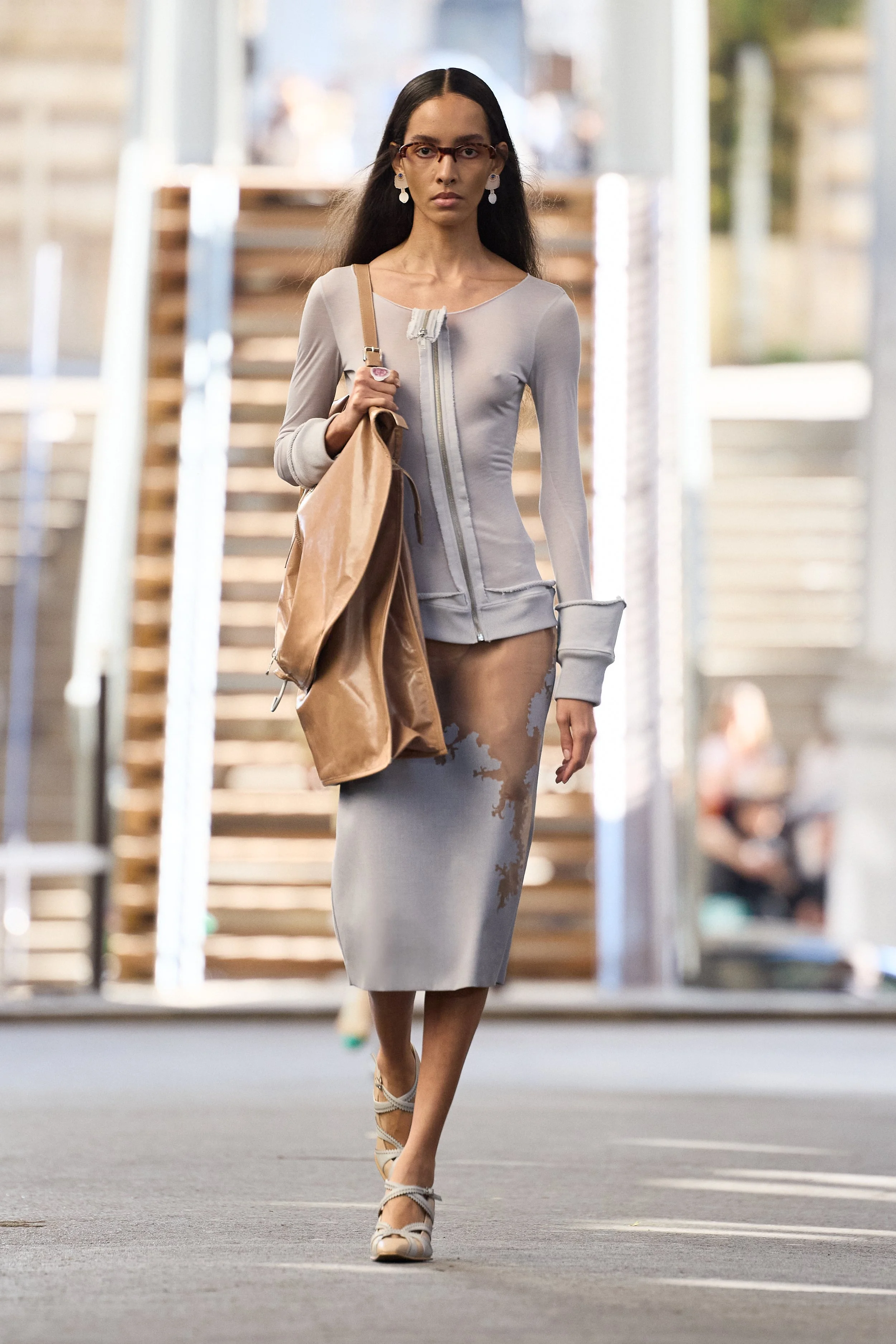
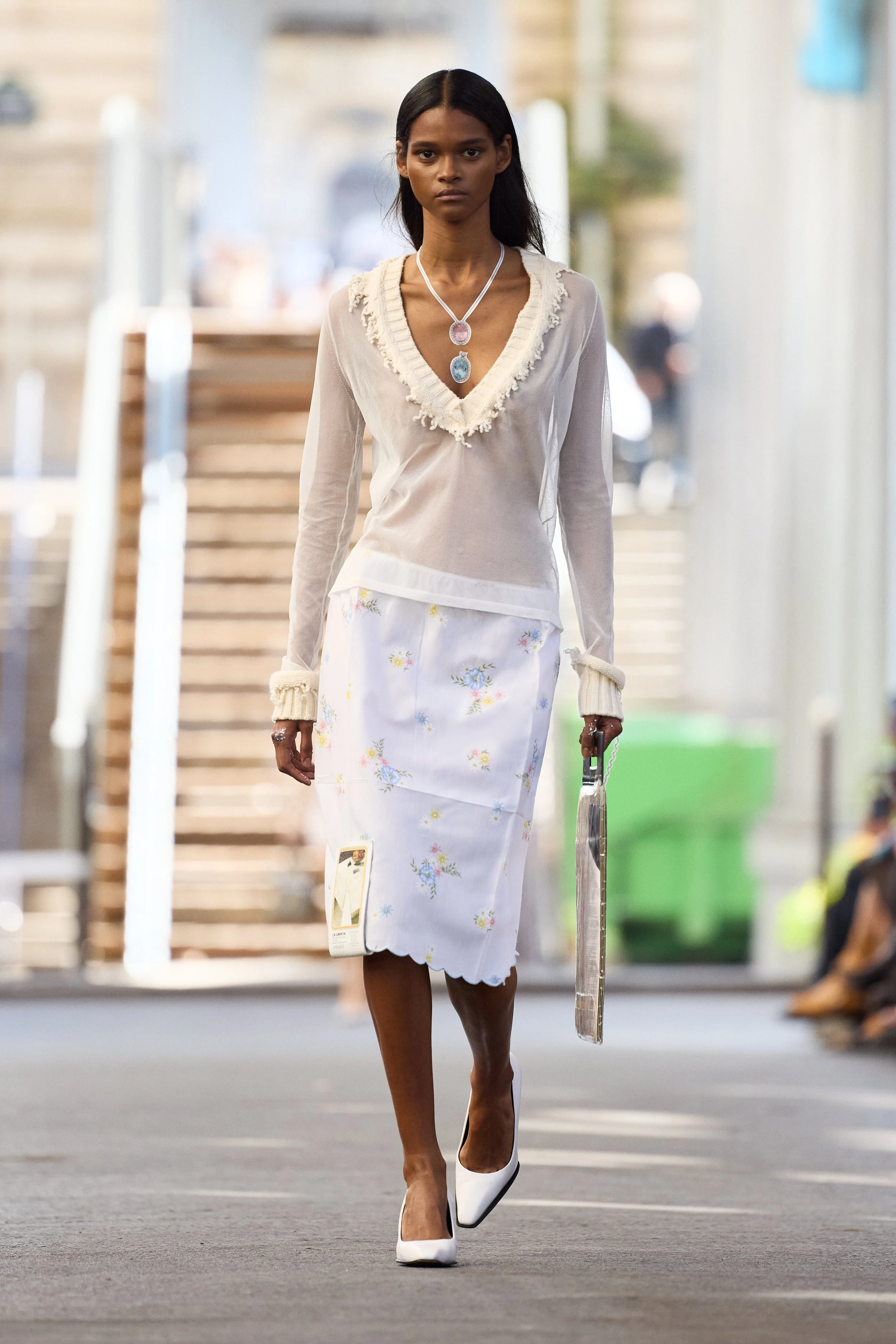
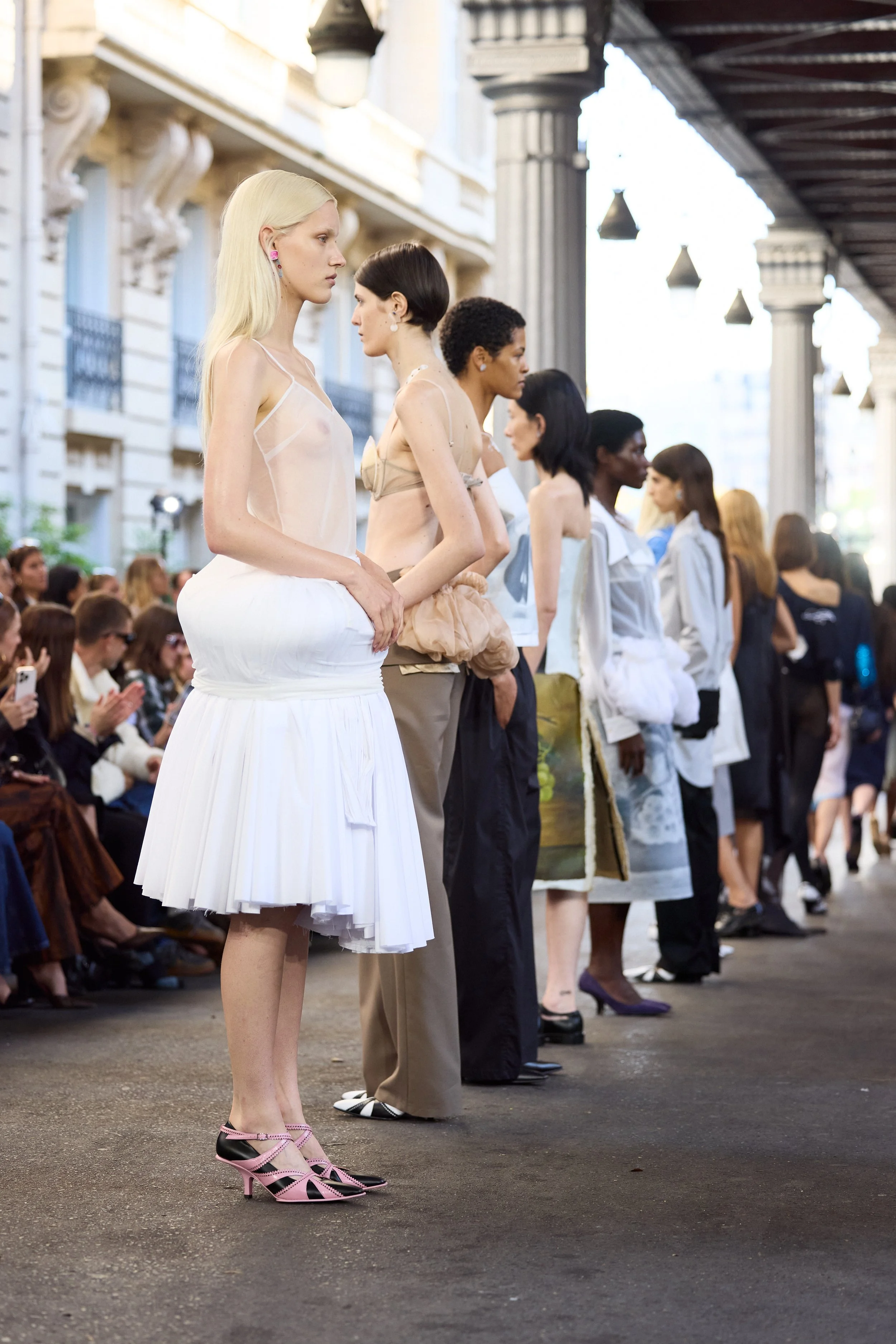
Julie Kegels S/S 2026, Paris Fashion Week
LM: Fashion is very ephemeral and everything changes so quickly. How does the brand Julie Kegels slow this down and ensure audiences are paying attention for a long time?
JK: Yeah, that’s the sad thing. But of course, you have to be stubborn. You don't want to be part of this huge fashion space. You should want to create something more niche, something more stubborn, something that really feels true and special to yourself as well. For me, I like to look at the bigger fashion landscape because it also doesn't excite me that much. So I always look for something more niche and something deeper that connects people. But I don't really create with the intention of joining a trend because trends change so fast and people get bored of things very quickly.
LM: And I can imagine if you're creating your collections for a smaller audience that belong to a certain subculture or small community, then people can relate more and you can find closer connections that way.
JK: Voilà. Yeah. It's important that they can also recognise something in the work and that they get a memory out of it and can really connect with it because I think when a piece makes you feel something, you are more inclined to remember it and that's important to me.
LM: What is something you have watched recently or listened to that has left an impression on you?
JK: I'm listening to a lot of Dido at the moment. It's very nostalgic and light and just very dreamy. I think it's also because it's spring in Antwerp and there's sunshine. As for a movie, I'm going for something darker. I think everyone loves this movie that came out this year, Hamnet. I became really obsessed with Jessie Buckley after it. She's amazing. For me, it was the last movie I saw that really shocked me. The last exhibition I went to was about the Antwerp Six at MoMA.
LM: Walter Van Beirendonck was one of your teachers at the Academy and he was part of the Antwerp Six as well, right?
JK: Yes, Walter Van Beirendonck was my teacher, as was Dirk Hasselaer. Both are super special in their own way. I think Walter is someone who really goes for individuality and Dirk is more sensitive, dreamy and nostalgic in a way. So in the exhibition, you have both of their worlds.
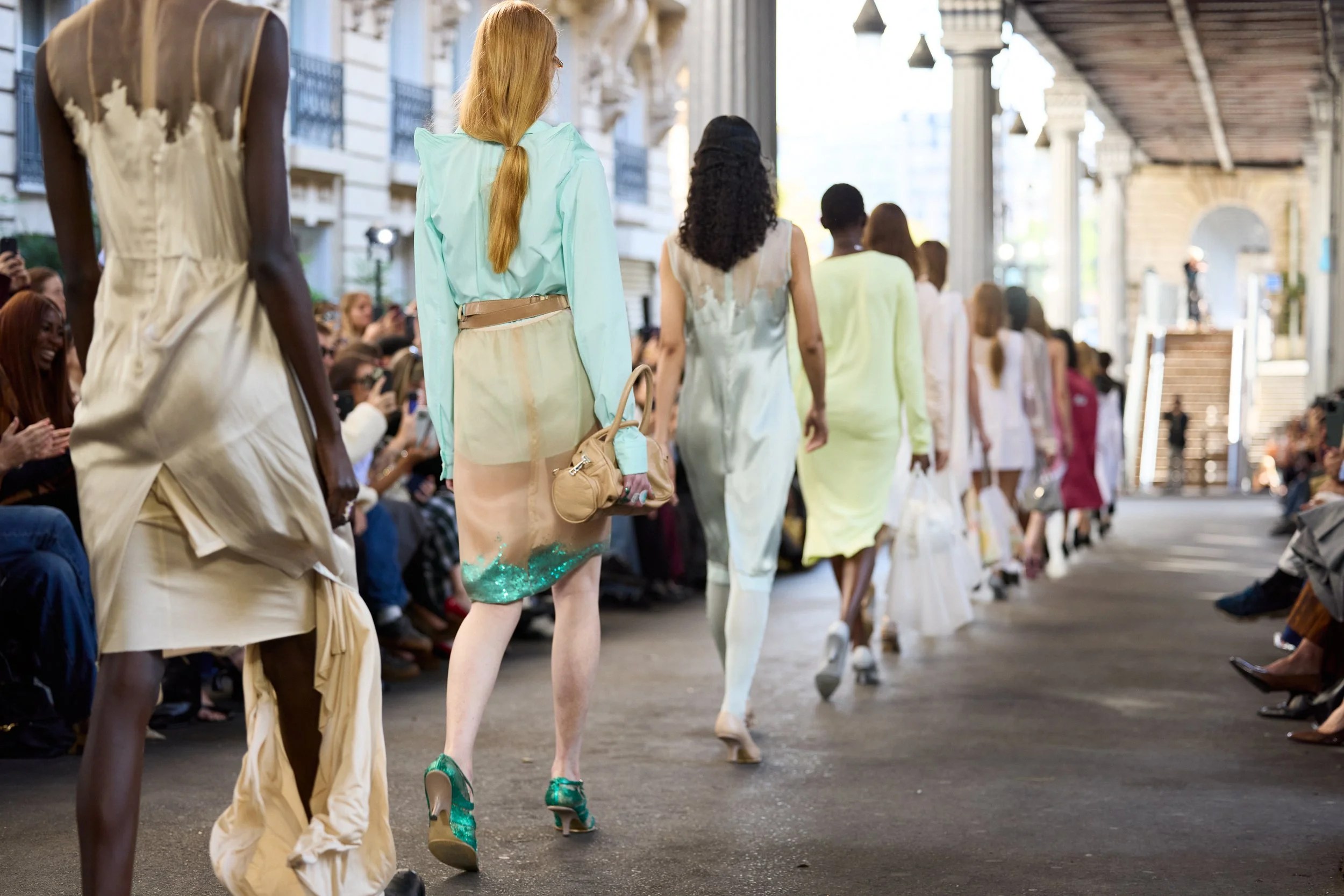
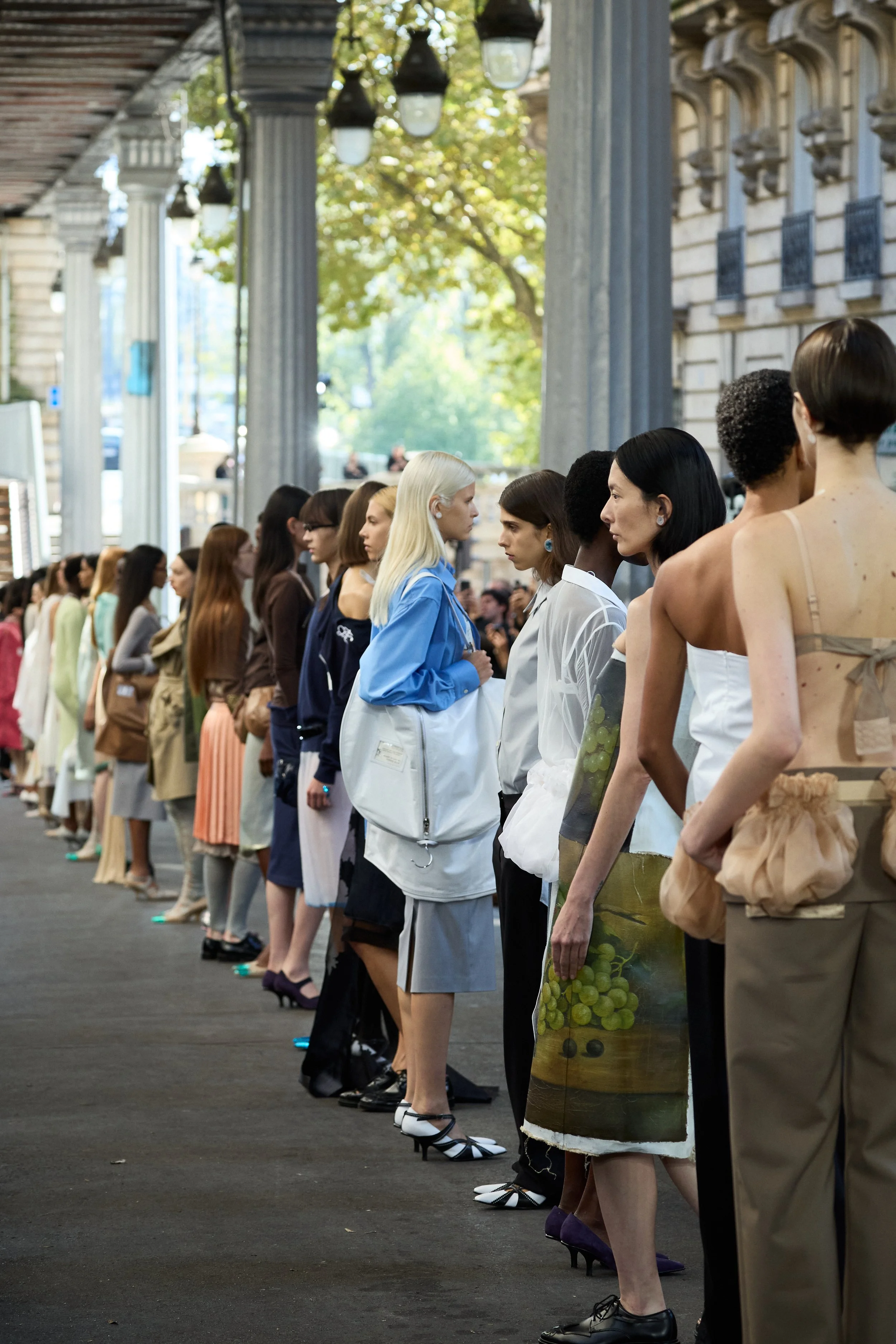
Julie Kegels S/S 2026, Paris Fashion Week
LM: So tell us more about the exhibition at COUR Gallery.
JK: We’re doing an exhibition at Cour Gallery in Antwerp. It’s essentially a collaborative exhibition with all the people we have already worked with and who I have known for a very long time. We have people who have worked on the scenography for a show, the soundtrack or designed parts of the collection with me. I thought it was really important because it’s the Antwerp Fashion Festival in June and, as I’m already doing two collections this year, I thought, let’s do something without clothes, but more so artworks and objects. The theme of the exhibition is “borderline”, meaning the space between the home and office, as we are all friends but we also all work together. Sometimes this relationship is a bit strange because I’m not sure when we should be serious or when we should just be friends. It’s also about how, when you are in the same company, there is a blur between work and social life and it becomes one thing. It’ll be beautiful, all in one room, and I’m very excited.