
Evolving and Unfolding with J Davies
Interview by Michelle Grey l Introduction by Lila Daly-Hyatt
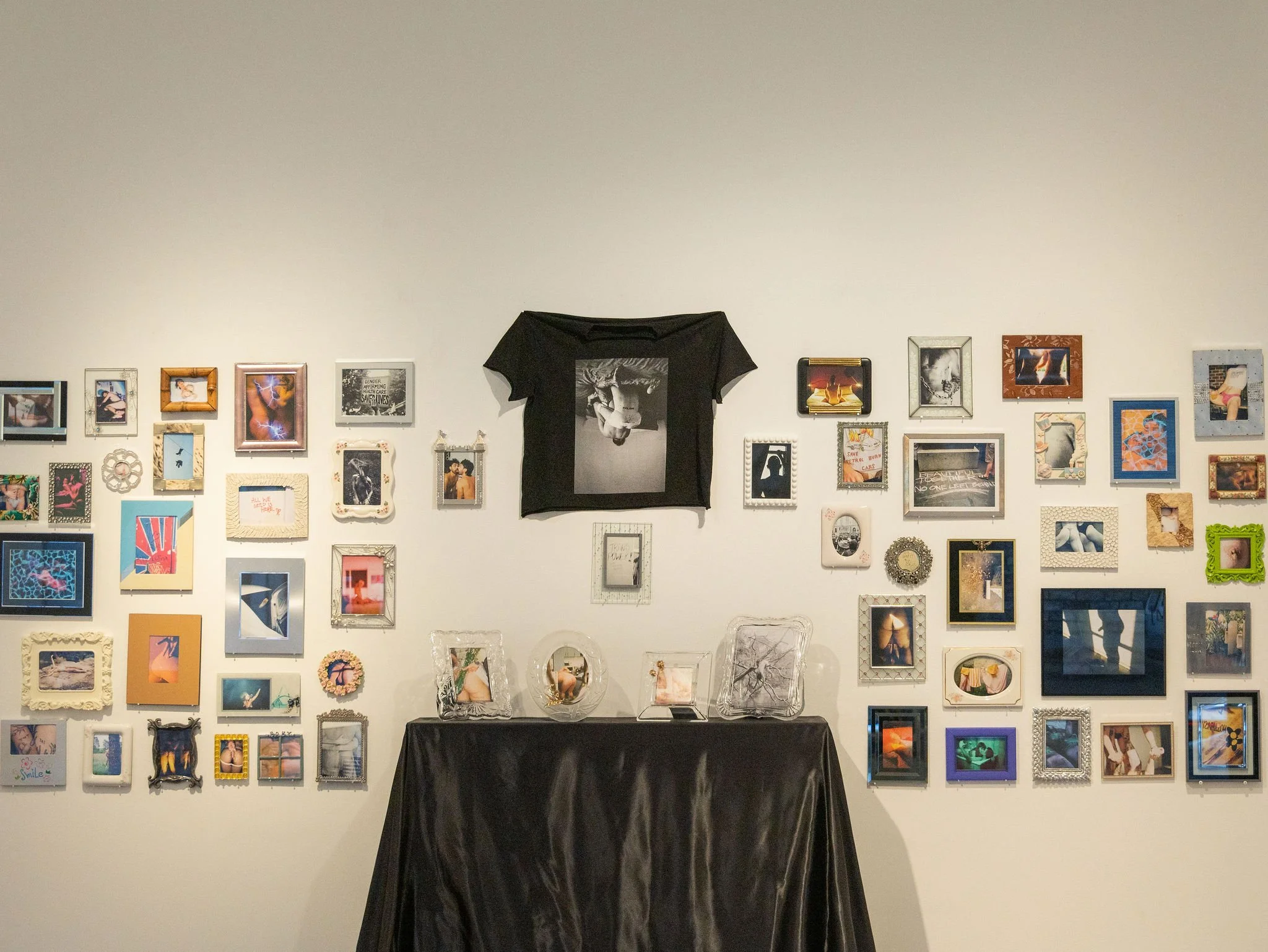
Exhibition photograph by Evan Fowler.
For photographer J Davies, the camera is not a wall between the photographer and their subject, but “ideally, it’s a doorway”. Their photographs capture this feeling — of lingering in a friend, or a lover’s, doorway, knowing you can’t stay for long but feeling too comfortable to leave, looking at the special things collected over time which reflect who they are, or who they’d like to become.
A multidisciplinary takatāpui (Māori, Queer/Trans) artist, J Davies’ current exhibition, Evolving, at Melbourne’s MARS Gallery, brings together photographs from across their practice which celebrate queer and trans communities, bodies and existence. Evolving centres queer and trans survival and flourishing not as a deviation, but as an ongoing process of unfolding, expanding and re-imagining beyond rigid binaries and expectations of heteronormative conformity.
The intimacy of the photographs extends to their presentation, with many displayed in second-hand frames provided by friends or sourced from the op-shop, situating the images themselves within personal and communal histories. Grounded in trust and vulnerability, J Davies’ visual vocabulary and photographic practice represents queer and trans bodies without footnote, exegesis or apology. They simply exist: ordinary, desiring, complex, vulnerable and joyful.
A-M Journal speaks with J Davies about the intimacy of looking, loving yourself as a radical act, and the ability of photography to radiate joy outwards.
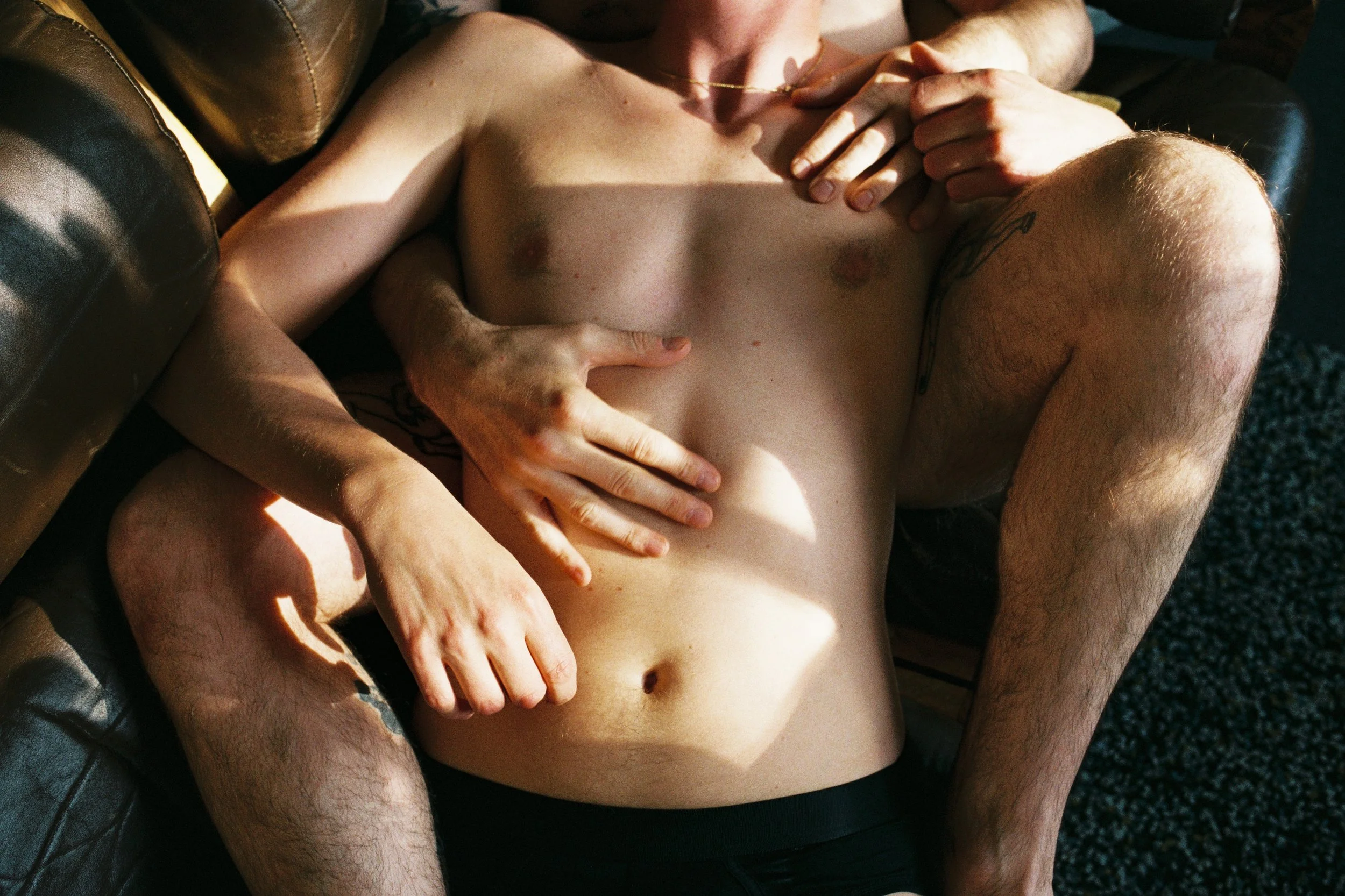
Photographs courtesy J Davies.
MICHELLE GREY: The title Evolving suggests something ongoing rather than resolved. What does “evolving” mean to you in the context of this exhibition?
J DAVIES: For many queer and trans people, there is an expectation that we conform, fit ourselves into definitions handed to us, and follow a script written for everyone else. But when we refuse those tightly bound binaries, when we evolve beyond the narrow, stigmatised cage we’ve been given, something else becomes possible: growth, freedom and liberation.
To me, EVOLVING is about discovering new ways to exist, share space, commune, celebrate ourselves and understand sexuality on our own terms. Being trans, for me, is a rejection of the cage assigned to us at birth. It is an ongoing process of becoming more fully yourself without constantly prioritising the perceptions, projections or persecutions of the public.
I don’t think we ever arrive at a final version of ourselves. We keep unfolding.
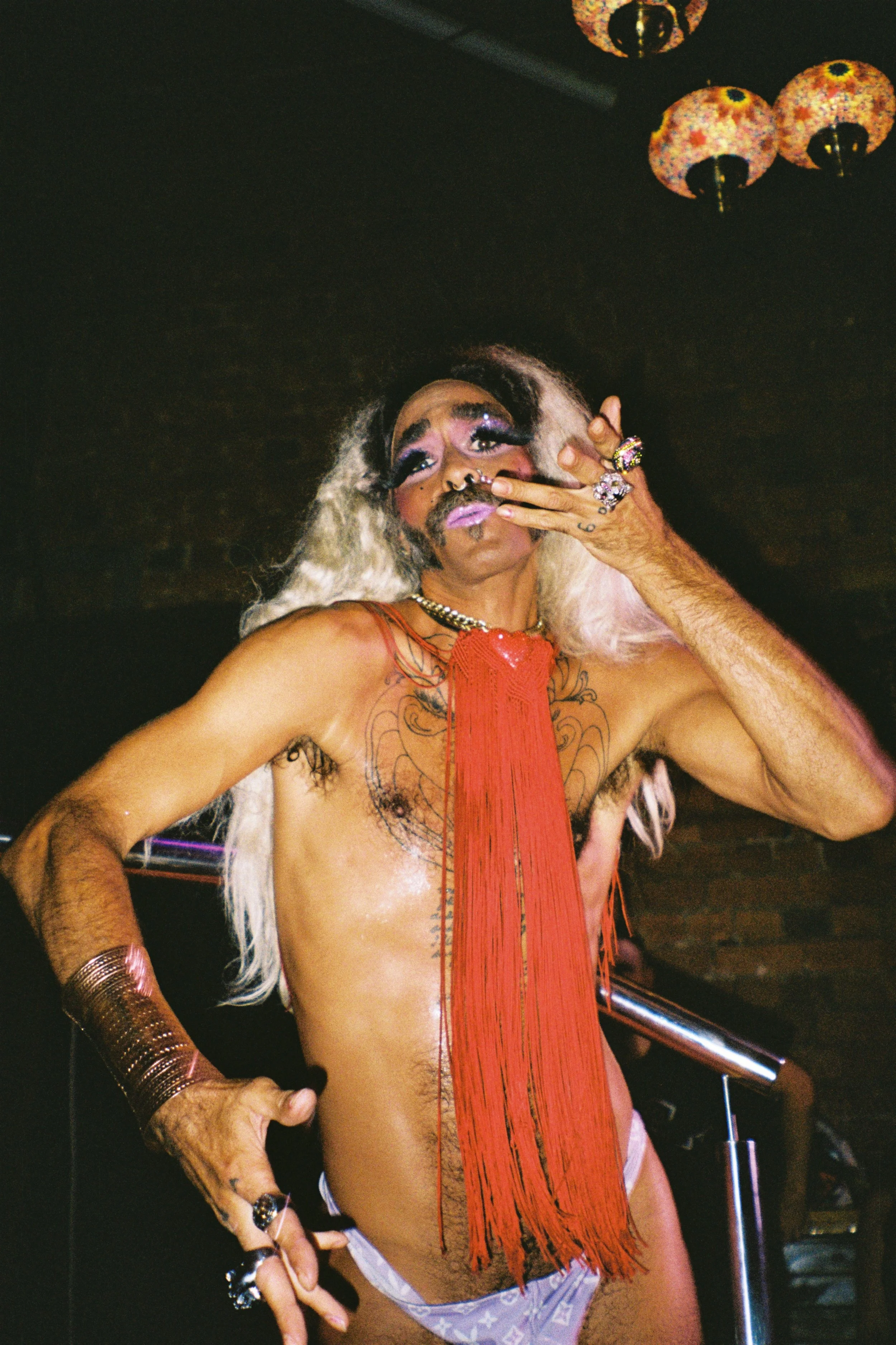
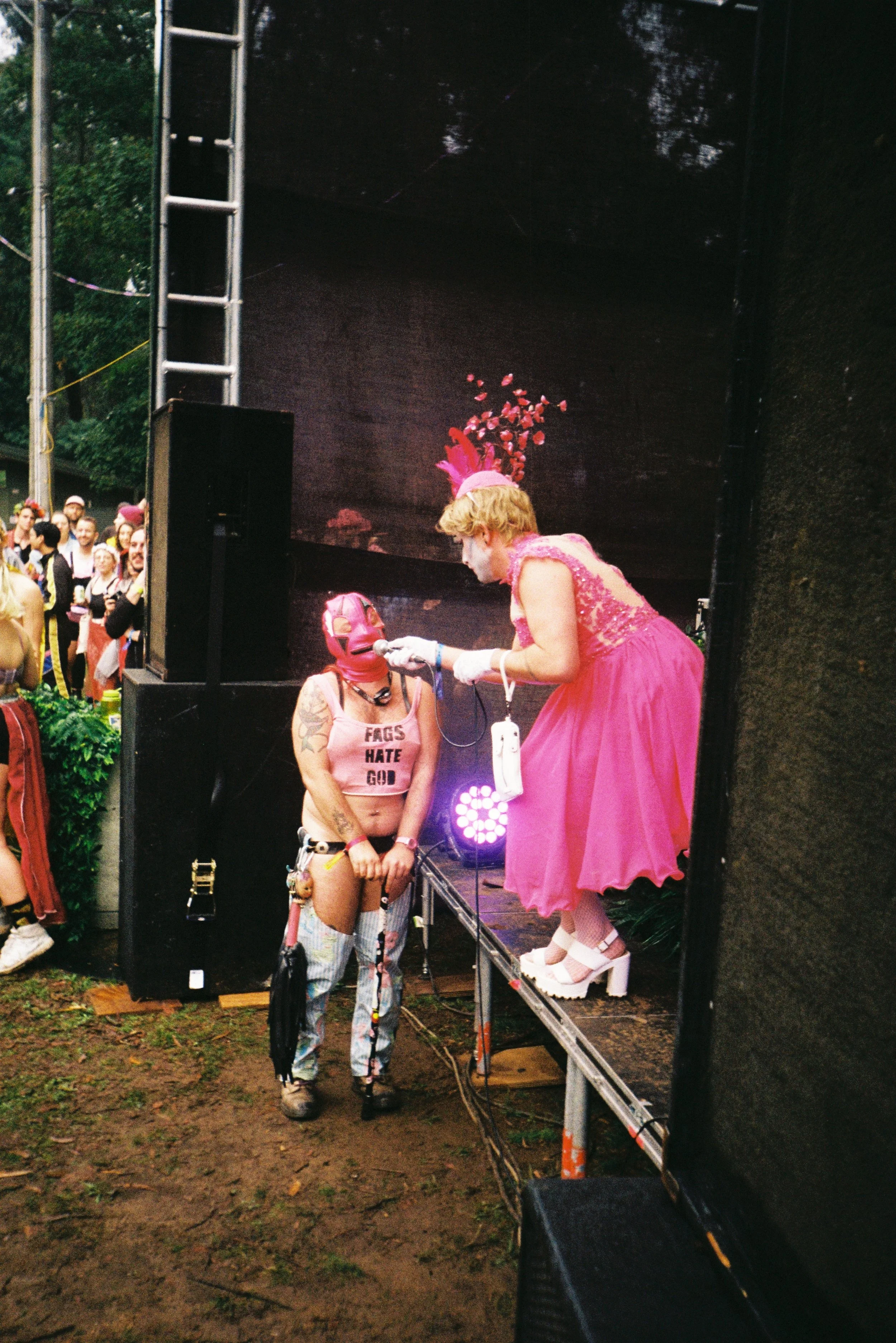
MG: There’s an incredible sense of trust and tenderness in these photographs. How do you build that intimacy with the people you photograph, and how conscious are you of the responsibility that comes with being allowed into someone’s private world?
JD: When I first started making this work, I was much more focused on the body as sculpture. A lot of that came from my own complicated relationship with my body. I felt strange inside it, but I didn’t really have the language to explain why. We weren’t given much vocabulary for those feelings.
Over time, photographing people in spaces where they feel comfortable has become an extension of the portrait itself. I want people to be able to consider what makes them feel celebrated, sexy, silly, playful or simply at home in themselves.
The trust involved is something I take seriously. I’m not interested in extracting a moment from someone and disappearing. The longevity of relationships matters to me. I photograph friends, lovers, friends of lovers, lovers of friends, and eventually people who become all of those things in different ways. The camera is often just the excuse to get closer.
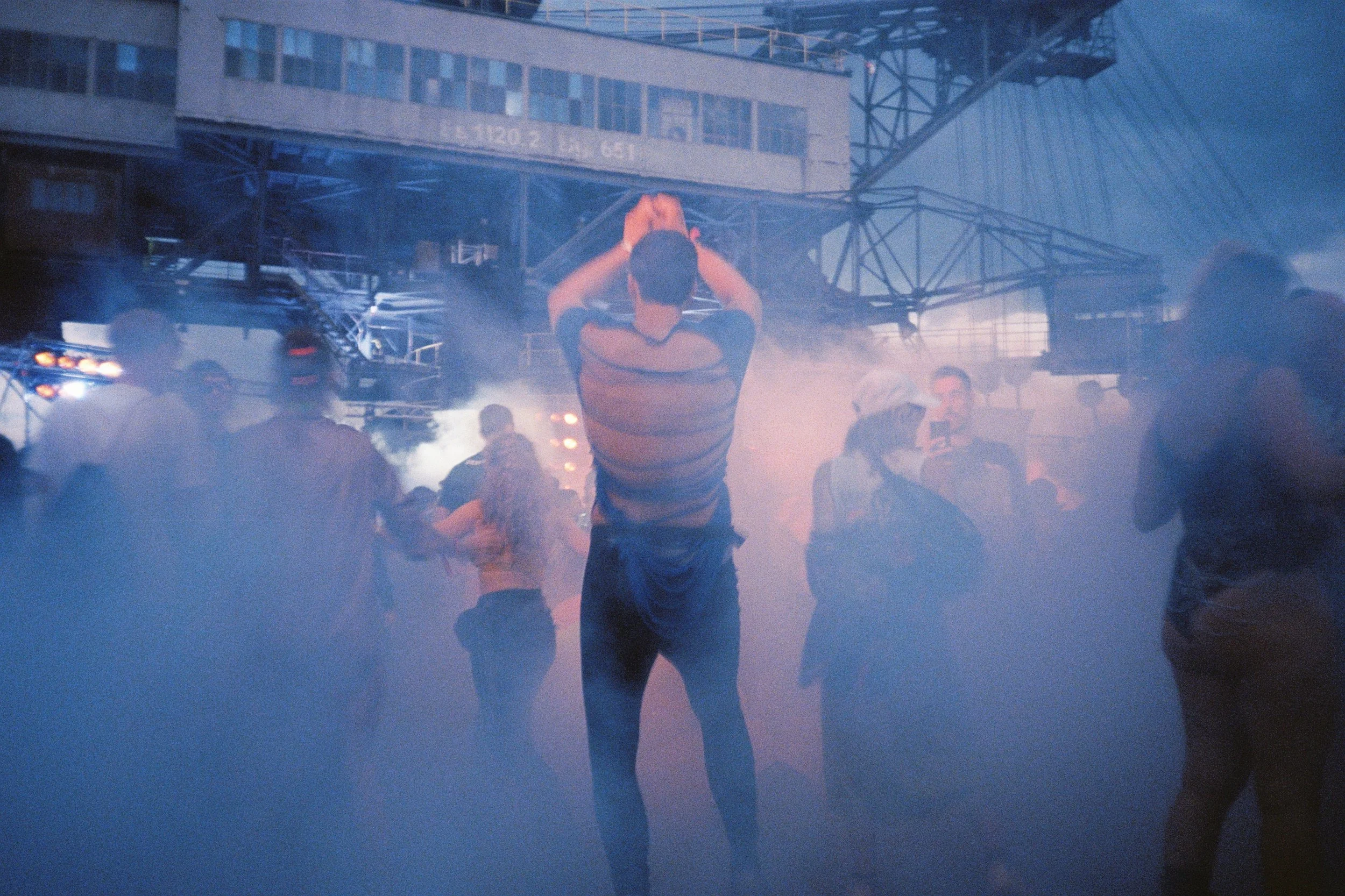
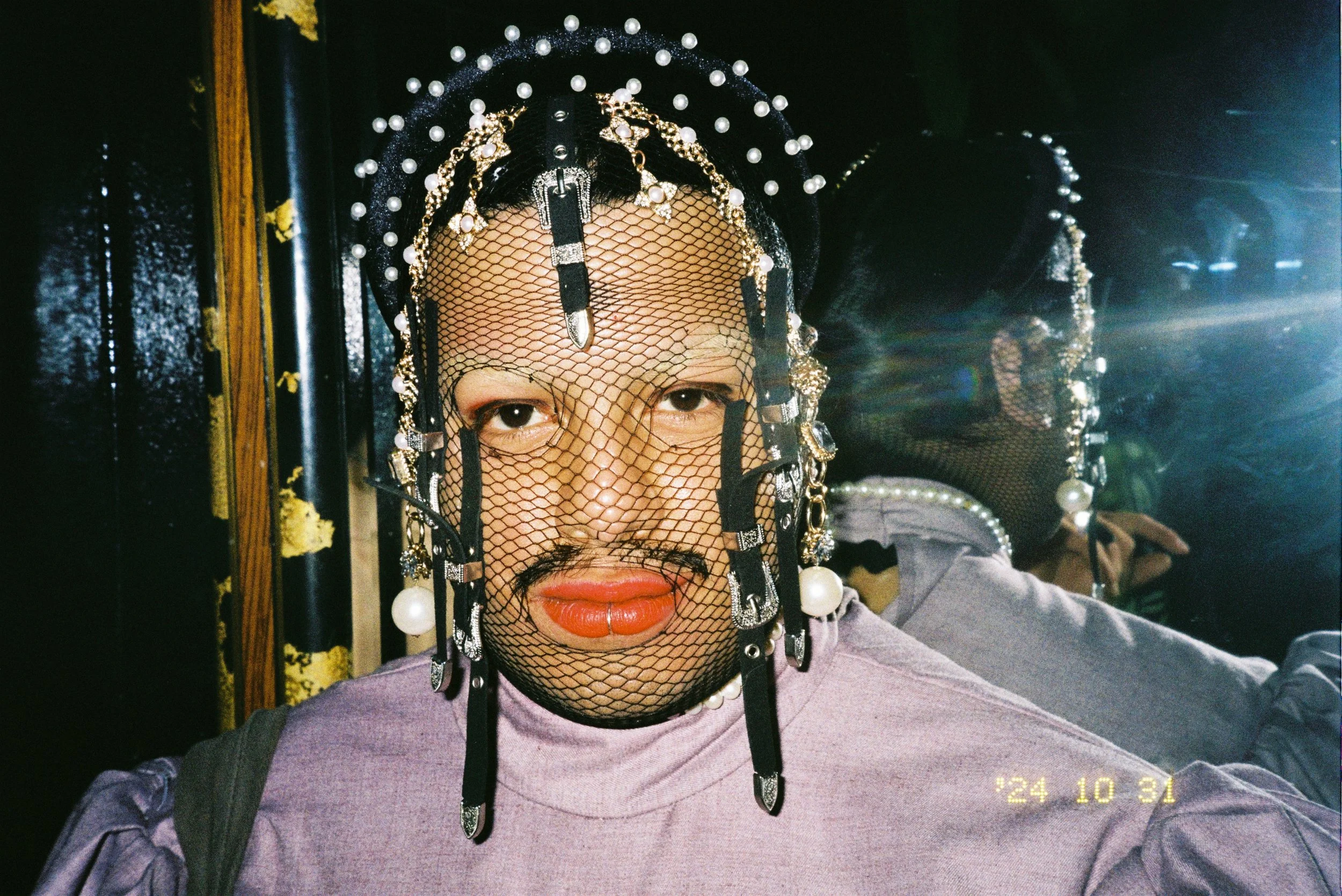
MG: The exhibition speaks about dismantling shame and imagining ways of living outside conventional ideas of gender, bodies and belonging. Do you think of photography as having the power to actively reshape how we see ourselves and one another?
JD: Absolutely. Photography, and art more broadly, is a form of influence. The images we consume, consciously and subconsciously, shape the way we understand ourselves and each other.
It’s important to acknowledge the ways our bodies are objectified, commodified, consumed and ultimately packaged by media, advertising, social platforms and the relentless machinery of trend cycles, fast fashion and thin supremacy. We are constantly being told what a desirable body should look like, and then sold the products required to become it. Art can interrupt that cycle.
I want to make photographs that allow people to see bodies existing without apology, without Photoshop, without FaceTune, without needing to be corrected before they can be considered beautiful. I want to photograph people who love themselves, or are at least learning how to, and allow that feeling to radiate outward. We have power over what we consume and how much power we allow it to have over us. Sometimes an image can be a tiny rebellion. Sometimes it can be a mirror that doesn’t lie.
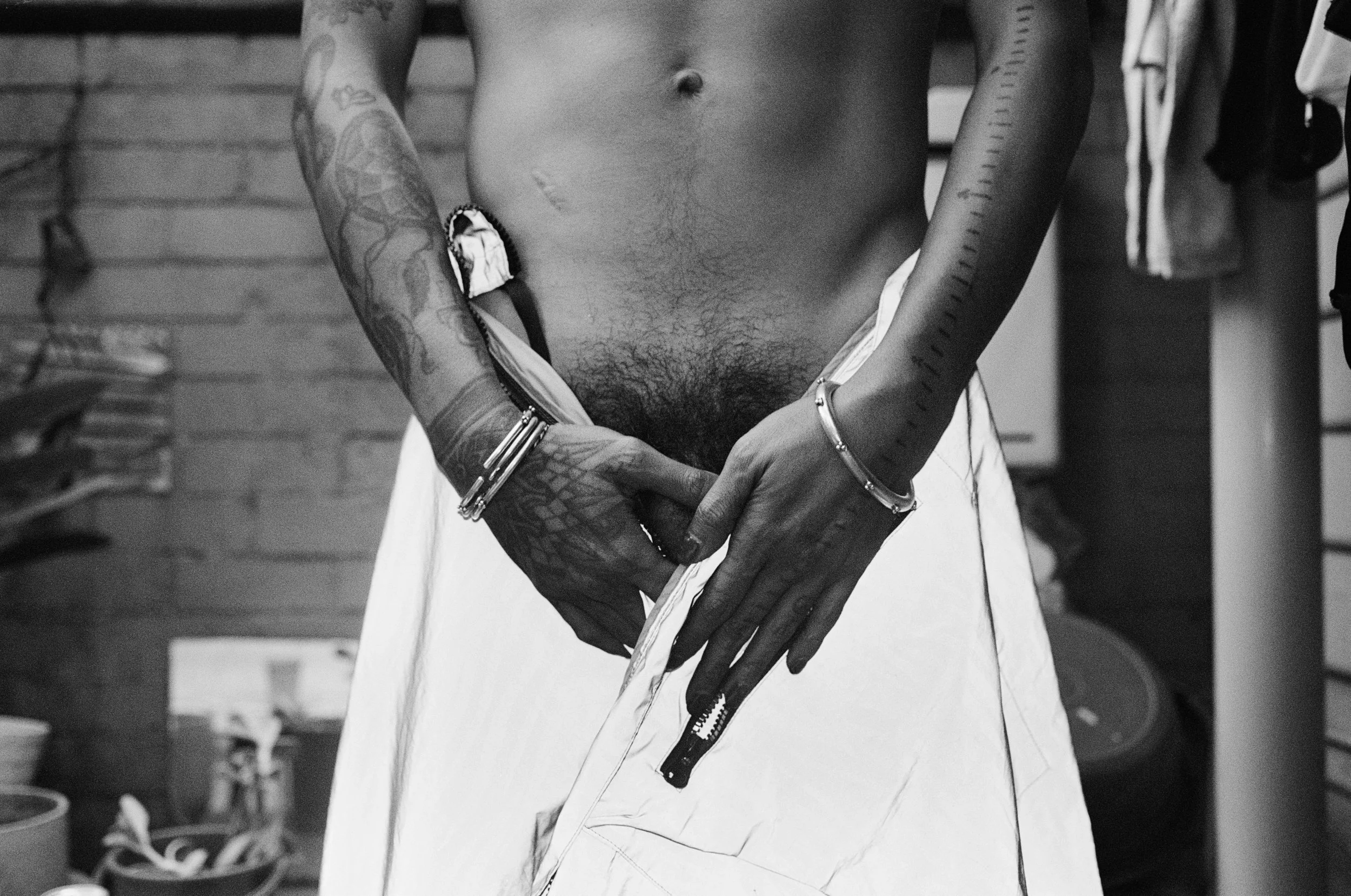
MG: Your photographs often sit somewhere between documentation and something much more personal and emotional. How do you think about the boundary between documenting a community and making work from within a community you’re part of?
JD: For me, I’m documenting my life and the people I share it with. Friends, whānau, lovers, friends of lovers, lovers of friends. The boundaries between those categories are intentionally blurry anyway.
I like meeting people through my work and learning about them: what makes them feel confident, comfortable, sexy, silly, ridiculous or completely themselves. I can only make this work because I am part of it. I don’t want it to feel like an outsider looking in, or like someone has wandered into the room simply to gawk.
Vulnerability is a two-way street. I’m asking people to trust me with something intimate, so I have to be willing to offer something of myself in return. That exchange is where the photographs become most honest. The camera isn’t a wall between us. Ideally, it’s a doorway.
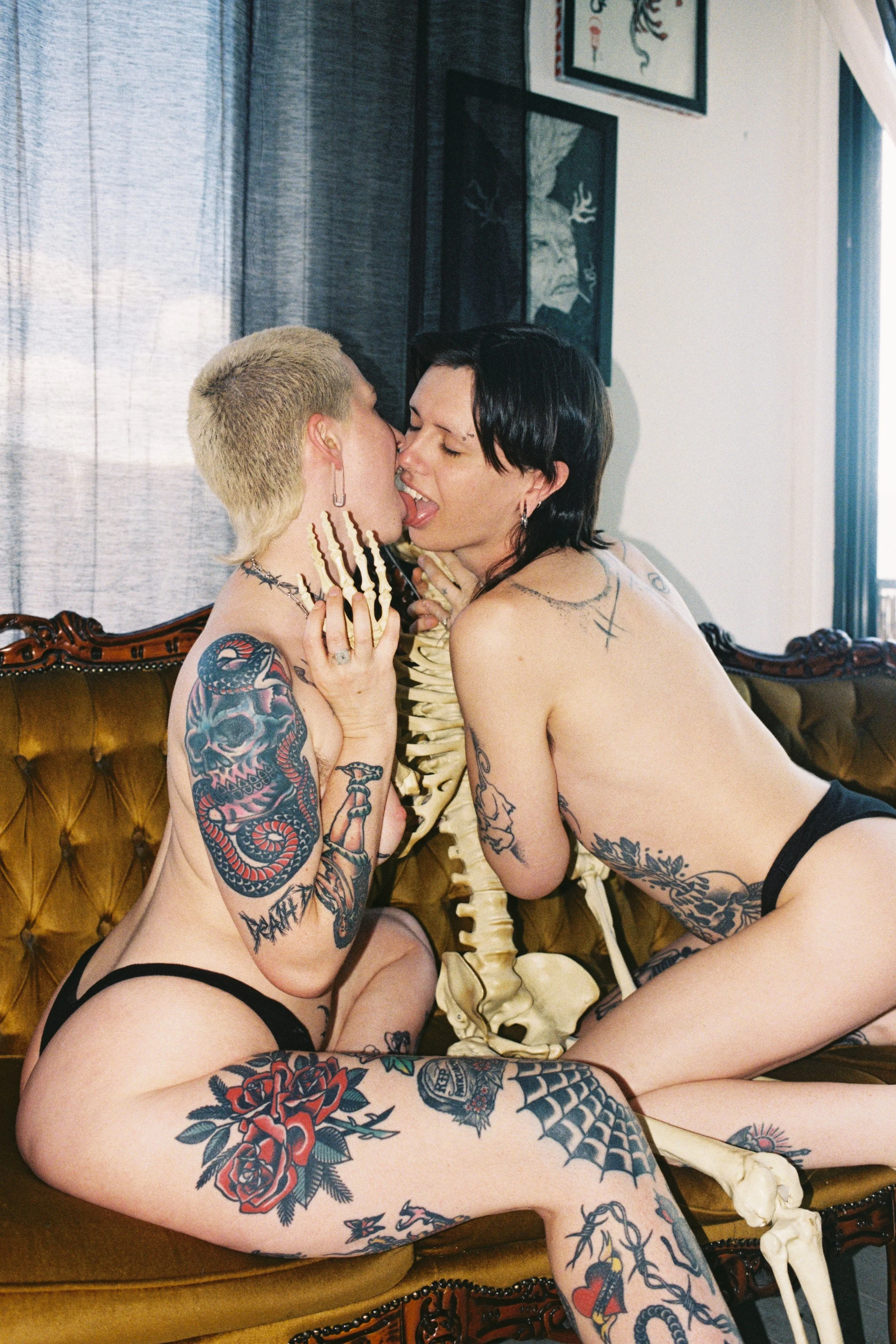
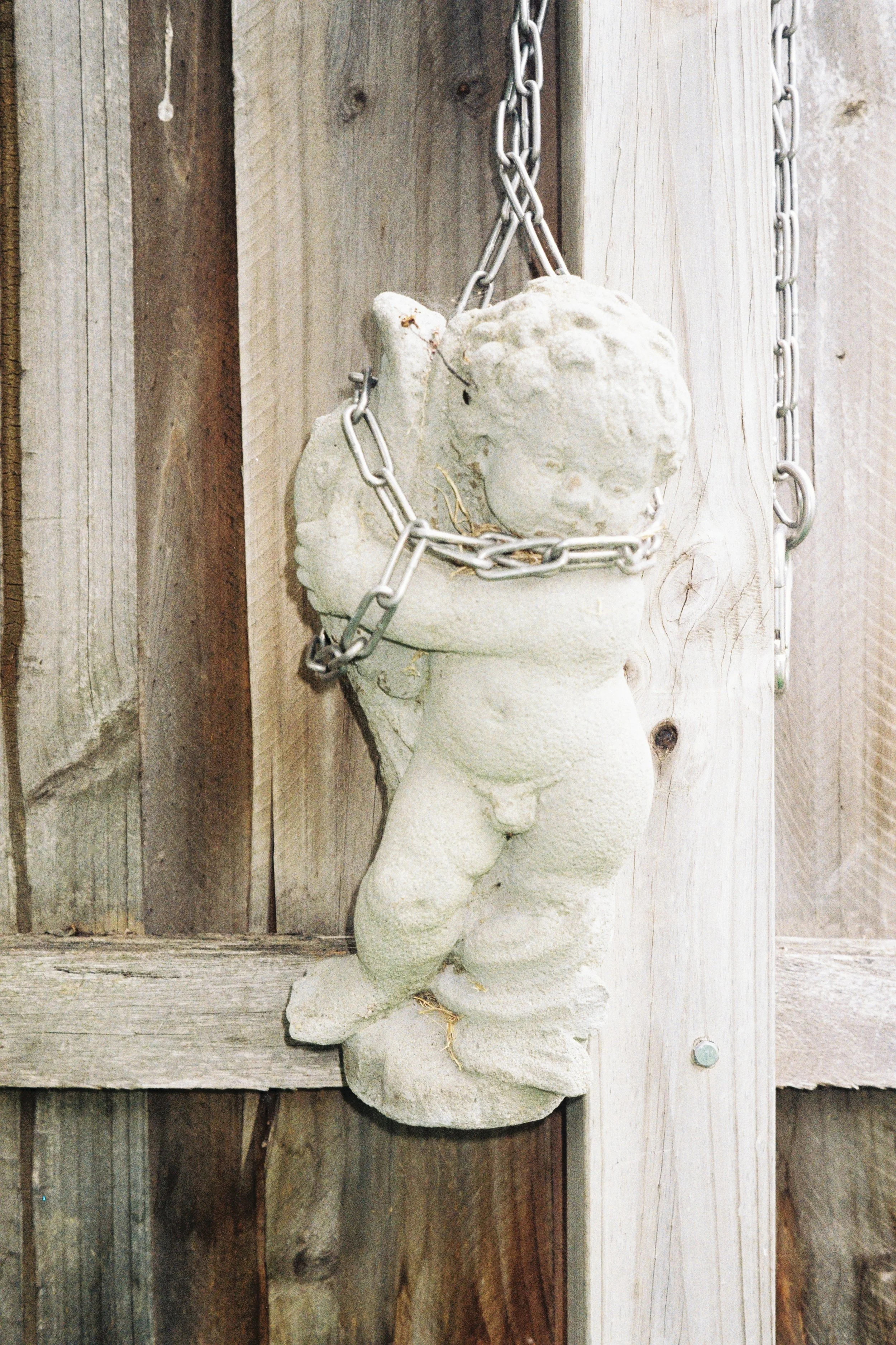
MG: Queer intimacy is presented in Evolving as something quietly radical — not necessarily through protest, but through care, kinship and people simply being themselves. Has your understanding of what constitutes a political image changed over the course of your practice?
JD: I was never really given the option to make apolitical art. In 2026, my mere existence is debated around the globe: in political conversations, in bathrooms, in institutions, online, and sometimes even within my own family.
I contain multitudes, and while simply existing can be political for me, I’m also very capable of protesting loudly and proudly. But I’ve become increasingly aware that I can sometimes reach more people through the joy of queer existence than through anger or trauma. That anger and rage are completely valid, of course, but I don’t want them to be the only stories we inherit or pass down.
Sexuality has always been a form of political rebellion. Loving yourself, particularly when the world has told you that you shouldn’t, can be an incredibly radical act. So I want to make work that amplifies our existence in all its forms, from the loudest scream to the quietest queer image. A photograph of someone laughing with their friends can carry its own kind of protest.
Sometimes the revolution is simply getting to be happy.
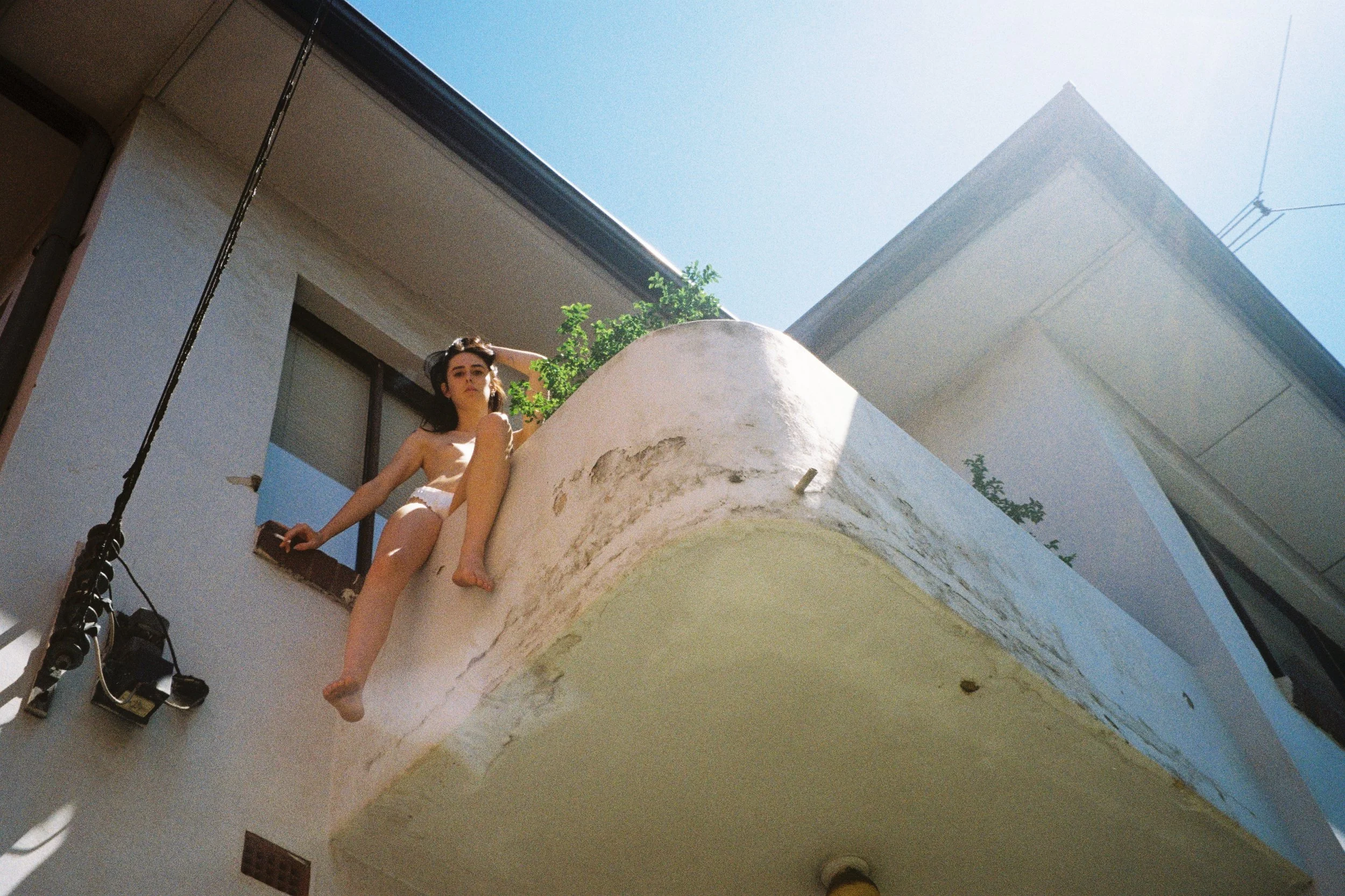
MG: What have been the key experiences, people or turning points that shaped the photographer you are today?
JD: I’m eternally grateful for the beautifully inspiring queer and trans people in my life. Without them, I wouldn’t be here, and I certainly wouldn’t have had the opportunity to evolve into the person I’m still becoming. My families, both chosen and biological, have shaped me enormously. So have artists like Nan Goldin and Ryan McGinley, whose work showed me different possibilities for photographing intimacy, community and queer experience.
I also really believe in the power of trade, skill-sharing, knowledge swaps and mutual mentorship between artists across generations. I want to learn from the people who paved the way for me to exist, while also making sure the door stays open, and perhaps a little easier to walk through, for the next generation.
I’m grateful for the opportunity to create alongside people and for the grace to keep listening and learning. Everything is a practice run for the next thing. Trial, error, adjustment, repeat. Perhaps that’s another form of evolving. I try to lead with love and hope to encourage more people to do the same: to see intimacy as valuable, connection as necessary, and people as more important than profit.
Evolving: J Davies continues at MARS Gallery, Melbourne, until Saturday 5 September.