
“Accidental yet inevitable”: The Design Language of Kwangho Lee
Interview by Lila Daly-Hyatt
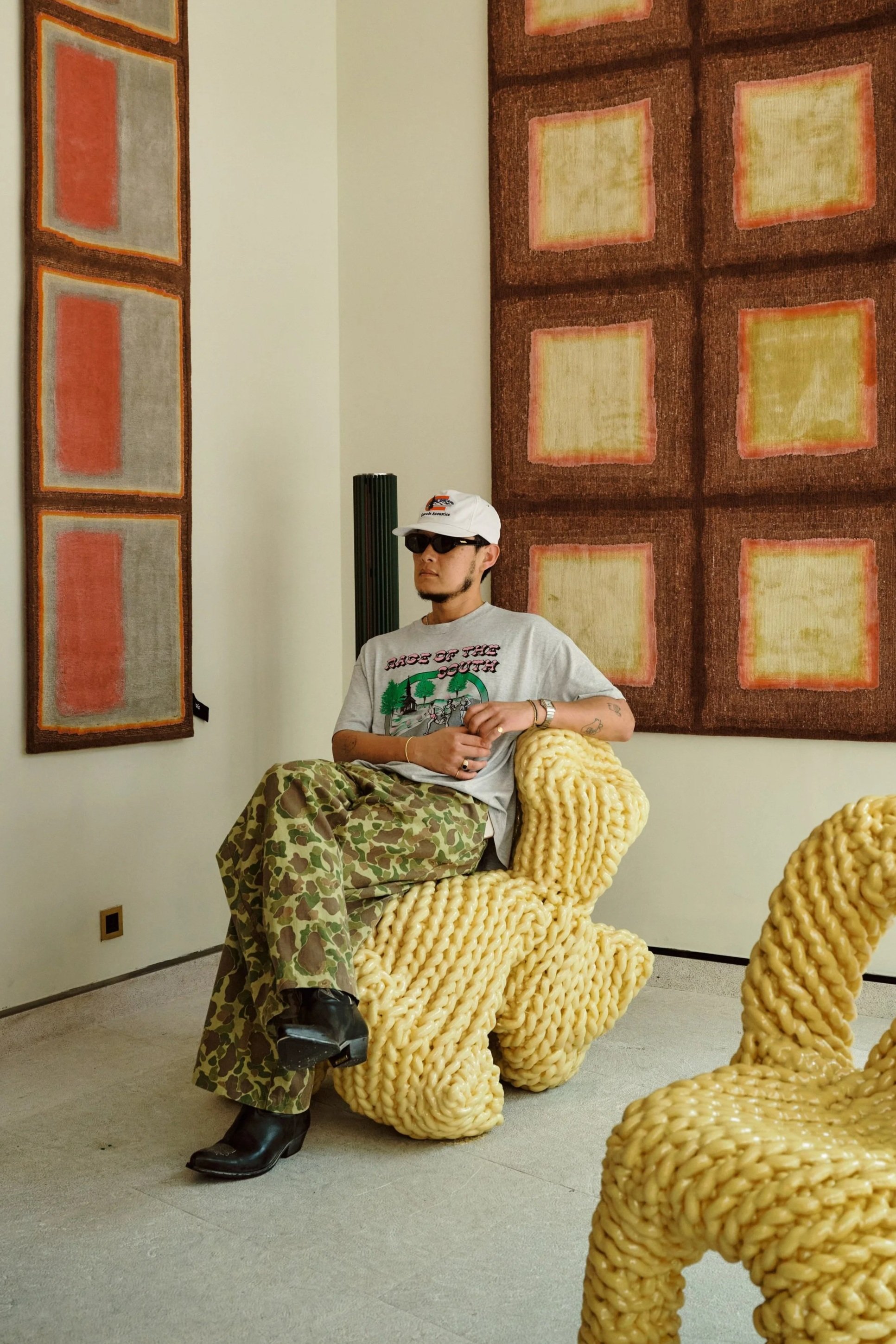
Kwangho Lee. Photography by Natalie Dunn, photograph courtesy of NUOVO Hong Kong.
At the centre of South-Korean designer Kwangho Lee’s practice is a compelling question: how can you give a standardised industrial product its own ‘individual body’? How might it bring its own movement, and its own story, beyond its utility? For Lee, unpacking a seemingly simple object, like a plastic chair, becomes an effort in archaeology and reconstruction. Peeling back the layers of ordinary perception to arrive at the core of the object, Lee builds this strata back up; layering time and his own experiences over the object to make it something different — something of its own.
Reluctant to frame himself as a “designer” — though holding a degree in metal art and design — Lee identifies more naturally as a “practitioner”, whose craft lies in moulding, shaping and re-contextualising objects in dialogue with his own subjectivity. His varied portfolio spans site-specific installation, ready-to-order furniture pieces, and standalone sculptural works, while his choice of material ranges from knotted electrical wires to hammered copper plates. Characterised by the interplay between the familiar and the unrecognisable, the ordinary and the unusual, and the industrial and the organic, Lee’s work moves freely across boundaries in a refusal to be confined by fixed definitions.
Following his collaborative exhibition with Bottega Veneta at Milan Design Week 2026, Kwangho Lee talks with A-M Journal about the possibilities of functional design, the value of subverting original purpose, and the joy in transforming the rigid into the uncanny.
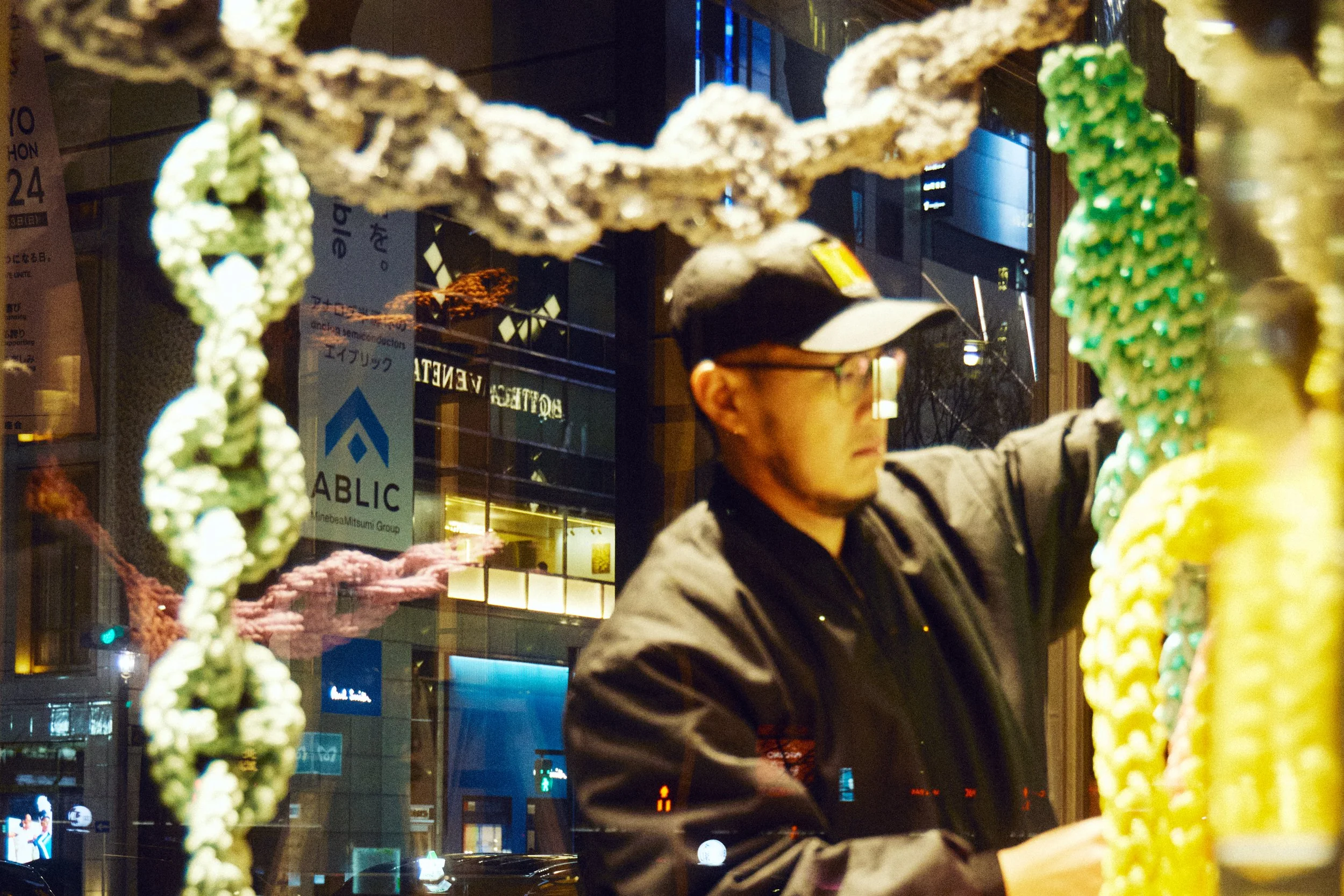
Photograph courtesy of the artist.
LILA DALY-HYATT: Across your career, you’ve worked with a wide range of materials and forms, often returning to experiment with them in new ways. How would you describe your design evolution?
KWANGHO LEE: My creative world resembles the growth process of a living organism. In the early stages, I was consumed by 'perfection', a specific goal of maintaining total control over my materials to realize a preconceived form. However, over time, I found myself drawn away from the form itself and toward a deep immersion in the dialogue with the materials. Weaving wires or ropes is no longer just a manufacturing process; it has become a rhythm of my daily life and a habit my body remembers. By repeatedly sensing the physical resistance of the material with my fingertips and absorbing it in my own way, I have come to understand how to project myself into an object. Today, rather than a designer who creates specific shapes, I consider myself a practitioner who meticulously layers time and my own existence upon an object.
LDH: How do ideas and considerations of futurity shape your work, if at all? Or are you more interested in the present and the everyday?
KL: To be honest, I tend to be romantic about the past, often dwelling on memories imbued with my emotions. At times, the dystopian future I imagined as a child feels as though it is actually approaching, which can be daunting. Consequently, I am captivated by the profoundly personal and concrete presentation of the texture of the material right before my eyes, the tasks I must fulfill today. The materials I handle are not high-tech; they are ordinary things found everywhere around us. By treating these familiar objects with equally familiar methods, I seek to uncover something more valuable than their original purpose. To me, the future is not a predetermined destination, but rather another 'today' shaped by the accumulation of yesterday and the present moment.
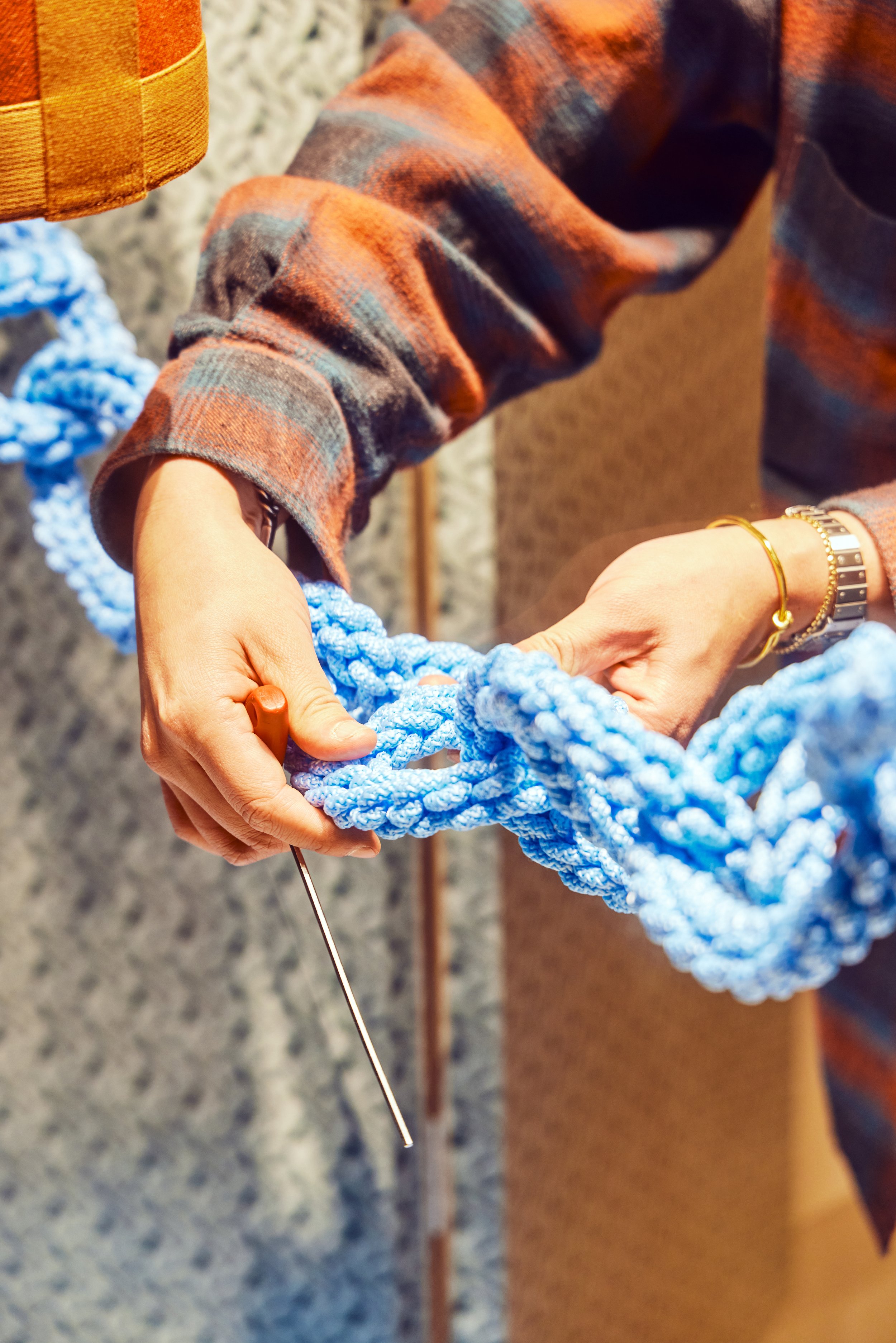
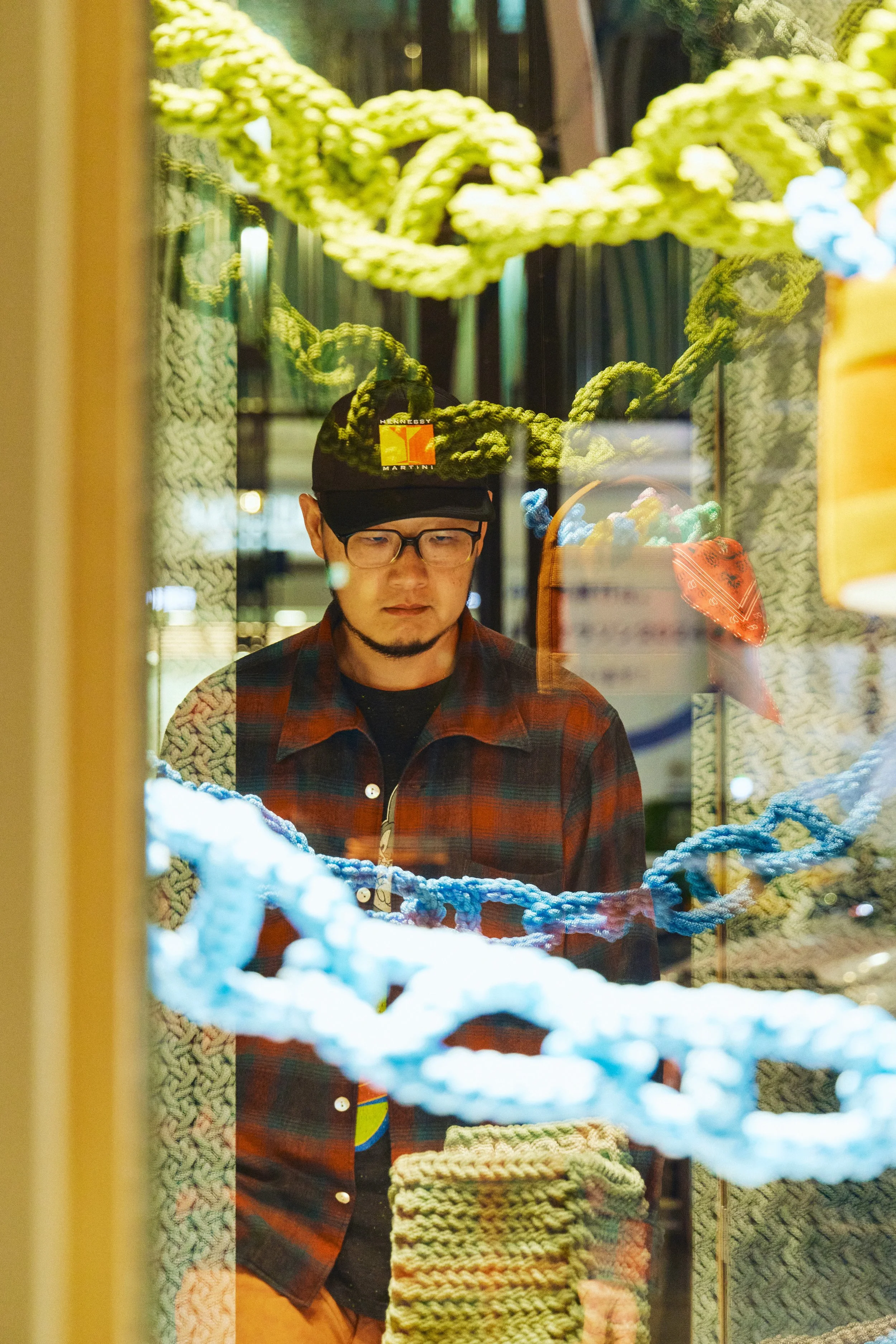
LDH: We loved your sculptural chairs exhibited at NUOVO at Art Basel Hong Kong and at SKAC in Tokyo earlier this year. People say that the plastic monobloc chair is the world’s most common chair, but here, you’ve made the common distinct – your sculptures turn the mass-produced into incongruous, softened forms. How do you think through the connections between the industrial and the organic, or the functional and the sculptural, in your practice?
KL: The act of wrapping a plastic chair in soft rope or tubing, or the process of birthing a specific form from industrial materials alone without a pre-existing structure, is a way of granting an 'individual body' to a standardized industrial product. Because my very existence is projected into that arduous process of discipline, a unique 'Ghost' comes to inhabit each form. I find pleasure in the collision between industrial textures and organic shapes. When a rigid plastic chair transforms into an uncanny sculpture clothed in knots, the object is finally liberated from the functional prison of its utility. Whether it is used as a chair or appreciated as a sculpture, the fluidity to move freely across those boundaries is the core of what I wish to convey. Just as an object refuses to be confined by a fixed definition, I believe our attitude toward life should also be more flexible and expansive.
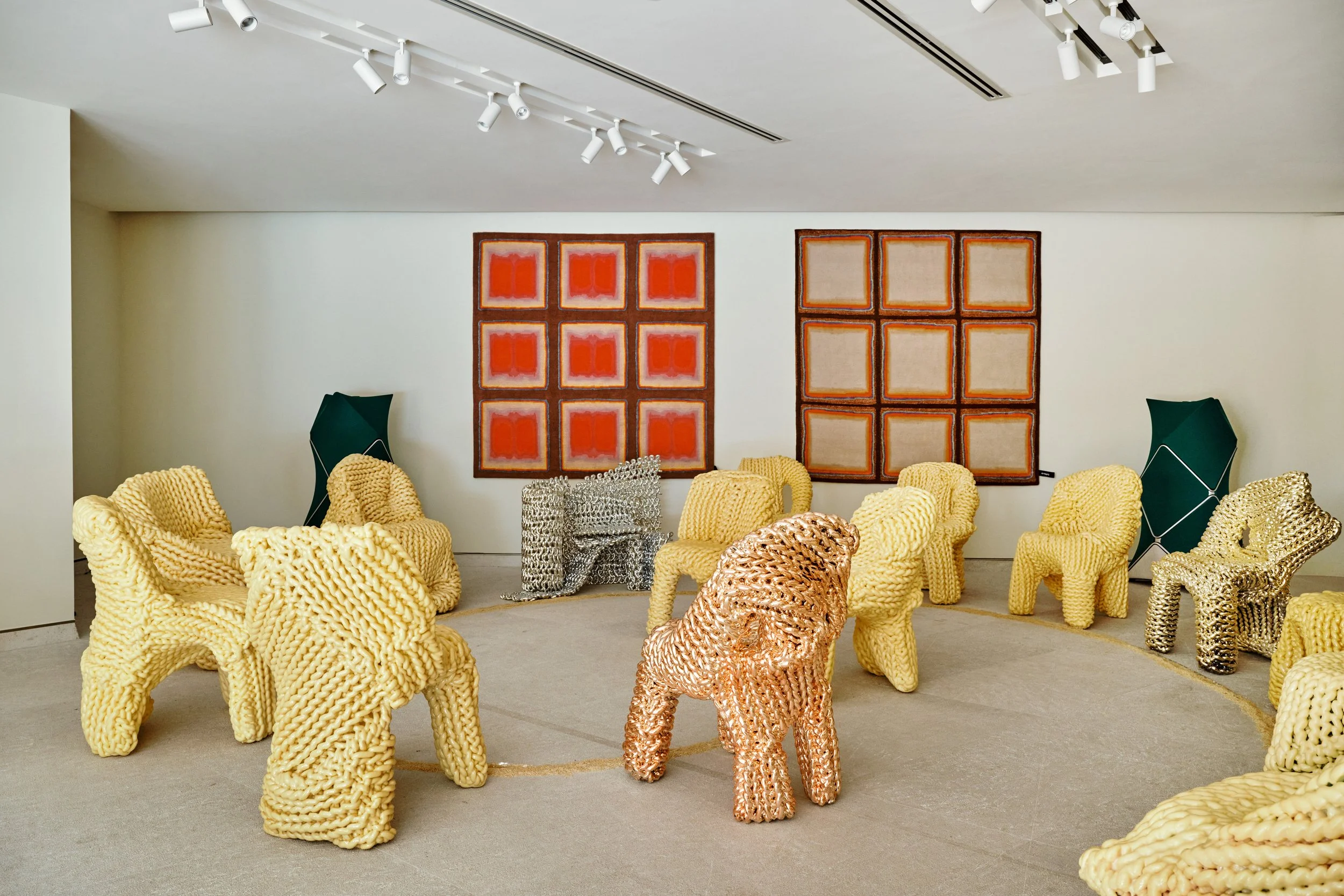
Kwangho Lee, Sequence Exhibition, NUOVO Hong Kong, Art Basel 2026. Photography by Natalie Dunn, photograph courtesy of NUOVO.
LDH: Much of your design work is functional and site-specific. What draws you to site-specific design?
KL: I love the 'accidental yet inevitable relationship' an object forms with a specific place. Rather than being an item that could be placed anywhere, an object created by considering the specific light, ceiling height, wall texture, and the movement of people within a space can truly communicate with its environment. Site-specific design is like bringing another version of myself into existence, an entity that occupies the space and converses with it on my behalf, even in my absence.
LDH: For Milan Design Week 2026, you collaborated with Bottega Veneta on a sculptural light installation, ‘Lightful’, which echoes Bottega’s signature intreciatto leather-weaving technique. How did this collaboration take shape, and how did you approach ideas of craft and tradition within this project?
KL: The collaboration with Bottega Veneta was a joyful journey, exploring the intersection between their decades-old intrecciato leather-weaving technique and the meditative rhythm of my daily practice. Their craftsmanship, weaving leather to create a singular, robust object, is inherently aligned with my own process of weaving wire to create a skeleton. In this project, rather than simply reproducing tradition, I contemplated how to translate that precise technique into something more fluid and liberated within a contemporary space. The result, ‘Lightful,’ consists of amorphous forms imbued with light, appearing as if they are floating within Bottega’s Sant’Andrea store. These softly shimmering masses of light are the outcome of layering my intuitive manual language over the brand’s enduring tradition. By merging the craftsmen's precision with my dynamic rhythm, I wanted to demonstrate how tradition can breathe in harmony with contemporary form.
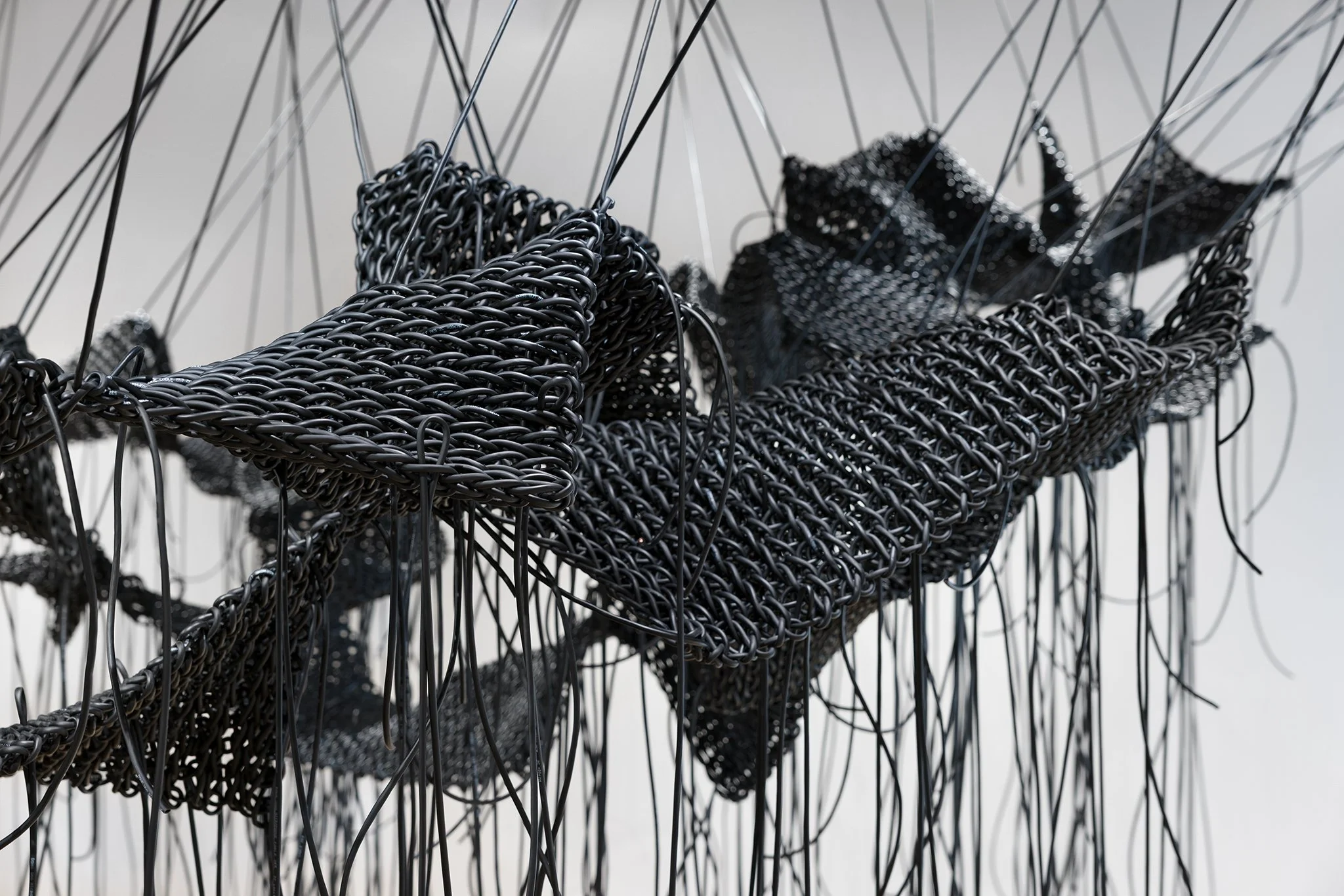
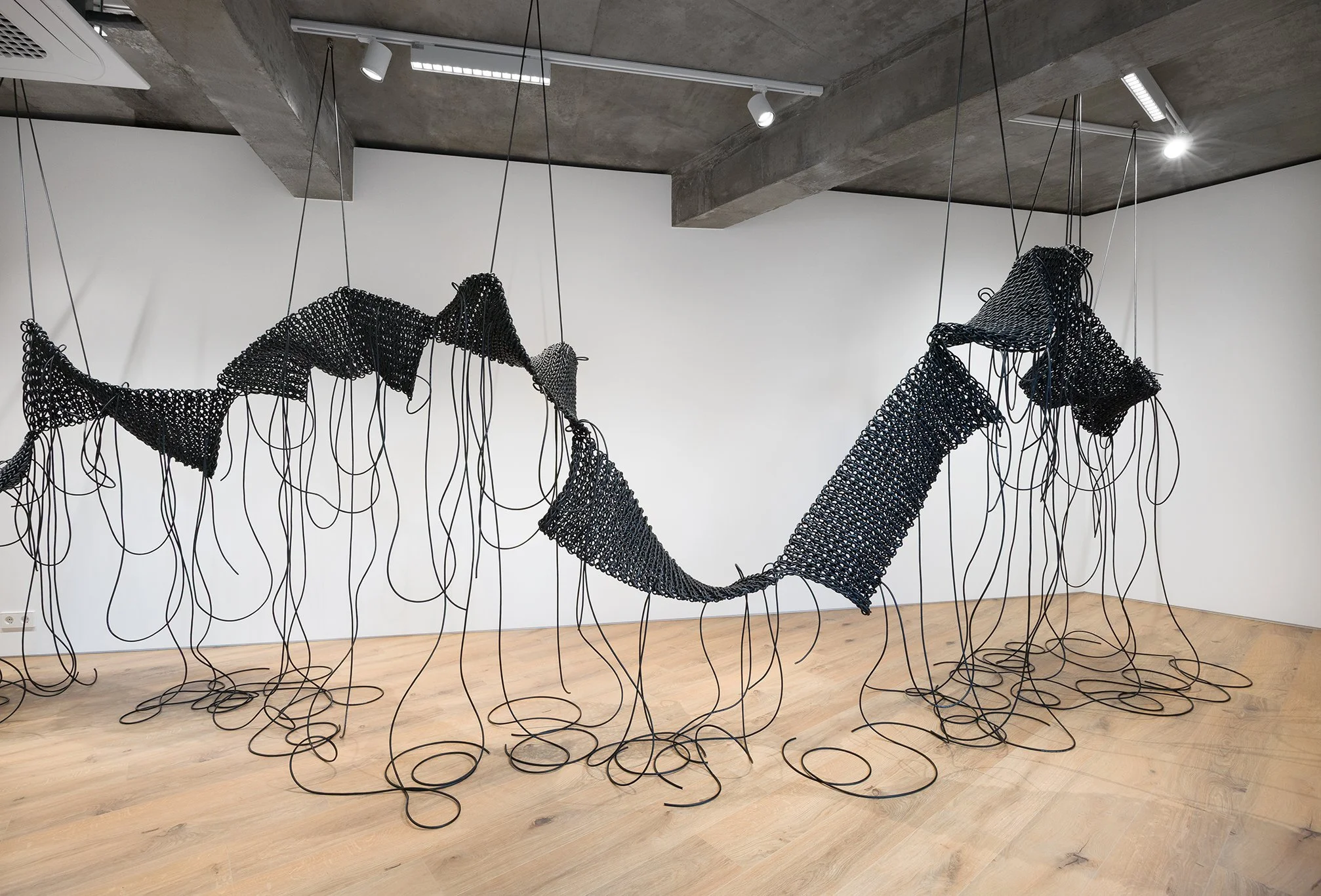
Kwangho Lee, Ouroboros, 2025, Frieze House Seoul. Images courtesy of the artist.
LDH: Does your personal experience of ‘home’ — as a place, a space, a concept — influence your design practice?
KL: In truth, 'home' is a concept I feel no need to define separately. From the moment I began this work, my home and my family have always been there. When I think of my existence, home is the naturally assumed foundation. It is the place where I began, and it remains the most certain source of motivation that allows me to immerse myself in my work. Rather than a grand philosophical rhetoric, home is the very reason for my existence. I also hope that, to someone else, I myself might eventually become a 'home’. For me, home is not a subject of my work, but the most fundamental source of energy that makes all my activities possible.