
Photography by Anna Kucera
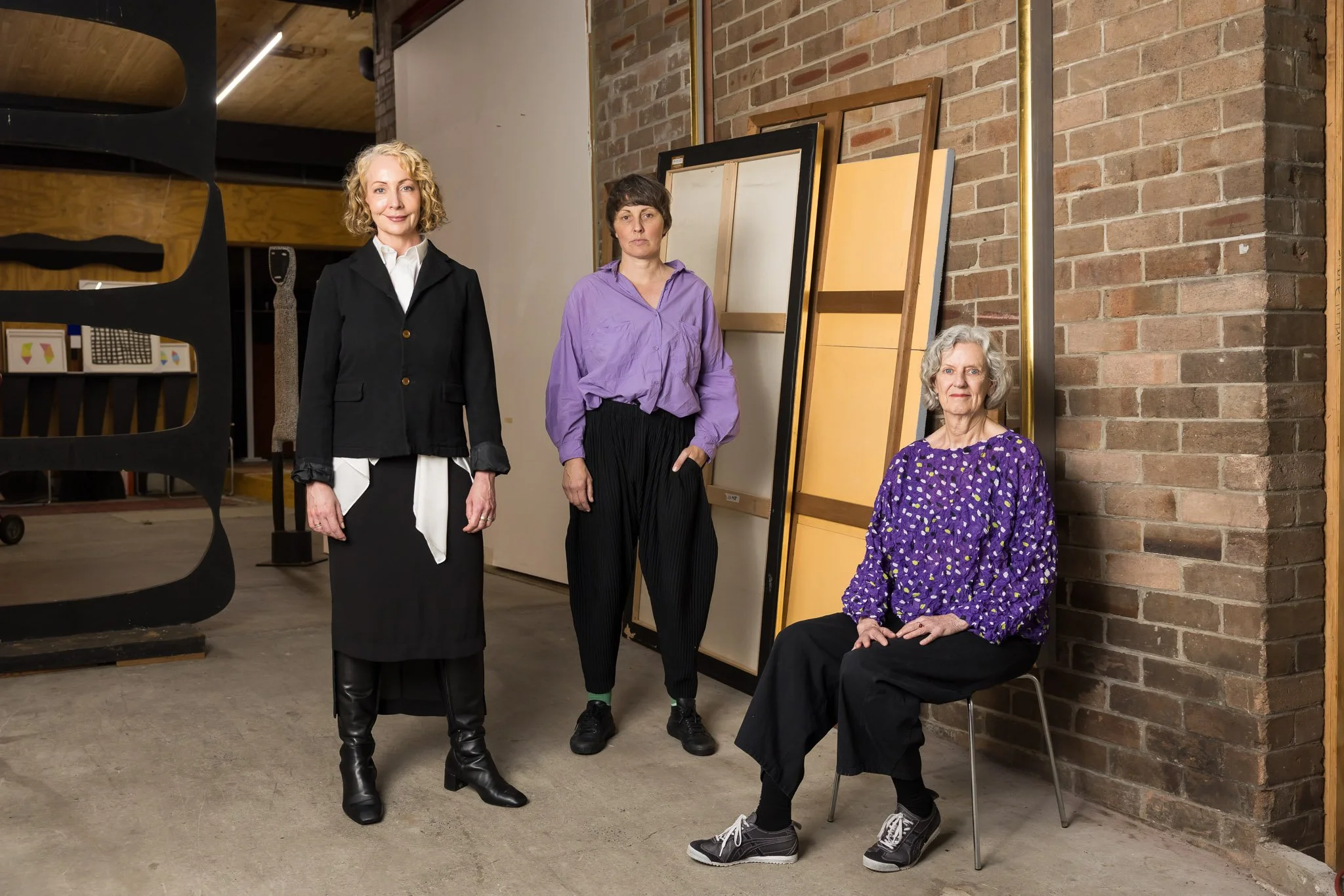
Heidi Forbes, Izabela Pluta and Helen Eager
The objects we surround ourselves with carry stories, memories and meaning, shaped by creative exchanges and unexpected collaborations which often go unnoticed.
Conceived as a new way to support Australia's creative communities, Arthur Alley Studio brings contemporary artists and Australian makers together through a series of limited-edition homewares. Founded by Heidi Forbes and Matthew Allen, the studio offers artists a new way to extend their practices into the everyday. For its first commissions, artists Helen Eager, represented by Utopia Art Sydney and known for her signature geometric abstractions, and Izabela Pluta, represented by Gallery Sally Dan-Cuthbert, whose practice spans photography, sculpture and installation, translate their distinct approaches to colour, light and material into functional forms and objects, opening up new ways of thinking about how we live with art.
A-M Journal speaks with co-founder Helen Forbes and artists Helen Eager and Izabela Pluta about the possibilities of working across disciplines, the relationship between art and design, and what happens when different ways of thinking and making come together.
ARTS-MATTER: Arthur Alley Studio sits at the intersection of art, design and social impact. What inspired you to launch the studio, and what are you hoping to shake up in Australia's creative landscape?
HEIDI FORBES: Arthur Alley Studio has been taking shape over seven or eight years. I’ve experienced the arts sector from several sides: as a senior executive at the Museum of Contemporary Art Australia and the Sydney Opera House, as a philanthropist and as a collector. My co-founder and husband, Matthew Allen, is an architect and Director at Bates Smart, where large-scale projects usually include a public art commission. Our two careers gave Arthur Alley Studio its DNA.
What turned the idea into an enterprise was the need we saw up close. Artists are under growing financial pressure, cultural institutions are stretched, and the decline of local manufacturing. Only 9 per cent of Australian artists now work full time on their practice, down from 55 per cent in 2009.
As we were developing the business, I visited the Bauhaus in Dessau. The Bauhaus was a turning point for collaboration between artists, designers and makers, and the idea of bringing that energy to a new Australian enterprise really excited us.
I wouldn’t say we’re shaking things up. Our quiet challenge is to build an enterprise that supports the arts in a fresh way. We want to extend the creative ecosystem: bring new audiences to artists, give Australian makers rewarding work, and offer an independent way to support the arts that doesn’t exist yet. As a social enterprise, we put all our profits back into that purpose.
A-M: In a world of mass consumption, you're creating objects designed to become future heirlooms. What makes something worth keeping forever?
HF: Storytelling and meaning, a sense of time and place, and craftsmanship. Arthur Alley Studio gives artists a platform to take their practice, and the way they see the world, into new territory: functional objects for the home. Each limited edition comes from one artist working closely with and Australian maker. Once the run is complete, it is never repeated. Every piece comes with a numbered, signed Certificate of Authenticity, so its story stays with it.
Our timeframe is 20 years, not 20 minutes. Because we make small runs locally rather than chasing scale offshore, everyone who buys a piece becomes a collector and joins a community that helps fund the next commission. What we want to make are artefacts for everyday life, made to be used and handed on.
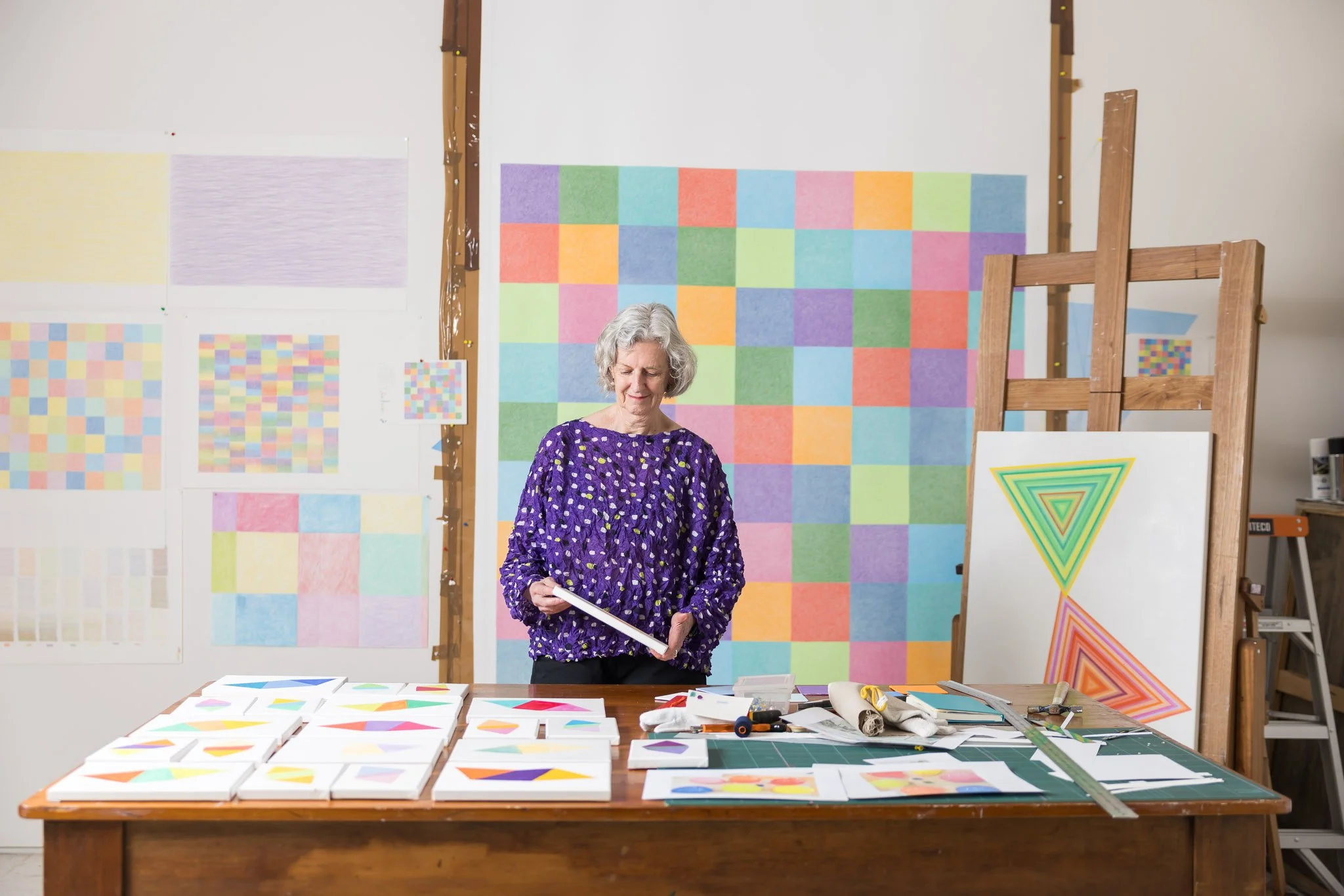
A-M: Helen, colour and abstraction are central to your practice. What excited you about taking your work beyond the gallery wall and into the everyday?
HELEN EAGER: How we live is important. I’ve always admired good design. I’ve always liked a challenge. It is good to think differently. My work always requires working out how to make it really work. Colour is central to my practice, it follows it will be a feature of my design.
A-M: Izabela, your work often explores memory, place and materiality. How did these ideas translate into your collaboration with Arthur Alley Studio, and did the process challenge your usual way of working?
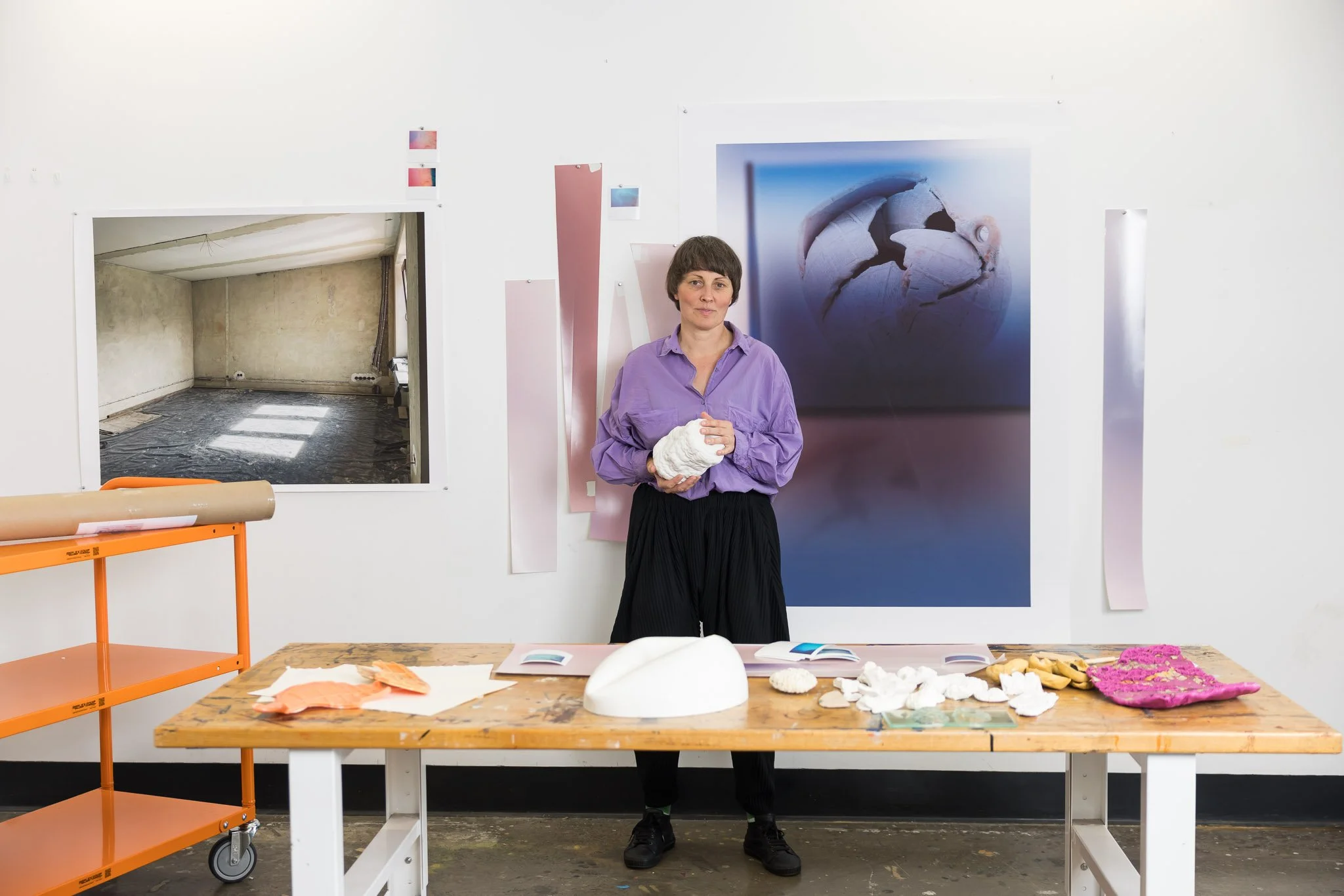
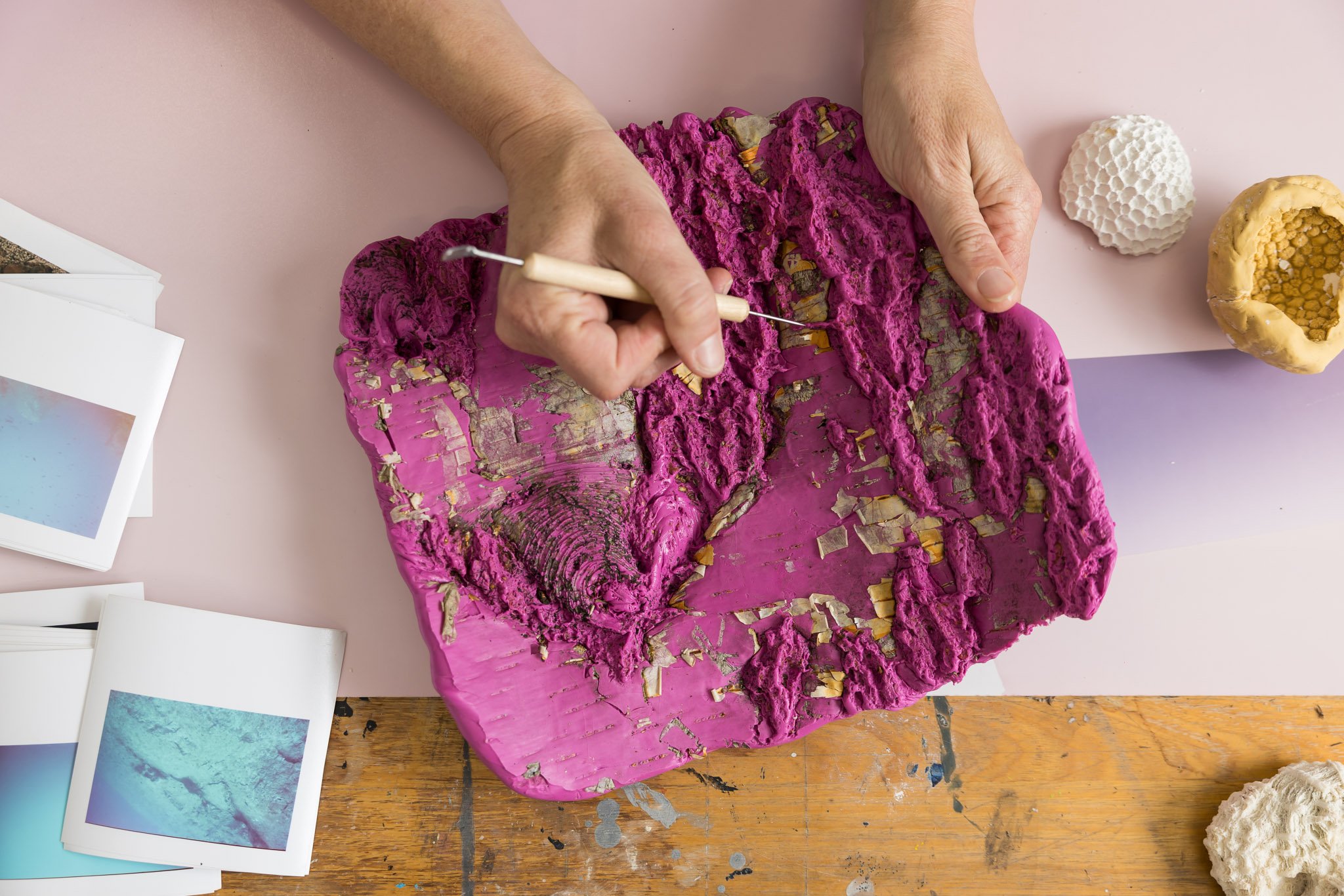
IZABELA PLUTA: My practice is grounded in an interest/obsession in how images and materials carry traces and forces of time, place and experience. I'm often working with processes of transformation, where materials are exposed, altered, displaced or reconfigured, and where the resulting object holds something of that history. Temporality that is very much layered but often fractured — both materially and conceptually. Much of my work considers the instability of images and the ways materials register time.
The collaboration with Arthur Alley Studio has offered an opportunity to bring some of these ideas into a different material and functional context which is exciting for me. I am always testing materials and trying to think of new ways of transferring ides into material forms — to see what kind of energy they can summon. I was interested in what happens when an artistic language developed through photography, sculpture and installation enters the realm of design, where questions of use, scale and the relationship to the body become more immediate. I love that this kind of object can also have a function, and a purpose that is different to the way I work with artmaking. How might glass operate photographically, not simply as a surface for an image, but as a medium through which light, reflection, refraction and chance become active? Glass has its own capacity to gather, transmit and distort light, producing fleeting images and optical effects that shift according to the conditions around it.
The collaboration extended my usual way of working, opening up possibilities for how an object might hold both a functional purpose and a more unstable, perceptual experience. In this sense, the work continues my interest in photography beyond the fixed image, considering how light and material might produce an image that is continually changing. Much of my practice involves experimentation and a willingness to allow materials and processes to determine outcomes. Working with Arthur Alley Studio introduced another set of considerations and possibilities, particularly around how an object might operate in everyday life while retaining a sense of ambiguity and material presence.
A-M: The line between art and design is increasingly blurred. Does it even matter anymore? Can a functional object hold the same cultural value as a work of art?
HE: Art and design are not the same, but a functional object can be more than just useful. The best design can certainly stand as part of our cultural heritage. I don’t think the line between art and design is any more blurred today.
IP: I think the distinctions between art and design are still useful and can be productive, but perhaps less as fixed categories and more as different ways of approaching an object. Both fields involve material experimentation, problem-solving, although they might begin with different intentions or a certain kind of grappling with a conceptual intention or in the way that I make iterate in the studio, the work is often created with elements of intention and chance, its generative and responds to materials, but also holds a responsibility to enter a conversation with the discourse, or the socio/environmental politics of its time.
I'm interested in the idea that function doesn't necessarily diminish an object's capacity to hold cultural or conceptual value. Objects can carry histories, memories and social relationships, and the things we live with often become deeply embedded in our understanding of place and identity.
For me, the more interesting question isn't whether an object is art or design, but what kind of relationship it invites. It’s capacity to be read, felt... remembered. How does it ask us to look, touch, use or think differently? A functional object can be as culturally resonant as an artwork, although that value might emerge through a very different kind of encounter.
A-M: Collaboration often means letting go of creative control. What surprised you most about the process, and did it shift the way you think about your own practice?
HE: Collaboration in its true sense means both parties contribute and learn together. I am not giving up my creative control. I’m learning what is possible and how together we can make it work. It is exciting to experience a new medium. You have to flex and learn and hopefully grow. Glass is an amazing medium; the translucency and intensity embodies light. My latest projections do that too. My challenge is to translate the potential I see into Reality.
IP: Collaboration is already an important part of my practice, particularly when working across different materials, technologies and disciplines. I am always generally stretching where my practice is at and testing its limits. I don't necessarily think of it as relinquishing creative control, but rather as opening up a process to other forms of knowledge and expertise. I see it a super generative and I get a lot out of it.
What I value is the moment when an idea begins to develop beyond what either collaborator might have imagined independently. There is something productive about encountering another person's way of thinking through materials, through form and process, particularly when it introduces possibilities or constraints that you wouldn't ordinarily consider. I love thinking out aloud.
Working with Arthur Alley Studio has been an opportunity to think about how my visual language might operate in another context, and how the demands of design can generate unexpected outcomes. It reinforced something I already value in my practice: that experimentation, dialogue and a degree of uncertainty are often where the most interesting work begins!