
Arco Takes Its First Bow
Words by Lameah Nayeem | Photography by Aidan Ouma
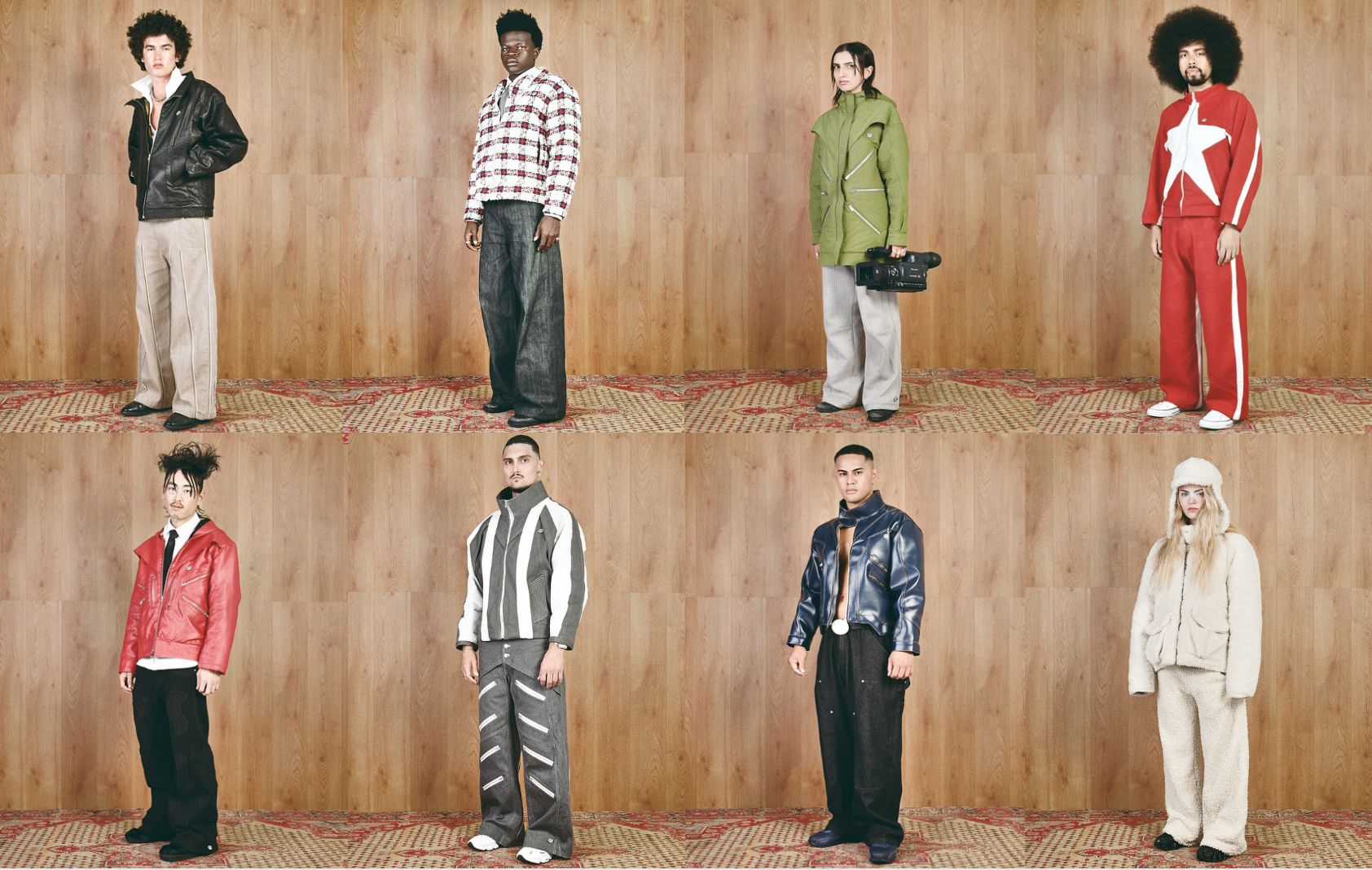
For the past few months, emerging streetwear label Arco set to breaking ground in Sydney’s fashion scene. Last month, the trio took over Lunar Studios for a stellar debut runway show and can now fairly claim veni, vidi, vici. Helmed by Kieran Medeiros, Satya Ganesh and Domengo Anastopoulos, Arco’s design language shares kinship with established brands. Their stylistic roots gesture toward Glenn Martens’ Diesel, Dsquared2 or Calvin Klein at their spunkiest. For the Arco wearer, words like saunter, command and charm are conjugated through the label’s starburst zippers, contrast seams and playful silhouettes. Still coming off the high of their show, Lameah Nayeem speaks with the Arco triumvirate about their runway debut, design philosophies and their brand identity in the making.
LAMEAH NAYEEM Tell me about Arco’s journey from its beginnings to what it is today.
KIERAN MEDEIROS Satya, Dom and I were all mates in high school, and we always went by the group name Arco. After school finished, we went to Ballina and came across a T‑shirt printing place. That’s where we printed the first Arco T‑shirt. Once we had it in hand and wore it, we realised this is the path we want to take. That was the end of 2020, early 2021. Since then, we’ve been developing our skills to get to where we are now. Learning how to make clothes, learning how to film, learning how to be more capable as people.
LN You called yourselves ‘Arco’ in high school? What does it actually mean?
KM We started as a SoundCloud group, just making music.
SATYA GANESH We made absolute joke songs. And then Dom went on a Spanish word generator. The first word that popped up was ‘arco iris’. We just took ‘arco’. It didn’t really mean anything at the time. We had to give it meaning.
LN Talking more about the runway show itself, what was that process like, especially as an emerging label?
SG Honestly, everything just came to be. We didn’t plan anything properly until after a pop‑up we did in August. We knew we wanted to do a runway show at the end of the year, but we had no idea how to get there. We happened to meet a producer, Joel, who brought organisation and structure to how we work. Then we got Kitty, one of our producers, involved, and suddenly there were so many people working on this thing. It became much bigger than just us.
KM We’d spend our days at our day jobs, then go to the office after work and stay there very late, sorting through all the small components of such a big event. We had to build departments, assign leaders, and let them bring in people they trusted. That kept happening until we had this massive team onboard who were genuinely down to help.
Without Kitty none of it would have worked. She made sure everything was in order. She was completely on top of it, which was crucial.
DOMENGO ANASTOPOULOS There were also a lot of sleepless nights and a lot of hours put in. For me especially, because I do both music and clothes, I decided to just put everything into this runway show. I wanted to look back and say, that was the best thing we’ve done. So we really gave it our all.
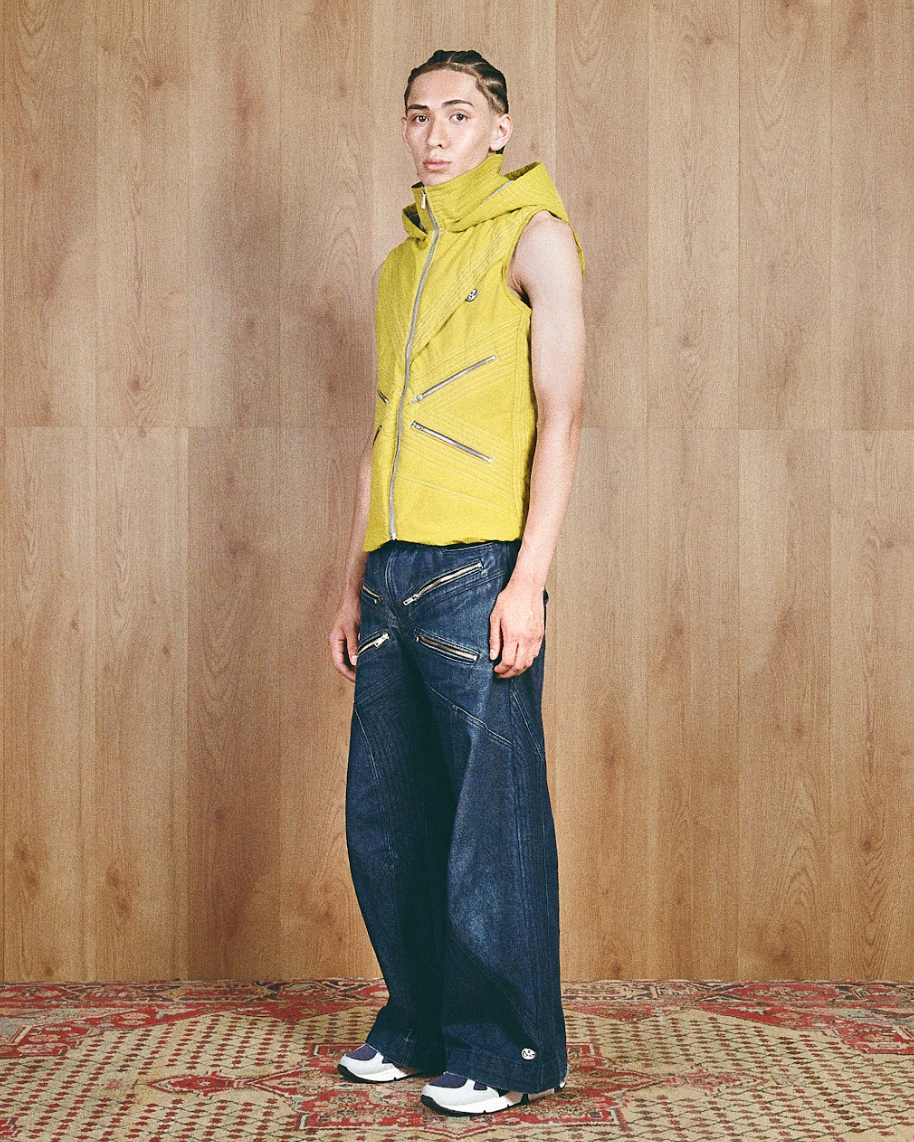
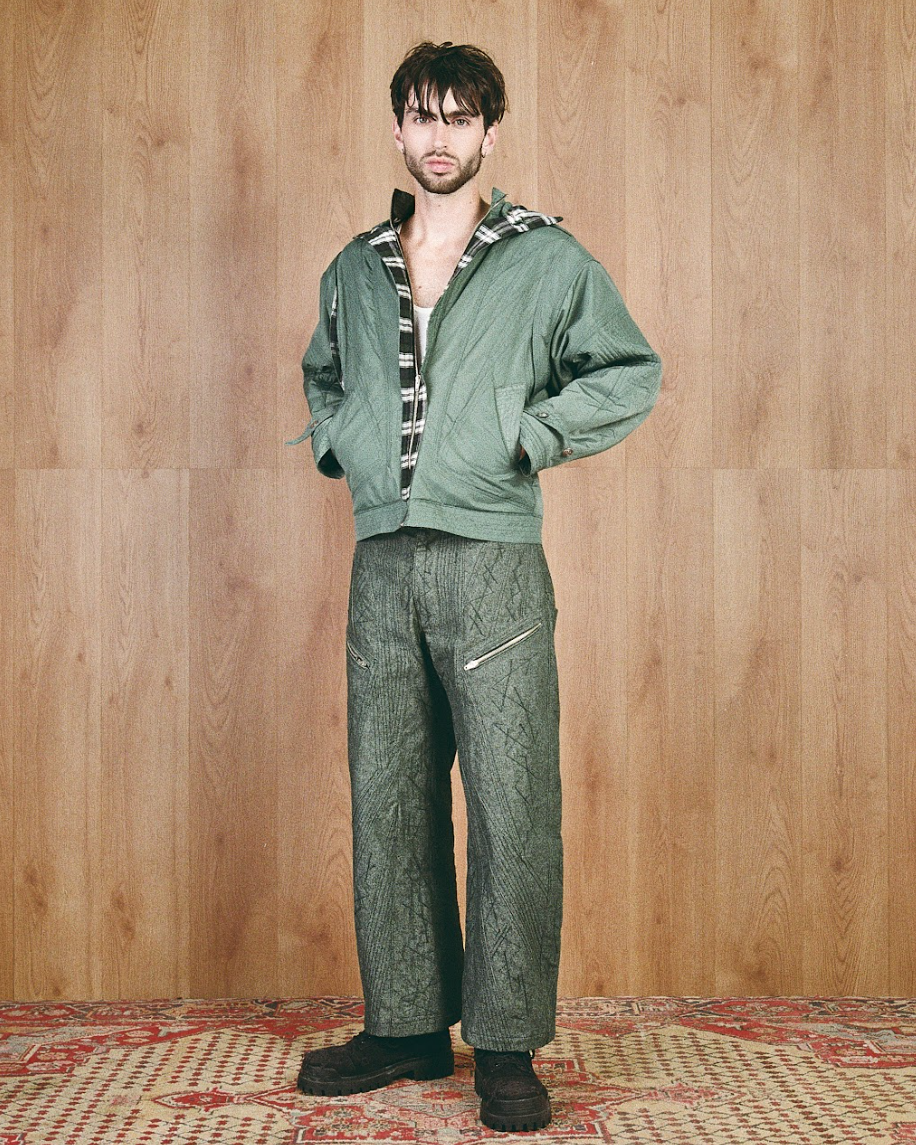
LN Are there any memories before, during or after the show that stand out to you?
KM The night before our very first fashion show, we were at the venue cleaning barrels in an industrial parking lot. We’d picked them up from a sausage casing company for an installation. They smelled terrible, so we were wiping them down the night before the show. That’s something I know will always stick.
SG For me, I remember sleeping at the office to edit the main promo video for the runway. Dom and I stayed there overnight just to get it finished.
DA I remember making an insane number of pitch decks. Sponsorship slides, hoping companies would give us free stuff or be part of it. We got so many rejections. Most of them didn’t land, but a couple did. Then the night before, I had a dream about a train crash because I was so stressed. I kept thinking, hopefully I don’t mess up my lyrics on stage, hopefully the lights look right, hopefully it feels cinematic enough.
I was worried about everything. What if too many people show up? What if we can’t let them in? What if the event gets shut down? On the day, though, there was this huge sense of relief. And then the day after, we were cleaning out the venue, packing everything up, and processing what had just happened. It was funny and bizarre.
LN Putting on a runway show means wearing multiple hats. Beyond designing, you’re also storytelling and curating. Was there an element of that process you resonated with more than others?
KM The hands-on work, the installations. The clothes were already made by the time the show came around, so I wasn’t designing new pieces for it. I resonated with building things, being a line producer, physically putting it together.
SG For me, it was having a team for the first time. Runners, a video team, managing people dedicated to specific roles. Usually it’s just the three of us and a couple of mates. This felt different. Bigger. Better energy.
DA I loved the ideas stage. Kieran and I went back and forth on the runway concept, how to show everything we’d made at the beginning, then end with the current work. We brainstormed the videos, the casting — wanting artists rather than traditional models. People who already do creative things in their own right. That felt important. Bringing Sydney culture into it was a big part of why the show worked.
LN You mentioned the clothes were pre‑made. How did you go about curating a theme or story for the show in that case?
KM That part wasn’t hard. The theme was the process of learning, my entire history as a designer, from not knowing how to make clothes to where I am now. We included everything I’d ever made and split it up by eras. The visual storytelling came directly from the progression of getting better at making clothes.
LN As a team, what inspires you most?
KM Making something great for where we’re from. To inspire other people.
SG I don’t really have anything different to add.
DA Definitely inspiring others, elevating ourselves, and hopefully helping elevate other people too.
LN I want to talk more specifically about your design philosophy and sources of inspiration. I saw a video where you used fabric from a Gucci jacket. I loved that idea of taking textiles from high‑culture contexts and transforming them into something suited to Sydney streetwear. What’s your thinking there?
KM My design philosophy is not planning anything in advance. I don’t draw first, I just let it come out. I freestyle everything I make.
LN You go straight into pattern‑making?
KM Straight into the pattern. Cut it up, sew it, and hope it’s a hit. Now I’m at a point where I trust that process. After the piece exists, I can pull the inspiration from the source. It comes afterwards. I don’t work the other way around.
LN How do you define the ‘Arco’ individual? What makes your approach to style and streetwear distinct?
DA The brand reflects our personalities, our playfulness, how unserious and serious we can be at the same time, and our dedication to doing things ourselves. That’s a big part of our lives. We’ll get it done, no matter what.
SG Arco feels like an entity, its own world. The videos, the clothes, us, the community — it all comes together to create a certain vibe.
KM Our approach is to draw on things we’ve lived through or things that are universally relatable. Relatability is what we try to bring into everything we do.