
Hope in Horror with Leviticus’ Joe Bird
Interview by April-Rose Desalegn l Photography by Seung Rok Baek
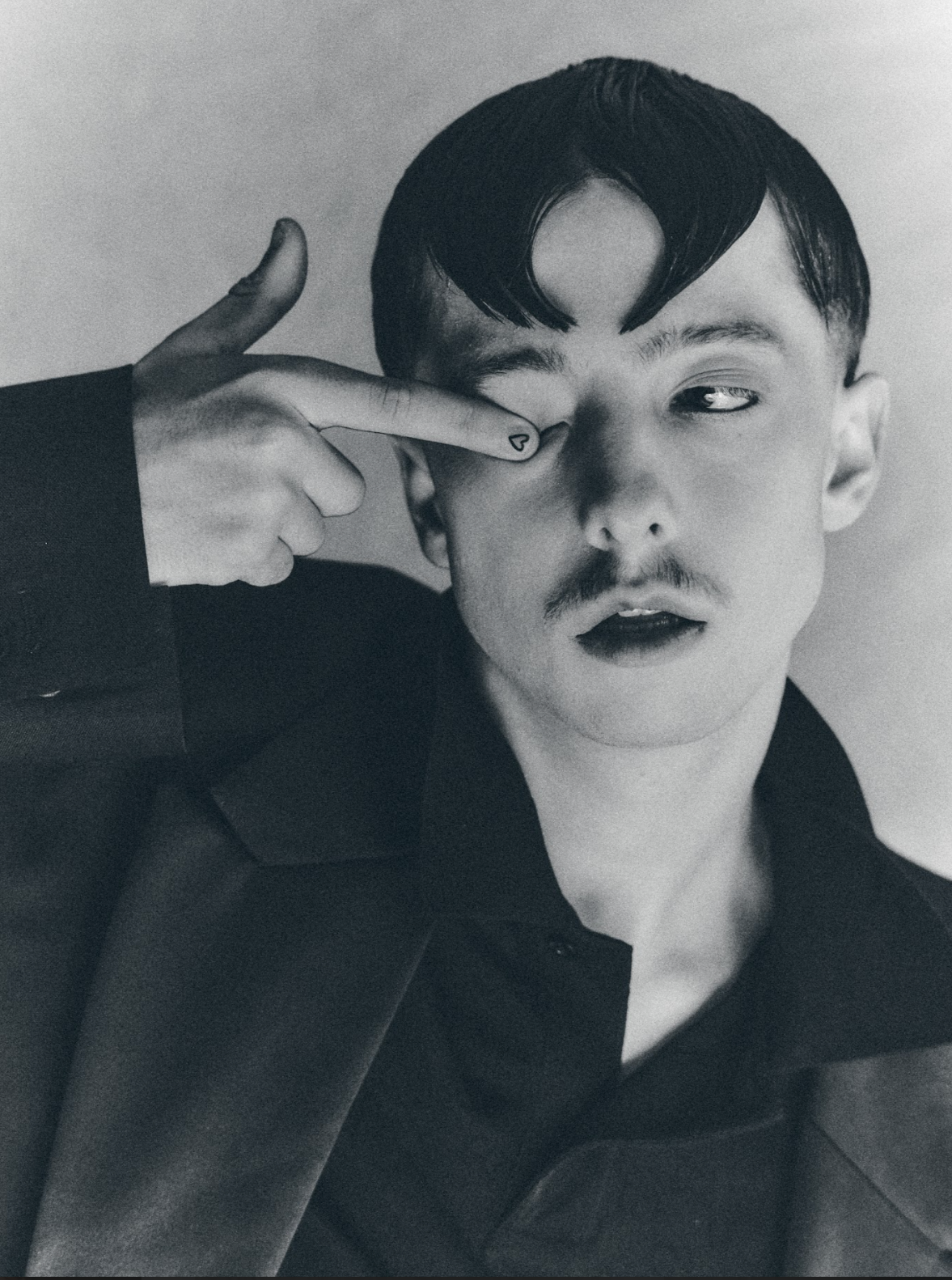
Gucci polo, stylist’s own blazer
Hope is the key to Australia’s most affecting horror of recent times. Leviticus brings a softness to the supernatural – charged on by rising star Joe Bird, who captures the nuance of male adolescence with boundless compassion.
Writer-Director Adrian Chiarella won’t tell audiences what he believes the true ‘monster’ to represent, but whether it is conversion therapy or internalised homophobia, it is terrifying — taking shape of the person you most desire, then luring you close. This predicament proves difficult for the lustful and enamoured Naim (Joe Bird) and Ryan (Stacy Clausen), two gay teenagers from a religiously conservative Australian town who must reject their true identities to avoid the grotesque consequences.
Returning home from Sundance, Leviticus hits mainstream Australian screens today – and speaking to the silver-tongued Joe Bird, one understands why the inquisitive, gracious young actor keeps being cast in the industry’s most compelling original screenplays.
APRIL-ROSE DESALEGN: What sort of journey do you hope to take people on in Leviticus?
JOE BIRD: I think what we really wanted to aim for was showing these boys becoming men, and not men that are stronger in the end or what-not – because every man is different – more in a sense of showing that these boys are choosing to live in hope instead of fear. And showing that, you know, that's them becoming men. It's not the traditional “they're men because they're strong and they've fought a demon” or whatever. It's that emotional maturity and emotional intelligence. Being able to accept things for how they've happened and being able to move on.
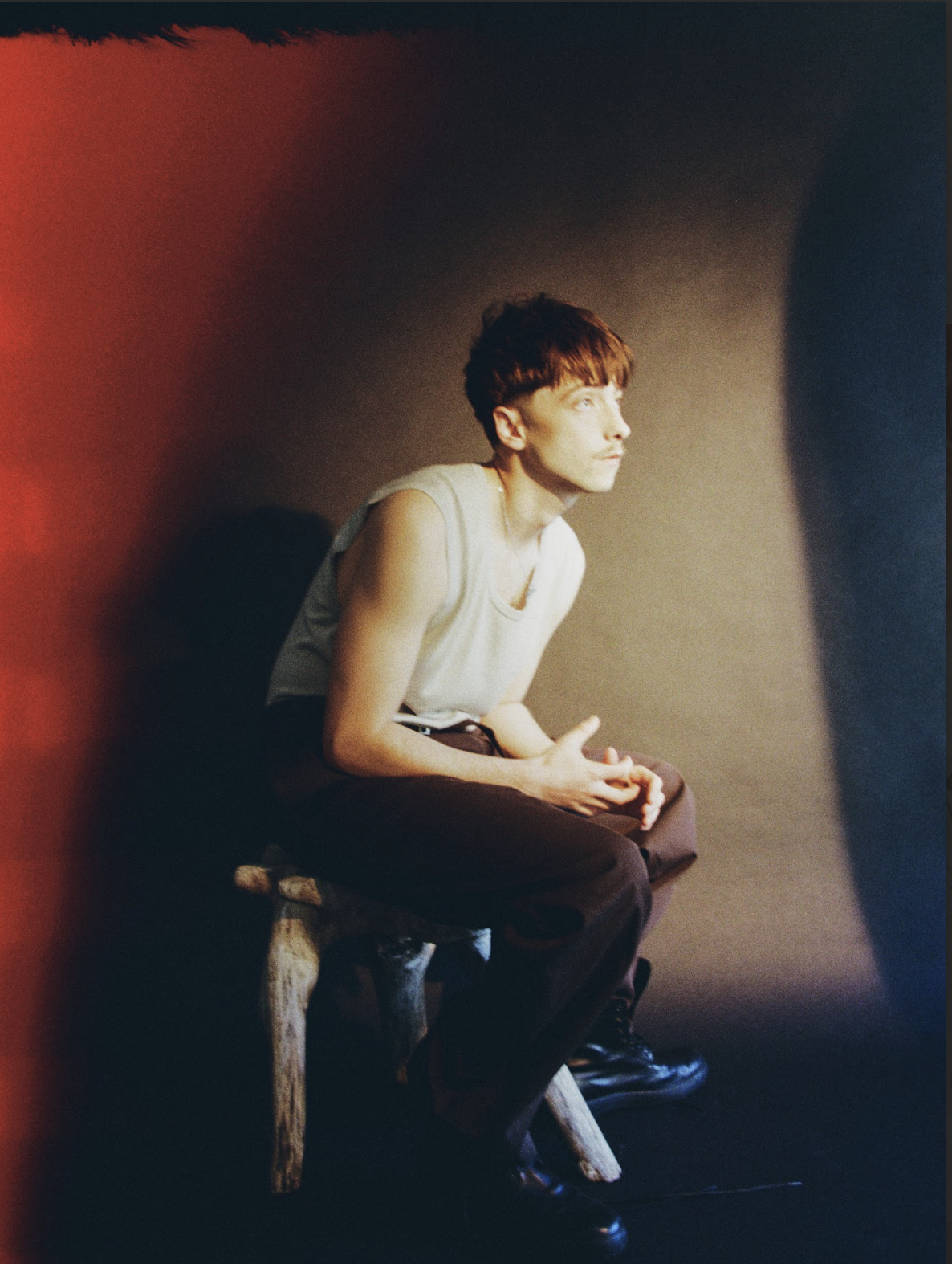
Hermès tank and pants, Tods boots
AD: What was the casting process like?
JB: It was actually quite interesting, because it was me, Jeremy, Stacy and these two other guys and we did a whole lot of different combinations. I was only going for Naim, so I did my thing with everyone. I remember Jeremy was going for Ryan and Hunter, and then Stacy was going for all three characters. Props to them, because they had so many lines to learn. I think it's such an interesting part of the auditioning process, because they just try out so many different things to really find out what they want. It shows how good Nikki Barrett [the casting director] is, and how the Causeway team are really trying to find authentic, real people for these roles, not just bigger names.
AD: So it was a really authentic audition process.
JB: Yeah, and I know Adrian has spoken about really wanting to cast the right age and not having 25 year olds play teenagers as well, so in that audition process we were all around the same age. I’m always drawn to working with [people like] Adrian, for example, who has been in this industry for so long, and even though this is his debut feature film, he's worked in TV, he used to edit trailers…I've been very lucky that the filmmakers I've worked with have all had a really broad knowledge of things, and I feel like that's what they breathe into their projects, because the projects I've been lucky to be a part of have been very multifaceted and have depth.
AD: I think that's great how you take notice of that as an actor. You are clearly someone who consumes so much data around you and is processing that data really quickly – and meaningfully interacting with it. That comes through in your performance.
JB: I feel acting…it all really stems down to connection, right? People make things to hopefully connect to other people, and art is subjective so you might not like something, but I feel like I always appreciate the effort that went into something.
AD: Yeah. I guess it's also a part of trying to discover that unknowable secret — how someone makes their art.
JB: Exactly.
AD: So let's talk about your character, Naim. Were there any new approaches that you took? As you've done horror before, in Talk to Me.
JB: I think Naim is a completely different role to Riley [in Talk to Me], and I think what a lot of people maybe don't realise is that I actually filmed a couple of other projects right before going back into horror. Working on those projects I learned so much because I'm working [in] a different genre, with different filmmakers and different producers [that] I brought into Leviticus. I actually saw Milly Alcock say this in an interview the other day, that you change after every job. I feel like my acting approach changes after every job, and it changes while I'm doing it, and so when I come to Leviticus it's a very different role to Riley, in a sense that he's not the reactive character, he's not having prosthetics on his face all night – it's a lot of the things he is observing, and the emotions have to go through him first to then go to the audience, because the film's from his perspective. It's also a thing that you can't judge your character, and I think an approach I also took is not judging anyone else's character, because a quality in Naim is that he understands people.
AD: You’ve led us towards one thing I liked about Naim. As much as he has every right to, he doesn’t hate his mother for, frankly, ruining his life.
JB: Yeah, Adrian – because he wrote these characters so well, I completely understand her actions. Her husband has just died…she's just seen another kid die after, you know, these things, and she's like, "I don't want my son to die”. So that’s the interesting thing, because you can understand that, but you can also disagree. It's living in that middle part. That’s what I think is a really cool part to explore.
AD: I think it's about different types of survival, right? Our parents know one type of survival, and the new generation knows another. If that's at complete odds, then that's when you have to, unfortunately, sever ties.
JB: Exactly, yeah.
AD: You mentioned earlier how ‘hope’ is a core quality of masculinity. Did you go into the film feeling this way, or did working on Leviticus help you calcify this idea?
JB: I went to a Catholic high school, and I think homophobia was very prevalent in just the school in general, because that's just, you know, that's the world we live in – and it wasn't that the school was in the wrong, it's just you'd witness it – whether young men are insecure about themselves and are projecting onto other people or they're just not comfortable with the idea because they haven't been educated on it. I think with these boys in the film, they're kind of showing that it doesn't matter, you know. There's no such thing as being a masculine or a feminine or whatever, you're just who you are as a person, and that's how you can be shaped, in the experiences that you've lived in. No one should judge someone for how they've grown up or what has influenced them to be who they are today, and I hope people watch the film and take that message away.
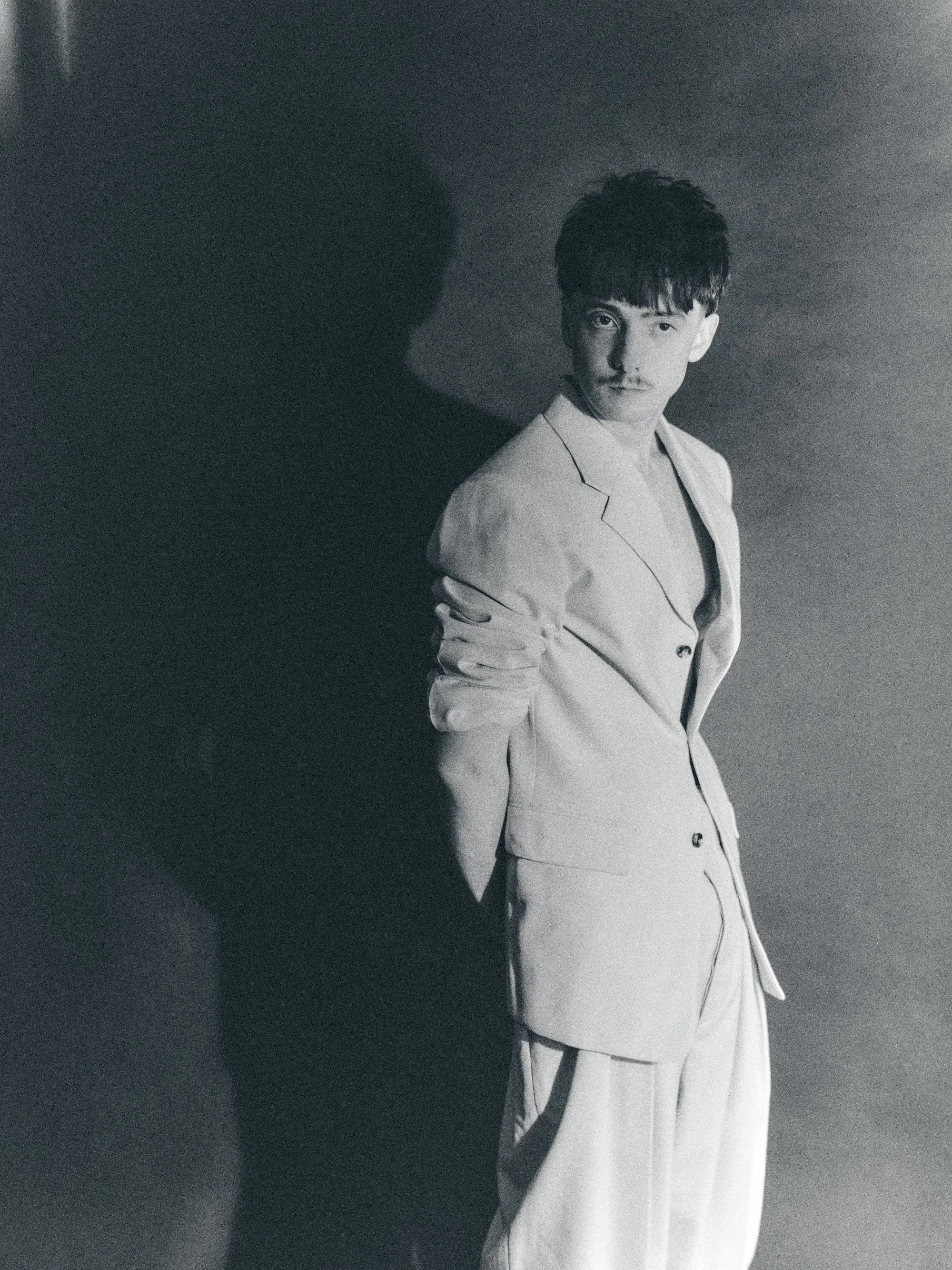
Bottega Veneta
Photographer: Seung Rok Baek
Fashion Editor: Lynn Mathuthu
Fashion Assistant: Kilimi
Hair: David Alfaro
Makeup: Eden Kinlock
Set Design: Tom Anson Mesker