
‘Continuity’, with London-based Industrial Designer Edward Robinson
Interview by April-Rose Desalegn
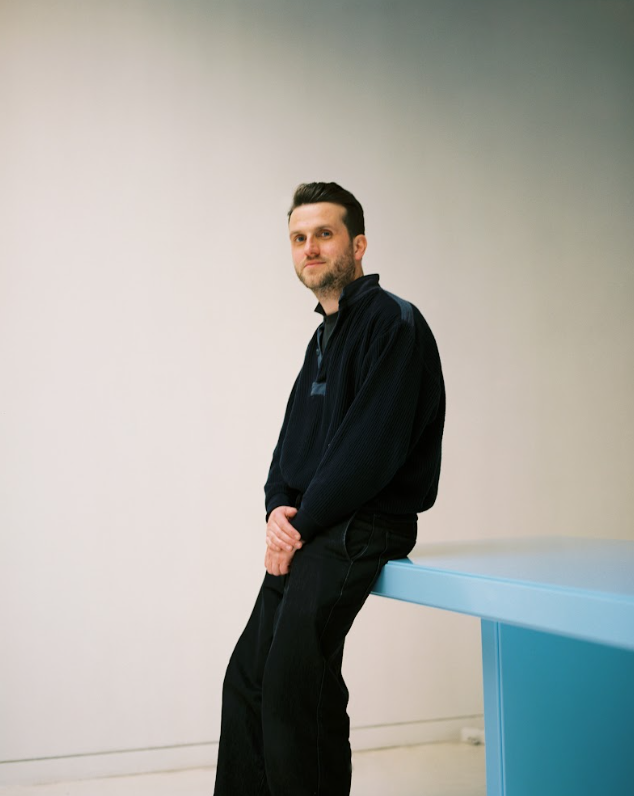
Image courtesy of Jousse Enterprise and Marion Berrin.
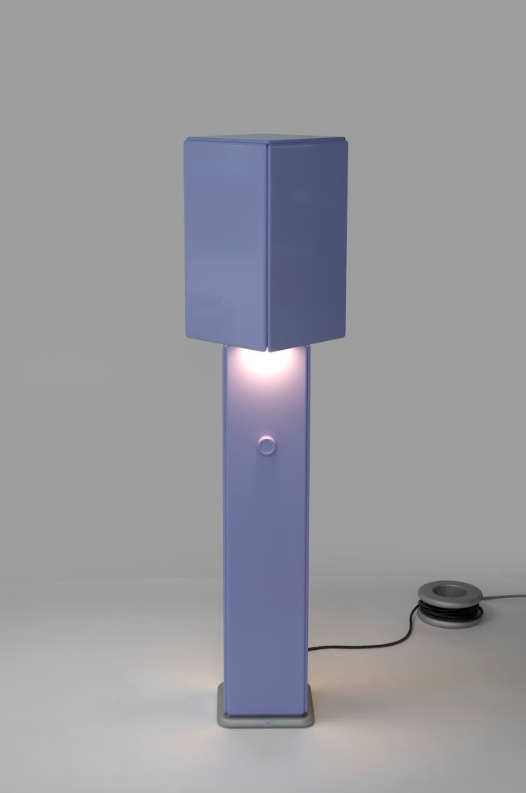
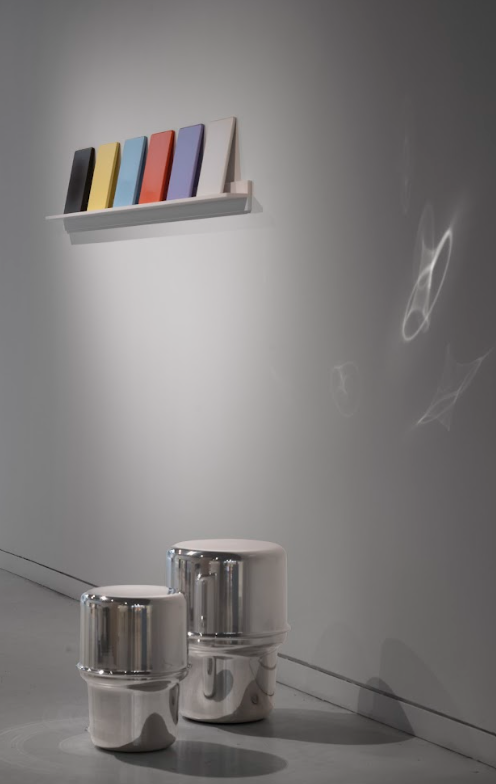
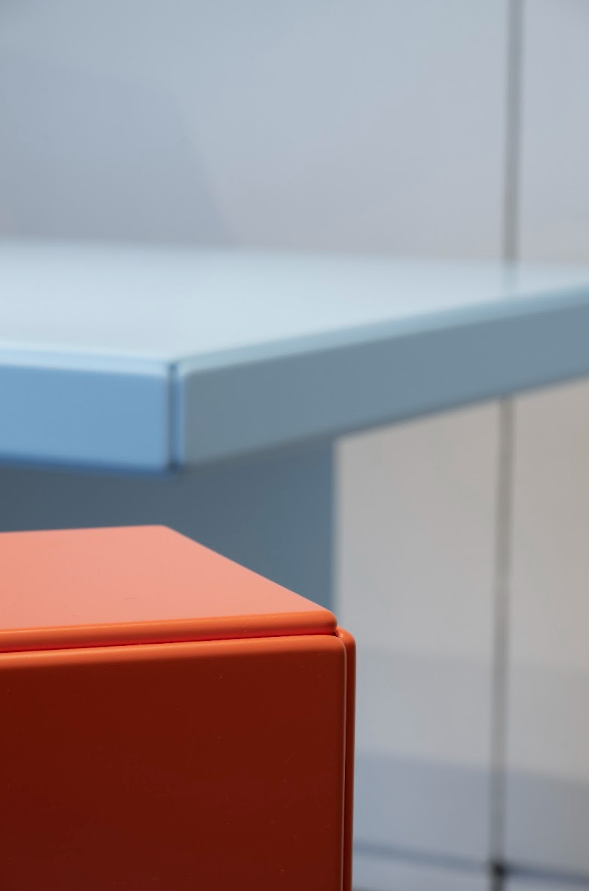
In a momentous new chapter for the Jousse Gallery in Paris, London-based industrial designer Edward Robinson unites three bodies of work — Board, Dyad, and Cloche — for his expansive new exhibition, Continuity. A series of contemporary stools, tables and lamps using hand-lacquered wood and machined-aluminium, Continuity is a foray into the past and present of industrial design. It reorients familiar industrial materials through scale, colour and light to offer innovative, subjective realities: smooth lacquer softens the corners of pastel panels, light is reflected off aluminium stools onto the surroundings, an asymmetrical lamp shapeshifts into a simple block when viewed from a specific angle.
Embodying his optimistic authorship, Robinson’s work nudges the viewer toward a feeling without overly engineering the emotional space. Technique welcomes human projection, craft invites atmosphere. In these objects, both new and familiar, we ponder the passing of time, and our place within it.
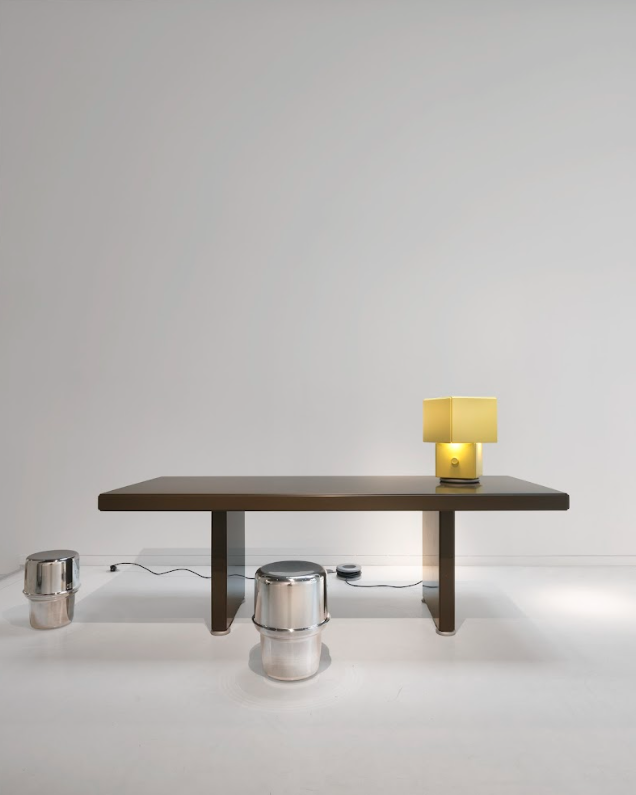
April-Rose Desalegn: Spanning three bodies of work and revisiting one of your earliest designs, the scale of Continuity is far-reaching. What was the first point of inspiration, and when did the triptych fall into place?
Edward Robinson: Honestly, it started in reaction to scale. I was working on packaging for Humanrace, where you’re dealing with very small, precise objects, and I wanted to take that same approach and apply it at a different scale. It was also a return to my training; I studied furniture and product design/making at university. Detail and finish have always fascinated me, so the idea of taking something as simple as the board and applying that level of care to it was exciting. Colour also played a role, as part of how I think about composition and how these objects sit within a space. The triptych came to life through a desire to create balance, and to bring an industrial design methodology into a gallery setting. I’m interested in creating objects that people can imagine in their own environments; it’s about choice, and about imagining how things can live together. These three bodies of work support that thinking.
AD: Unlike traditional notions of visual art, furniture interacts with the body. How do you approach the pieces when exhibiting them as a gallery experience, as opposed to a tactile, lived-in space?
ER: I think my role is to build a space where the pieces interact with each other, but ultimately I’m an industrial designer, and the relationship between a gallery setting and everyday use shouldn’t feel too separate. These objects should fit into someone’s space, be used, and age over time.
AD: Tell us about the exposed junction in the lamp. Why is it the collection’s defining detail to you?
ER: The exposed function is the key signifier of the board collection; it’s what brings detail and contrast to the overall objects. It also celebrates the construction and the craftsmanship. It indicates a level of quality and reinvention that I find resonates with people. There’s also a play of shadow and light, which adds even more visual volume to the pieces.
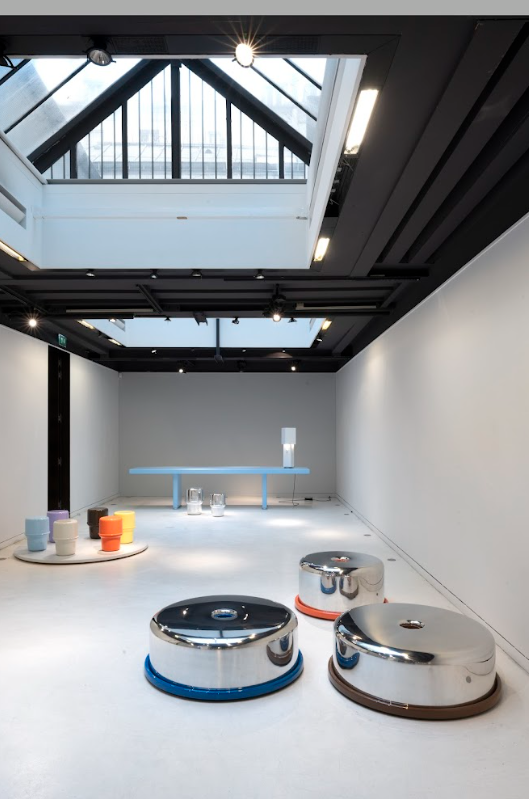
AD: I’m particularly interested in the dyad, as this is your second edition of the stool. How did you approach it differently, and why do you think it still garners your interest after all this time?
ER: Yes, it’s almost 16 years old, and it shows a level of consistency in my authorship. You can find clear links to other work I’ve done since then and now, and it felt like a full-circle moment for me. After moving through different phases, it was nice to return to this object with a level of skill that I’ve honed over the years. The object is far more refined now, and the scale, construction, and finish feel more coherent than the first version.
AD: You have had an eclectic and impactful career — innovating key footwear for Adidas and co-founding Humanrace alongside Pharrell Williams. How have these brand collaborations influenced your practice?
ER: I see my career as a series of phases, with a consistent thread being an industrial design approach. The projects have varied, but the focus hasn’t, it’s about applying that thinking to new challenges. Working with different brands builds your knowledge and your ability to understand different worlds. With Adidas, I learnt a lot about scale, about building proof of concepts within a larger organisation, and about working with a wide range of people. With Humanrace, I was able to build a world, from design through to identity and imagery. These partnerships have allowed my practice to work across many different objects, and on things that relate to our time and culture. Long term, I’m interested in finding new avenues for the studio and maintaining this variety of challenges. It’s something traditional industrial design practice embraced, and something I’d like to uphold.
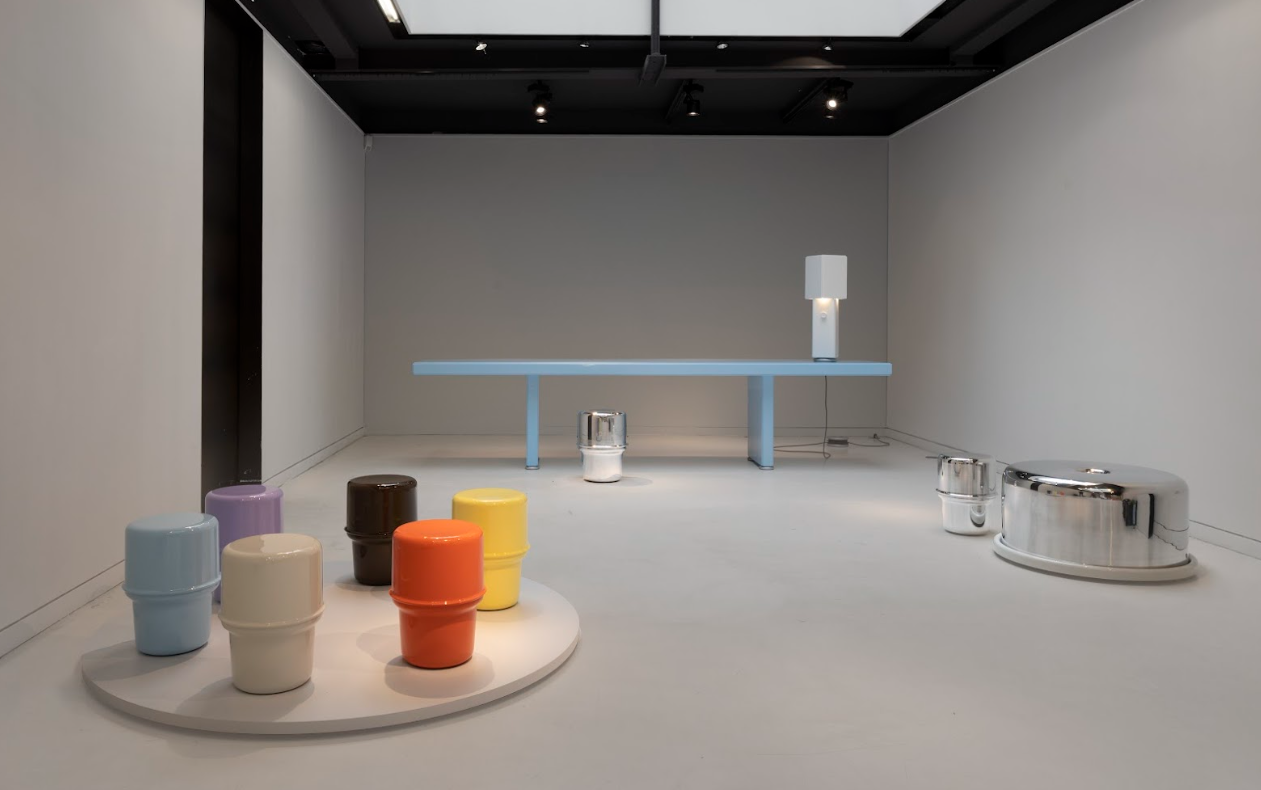
Image courtesy of © Fabrice Gousset and Jousse Enterprise. Edward Robinson, ‘Continuity’, 2026.
AD: You have mentioned that you are intentional in building your own environment that allows you to create. Does Continuity empower audiences to envision this for themselves?
ER: I’d like to think so, yes. I always imagine where my objects might end up, and what effect they may have on someone’s personal space. In a simple way, I hope the pieces in this collection can resonate and age over time alongside someone’s ambitions and the way they choose to live. Colour plays a role in that as well; within the board collection, you can choose from six colours, which allows people to begin shaping how the objects sit within their own environments.
AD: What has been your favourite part about making this exhibition?
ER: The challenge of creating something coherent, and building an environment that develops atmosphere through interaction with the viewer. Also, the opportunity to work with a great partner in Jousse Entreprise, a gallery that upholds values that align with my own.