
Interview by Lameah Nayeem | Photography by CaptureCharles
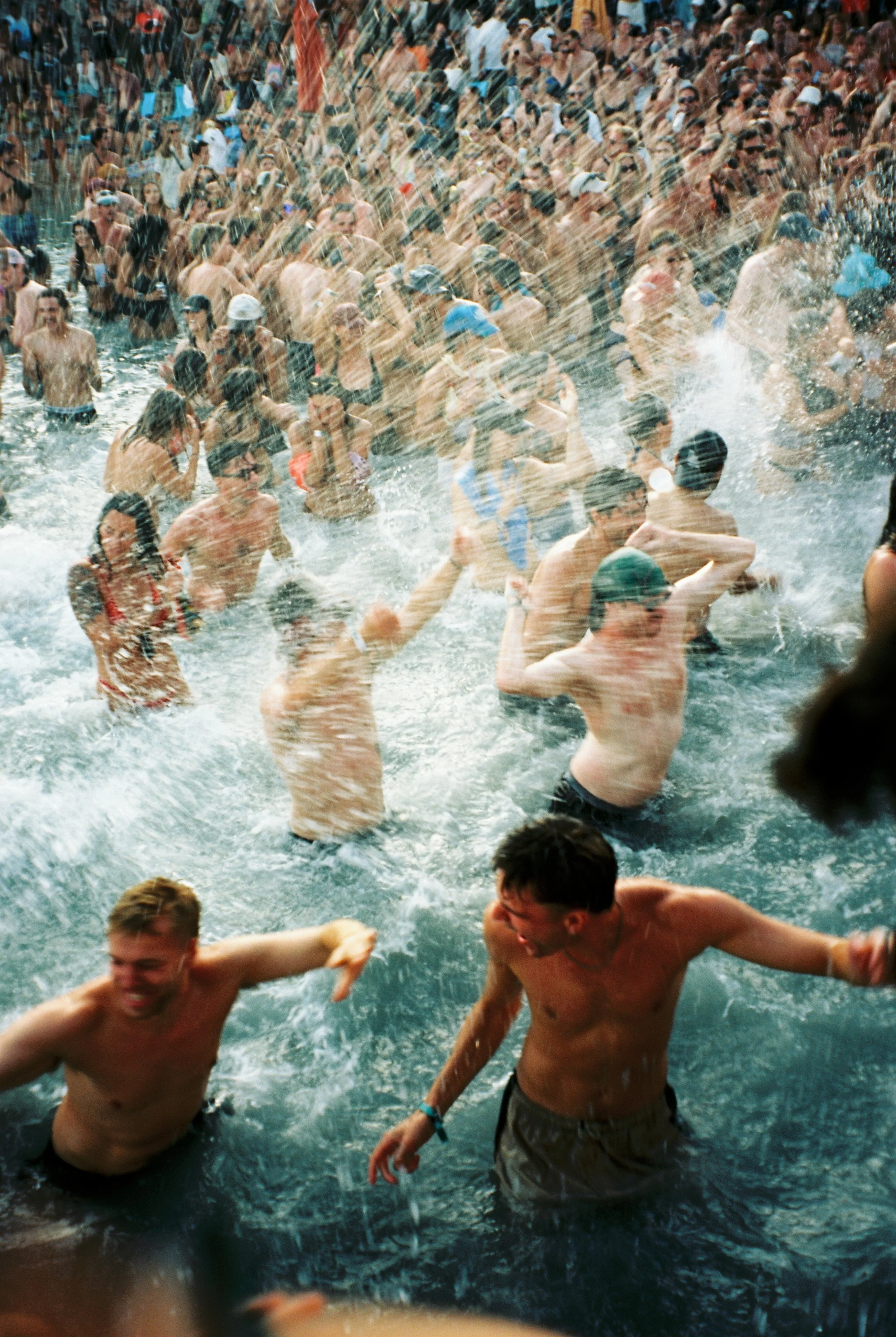
Blink-and-you-miss-it moments under the glare of fluorescent lights, the mingling of sweat and perfume, the pull towards rogue pleasure on the dancefloor — CaptureCharles, a Sydney-based nightlife photographer, reveres the fragments of nights barely remembered. Unveiling A Shot in the Dark at In-Between Ibiza until 8 May, the exhibition traces seven years of his nocturnal escapades across cities and subcultures worldwide. His images traverse finicky territory, memorialising sensations and social codes that, by nature, resist permanence. What emerges is nightlife photography as a provocation of unsettled memory and fleeting euphoria.
CaptureCharles recently caught up with A-M Journal to discuss the ephemerality of nightlife colliding with the supposed permanence of the image, the shifting tides of club culture, and the instinct behind capturing moments that were never meant to last.
LAMEAH NAYEEM: Your upcoming exhibition draws on glimpses of nightlife, hedonism, and collective release. What attracts you to these moments?
CC: I find it interesting to capture how all types of people enjoy themselves on nights out all over the world. I have always had an affinity for the unknown that nightlife possesses. Since the beginning of my career — and before I started shooting — the anticipation of what a night out could bring was always so much more interesting than staying in. The same goes for going out to capture these moments. The collective release and style of hedonism changes every night, and that always attracts my curiosity, pushing me to go out and take more photos. You never know what the night will hold.
LN: Nightlife is often when our alter egos and our subconscious come forward. What have you learned about others and yourself through documenting these moments?
CC: After shooting for five years, I have realised that music and nightlife culture will always be an escape for me. I love that nightlife can be a place for people to present as much or as little of themselves as they want. You can be whoever you want for those few hours. I have definitely learned that people seek out in-person connection so much more than I had originally thought. As much as the dancefloor is a place to get lost in your own world, it is still a place where you can get real, raw connection and community, which can be hard to find in day-to-day life where most communication is now done digitally.
LN: In deciding when to take a photo, are you more methodical or spontaneous? Do any images in the exhibition reflect this?
CC: A mix of both. I’ve always been one to shoot as it comes. I like to keep an open mind when walking around looking for photos and never force myself to find something. Though I prefer spontaneity, I always seek out a variety of shots to make sure I paint a comprehensive picture of the night.
LN: How do you think club culture has evolved over the years, and how do your images archive those shifts?
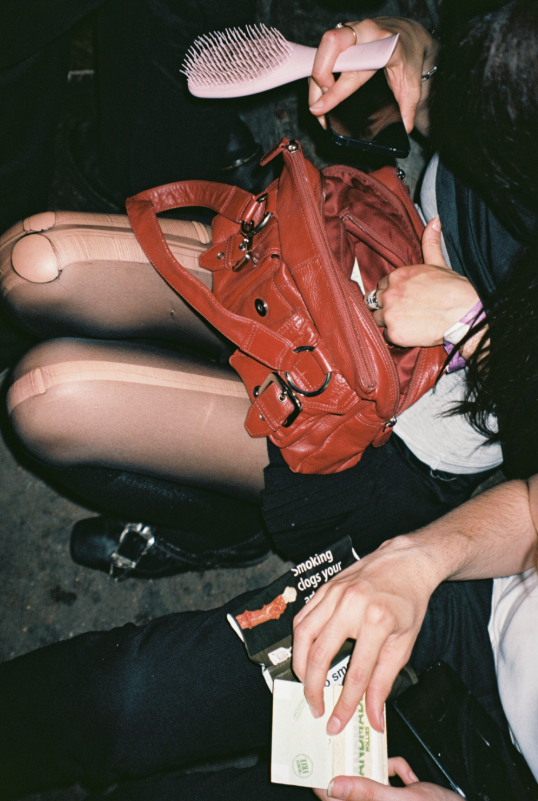
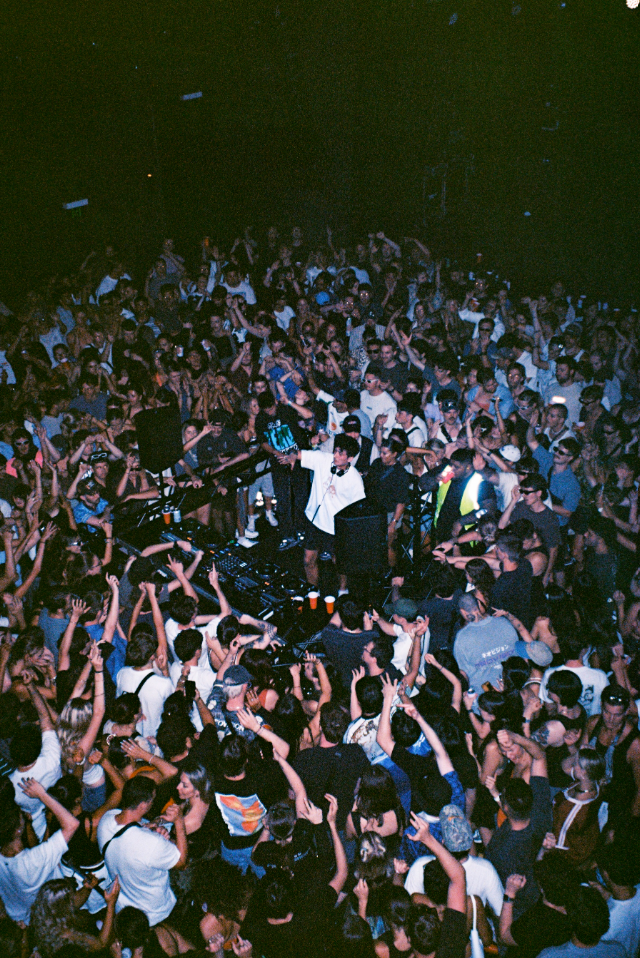
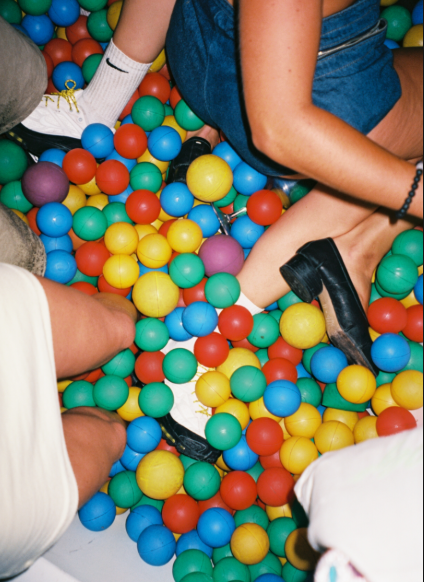
CC: Club culture is constantly evolving. There’s a lot more people going to events, audiences are getting bigger and artists are reaching new parts of the world as the scene expands, and I think I’ve definitely captured that growth through my work. I’ve also noticed people are becoming increasingly creative and expressive with how they dress and style themselves. I love documenting changes in fashion and what people wear at clubs over the years, as it becomes a marker of the culture at that time.
LN: Do you see yourself as a participant in nightlife or as an observer of it? Does that manifest in the way you take photographs?
CC: I still love to dance and be part of the party. It’s so important as a photographer to include yourself as part of the event and not just be an external fixture. If you can’t enjoy yourself around others, they won’t enjoy being around you, and there’s no fun in that. I think being immersed in the crowd creates better photos, and I love to be on the dancefloor as much as I can.
LN: Club spaces are often ephemeral. What do you think club photography preserves and what do you think it inevitably loses?
CC: Club photography is quite special in the sense of how easily it can preserve the true feeling of that specific evening and bring back such strong memories. Inevitably, it loses the noise of the night, but as the element of sound is not part of this form of documentation, it can act as an entry point of interest for people who may not be super familiar with electronic music or it may not be their taste. Photos allow anyone and everyone to still connect, understand and engage with club culture.
LN: How does the music influence your visual language, if at all?
CC: Music is for sure the second biggest influence when I am shooting on a night out, with people being the first. But without the music, no matter how present sound is in the evening, the photos would not turn out the way they do.
I love stepping into any event space when music is playing because I am able to build a world in my head from the elements of sound I am hearing without having to do anything but listen. In turn what I hear transforms into what I see and what I select subconsciously when shooting in these spaces. The music that is playing can be what pushes me to shoot in new ways and take creative risks.
LN: What do you think nightlife photography reveals that other forms of cultural documentation miss?
CC: Photos keep their essence well through time and preserve the intimacy of these moments without feeling invasive. I also think photography leaves the narrative unwritten, which keeps the scene elusive and helps spark intrigue that can attract new crowds.
Music, video, and other forms come close, but compared to other mediums, I think people are able to connect instantly to photographs because it is purely visual and consists of a single frame. The feeling of being able to immediately connect to an image as soon as you see it is what makes this type of documenting so special and is a big reason why I enjoy using photography as my medium.